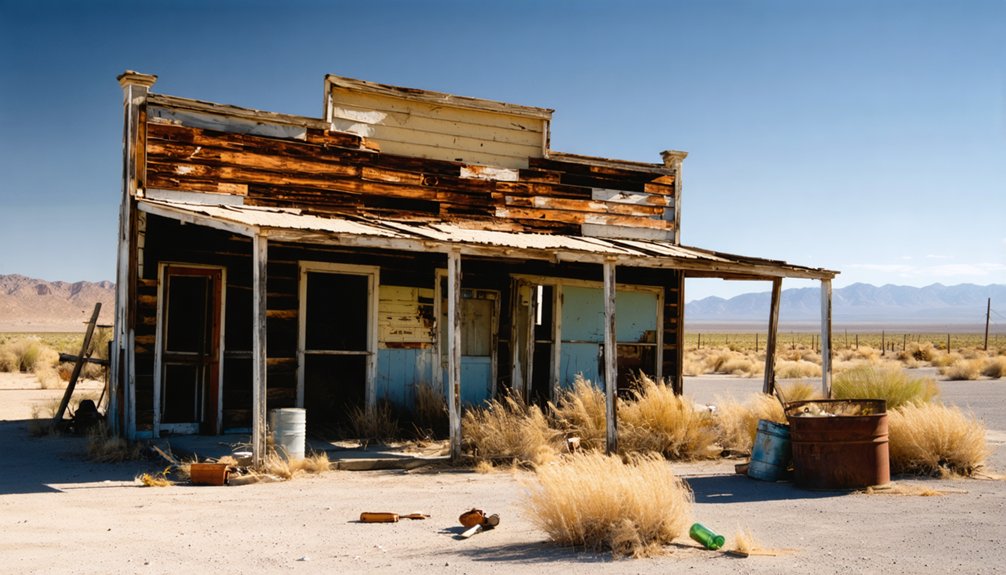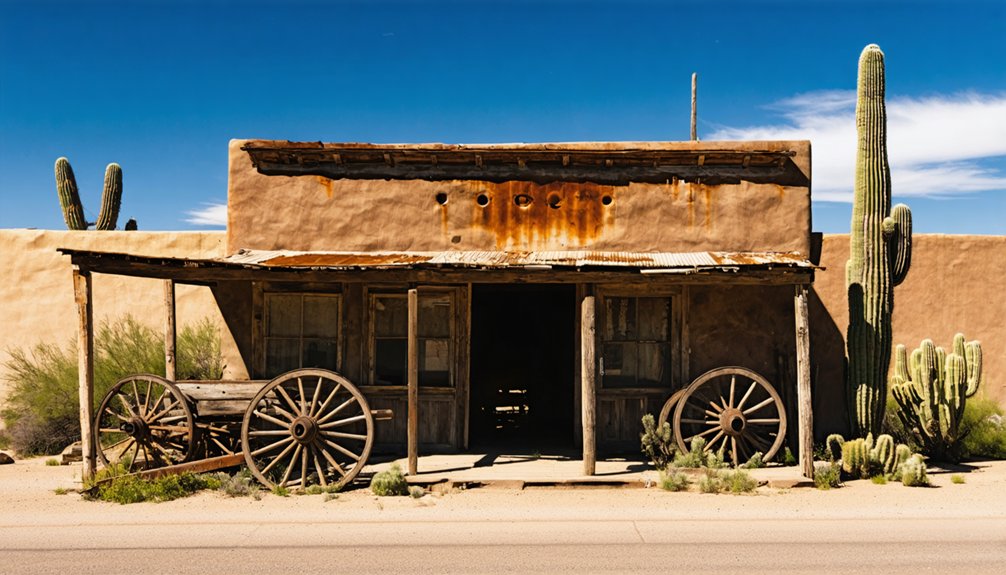
Planning a ghost town road trip to Copper Creek, Arizona means venturing 9 miles down a rugged dirt road into the Galiuro Mountains, where crumbling ruins and vivid mineral-stained tailings piles tell a forgotten mining story. You’ll need a 4WD vehicle, plenty of water, and sturdy boots to explore what was once a thriving community of 500 residents. Visit between November and March for the most comfortable conditions. Stick around, and you’ll discover everything you need to make this journey unforgettable.
Key Takeaways
- Copper Creek ghost town sits 9-10 miles east of Mammoth, Arizona, requiring a 4WD vehicle for its rough 9-mile dirt road access.
- Visit between November and March for comfortable hiking conditions, as summer temperatures can exceed 100°F, making exploration potentially dangerous.
- Pack essential supplies including extra water, paper maps, recovery gear, and sturdy boots, since cell service is unreliable throughout the area.
- Explore ruins featuring crumbling buildings, colorful tailings piles, concrete foundations, old mine shafts, and the historic Sibley mansion and iron bridge.
- Extend your road trip by visiting nearby ghost towns Oracle, Mammoth, Bisbee, and Tombstone for a fuller Arizona abandoned history experience.
What Makes Copper Creek Ghost Town Worth the Drive?
Even if you’ve seen your share of Arizona ghost towns, Copper Creek stands apart — tucked deep inside Copper Creek Canyon in the Galiuro Mountains, it rewards the rough 9-mile dirt road with a canyon landscape stained turquoise from mineral-rich creek waters.
Layers of crumbling ruins spread across steep hillsides, and the ghostly silence of a town that once housed up to 500 residents across 50 buildings. Its historical significance runs deep, spanning active mining from the early 1900s through 1917 and generating $430,000 in district profits.
You’ll find iron machinery, concrete foundations, mineralized rock faces, and partial mansion ruins that offer remarkable ghost town photography opportunities at every turn. Few Arizona ghost towns deliver this combination of raw scenery, authentic decay, and documented history so far off the beaten path.
How to Get to Copper Creek, Arizona
Getting to Copper Creek requires some planning, but the route is straightforward once you know what to expect.
The ghost town sits in Copper Creek Canyon within the Galiuro Mountains of Pinal County, roughly 9 to 10 miles east of Mammoth and 44 to 75 miles from Tucson.
To reach it, you’ll navigate approximately nine miles of rocky dirt road, so bring a 4WD vehicle — it’s not optional here.
Watch for the sign and turn left for access. The BLM manages most of the land, though private ranch areas exist nearby.
Once you arrive, you’ll explore on foot across steep terrain scattered with mining artifacts and layered with ghost town legends.
Mild winters make it ideal for year-round visits if you’re prepared.
What You’ll Actually Find at the Copper Creek Ruins
Once you make it through the rough canyon road, you’ll find scattered ruins clinging to the steep hillsides, including crumbling buildings, concrete foundations, and the partial remains of the Sibley mansion tucked further up the creek.
You can still spot the iron bridge crossing the creek, old mine shafts, and tailings piles stained vivid shades of red, yellow, and blue from the mineralized rock.
Heavy machinery and iron equipment remain on-site, offering a tangible glimpse into the district’s once-productive mining operations that hauled ore via a short railroad to the nearby mill.
Standing Structures And Remnants
Scattered across Copper Creek Canyon‘s steep, cactus-covered hillsides, the ruins tell a surprisingly layered story for a town that’s been silent since the early 1940s.
You’ll spot concrete foundations, iron machinery, and tailings piles that speak to the site’s historical significance as a once-thriving mining hub.
The architectural features worth noting include an iron bridge spanning the creek, remnants of the old mill near the Childs-Aldwinkle Mine, and the partial remains of the Sibley mansion, which requires a walk up the creek to reach.
Tunnels cut into the hillside and mineralized rocks stained red, yellow, and blue add visual drama throughout.
You’ll also find the post office foundation, a quiet but tangible marker of the community that once called this canyon home.
Mining Equipment Still There
Among the most striking discoveries at Copper Creek is the 18-ton Porter locomotive sitting near the Old Reliable Mine, a hulking piece of industrial history that once hauled ore along a short two-mile rail line to the mill.
Eight cars accompanied it, and seeing this mining machinery up close connects you instantly to the town’s working past.
Beyond the locomotive, you’ll encounter concrete foundations, iron bridges spanning the creek, and scattered historical artifacts embedded throughout the canyon terrain.
An old mill near the Childs-Aldwinkle Mine still holds its form, while iron machinery pieces emerge unexpectedly along the hillsides.
Mineralized rocks stained red, yellow, and blue add vivid color to your exploration.
These remnants aren’t behind glass — you’re walking directly through an open-air industrial museum.
Copper Creek Ghost Town’s Mining History: Rise and Abandonment
Deep in the Galiuro Mountains, Copper Creek’s mining story began in the early 1900s when prospectors staked their claims across the Bunker Hill Mining District.
Using mining techniques typical of the era, workers extracted copper ore that generated $430,000 in profits between 1905 and 1930.
At its peak, you’d have found 200-500 residents living among 50 buildings built in tiers along the steep canyon hillside.
Ghost town legends tell of a community shaped by prohibitionist Charles Sibley, whose influence kept the town saloon-free.
A short railroad hauled ore two miles to the mill, while a 31-mile telephone line connected residents to surrounding towns.
Best Time to Visit Copper Creek Ghost Town
You’ll find Copper Creek most enjoyable during the mild winter months, when cooler temperatures make hiking the steep, cactus-covered terrain far more manageable.
Summer visits are possible but punishing, as Arizona’s desert heat turns the canyon into an oven and can make even a short trek feel grueling.
Winter roads are generally passable with a 4WD vehicle, though you’ll want to check conditions beforehand, since the rough 9-mile dirt road can become treacherous after seasonal rains.
Ideal Seasons To Visit
Timing your visit to Copper Creek can make or break the experience. Arizona’s mild winters, spanning November through March, offer the most comfortable conditions for exploring steep, cactus-covered hillsides and traversing the rough 9-mile dirt road.
You’ll find seasonal activities like wildlife sightings more rewarding when temperatures stay below 80°F, as desert animals move freely through Copper Creek Canyon during cooler months.
Summer transforms the canyon into a brutal furnace, with triple-digit heat making foot exploration genuinely dangerous.
Spring and fall offer brief sweet spots, though monsoon season from July through September can make that rocky access road impassable.
Whatever season you choose, pack enough water for extended hiking across scattered ruins. Freedom means going prepared, not going unprepared.
Summer Heat Considerations
When summer arrives in Copper Creek Canyon, the Galiuro Mountains become an unforgiving environment that can turn a rewarding ghost town excursion into a genuine survival situation.
Heat safety isn’t optional here—it’s essential. Follow these hydration tips and precautions before heading out:
- Carry at least one gallon of water per person
- Start exploring before 9 a.m. to avoid peak heat
- Wear lightweight, breathable, light-colored clothing
- Pack electrolyte supplements alongside your water supply
- Know your exit route before temperatures climb past noon
The steep, cactus-covered hillsides demand physical exertion even in cooler months.
Summer transforms that challenge into something dangerous. Respect the desert’s power, plan accordingly, and you’ll preserve your freedom to explore Copper Creek’s remarkable ruins safely.
Winter Road Conditions
Winter transforms the rough 9-mile dirt road into Copper Creek Canyon from a punishing washboard into something far more manageable—making it the clear best season to visit.
Cooler temperatures firm up the loose desert soil, giving your 4WD vehicle better traction and reducing the bone-rattling ride that summer heat intensifies.
Road maintenance out here is minimal since BLM manages most of the route, so you’ll still encounter rocks, ruts, and narrow passages.
Winter safety means checking weather forecasts before you head out—occasional storms can turn dirt roads into slick mud traps that’ll strand even capable vehicles.
Pack recovery gear, extra water, and a paper map.
With proper preparation, you’ll roll into Copper Creek Canyon on Arizona’s most forgiving terms.
Private Land, Active Mines, and No-Trespassing Zones at Copper Creek
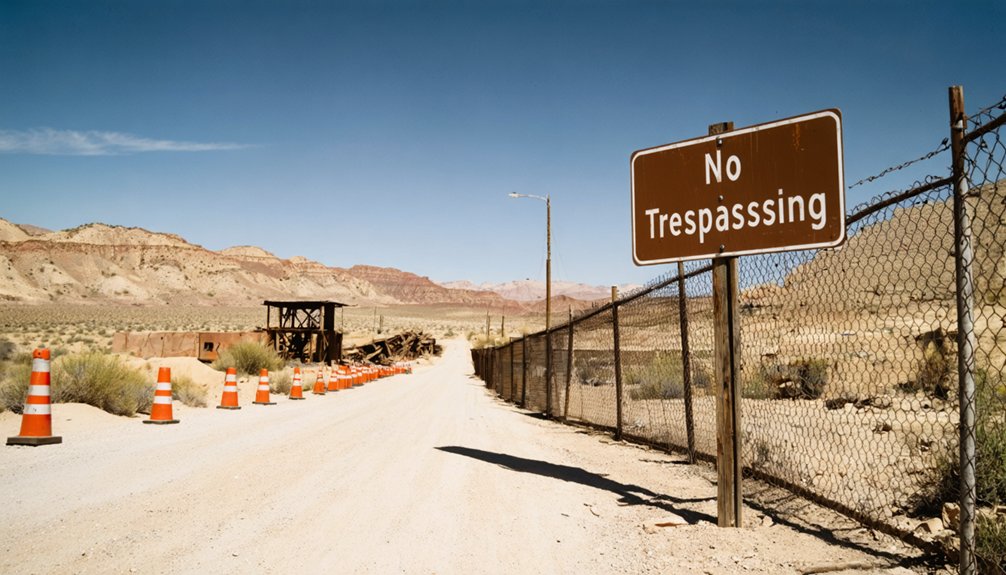
Exploring Copper Creek comes with real boundaries you’ll need to respect. Private property cuts off access to the upper canyon, where many of the most significant ruins sit. Active mining operations add another layer of exploration limits you can’t ignore.
Watch for these specific restrictions before you roam:
- A private ranch blocks the upper canyon section entirely
- No-trespassing signs are posted throughout restricted areas
- Some ruins sit within an active mine’s operational boundaries
- Steep, cactus-covered hillsides make unauthorized detours dangerous
- Vandalism has already damaged what little remains
Stay on BLM-managed land, read every posted sign, and don’t push past barriers.
The ruins you can legally access still tell a compelling story worth your time.
What to Bring When Visiting Copper Creek Ghost Town
A successful trip to Copper Creek starts long before you turn down that rocky dirt road. Your ghost town essentials packing checklist should include plenty of water, as there’s no shade relief in summer heat.
Preparation begins before you hit the dirt road — water is non-negotiable when shade doesn’t exist.
Wear sturdy boots — you’ll navigate steep, cactus-covered hillsides and rocky creek crossings. Bring a detailed map since cell service disappears fast in Copper Creek Canyon.
Pack your camera for dramatic ruins, mineralized rock formations, and turquoise-stained creek waters. A first aid kit handles unexpected scrapes from rough terrain.
Since you’ll cover serious ground on foot, energy snacks keep you moving between scattered structures.
Don’t forget sunscreen, a hat, and gloves for handling rocks. Four-wheel drive handles the road, but your preparation handles everything else.
How to Explore Copper Creek Without Getting Into Trouble
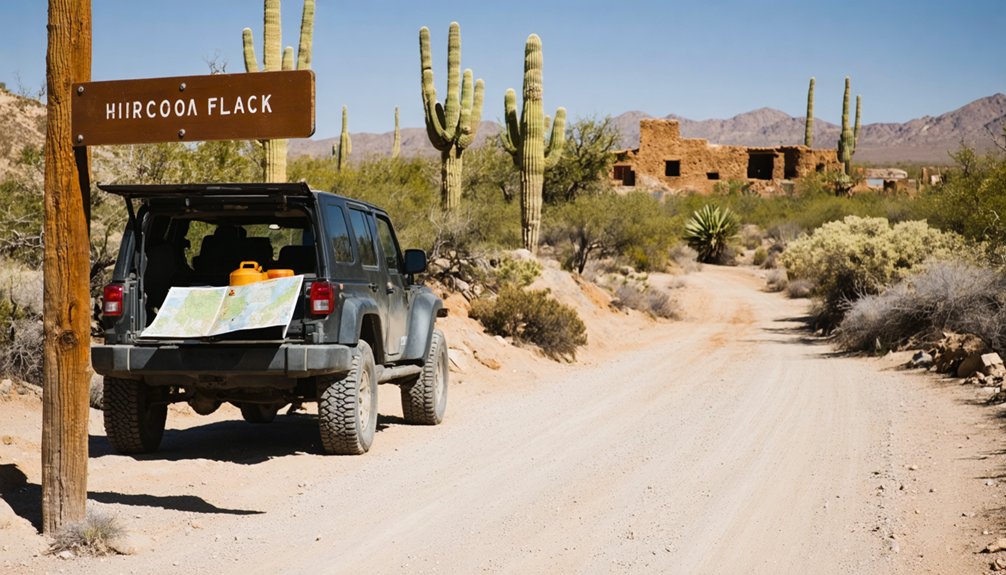
Copper Creek rewards curious visitors, but only those who respect its boundaries. Following basic ghost town etiquette and safety precautions keeps you out of trouble and preserves the site for others.
- Honor all posted no-trespassing signs, especially in the upper canyon.
- Stay on established paths through steep, cactus-covered hillsides.
- Don’t remove artifacts, machinery, or mineralized rocks.
- Avoid entering unstable mine shafts or tunnels.
- Respect the private ranch boundaries blocking upper canyon access.
You’re free to roam BLM-managed sections, photograph ruins, and explore the creek’s turquoise-stained waters without restriction.
The abandoned foundations, iron bridge, and scattered machinery tell their own story without you disturbing anything.
Treat Copper Creek like the living historical landscape it is, and it’ll reward every step you take.
Nearby Arizona Ghost Towns Worth Adding to the Trip
While you’re already making the drive out to Pinal County, it’s worth extending your ghost town itinerary—southern Arizona packs more abandoned history per mile than almost anywhere in the American Southwest.
Oracle, just northwest of Mammoth, offers compelling ghost town attractions tied to Arizona’s ranching and mining heritage. Nearby Mammoth itself carries historical significance as a former gold and silver boomtown.
Push further south and you’ll find Bisbee’s eerie underground mines and Tombstone’s preserved frontier streets. Each destination rewards curious, independent travelers willing to navigate rough roads and faded signage.
Bundle these stops into a multi-day loop, camp where you can, and you’ll experience Arizona’s forgotten past on your own terms—no guided tour required.
Frequently Asked Questions
Are There Any Guided Tours Available at Copper Creek Ghost Town?
Like a lone wolf, you’ll explore Copper Creek’s historical significance independently — no guided tour options exist. You’re free to roam BLM-managed ruins, discovering abandoned mines and scattered relics entirely on your own adventurous terms.
Can You Camp Overnight Near the Copper Creek Ruins Legally?
You’ll need to check BLM’s camping regulations before pitching your tent near Copper Creek’s ruins. Overnight permits may apply, and you must respect private ranch boundaries to stay legally compliant and adventure-ready!
Is Copper Creek Ghost Town Accessible to Visitors With Disabilities?
With 9 miles of rough, rocky dirt road and steep, cactus-covered hillsides, Copper Creek isn’t disability-friendly. You’ll find no accessible routes or visitor facilities here, making independent exploration challenging for mobility-limited adventurers.
Are Pets Allowed When Exploring the Copper Creek Ghost Town Area?
No official pet friendly policies exist for Copper Creek, but you can likely bring leashed pets. Stay alert — the rugged terrain and local wildlife, including rattlesnakes and desert creatures, make vigilance essential for your furry companion’s safety.
Does Copper Creek Ghost Town Have Any Cell Phone Signal Coverage?
Ready to unplug completely? You won’t find reliable cell service at Copper Creek’s remote location. The rugged Galiuro Mountains naturally block signals, so you’ll want to download maps, inform someone of your plans, and embrace the true off-grid adventure!
References
- https://www.americansouthwest.net/arizona/copper_creek/ghost_town.html
- https://www.ghosttowns.com/states/az/coppercreek.html
- https://www.mindat.org/loc-194728.html
- http://www.azbackcountryadventures.com/copper.htm
- https://kids.kiddle.co/Copper_Creek
- https://tucson.com/news/local/minetales/mine-tales-copper-creek-history-includes-recent-discovery/article_3f7e5e7e-e75a-54a7-9f64-c3245e17833d.html