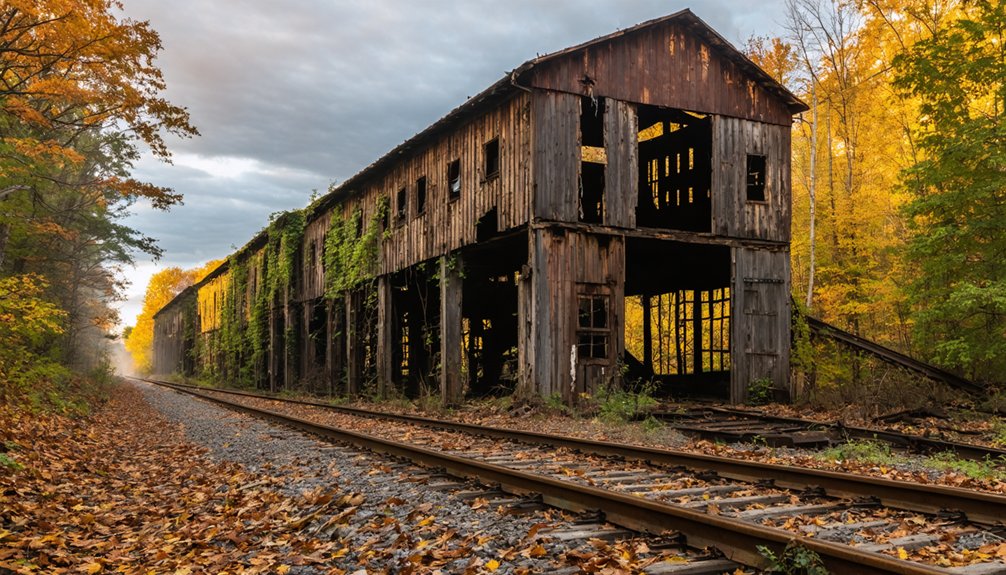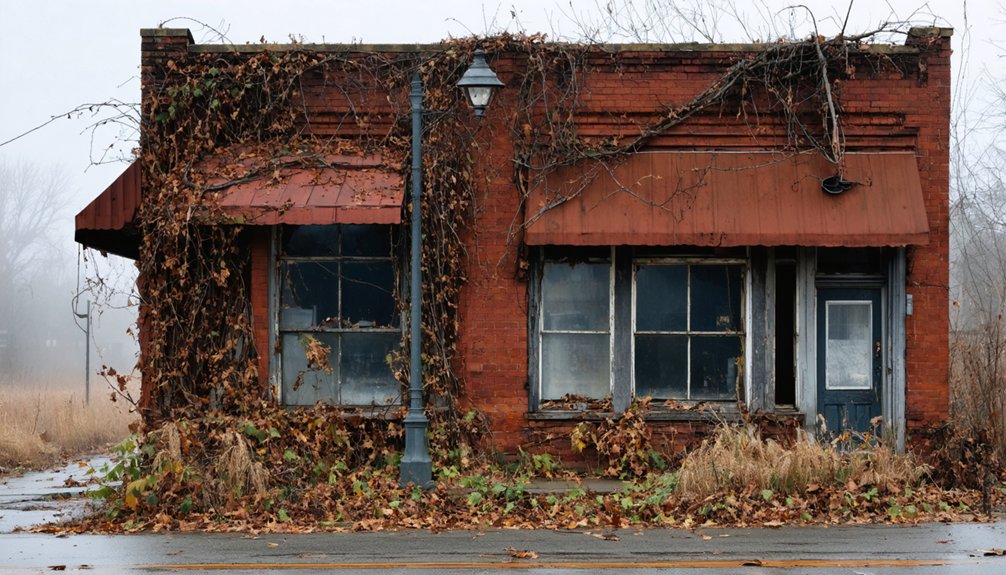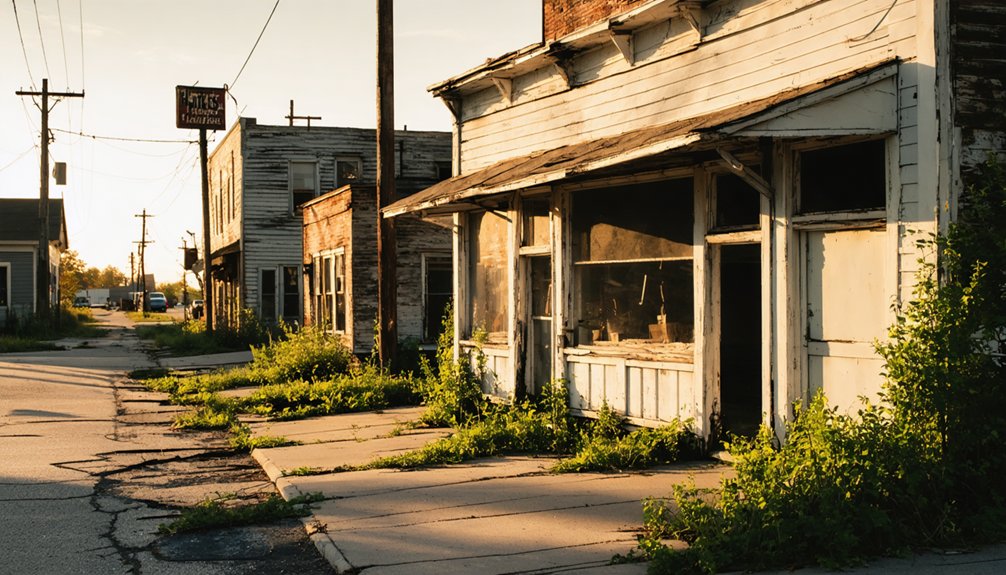
Planning a ghost town road trip to Kickapoo, Indiana means tracking down a quiet piece of forgotten history along County Road 425 E in Warren County. Founded in 1885 as a railroad town, Kickapoo never quite took off and faded away within a generation. You won’t find buildings or signage, just open land, Kickapoo Creek, and a landscape that holds its secrets well. There’s far more to this story than the silence suggests.
Key Takeaways
- Kickapoo, Indiana, founded in 1885 as a railroad town, gradually became a ghost town due to stagnant population and lack of industry.
- The site is located on County Road 425 E with GPS coordinates 40°19′48″N, 87°13′59″W, featuring open land and Kickapoo Creek.
- Spring and fall offer the best visiting conditions, while heavy rainfall should be avoided due to muddy road conditions.
- No infrastructure exists on-site, so pack water, snacks, sturdy footwear, offline maps, and a notebook for recording observations.
- Nearest accommodations are in Williamsport and Covington, with primitive camping available along the Wabash River corridor.
What Kickapoo, Indiana Actually Was Before It Disappeared
Kickapoo, Indiana started as a modest railroad town platted on February 2, 1885, by Lewis Davisson in Warren Township, Warren County. Built alongside the Chicago and Great Southern Railway, it sat where Kickapoo Creek flows toward the Wabash River, one mile north of their confluence.
The town’s historical significance lies in what it represented — a typical 19th-century settlement shaped by railway expansion and frontier ambition.
Kickapoo culture in the region reflected that restless pioneer spirit, where small communities rose quickly and faded just as fast.
Why Kickapoo, Indiana Was Platted in 1885 and Forgotten Within a Generation
When Lewis Davisson platted Kickapoo on February 2, 1885, he did so with the Chicago and Great Southern Railway running nearby, betting that rail access would spark growth and draw settlers.
That bet didn’t pay off — the town never built momentum, and by 1913 historians were already describing it as a place with little more than a small, dwindling population.
Within a generation of its founding, Kickapoo had quietly slipped into obscurity, leaving behind no residents and earning its place among Indiana’s roster of forgotten ghost towns.
Railway Dreams Faded Fast
Like so many small Indiana settlements of its era, Kickapoo existed because a railroad made someone believe a town could thrive there.
The Chicago and Great Southern Railway‘s presence convinced Lewis Davisson to plat the town on February 2, 1885, expecting railway impact to drive growth, commerce, and permanent settlement.
It didn’t happen.
Small Population, No Growth
By 1913, just one generation after Lewis Davisson platted Kickapoo on February 2, 1885, the town’s history recorded nothing more than a small population and stalled ambitions. The population dynamics here never gained momentum. Settlers arrived with hope, but the numbers never multiplied into anything sustainable.
You can see this pattern clearly when you study community decline across Indiana’s ghost towns — small starts that simply stopped. Kickapoo wasn’t destroyed by disaster or flood. It quietly emptied out, household by household, until no residents remained.
The railway’s broken promise accelerated that drift, but the deeper truth is simpler: the town never built enough critical mass to survive. What began as potential became a footnote, and today Kickapoo exists only as coordinates along a rural Indiana road.
Ghost Town By Century’s End
Platted on February 2, 1885, Kickapoo, Indiana entered the world with reasonable ambitions — a railway nearby, a creek at its edge, and Lewis Davisson’s signature on the paperwork.
But ambition alone doesn’t build a town. By 1913, historians already described it as barely populated, a community that never found its footing. No industry anchored it. No population surge saved it.
Before the century closed, Kickapoo had quietly surrendered to the surrounding landscape, joining Indiana’s long list of disappearing landscapes that once held genuine promise.
Its historical significance lies precisely in that failure — a reminder that railways and plats don’t guarantee survival.
When you visit today, you’re walking ground that dreamed bigger than it ever delivered, and that story deserves your attention.
How to Find the Kickapoo, Indiana Town Site Today
Finding the Kickapoo town site takes just a few simple steps. Head to Warren Township in Warren County, Indiana, and follow County Road 425 E, also known as Kickapoo Road.
The former town sits near Section 29, township 22, range 7 west. Once you’re there, you’ll find Kickapoo Creek flowing past the old site, eventually joining the Wabash River about a mile south. That natural landmark makes orientation easy.
Kickapoo history unfolded quietly along these roads after Lewis Davisson platted the town in 1885, but like many Indiana ghost towns, it faded without fanfare.
Bring your GPS coordinates — 40°19′48″N, 87°13′59″W — and combine your visit with other Warren County ghost towns like Brisco and Chatterton for a fuller exploration.
What You’ll Actually Find at the Kickapoo, Indiana Town Site
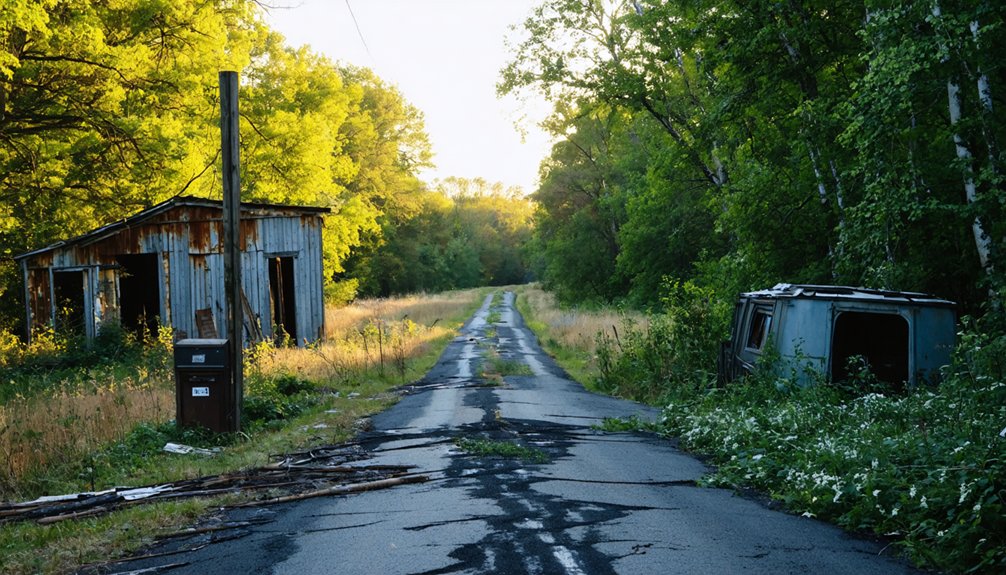
When you arrive at the Kickapoo town site, don’t expect buildings, storefronts, or any obvious signs of a former settlement — what’s left is mostly open land, rural road, and the quiet flow of Kickapoo Creek nearby.
The creek eventually joins the Wabash River just a mile south, giving the landscape a peaceful, timeless quality that rewards those willing to slow down and look closely.
You won’t find markers explaining the town’s historical significance, so bring your curiosity and do your research beforehand.
Local folklore surrounding Indiana’s ghost towns often fills the gaps that physical evidence can’t.
Stand along County Road 425 E, listen to the creek, and let your imagination reconstruct what Lewis Davisson platted here in 1885 — a town that briefly existed, then quietly disappeared.
When Is the Best Time of Year to Visit Kickapoo, Indiana?
Once you’ve soaked in the stillness of the Kickapoo town site, timing your next visit well can make the experience even richer. The best visiting seasons each offer something distinct, and local flora shifts dramatically throughout the year.
- Spring (April–May): Wildflowers bloom along Kickapoo Creek, and mild temperatures make exploration comfortable.
- Summer (June–August): Long daylight hours maximize your time, though humidity runs high near the Wabash River confluence.
- Fall (September–October): Crisp air and vivid foliage create striking contrast against the open, abandoned landscape.
- Winter (November–March): Snow strips away vegetation, revealing foundations and terrain features you’d otherwise miss.
Avoid visiting after heavy rainfall since unpaved County Road 425 E becomes muddy and difficult to navigate.
Kickapoo Creek and Wabash River Stops Within a Mile
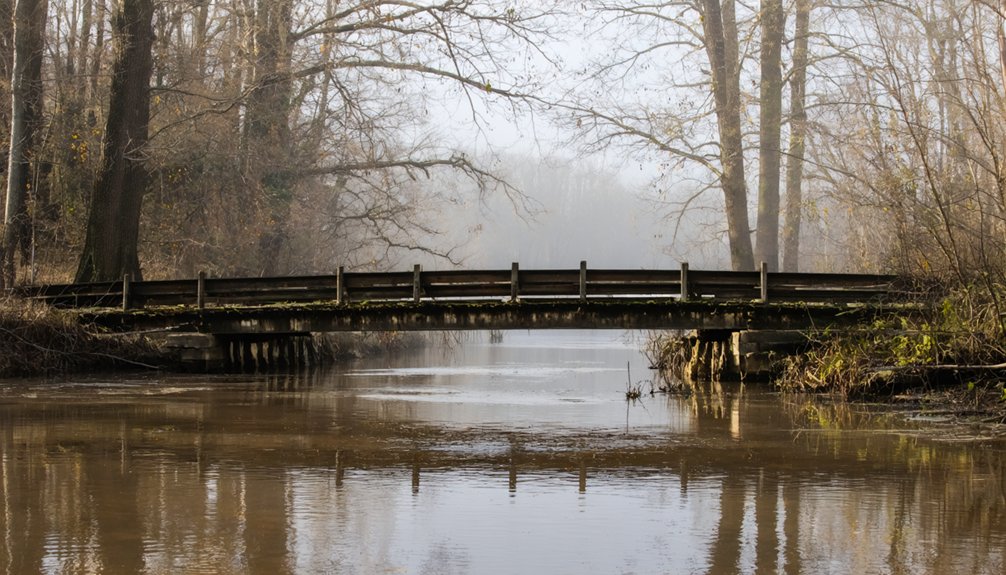
Two natural landmarks sit within a mile of the Kickapoo town site, and you can reach both on foot or by car without backtracking.
Kickapoo Creek runs directly past the former settlement before merging with the Wabash River just one mile south. That confluence point carries forgotten stories older than the town itself, where Indigenous movement, frontier trade, and early settler life once collided along these banks.
Kickapoo Creek once carried more than water — it carried centuries of collision between worlds.
Standing where the creek meets the river, you’ll feel the weight of Kickapoo legends embedded in the landscape long before Lewis Davisson platted his little railroad town in 1885.
Bring water shoes if you want to wade the creek, and walk the riverbank south to find the confluence yourself. No tour guide required — just follow the current.
Which Other Warren County Ghost Towns Are Worth the Detour?
Warren County hides more than one forgotten town along its back roads, and Brisco and Chatterton both reward the curious traveler willing to veer off the main route.
Each site carries real historical significance, offering glimpses into Indiana’s 19th-century settlement patterns through whatever abandoned structures still stand or scar the landscape.
- Brisco – Scout remnants along rural Warren County roads for foundations and overgrown lots.
- Chatterton – Trace its former layout and imagine the community that once thrived there.
- Combine stops – Link Kickapoo, Brisco, and Chatterton into one efficient loop drive.
- Document everything – Photograph abandoned structures responsibly, preserving their historical significance through your own record.
You’ll leave Warren County with a richer understanding of how entire communities simply vanished.
How Does Kickapoo Fit Into Indiana’s Broader Ghost Town Map?
Kickapoo sits among at least 41 documented abandoned towns scattered across Indiana. When you zoom out on the state’s ghost town map, a striking pattern emerges: most of these communities rose during the 19th century‘s settlement boom and quietly collapsed throughout the 20th.
Kickapoo’s ghost town significance lies in what it represents collectively — a statewide story of ambitious platting, railway dependency, and eventual abandonment. You’ll find similar tales in Lick Creek’s African-American settlement history and Little Chicago’s Blackford County origins.
Kickapoo’s story isn’t singular — it mirrors a statewide pattern of platted ambition, railroad reliance, and quiet disappearance.
Indiana even has two towns drowned beneath reservoirs. Each site carries its own chapter of historical preservation challenges, reminding you that these landscapes hold real human stories.
Kickapoo isn’t an outlier — it’s a thread woven deeply into Indiana’s forgotten fabric.
What the Kickapoo Site Visit Actually Requires You to Bring
Visiting a ghost town with no infrastructure means you’re entirely on your own once you turn onto County Road 425 E.
Kickapoo offers no signage, no services, and no guides — just open land, abandoned structures, and Kickapoo Creek moving quietly nearby.
Pack smart so you can explore freely.
- Navigation tools — Download offline maps; cell service is unreliable here.
- Water and snacks — There’s nothing available for miles around.
- Sturdy footwear — Uneven terrain surrounds former building sites.
- A notebook — Jot down observations or local folklore you’ve researched beforehand to compare against what you actually find.
Coming prepared transforms this visit from a frustrating detour into a genuinely rewarding experience.
Freedom tastes better when you’ve planned for it.
Where to Stay Near Kickapoo, Indiana
Once you’ve packed your gear and mapped your route, you’ll want a solid base camp — and that means looking beyond Kickapoo itself, which offers nothing in the way of lodging.
The nearest accommodation options cluster around Williamsport and Covington, both within reasonable driving distance in Warren County. Williamsport offers modest motels and rental stays, putting you close to local attractions like the famous Portland Arch Nature Preserve.
Covington, the county seat, provides additional choices with easy highway access. If you prefer sleeping under stars, primitive camping along the Wabash River corridor suits the spirit of independent exploration perfectly.
Book ahead during warmer months since options are limited. Staying nearby lets you hit Kickapoo at sunrise, when the landscape feels most hauntingly alive.
Frequently Asked Questions
Is the Kickapoo, Indiana Town Site Located on Private Property?
Sure, just ask permission from the corn! The Kickapoo history records don’t confirm private ownership. For town site accessibility, you’ll follow Kickapoo Road — but always respect land boundaries before exploring freely.
Are There Any Guided Ghost Town Tours Available in Warren County?
No specific guided tours exist for Warren County’s ghost town history, but you can explore independently! Grab a map, follow County Road 425 E, and you’ll uncover Kickapoo’s fascinating, abandoned past on your own terms.
Can You Legally Camp Overnight Near the Kickapoo Town Site?
You’ll need to check local camping regulations before pitching a tent near Kickapoo’s ghost town site. Respect ghost town etiquette by contacting Warren County authorities, as private landowners likely control surrounding land access.
Is the Kickapoo Creek Area Safe for Children During Visits?
Sure, let Kickapoo Creek babysit your kids unsupervised! Jokes aside, you’ll want solid safety precautions near the water. Enjoy kid-friendly activities like exploring creek banks, but always supervise children closely around moving water.
Are There Any Local Historical Societies Preserving Kickapoo’s Remaining Records?
You’ll want to check with Warren County’s local archives and historical societies for Kickapoo’s remaining records. They’re actively involved in historical preservation, safeguarding fascinating documents that connect you to this vanished 19th-century town’s remarkable, freedom-filled pioneer past.
References
- https://kids.kiddle.co/Kickapoo
- https://www.youtube.com/watch?v=GQuQJldC2fY
- https://en.wikipedia.org/wiki/Kickapoo
- https://storymaps.arcgis.com/stories/9a3b3f4a63ba4031a46cb53907a0515c
- https://en.wikipedia.org/wiki/List_of_ghost_towns_in_Indiana
- https://en.wiktionary.org/wiki/Category:en:Ghost_towns_in_Indiana
- https://www.texasescapes.com/TexasHillCountryTowns/Kickapoo-Texas.htm