You’ll find Cuthbert’s haunting remains 14 miles northwest of Colorado City via Farm Road 1229, where D. T. Bozeman’s 1890 settlement now exists as scattered foundations and weathered cemetery stones across windswept prairie. Plan your visit during spring or fall’s mild weather, pack water and navigation tools since GPS fails here, and bring wide-angle lenses to capture the expansive ruins. Combine your journey with nearby ghost towns like Vincent and Ira to discover how frontier communities rose and vanished across Mitchell County’s unforgiving landscape.
Key Takeaways
- Navigate 14 miles northwest from Colorado City via Farm Road 1229, using USGS maps as GPS may fail.
- Visit during spring or fall to avoid extreme summer heat and enjoy mild weather conditions.
- Expect scattered foundations, church remnants, and cemetery remains rather than standing structures at this true ghost town.
- Bring wide-angle lenses and polarizing filters to photograph expansive ruins and weathered details across open prairie.
- Combine your trip with nearby ghost towns Vincent, Ira, and Klondike to explore regional abandonment patterns.
The Story of D. T. Bozeman and Cuthbert’s Founding in 1890
In 1890, when West Texas still measured distance by wagon wheels and handshakes sealed most deals, D. T. Bozeman staked his claim sixteen miles northwest of Colorado City. The teacher-turned-merchant built a wagon yard and store along the main road through Mitchell County, creating a haven for travelers crossing the rugged terrain at 2,251 feet elevation.
Bozeman named his settlement after Thomas Cuthbertson, a neighbor who’d earned his respect in this unforgiving landscape. That choice of hometown moniker reflected the bonds forged between pioneers who understood survival meant community.
Bozeman remained until his death in 1927, watching his modest outpost transform into something more—a legacy to one man’s vision on the open frontier.
What Remains of Cuthbert Today: A True Ghost Town Experience
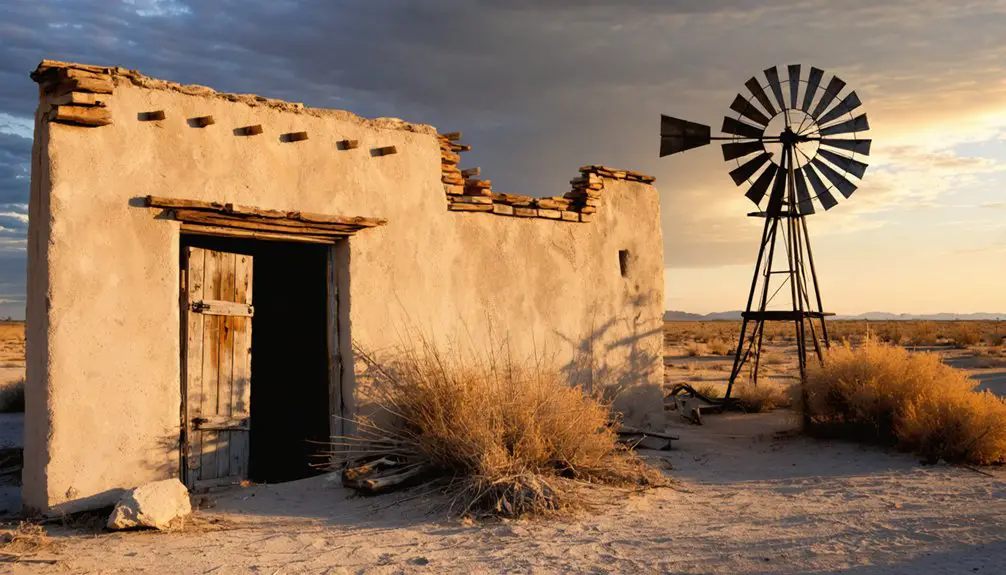
The wind sweeps across empty prairie where Bozeman’s wagon yard once bustled with travelers, and silence has reclaimed the crossroads. You’ll find Cuthbert fourteen miles northwest of Colorado City on Farm Road 1229, where scattered foundations mark what two stores and a blacksmith shop once anchored. The cemetery stands as the primary witness to this community’s century-long story.
What you’ll discover here:
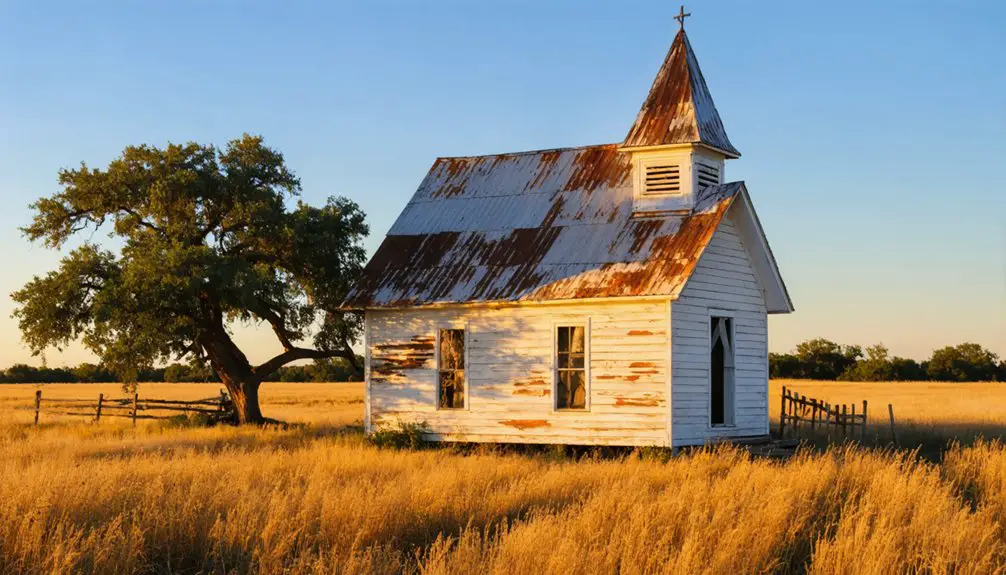
- Church remnants barely visible among native grasses
- Foundations scattered across the windswept landscape
- Working farms maintaining the surrounding countryside
No tourist signs guide you to Cuthbert—just open Texas rangeland and the ghosts of cotton gins and telephone wires. Since 1974, nature’s reclaimed what progress abandoned. This authentic ghost town experience offers solitude and freedom from crowds, where you’ll explore completely on your own terms.
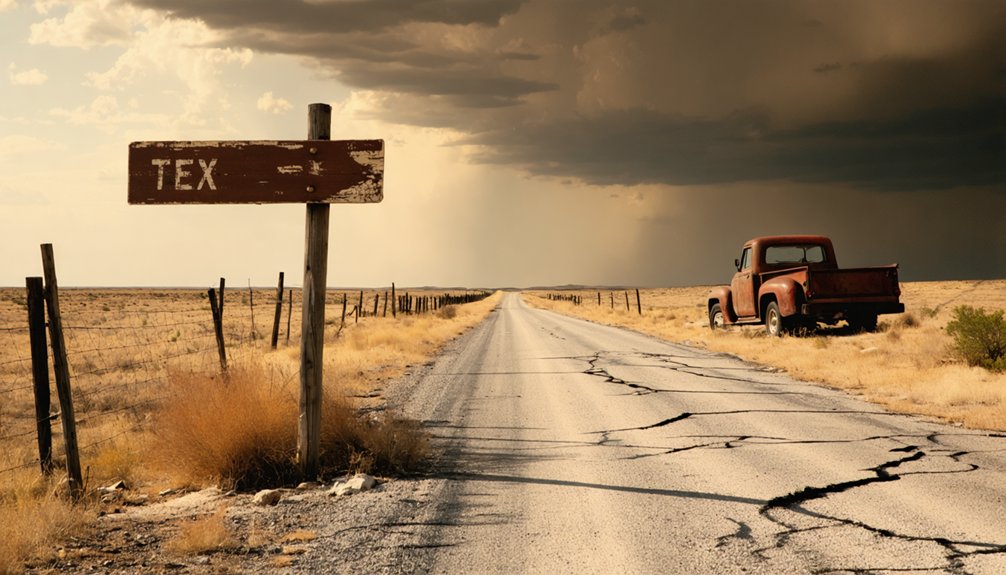
Fourteen miles of Farm Road 1229 stretch northwest from Colorado City through Mitchell County’s windswept prairie, carrying you toward Cuthbert’s scattered remains. You’ll traverse landscape features that define west Texas—rolling prairieland at altitudes exceeding 2,000 feet, red sandy soils, and vast open skies. The Colorado River cuts through this terrain, while the Callahan Divide hills rise to the south.
Rural transportation challenges persist despite post-World War II road improvements. These single-lane farm roads demand attention—no gas stations, limited cell service, and isolation that stretches for miles. Your GPS might struggle here, so study that 1:24,000 USGS topo map beforehand. MapQuest offers current conditions, but old-school navigation serves you better.
The journey embodies freedom: uninterrupted horizons, solitude, and roads less traveled toward a ghost town.
Best Time to Visit and Photography Tips for Your Trip
When planning your Cuthbert expedition, target the shoulder seasons—spring and fall deliver Mitchell County at its most forgiving. You’ll dodge the brutal summer heat that transforms this ghost town into an oven, while winter’s mild temperatures offer comfortable exploration without seasonal event schedules crowding nearby regions.
Spring and fall offer Mitchell County’s sweet spot—mild weather for ghost town exploration without the scorching summer heat or crowded event seasons.
Skip lodging recommendations—you won’t find any here, making day trips essential.
For photography, golden hour transforms Cuthbert’s decay into art:
- Wide-angle lenses capture expansive ruins and cemetery remnants scattered across windswept plains
- Polarizing filters cut glare on weathered wood and rusted metal details
- Weather-sealed gear protects against relentless Mitchell County dust storms
Arrive at dawn when possible spring fog adds atmospheric mystery. Bracket your exposures—the High Plains sunlight creates harsh contrasts that’ll challenge your camera’s dynamic range.
Nearby Ghost Towns and Historic Sites Worth Exploring
Cuthbert’s isolation positions you perfectly for exploring Mitchell County’s constellation of abandoned settlements, each revealing different chapters in West Texas’s boom-and-bust narrative.
Vincent lies nine miles east via Farm Road 1229—a barren site where agricultural decline factors eliminated this rural trade hub post-WWII.
Ira, twenty miles northeast in Scurry County, offers abandoned buildings and pioneer life markers dating to early ranching days. The cemetery and scattered ruins chronicle Permian Basin settlement through the 1930s.
For extended exploration, Klondike sits forty miles northeast in Dawson County—a micro-community that housed forty residents until 1960 before complete abandonment. These quick stops create powerful contrasts in decline patterns.
Colorado City, fourteen miles southeast, absorbed Cuthbert’s functions after improved roads shifted commerce. You’ll trace how transportation evolution dictated survival across this unforgiving landscape.
Combining Cuthbert With Balmorhea State Park Adventures
You’ll find Cuthbert’s weathered ruins about 40 miles northeast of Balmorhea State Park, making them natural companions for a single day’s exploration through West Texas’s stark beauty. The drive between these destinations follows lonely two-lane highways through Chihuahuan Desert landscapes where pronghorn antelope often graze near crumbling windmills.
Start early at the ghost town’s silent streets, then reward yourself with an afternoon plunge into Balmorhea’s spring-fed pool, where 15 million gallons of crystal-clear water flow daily at a consistent 72-76 degrees.
Scenic Route Between Sites
The stark beauty of West Texas unfolds across 170 miles of open road connecting Cuthbert’s weathered remnants to Balmorhea’s spring-fed oasis. You’ll traverse TX-349 through Permian Basin oil country, where pumpjacks nod endlessly beneath vast skies. The direct route takes 2.75 hours, but you’re here for discovery, not speed.
Consider these worthwhile detours:
- Fort Lancaster State Historic Site – 19th-century military ruins rising from harsh terrain
- Monahans Sandhills State Park – 80-foot dunes offering unexpected desert landscapes
- Abandoned homestead ruins – scattered along backcountry roads, monuments to frontier ambition
Highway 67 reveals unusual roadside attractions and ghost town markers few tourists encounter. Spring wildflowers blanket roadsides after rare rains. The Davis Mountains emerge gradually, promising relief before you reach Balmorhea’s crystalline waters—your reward for embracing the untamed journey.
Planning Your Day Trip
Before dawn breaks over Mitchell County, your adventure begins with Cuthbert’s silent ruins—a ghost town that demands little time but rewards the curious. Pull off Farm Road 1229 where parking options are simply open desert—no gates, no fees, just weathered structures against vast sky.
Capture scenic photo spots in early light when shadows stretch across abandoned foundations. Depart by 10 AM for Balmorhea’s crystalline springs, four hours west through empty rangeland. You’ll need that early start: swimming in 72°F waters under afternoon sun, then homeward before darkness claims these remote highways.
Pack everything—water, fuel, food—because freedom here means self-reliance. This twelve-hour loop demands preparation but delivers authentic Texas: desolation meeting rejuvenation, silence giving way to splash.
Essential Supplies and Safety Considerations for Remote Exploration
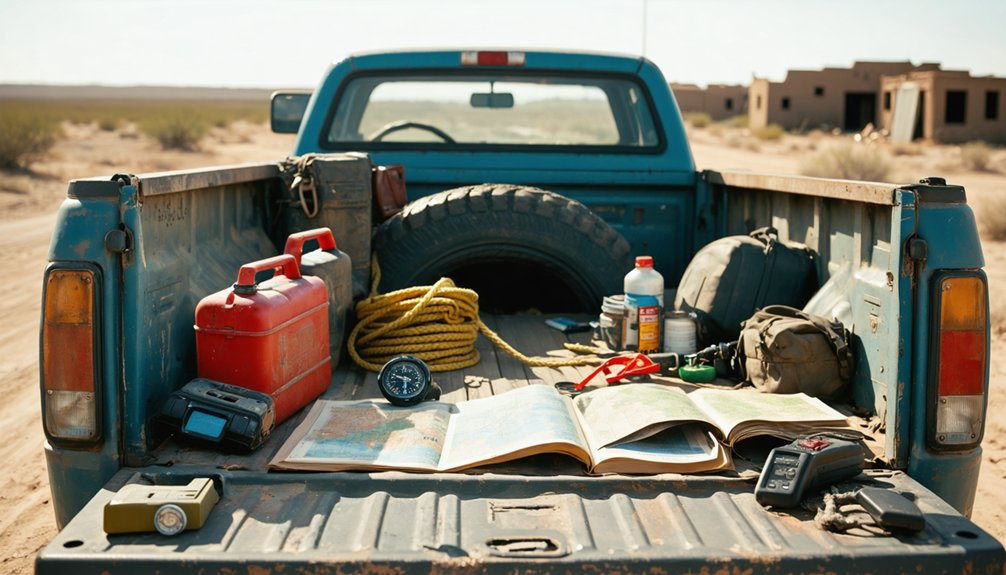
Exploring Cuthbert’s crumbling structures demands more than curiosity—it requires deliberate preparation that could mean the difference between adventure and disaster. Your risk assessment begins before you leave home.
Never venture alone—bring at least three people so someone can seek help while another stays with an injured explorer. Inform someone outside your group about your location and expected return time, considering legal considerations if authorities need to locate you.
Pack your vehicle with essential gear:
- Protection: FFP3 respirator, sturdy boots, heavy gloves, headlamp with spare batteries
- Navigation: Offline maps, compass, marking chalk, whistle
- Emergency: First-aid kit, water, recovery equipment, identification
Weather conditions change rapidly in remote West Texas. Check forecasts, scout exterior structures first, and carry your phone despite limited service. Freedom requires responsibility.
Frequently Asked Questions
Is Camping Allowed on or Near the Cuthbert Ghost Town Site?
No specific camping rules exist for Cuthbert’s ghost town site. You’ll need private landowner permission since it’s abandoned property. Instead, seek designated camping areas at nearby Texas state parks, where you’ll find freedom within established guidelines and facilities.
Are There Any Fees Required to Visit Cuthbert Ghost Town?
You’ll enter Cuthbert completely free—no admission fees whatsoever. Explore at your own pace without guided tour options restricting you. Nearby historical markers enhance your adventure, and there’s ample free parking. Just bring sturdy shoes for the rocky terrain.
What Wildlife Should Visitors Expect to Encounter in the Area?
You’ll encounter abundant lizard populations basking on sun-bleached ruins, with occasional roadrunner sightings darting through mesquite. Texas Horned Lizards and rattlesnakes claim this wild territory, while monarchs gather by thousands each October—nature reclaiming forgotten human spaces.
Is Cell Phone Service Available in and Around Cuthbert?
Cell phone service remains spotty in remote Cuthbert. You’ll find minimal cell tower coverage and unreliable cellular data speeds in this isolated ghost town. Download maps offline beforehand, and embrace the disconnection—true freedom awaits beyond the grid.
Can Artifacts Be Legally Collected From the Ghost Town Ruins?
No, you can’t legally collect artifacts without respecting legal rights of property owners and Texas law requiring preservation of historical artifacts. Even “abandoned” items need written permission, protecting both heritage and landowners’ freedoms from trespass violations.