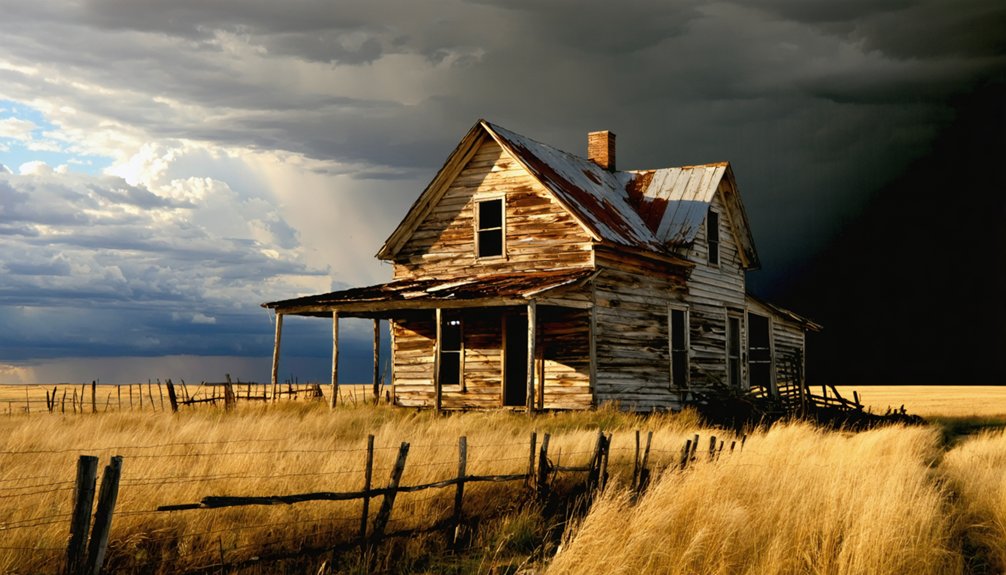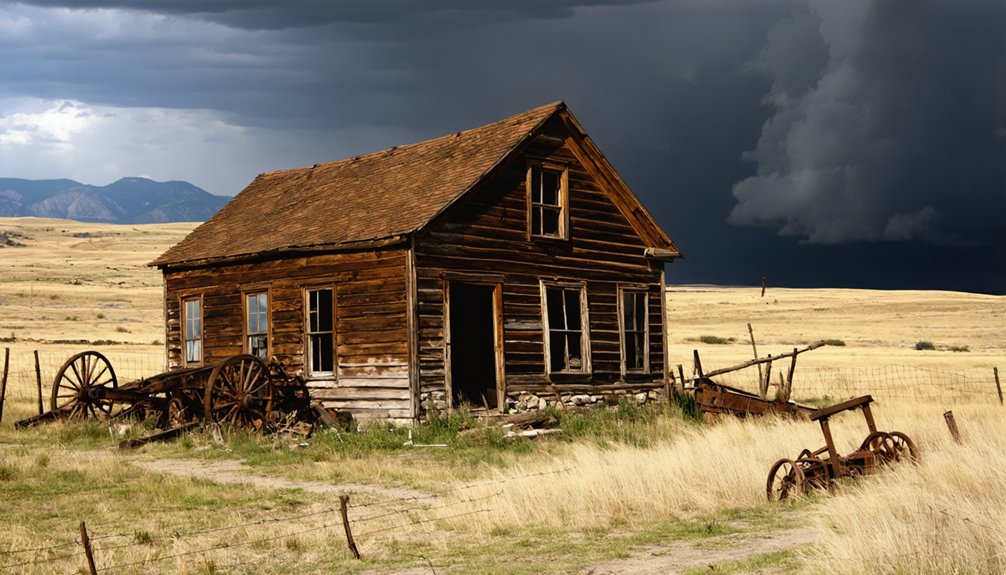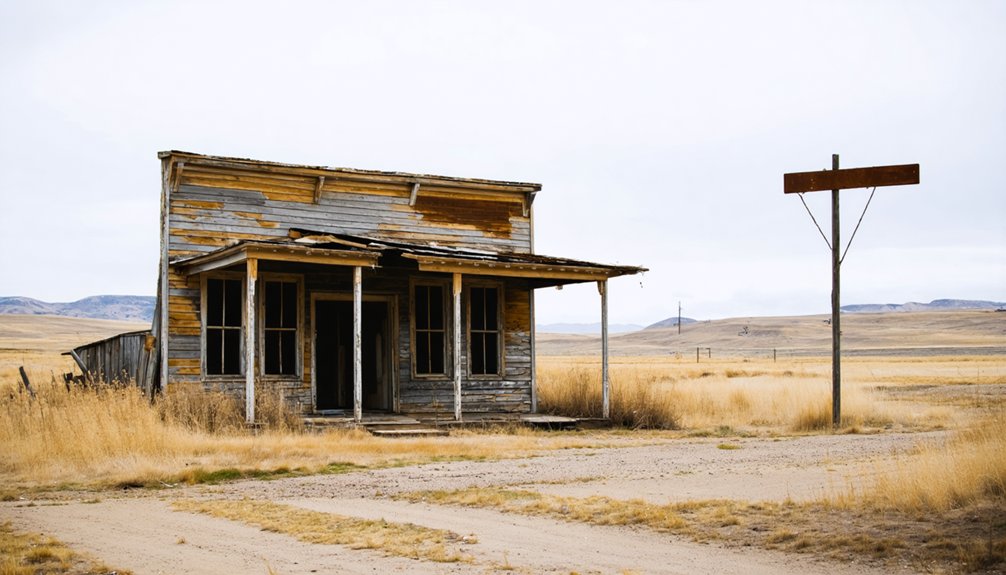
Planning a ghost town road trip to Cyanide, South Dakota starts in Hill City, about 12 miles from this hauntingly named Lawrence County site. You’ll need a high-clearance vehicle to navigate the gravel and Forest Service roads leading to the ruins. Once there, you can explore mill fragments, ore bins, and foundations left behind after gold extraction collapsed the community. Pair Cyanide with nearby ghost towns like Mystic and Trojan for a full Black Hills experience — there’s much more to uncover ahead.
Key Takeaways
- Cyanide, South Dakota, is a ghost town in Lawrence County’s Black Hills, named after the cyanide milling process used for gold extraction.
- Start your trip in Hill City, located approximately 12 miles from Cyanide, where you can find food, fuel, and lodging.
- High-clearance vehicles are essential due to rough gravel and Forest Service roads leading to the remote Cyanide site.
- Explore remnants including foundations, ore bins, and mill fragments, but avoid unstable structures and old mine openings for safety.
- Extend your road trip by visiting nearby ghost towns like Mystic, Trojan, and Astoria for additional Black Hills mining history.
What Is Cyanide, South Dakota?
Tucked into the forested slopes of the Black Hills in Lawrence County, South Dakota, Cyanide is a ghost town that owes its unusual name to the milling process once used to extract gold from ore.
Cyanide history traces back to the early 1900s, when gold fever drove ambitious operations into these hills. Mining techniques of the era relied heavily on cyanide processing, and a 300-ton cyanide mill built in 1902 by the Spearfish Gold Mining and Reduction Company defined the settlement’s identity.
Gold fever struck the Black Hills in the early 1900s, and cyanide processing defined everything that followed.
At its peak, Cyanide supported a school and post office, functioning as a real community. When mining faded, so did the town.
Today, scattered foundations and ruins mark where it once stood, waiting for curious travelers willing to explore.
How Cyanide Got Its Name and Gold Rush Roots
When you hear “Cyanide,” you might picture something sinister, but the name actually traces back to the gold extraction method that put this Black Hills settlement on the map.
Miners in the early 1900s used a cyanide leaching process to pull gold from low-grade ore, and a 300-ton cyanide mill built in 1902 by the Spearfish Gold Mining and Reduction Company anchored the operation.
That industrial chemistry gave the town its blunt, no-frills name and tied its fate directly to the boom-and-bust rhythm of the Black Hills gold rush.
The Cyanide Milling Process
Few ghost towns earn a name quite as striking as Cyanide, and the story behind it says everything about how gold was pulled from the Black Hills in the early 1900s.
Miners discovered that raw ore alone wouldn’t release its gold easily, so they turned to cyanide processing — a chemical method that dissolved gold from crushed rock using sodium cyanide solution.
The Spearfish Gold Mining and Reduction Company built a 300-ton cyanide mill nearby in 1902, and that operation defined everything about this settlement.
The historical significance of this technology can’t be overstated; it transformed marginal ore into profitable gold.
When you visit today, you’re standing where industrial chemistry and frontier ambition collided, reshaping how an entire region extracted its wealth from the earth.
Gold Rush Origins
The name Cyanide doesn’t come from notoriety or frontier drama — it comes from chemistry. When gold fever swept the Black Hills in the early 1900s, miners needed efficient extraction methods. The cyanide process answered that call, pulling gold from low-grade ore that older techniques couldn’t touch.
A 300-ton cyanide mill rose here in 1902, built by the Spearfish Gold Mining and Reduction Company, and a working community grew around it.
You’ll find the town’s identity locked entirely in that industrial moment. Schools and a post office followed the gold.
But gold mining is unforgiving — when yields dropped and economics shifted, town decline came fast. What you’re visiting today is what ambition leaves behind when the chemistry stops paying off.
Ruins and Remnants Still Visible at the Town Site
Scattered across the forested slopes around Cyanide, you’ll find the quiet remains of a community that once hummed with industrial purpose. Foundations jut from the earth where buildings once stood, and mining relics like ore bins, shaft houses, and mill fragments still punctuate the hillsides.
These remnants carry real historical significance, offering a tangible connection to the cyanide-ore processing methods that defined early-1900s Black Hills gold extraction. The site is considered neglected rather than fully erased, meaning enough survives to reward a careful explorer.
You won’t find interpretive signs or maintained paths here, but that raw quality is part of the appeal. Move through the landscape with respect, stay aware of unstable ground, and let the ruins tell their story on their own terms.
How to Get to Cyanide in the Black Hills
Start your trip in Hill City, a practical base with food, fuel, and lodging before you head into the backcountry.
From there, you’ll take gravel and Forest Service roads—including Forest Service Road 231—north toward the Mystic area, where Cyanide sits roughly 12 miles out.
The terrain can get rough, so bring a high-clearance vehicle and check road conditions before you go.
Starting Point: Hill City
Hill City makes a sensible base for reaching Cyanide, sitting close enough to the Mystic area that you can top off your tank, grab supplies, and still be on gravel roads within thirty minutes.
The town offers lodging, food, and fuel without the crowds of Deadwood or Rapid City, giving you the freedom to move on your own schedule.
Don’t let Cyanide myths fool you into expecting a dramatic ghost town frozen in time.
What you’ll find is a quiet mining legacy written in foundations, scattered ruins, and forested slopes that once supported a working community.
From Hill City, head north toward Mystic and follow Forest Service roads into the Ragged Top District, where the landscape itself tells the story better than any marker ever could.
Key Roads and Routes
Once you’ve loaded up in Hill City, the route north gives you your first feel for how the Black Hills ghost-town landscape works.
Head north roughly 12 miles toward the Mystic area, shifting from pavement onto gravel as the forest closes in. Forest Service Road 231 becomes your primary corridor, threading through terrain shaped by generations of prospectors who tested early mining techniques across these ridges and drainages.
The roads are graded but can get rough, so high-clearance vehicles handle conditions better.
You’re traveling through the Ragged Top District, where Cyanide history runs deep into the hillsides.
Watch for unmarked turnoffs and consult a current Forest Service map before you go. Cell service thins out fast, and self-reliance matters more than convenience once you leave the main road behind.
High-Clearance Vehicle Advisory
Before you commit to the route toward Cyanide, know that high-clearance vehicles aren’t just recommended — they’re the practical difference between reaching the site and turning around frustrated on a rutted forest track.
The graded roads cutting through Lawrence County’s Black Hills terrain don’t accommodate low-clearance sedans, especially after rain softens the ground. You’re heading into territory where Cyanide history lives in the soil itself — foundations, processing ruins, and remnants of mining technology that once extracted gold using revolutionary cyanide milling methods.
Rough conditions come with the territory. Drive a truck, SUV, or another capable vehicle, check road conditions with the Forest Service before departing, and bring a physical map. Freedom out here means being prepared, not stranded miles from the nearest paved road.
Old Mine Hazards and Land Rules You Need to Know
Wandering into old mining country feels thrilling until you realize how quickly the terrain can turn dangerous. Abandoned shafts hide beneath thin soil crusts, structures deteriorate without warning, and unstable slopes offer little forgiveness.
Mine safety isn’t optional out here — it’s what keeps your adventure from turning into an emergency.
Mine safety isn’t a suggestion out here — it’s the line between a great story and a rescue call.
Land access matters just as much. Much of the Cyanide area sits within Forest Service jurisdiction, with some parcels privately owned. You’re responsible for knowing where you’re standing. Trespassing on private mining claims isn’t just illegal — it disrespects the history you came to experience.
Stick to established roads and trails, keep your distance from crumbling foundations, and never enter old mine openings.
Photograph what you find, leave everything in place, and move on richer for the experience.
The Best Black Hills Ghost Towns to Pair With Cyanide
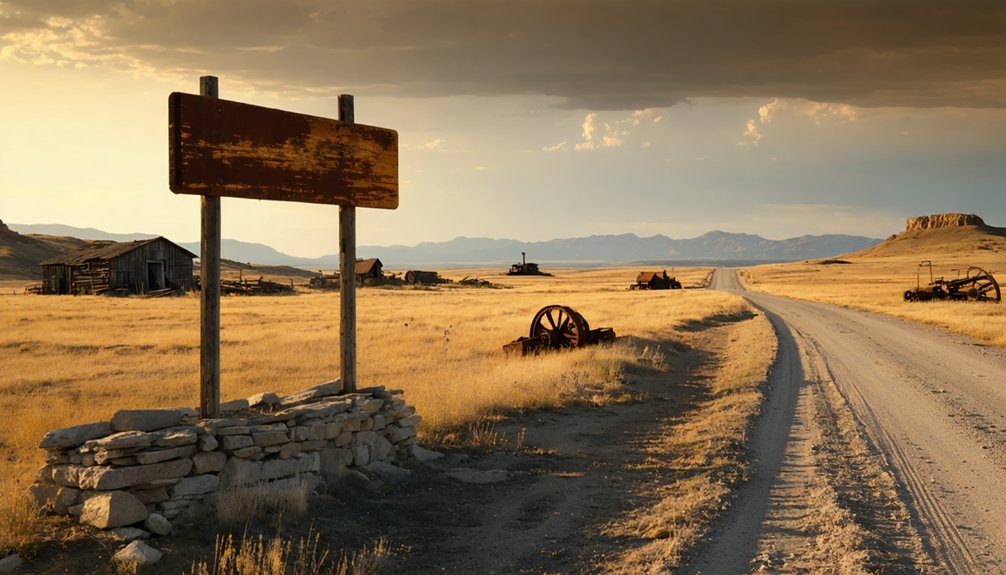
Cyanide rewards the curious, but it’s the surrounding Black Hills that transform a single stop into a full ghost-town circuit worth planning around.
Layer your route with stops at Mystic, Astoria, Trojan, Maitland Two Bit, Golden West, and Myersville for a sweep of Historic Attractions spanning the region’s mining era. Each site adds texture — collapsed structures, ore bins, silent foundations — that deepens the story Cyanide starts.
Thread these stops along Forest Service roads and gravel corridors for Scenic Drives that match the history mile for mile. Spearfish Canyon and Lead offer stronger interpretive context when you’re ready for pavement.
Use Hill City as your base, fuel up, map your loop, and move freely through terrain that still carries the weight of its past.
Why Hill City Is the Right Base for This Road Trip
Every ghost-town loop needs an anchor, and Hill City earns that role without much argument.
Sitting near the heart of the Black Hills, it puts you within striking distance of Cyanide, Mystic, and the wider Ragged Top District without burning your morning on a long drive. You’ll find food, fuel, and lodging here before heading out on the scenic routes that thread through forested terrain toward the old mining sites.
Hill City is small enough to feel unhurried yet stocked with what you actually need. Leave early, follow the gravel corridors north, and you’ve got a full day of exploration ahead.
When you return, the town’s ready for you — no ceremony, just a clean, practical base for chasing Black Hills history.
Frequently Asked Questions
What Time of Year Is Best for Visiting Cyanide Ghost Town?
You’ll find summer offers the best seasonal weather for exploring Cyanide’s rugged terrain. Follow these travel tips: avoid winter’s harsh snowfall, embrace warm months for clear roads, and enjoy the Black Hills’ breathtaking freedom fully.
Are Guided Ghost Town Tours Available in the Black Hills Region?
You’ll find guided tours highlighting the historical significance of Black Hills ghost towns through local outfitters and historical societies. These experiences let you explore freely while uncovering Cyanide’s fascinating mining past with knowledgeable guides leading the way.
Can You Camp Overnight Near the Cyanide Ghost Town Site?
Like a tent staked into open sky, you can camp near Cyanide on Black Hills Forest Service land, but check camping regulations first. Nearby attractions like Mystic trail make your overnight stay unforgettable.
Is the Cyanide Site Accessible to Visitors With Mobility Limitations?
The Cyanide site lacks accessibility features for mobility options — rough terrain, uneven ground, and remote trails make it challenging. You’ll find the scenic drives rewarding, but extensive on-site exploration isn’t practical if mobility’s a concern.
How Long Does a Typical Visit to Cyanide Ghost Town Take?
Like Brigadoon appearing briefly from the mist, you’ll explore Cyanide history and local legends in roughly one to two hours, letting you soak up the atmosphere, photograph ruins, and move freely on your ghost-town adventure.
References
- https://historynet.com/ghost-towns-mystic-south-dakota/
- https://en.wikipedia.org/wiki/List_of_ghost_towns_in_South_Dakota
- https://www.youtube.com/watch?v=jmSADvq4Lek
- https://www.aol.com/articles/south-dakotas-once-thriving-prairie-100000284.html
- https://www.powderhouselodge.com/black-hills-attractions/fun-attractions/ghost-towns-of-western-south-dakota/?2021_TAG
- https://www.islands.com/2004885/abandoned-ghost-village-border-south-dakota-nebraska-ardmore/
- https://www.sdpb.org/rural-life-and-history/2023-08-21/some-black-hills-ghost-towns-and-their-origins
- https://www.facebook.com/groups/SouthDakotaBeautiful/posts/1699734601205384/
- https://www.tripadvisor.com/Attraction_Review-g54538-d1111483-Reviews-Cowboy_Ghost_Town-Buffalo_Ridge_South_Dakota.html
- https://www.youtube.com/watch?v=4SzYNTLnvFA