Wanborough, Illinois was founded in 1818 and abandoned by 1840, leaving nothing but a quiet cemetery two miles west of Albion. You’ll want to visit in spring or fall when the roads are passable and the landscape is at its best. Pack sturdy shoes, water, and insect repellent before heading out. Combine your stop with Albion’s historic landmarks and nearby ghost towns like Vishnu Springs for a fuller picture of what this vanished corner of Illinois once looked like.
Key Takeaways
- Wanborough, Illinois, founded in 1818 by Morris Birkbeck, is now a ghost town with only its cemetery remaining as a historical landmark.
- The site is located approximately two miles west of Albion, Illinois, accessible via county roads with coordinates 38°22′43″N, 88°05′30″W.
- Spring and fall are the best seasons to visit, offering mild temperatures and manageable road conditions for exploration.
- Pack sturdy shoes, water, insect repellent, sunscreen, and a charged phone, as the area has limited amenities and coverage.
- Nearby attractions include the Edwards County Courthouse, Albion Museums, and neighboring ghost towns like Vishnu Springs and Weston.
What Was Wanborough, Illinois?
Nestled about two miles west of Albion in Edwards County, Illinois, Wanborough was a short-lived English settler town founded in August 1818 by Morris Birkbeck.
Named after Wanborough in England, it was built with bold intentions — a commercial hub for English settlers carving out a new life on the American frontier.
Named after its English counterpart, Wanborough was built as a bold commercial beacon for frontier-bound settlers.
Wanborough history reflects that pioneering spirit clearly: the town featured two taverns, two stores, a grist mill, a pottery shop, a blacksmith, and even one of Illinois’s earliest breweries.
It wasn’t just a settlement; it was a vision of self-sufficient freedom.
But competition from nearby Albion and Birkbeck’s drowning death in 1825 shattered that vision.
What’s Left to See at the Wanborough Ghost Town Site Today?
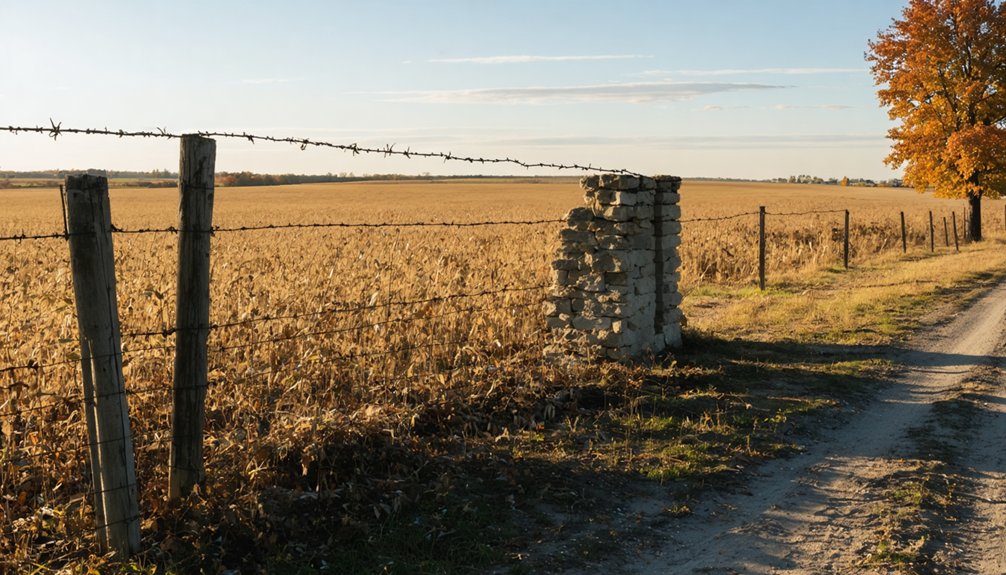
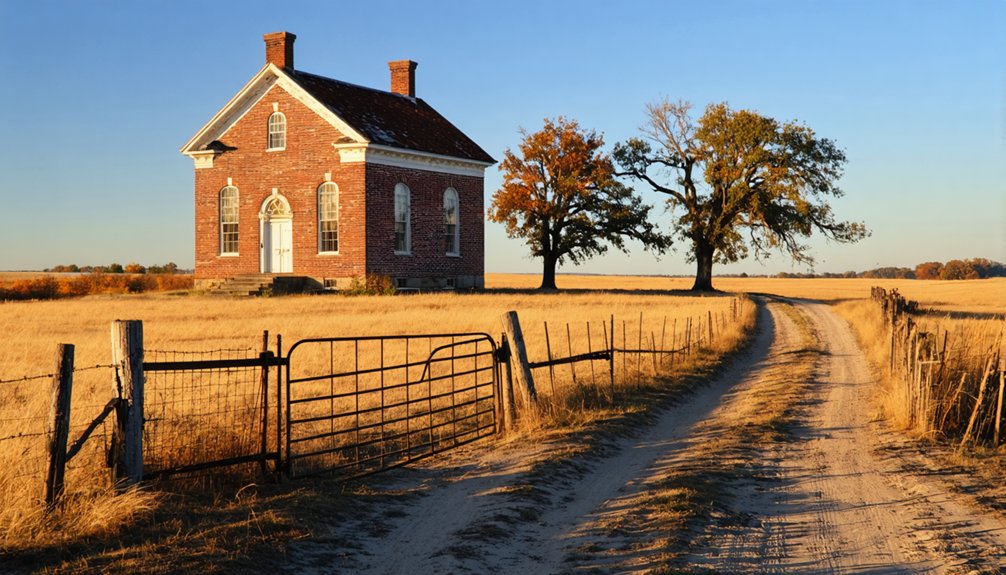
When you arrive at the former Wanborough site today, you won’t find a preserved downtown or any standing structures from the original settlement.
The Wanborough Cemetery is the only tangible landmark that survives, offering a quiet, grounded connection to the people who once built their lives here.
Illinois ghost-town listings formally recognize Wanborough’s vanished status, making it a legitimate stop on any self-guided tour of the state’s forgotten places.
Wanborough Cemetery Remains
Today, only one landmark remains of what was once a bustling frontier town: the Wanborough Cemetery. It stands as the sole surviving piece of cemetery history connecting you to Morris Birkbeck’s ambitious 1818 settlement.
When you visit, you’ll walk among grave markers that quietly tell the story of English immigrants who believed they could build something extraordinary on the Illinois frontier. These stones represent real people who crossed an ocean chasing a freer, better life.
The town they built is gone — swallowed by time, competition, and loss — but the cemetery holds its ground. It’s a small site, so you won’t need much time here, but the weight of what happened in this place will stay with you long after you leave.
No Town Center Exists
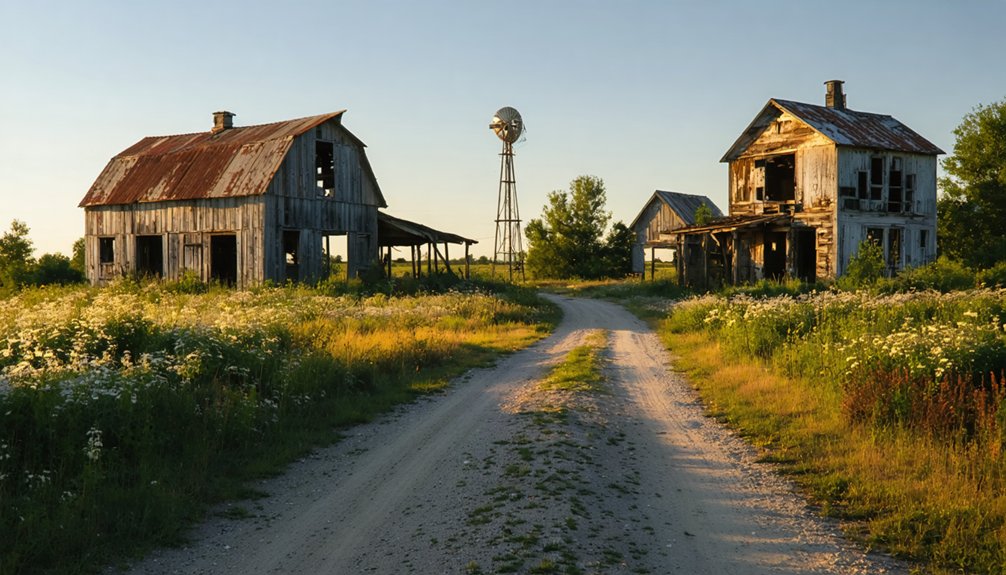
Unlike many ghost towns that preserve at least a crumbling storefront or a weathered foundation, Wanborough offers no standing structures from its frontier days.
The town layout that once included taverns, a grist mill, stores, a pottery shop, and even one of Illinois’s earliest breweries has completely vanished beneath open countryside.
You won’t find interpretive signage marking where merchants once traded or where settlers gathered.
What remains is simply land, quiet and unmarked.
Yet that absence doesn’t erase Wanborough’s historical significance as Morris Birkbeck’s ambitious commercial vision for English Prairie settlers.
You’re fundamentally standing inside an invisible town, which carries its own eerie power.
Bring your imagination, because that’s your primary tool for experiencing this site.
Ghost Town Recognition Status
Although Wanborough has vanished from the physical landscape, it holds a recognized place on Illinois ghost-town listings, which validates the site’s historical significance and gives history-minded travelers a legitimate reason to seek it out.
That recognition matters when you’re planning a self-guided drive, because it confirms you’re not chasing a rumor — you’re visiting a documented piece of frontier history.
Illinois ghost town registries acknowledge Wanborough’s brief but meaningful existence, connecting it to a broader network of vanished settlements worth exploring across the state.
Knowing the site carries official recognition lets you frame your visit with confidence and purpose. You’re not just stopping at an empty field; you’re standing where Morris Birkbeck once envisioned a thriving English community on the American frontier.
How Wanborough Rose and Fell in Just 22 Years
When you look into Wanborough’s brief history, you’ll find that Morris Birkbeck launched the town in August 1818 with a bold vision of building a thriving commercial hub for English immigrants on the Illinois frontier.
Nearby Albion, however, quickly pulled settlers and trade away, draining the life from Wanborough before it could take hold.
Birkbeck’s Bold Prairie Vision
Few frontier dreamers matched the ambition of Morris Birkbeck, the English reformer who platted Wanborough in August 1818 as the commercial heart of his bold “English Prairie” experiment on the Illinois frontier.
Birkbeck’s ambitions reflected a pioneering spirit that valued independence, community, and self-determination far from European constraints. He envisioned a thriving settlement where English immigrants could build lives on their own terms.
His vision produced a surprisingly robust early town featuring:
- Two taverns and two general stores serving settlers
- A grist mill, pottery shop, and blacksmith workshop
- One of Illinois’s earliest breweries
You can still feel the weight of that vision today, knowing Birkbeck staked everything on this Illinois prairie and nearly pulled it off.
Albion’s Competing Commercial Pull
Birkbeck’s vision had real momentum, but it ran straight into a practical problem just two miles east: Albion. That town grew faster, attracted more early settlers, and offered stronger infrastructure. The commercial rivalry was uneven from the start. Albion had better road connections and a more established merchant base, giving newcomers a practical reason to bypass Wanborough entirely.
You can imagine the slow bleed — taverns losing customers, the grist mill grinding less grain, the brewery producing for a shrinking crowd.
When Birkbeck drowned in 1825, Wanborough lost its driving force. Without his energy, the settlement drifted. By 1840, it was effectively gone, absorbed by the surrounding landscape.
Albion won the commerce. Wanborough kept only its cemetery.
Abandoned By 1840
Twenty-two years is all Wanborough got. From 1818 to roughly 1840, this frontier experiment burned bright, then quietly vanished. Settlement challenges stacked up fast, and pioneer dreams crumbled under real-world pressure.
Here’s how the collapse unfolded:
- 1818 – Morris Birkbeck founds Wanborough with bold ambitions for an English commercial hub.
- 1825 – Birkbeck drowns, stripping the settlement of its driving force and vision.
- ~1840 – Residents abandon Wanborough entirely as Albion absorbs the region’s trade.
When you visit today, you won’t find ruins or preserved storefronts. You’ll find silence.
That silence tells the story better than any historical marker could. Wanborough didn’t survive, but its arc — fast rise, faster fall — makes it worth tracking down.
How to Get to Wanborough, Illinois From Albion
Reaching Wanborough from Albion takes only a few minutes, as the ghost town‘s remnants sit roughly 2 miles to the west along county roads. You won’t find paved tourist corridors or marked ghost town attractions here — just open Illinois countryside leading you toward a quietly fading piece of history.
Follow the county road west out of Albion, and you’ll arrive near the coordinates 38°22′43″N, 88°05′30″W. One of the best road trip tips for this stop is to treat it as a flexible detour rather than a destination requiring heavy planning.
The Wanborough Cemetery serves as your primary landmark since no town center survived. Park, walk the grounds briefly, and let the silence tell the story abandoned settlements always leave behind.
Albion Landmarks Worth Combining With a Wanborough Stop

Once you’ve walked Wanborough Cemetery and soaked in the quiet of that vanished settlement, Albion’s own history makes a natural next stop just 2 miles east.
The town rewards curious travelers who want context beyond a cemetery visit.
Three Albion landmarks worth your time:
- Edwards County Courthouse – A striking piece of historic architecture anchoring the town square since the 1800s.
- Albion museums – Local collections preserving English Settlement artifacts and regional pioneer stories.
- Downtown Albion’s historic streetscape – Walk blocks where early English immigrants built their commercial lives.
Pairing these stops with Wanborough stretches your drive into a fuller picture of why this corner of Illinois once attracted reform-minded settlers chasing a better frontier life.
Weston, Brownsville, and Vishnu Springs: Ghost Towns Near Wanborough
If Wanborough has sparked your appetite for vanished Illinois, three more ghost towns within reasonable driving distance deserve a spot on your itinerary: Weston, Brownsville, and Vishnu Springs.
Each site deepens your ghost town explorations with its own layer of rural history. Weston and Brownsville share Wanborough’s familiar story — once-active communities that simply faded as neighboring towns absorbed their populations and commerce.
Each ghost town carries its own quiet history — communities that faded as neighboring towns absorbed what they left behind.
Vishnu Springs adds a more dramatic chapter, having once operated as a resort destination before falling silent. You won’t find bustling downtowns at any of these stops, but that absence is precisely the point.
These quiet, forgotten places reward curious travelers who prefer honest, unpolished history over reconstructed tourist attractions. String them together for a genuinely memorable self-guided drive through Illinois’s erased past.
When’s the Best Time to Drive Through Edwards County?

When you drive through Edwards County matters more than you might expect. Choosing the best season sharpens the entire experience, so factor in weather considerations before you roll out.
- Spring (April–May): Mild temperatures and green landscapes make cemetery visits comfortable and roads easy to navigate.
- Fall (September–October): Crisp air and turning leaves create a naturally atmospheric backdrop for ghost-town exploring.
- Winter (December–February): Cold, muddy county roads can limit access to rural sites like Wanborough Cemetery.
Summer works but brings humidity and heat that drain your energy fast.
Your best windows are spring and fall, when conditions stay manageable and the rural Edwards County scenery actually rewards slowing down.
Plan accordingly, and you’ll get the most from every stop.
What to Pack for a Wanborough Cemetery Visit and Rural Drive
A few key items separate a smooth rural cemetery visit from an uncomfortable one. Pack sturdy walking shoes since the ground around Wanborough Cemetery can be uneven and overgrown.
Bring water, sunscreen, and insect repellent because Edwards County’s rural roads offer little shade or shelter. Your packing essentials should also include a fully charged phone for navigation, since cell coverage thins out quickly on county roads.
Respect cemetery etiquette by keeping noise low, staying on established paths, and never touching or moving any markers. A small notebook helps you record historical details you’ll want to remember later.
If you’re driving other ghost-town stops the same day, pack snacks and a paper map as a backup. Freedom out here means being genuinely self-sufficient.
Frequently Asked Questions
Is Wanborough Cemetery Open to the Public Year-Round?
You’ll find Wanborough Cemetery’s regulations typically allow year-round public access, letting you shape your own visitor experiences. Explore this quiet, historic landmark freely, connecting with Illinois’s vanished past on your own adventurous schedule.
Are There Any Guided Tours Available for the Wanborough Site?
You won’t find formal guided tour options at Wanborough, but don’t let that stop you! You can explore its historical significance independently, uncovering stories of this vanished English settlement at your own adventurous pace.
Can You Access the Wanborough Site by Non-Motorized Transport?
Ironically, you don’t need a car to chase this ghost! You can reach Wanborough via county roads using bicycle routes or hiking trails, letting you freely explore this forgotten slice of Illinois history.
Is the Wanborough Cemetery Maintained by a Local Organization?
The knowledge doesn’t confirm a specific local organization maintains the cemetery, but you’ll find cemetery history preserved there. Local legends live on through this quiet landmark, so explore it freely and uncover Wanborough’s haunting, untamed past yourself!
Are There Any Historical Markers Specifically Dedicated to Wanborough?
Like whispers fading into the prairie wind, Wanborough’s historical significance lives mostly in ghost town legends. You won’t find dedicated historical markers there, but the cemetery silently tells its story for those who seek it.
References
- https://www.newsbreak.com/a-z-animals-1693032/3052374541798-8-abandoned-and-forgotten-ghost-towns-in-illinois
- https://www.onlyinyourstate.com/trip-ideas/illinois/ghost-towns-il
- https://www.youtube.com/watch?v=X-k9IxjPWqc
- https://en.wikipedia.org/wiki/Wanborough
- https://drloihjournal.blogspot.com/2022/04/lost-towns-of-illinois-village-of-wanborough-illinois.html
- https://en.wikipedia.org/wiki/Category:Ghost_towns_in_Illinois
- https://www.facebook.com/EdwardsCountyHistory/posts/the-english-settlement-established-by-morris-birkbeck-and-george-flower-in-1817-/1308776758111727/
- https://www.findagrave.com/cemetery/108743/wanborough-cemetery
- https://en.wikipedia.org/wiki/List_of_ghost_towns_in_Illinois
- https://www.instagram.com/reel/DYP-FfJiE-t/