You’ll find Dawson, Oklahoma not on any current map, but in the weathered facades of old buildings and the quiet stretch of Dawson Avenue, where a coal town of 3,500 people once hummed with life before Tulsa swallowed it whole in 1949. Start your visit early, bring water, and leave room for nearby ghost towns like Ingalls and Prue. There’s far more history buried in these streets than first meets the eye.
Key Takeaways
- Dawson, located five miles northeast of Tulsa, was a coal mining town that peaked at 3,500 residents before becoming a ghost town.
- The town was absorbed by Tulsa in 1949, closing its post office and erasing its independent municipal identity.
- Key remnants include aged commercial buildings, auto shops, a cemetery, and the historically significant Dawson Avenue.
- Visit in the morning for the best photography, and budget four to six hours for thorough exploration.
- Combine your trip with nearby ghost towns like Ingalls and Prue, plus Tulsa attractions like the Greenwood District.
How Coal Mining Put Dawson, Oklahoma on the Map
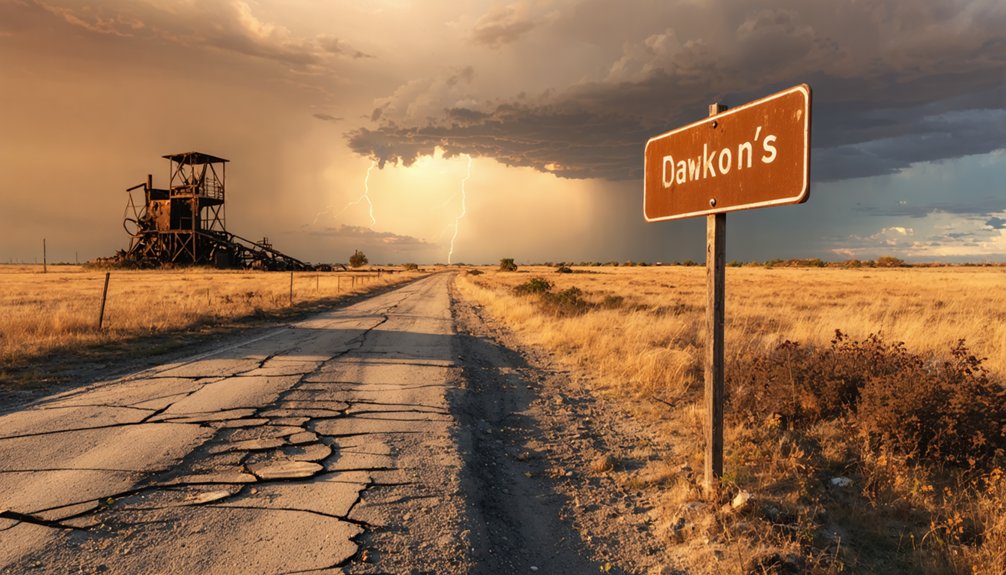
Tucked five miles northeast of downtown Tulsa, Dawson, Oklahoma built its identity on coal.
When miners swung their picks into the earth around the turn of the 20th century, they weren’t just extracting fuel — they were laying the foundation for an entire community.
Coal mining drew workers, families, and ambition to this patch of northeastern Oklahoma, transforming raw land into a functioning town complete with schools, banks, retail stores, and a jail.
How Dawson Grew Into a Town of 3,500 People
As coal demand surged, so did Dawson’s population. By 1923, you’d have found a thriving incorporated town stretching across 2.5 square miles.
The mines drew workers and their families, filling neighborhoods, storefronts, a bank, a school, and even a jail—every institution a growing community needed.
At its peak, 3,500 residents called Dawson home, transforming what began as an industrial outpost into a fully realized Oklahoma town.
Coal Mining Drives Growth
Coal mining didn’t just fuel Dawson’s economy — it built the town from the ground up. Every structure, every street, every business existed because coal kept the engines running. You can almost hear the pickaxes ringing when you walk the old routes today.
Coal mining shaped Dawson’s community identity through four defining contributions:
- Attracted settlers seeking steady wages and independence
- Funded schools, banks, and retail stores townspeople relied on daily
- Established infrastructure that transformed scattered settlers into neighbors
- Created lasting community identity that survived even after the mines quieted
Town Incorporation and Expansion
By 1923, all that coal-driven momentum had built something worth making official — Dawson incorporated as a town, spreading across 2.5 square miles with 3,500 residents calling it home.
That’s a real community: neighbors with shared streets, a school, a bank, a jail, and stores stocked for everyday life.
You can almost picture it — a self-sufficient town with its own town identity, independent and grounded in honest work. People weren’t just living there; they were building something that belonged to them.
That sense of ownership mattered, especially since urban absorption into Tulsa would eventually arrive in 1949.
But before that happened, Dawson stood on its own terms — a legitimate municipality shaped by the people who chose to stay and invest in it.
How Dawson Became Part of Tulsa in 1949
Though Dawson once thrived as its own incorporated municipality with 3,500 residents and a bustling coal-driven economy, the town’s independent identity quietly dissolved in 1949 when Tulsa absorbed it through annexation. This urban absorption reshaped everything residents once called their own.
Here’s what changed:
- The post office closed October 31, 1949
- Dawson’s municipal boundaries merged into Tulsa’s city limits
- Streets were redesignated, with Dawson Avenue replacing the town’s original identity
- Local governance transferred entirely to Tulsa’s administration
Yet the Dawson Legacy refuses complete erasure. You can still feel its presence along historic routes where scattered structures and a cemetery quietly resist time.
Dawson’s story mirrors countless Oklahoma towns—communities that once stood free, then surrendered their independence to inevitable urban expansion.
What’s Left of Dawson, Oklahoma Today?
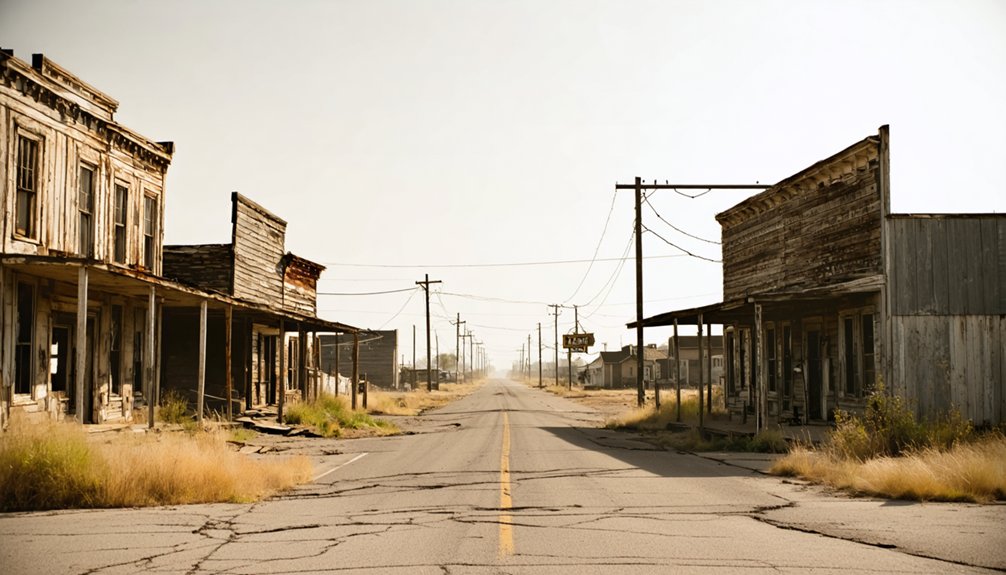
Despite Tulsa’s decades-long absorption, Dawson’s ghost still lingers if you know where to look. Drive along Dawson Avenue and you’ll feel the community identity that refused to dissolve into the city’s expanding grid.
Dawson’s ghost lingers still — a community identity that refused to dissolve into Tulsa’s ever-expanding grid.
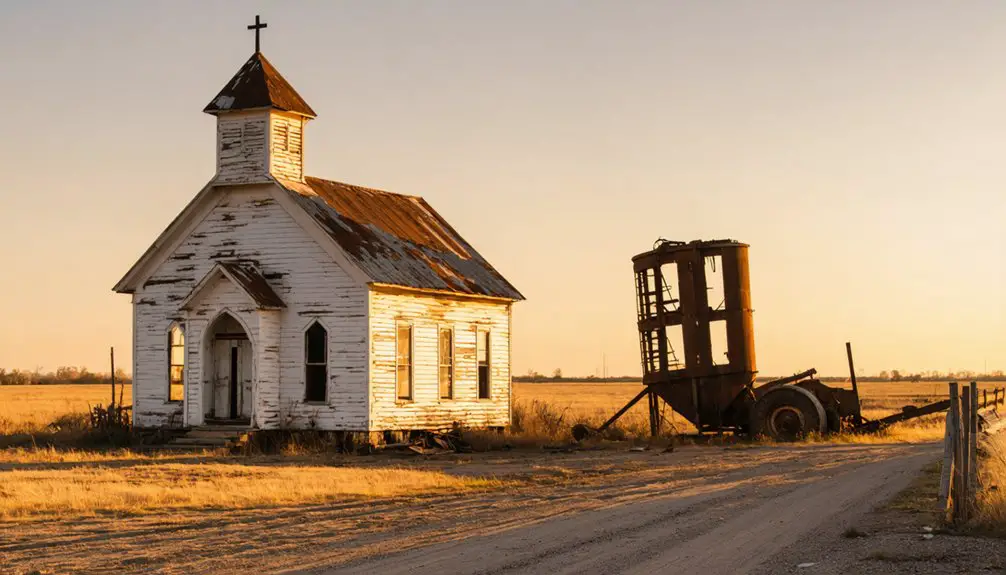
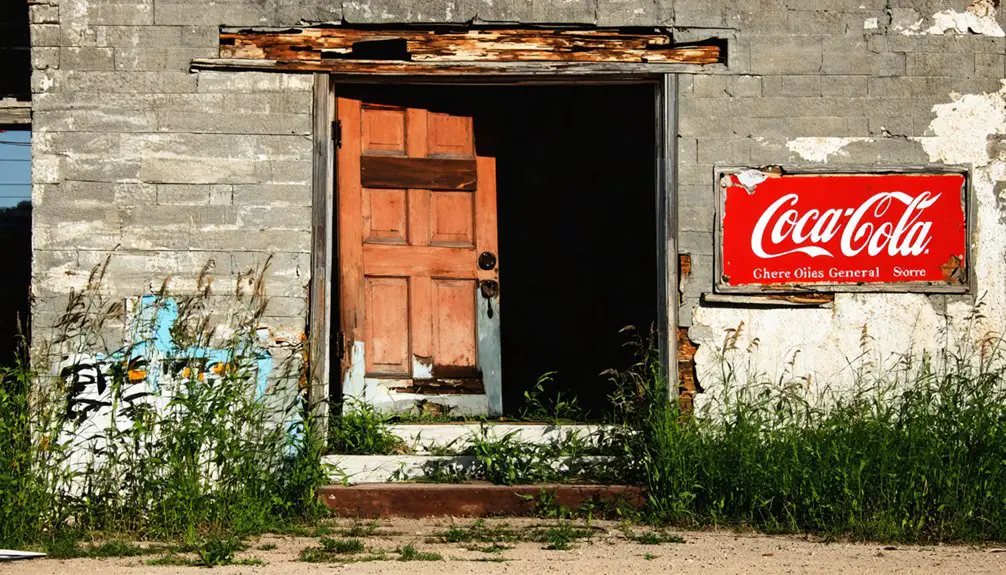
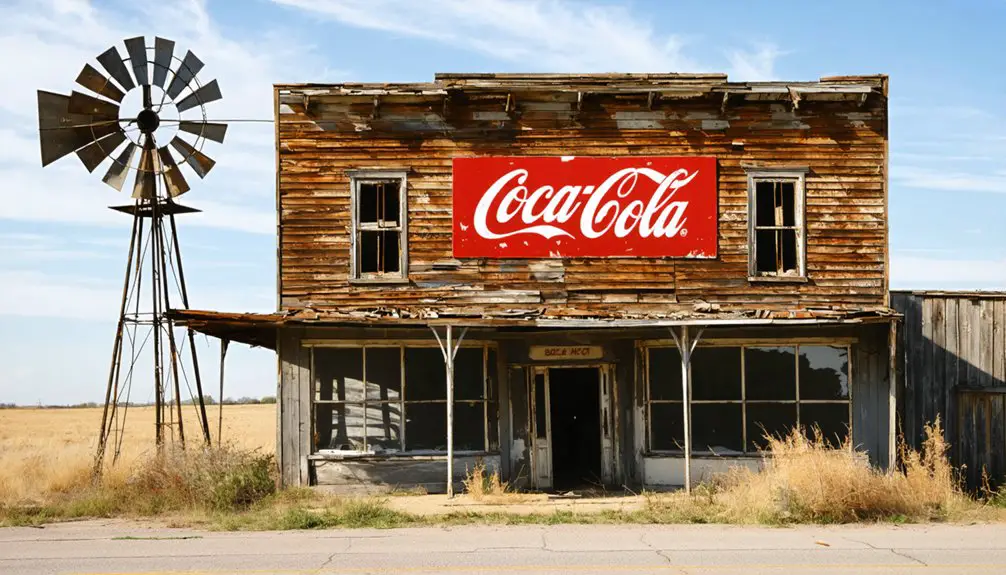
The Dawson remnants aren’t dramatic — no crumbling courthouse or hollow saloon — but they speak quietly through scattered structures, aged commercial buildings, and the occasional auto shop still serving locals who’ve never stopped calling this place home.
A cemetery anchors the area’s memory, offering tangible proof that real lives unfolded here. Streets laid down over a century ago still carry your tires forward.
Bring your curiosity, keep your eyes open, and you’ll find that Dawson rewards the traveler willing to look beyond Tulsa’s modern surface.
Where Exactly Is Dawson Located?
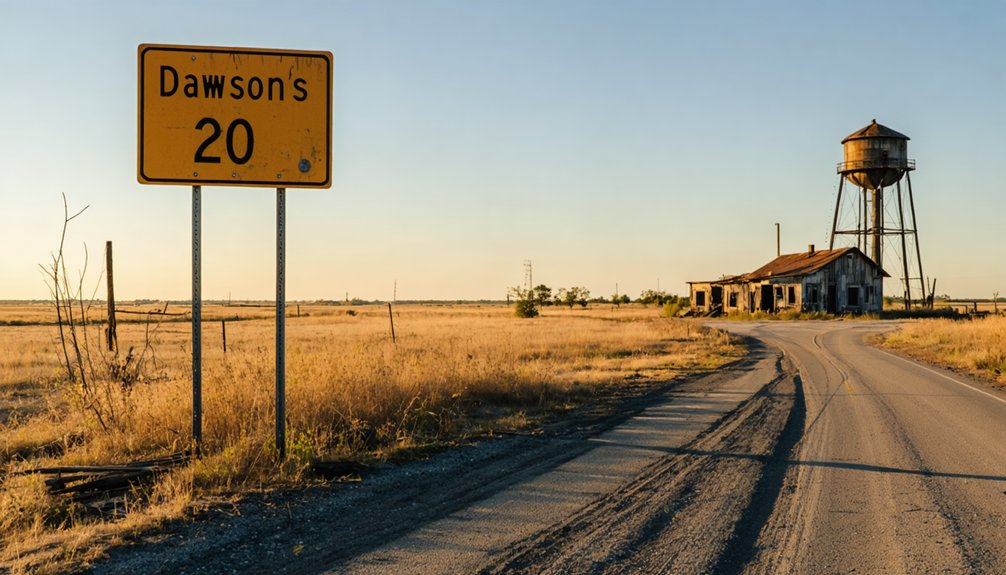
Five miles northeast of downtown Tulsa, Dawson sits tucked between Yale and Sheridan near Apache Street, just north of Pine and Dawson Road — the same corridor that locals still call East Tecumseh Street.
Understanding Dawson’s boundaries helps you appreciate its historical significance before you arrive:
- Northern edge runs along North Sheridan Road
- Southern boundary follows East 33rd Street
- Zip code 74115 anchors your navigation
- Dawson Avenue remains the community’s surviving spine
You’re not just driving through a forgotten neighborhood — you’re tracing the outline of a once-thriving coal town that housed 3,500 residents across 2.5 square miles.
The street grid still whispers those old boundary lines. Pull up a map, orient yourself, and let the landscape tell you what the history books started.
How to Get to Dawson From Downtown Tulsa
Getting to Dawson takes you just five miles northeast of downtown Tulsa — a short drive that crosses the invisible threshold between modern city and layered history.
Head northeast toward Yale or Sheridan, keeping Pine Street and Dawson Road as your southern compass points. East Tecumseh Street carries the old name of Dawson Road, a quiet nod to community heritage hiding in plain sight.
Pine Street and Dawson Road anchor your southern bearing as East Tecumseh Street quietly preserves a name the neighborhood never forgot.
You’ll recognize the shift when the urban grid softens around North Sheridan Road and East 33rd Street.
The Dawson landmarks won’t announce themselves with signage or fanfare — they reveal themselves gradually through scattered structures, aged storefronts, and the unmistakable feeling that something significant once happened here.
Your two-wheel drive handles the terrain easily, leaving you free to simply look, wander, and absorb.
Best Time to Visit Dawson
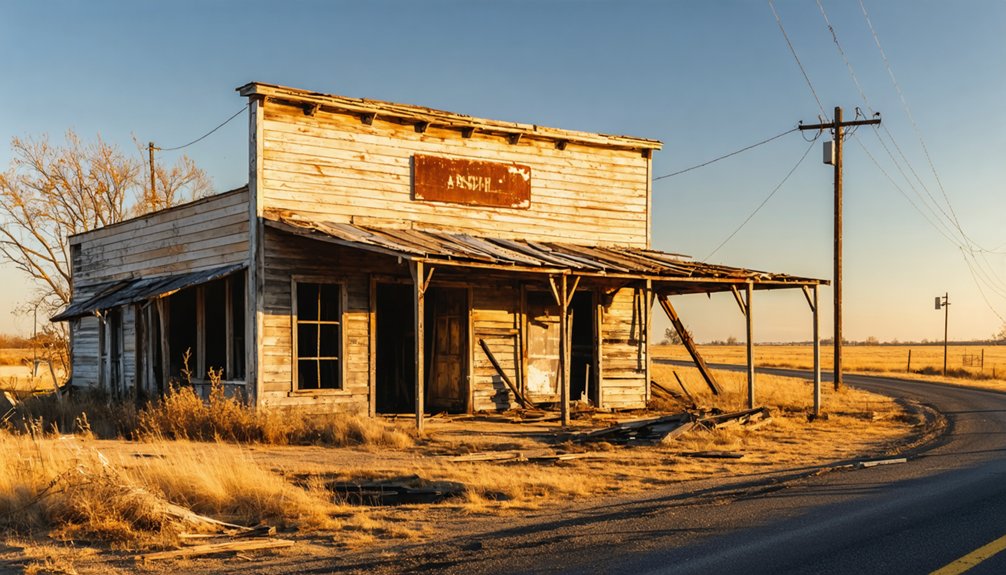
Dawson welcomes visitors at any hour and in any season, but the quality of your experience shifts with the light.
The best seasons for ghost town exploration each offer something distinct:
- Spring – Soft light filters through budding trees, softening Dawson’s weathered remnants into something almost tender.
- Summer – Long daylight hours let you linger, tracing old boundaries between Yale and Sheridan without rushing.
- Fall – Cooling air and golden tones make abandoned structures feel cinematic and alive with memory.
- Winter – Stripped-bare landscapes reveal structural bones normally hidden by vegetation.
Watch for local events tied to Tulsa’s historic neighborhoods, which occasionally spotlight Dawson’s coal mining roots.
Arrive at dawn if you can. The quiet belongs entirely to you then.
What You Can Still See in Dawson Today
Once you’ve chosen your moment to arrive, the question becomes what, exactly, you’re arriving to see. Dawson doesn’t announce itself dramatically — it whispers.
You’ll navigate streets that once bustled with miners and merchants, now absorbed quietly into Tulsa’s grid. Dawson Avenue itself traces the town’s original bones.
Look for abandoned structures along the historic route — weathered remnants that refused to surrender completely to time. Auto shops and scattered commercial buildings occupy spaces where a bank and general store once served 3,500 residents.
Historical signage connects present streets to their deeper past.
The nearby cemetery grounds you in something real and irreplaceable. Here, Dawson’s identity survives municipal absorption — a community that existed independently, lived fully, and left enough behind for wanderers like you to find.
Ghost Towns Within an Hour of Tulsa
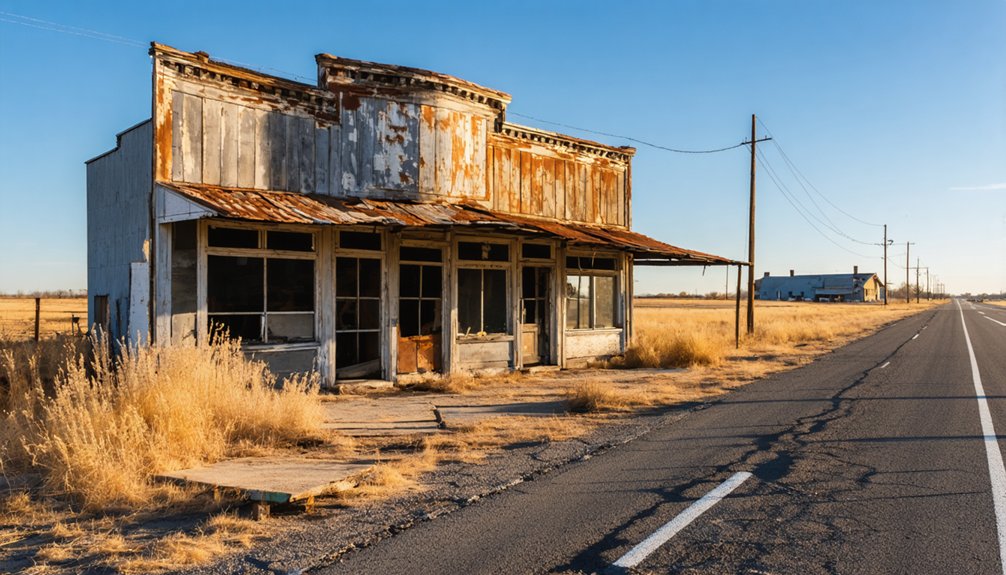
If Dawson’s weathered streets leave you hungry for more, you’re in luck — Oklahoma’s ghost town landscape stretches across the region within an hour’s drive of Tulsa.
Towns like Prue, Avant, and Haskell each carry their own faded histories, from oil boom collapses to railroad abandonments that quietly emptied once-thriving main streets.
Pack a full tank, a paper map, and a camera, because stringing these stops together into a single day trip rewards you with a richer picture of how Oklahoma’s past keeps surfacing through the present.
Nearby Historic Ghost Towns
While Dawson is a fascinating stop, it’s just one piece of Oklahoma’s rich ghost town tapestry — and within an hour’s drive of Tulsa, you’ll find several more forgotten communities waiting to be explored.
Each offers distinct ghost town experiences packed with historical significance:
- Ingalls — Once a notorious outlaw hideout during the 1890s, it witnessed the infamous Battle of Ingalls.
- Prue — A quiet Creek Nation settlement swallowed by time and shifting economies.
- Osage — A former oil boom community that rose and fell with the petroleum industry.
- Tatum — A small agricultural town abandoned when railroads bypassed its borders.
Pack your map, fuel your tank, and let Oklahoma’s forgotten roads pull you deeper into history.
Day Trip Planning Tips
Planning a ghost town day trip around Tulsa rewards you with layers of history — but only if you’re strategic about it. Start early, filling your tank before leaving city limits, since services thin out quickly beyond Tulsa’s edges.
Pack water, a paper map, and a charged phone — technology fails where pavement ends.
Hit Dawson first while your energy’s fresh, tracing Dawson Avenue’s quiet remnants before crowds arrive. Then push outward, chasing local legends tied to coal camps and forgotten railheads.
Photograph historical landmarks during golden morning light rather than harsh midday sun.
Wear sturdy shoes, since two-wheel drive handles most terrain but walking reveals details asphalt hides.
Budget four to six hours total — Tulsa’s ghost town circuit rewards those who linger long enough to truly listen.
Tulsa Stops Worth Combining With a Dawson Visit
Since Dawson sits just minutes from Tulsa’s core, you’d be shortchanging yourself not to fold a few nearby stops into the day.
Pair your Dawson Heritage exploration with these Tulsa Attractions worth your time:
- Tulsa International Airport Observation Area – Watch jets roll past land once worked by coal miners.
- Greenwood District – Walk America’s most resilient comeback neighborhood, just miles away.
- Cain’s Ballroom – Let the honky-tonk floors remind you why Oklahoma never plays it quiet.
- Philbrook Museum of Art – Trade roadside dust for Italian Renaissance gardens inside a converted oil baron’s estate.
Each stop deepens the contrast between Dawson’s faded independence and Tulsa’s relentless reinvention, making the whole day feel earned rather than rushed.
Frequently Asked Questions
Is Dawson, Oklahoma Considered an Official Ghost Town?
While it’s not an official ghost town, you’ll find Dawson’s abandoned buildings and local legends whispering of a coal-mining past. Tulsa absorbed it in 1949, yet its nostalgic community spirit roams freely still.
Can Visitors Access the Dawson Cemetery During Exploration?
You can visit Dawson’s cemetery, where cemetery history whispers through scattered stones. Don’t be *that* tourist — visitor etiquette matters. Roam freely, but respect the souls who built this coal-dusted, forgotten corner of Oklahoma’s spirited past.
Are Guided Tours Available for Exploring Dawson’s Historic Remnants?
No guided tours are available, but you’ll freely wander Dawson’s streets, uncovering tourist attractions that echo its coal-mining past. Explore at your own pace, letting the historical significance of scattered remnants whisper forgotten stories directly to you.
What Zip Code Should GPS Navigation Use for Visiting Dawson?
Like Brigadoon rising from the mist, you’ll find Dawson’s ghost town myths and rich Dawson history at zip code 74115 — punch it in, hit the road, and let freedom guide you there.
Did Dawson Residents Resist Annexation Into the City of Tulsa?
The records don’t confirm whether Dawson residents resisted annexation, but you can feel the community’s fierce independence in its enduring Dawson history — even Tulsa government couldn’t erase the town’s proud, nostalgic spirit.
References
- https://www.youtube.com/watch?v=tkRD0xqeEvc
- https://dawsonpower.com/2020/10/ghost-towns-a-look-at-our-past/
- https://en.wikipedia.org/wiki/List_of_ghost_towns_in_Oklahoma
- https://www.ghosttowns.com/states/ok/dawson.html
- https://www.okhistory.org/publications/enc/entry?entry=GH002
- https://www.atlasobscura.com/places/dawson-ghost-town
- https://www.travelok.com/articles/oklahomaghosttowns
- https://www.youtube.com/watch?v=5XQUmVjjrZw
- https://www.youtube.com/watch?v=8o4cJVEXlOo
- https://en.wikipedia.org/wiki/Dawson