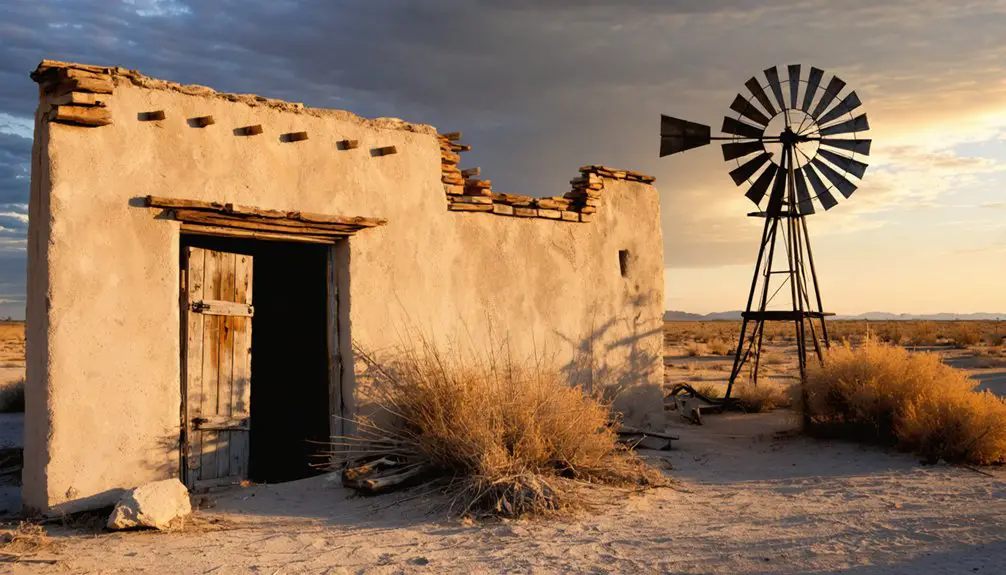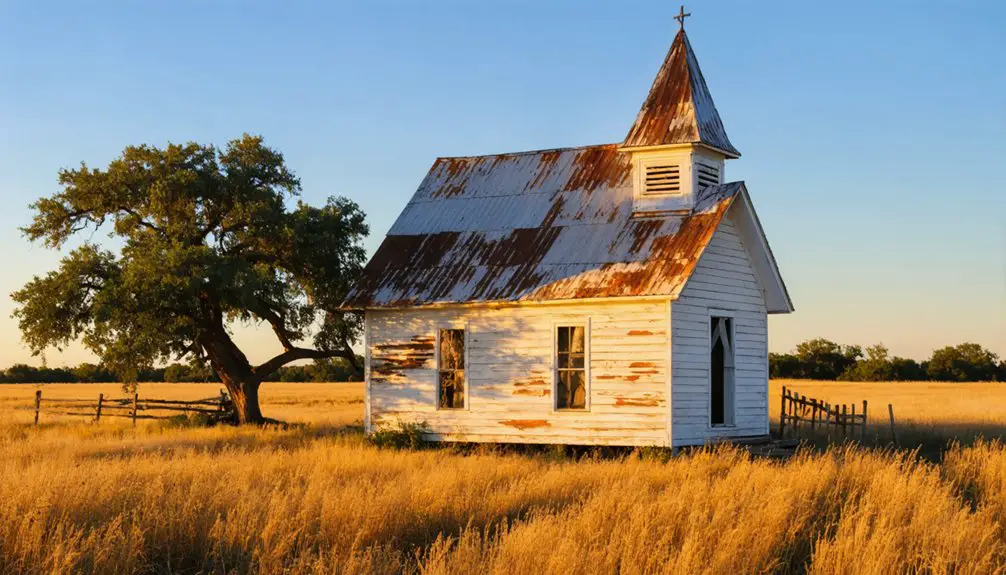
Drive 30 miles northwest from Austin on US 183 to Highway 29, where two weathered log cabins from the original Dodge City now stand at Fort Tumbleweed (16450 West Highway 29). You’ll find this preserved collection open Saturdays and Sundays only, no 4WD required. The actual town site rests beneath Lake Travis’s waters, drowned when the Colorado River was dammed. Unlike its Kansas namesake, Texas’s Dodge City offers authentic abandonment without staged gunfights—just genuine remnants of a lumber mill town that burned twice before vanishing forever beneath the reservoir.
Key Takeaways
- Two original Dodge City log cabins relocated to Fort Tumbleweed at 16450 West Highway 29 near Liberty Hill, open weekends only.
- Drive 30 miles northwest from Austin via US 183 to Highway 29; no four-wheel drive required for access.
- Original Dodge City submerged beneath Lake Travis; view underwater location using Google Earth for historical context.
- Visit year-round with no crowds or closures, though seasonal flooding may occur along reservoir edges.
- Expect authentic abandonment without tourist attractions—no staged gunfights, just genuine 1800s Texas structures and ghost-town solitude.
The History Behind Texas’s Forgotten Dodge City
Long before Lake Travis swallowed its foundations, Dodge City thrived along the Colorado River as a junction town where railroad tracks converged and lumber mills hummed with commerce. You’ll discover a settlement that peaked when the Trinity Valley Southern and ING Railroads intersected here from 1901 to 1936, feeding the old logging industry that defined this region. The town boasted hotels, drugstores, cotton gins, and a Masonic lodge—all the markers of frontier prosperity.
Then natural disaster impacts struck hard. Devastating fires in 1924 and 1925 nearly erased the town’s structures. When the Great Depression shuttered the lumber mills in 1936, Dodge City couldn’t recover. Today, only two relocated cabins at Fort Tumbleweed preserve what Lake Travis didn’t claim—a record, an evidence, a vestige of how quickly boom towns vanish.
What Remains at Fort Tumbleweed Today
Two weathered log cabins stand as silent witnesses at Fort Tumbleweed, the sole survivors of Dodge City’s complete erasure beneath Lake Travis’s waters. You’ll find them relocated to 16450 West HW 29 near Liberty Hill, where Len and Linda Kubiak’s collection development efforts have assembled a remarkable outdoor museum of 1800s Texas structures.
The centerpiece, Bryson Stage Coach Stop from 1850, anchors this primitive site shaded by sprawling trees. Their preservation methods focus on Republic of Texas-era buildings, creating an authentic glimpse into frontier life you can’t experience in sanitized museums.
You’re free to explore most weekends from 11:00 AM onward. Private tours run $10 per person, perfect for those seeking genuine Texas history without crowds or restrictions. The 2WD-accessible site welcomes your curiosity year-round.
Getting There: Directions and Road Conditions

From Austin, you’ll drive roughly 30 miles northwest on US 183, merging onto Highway 29 westbound toward Liberty Hill, where the pavement cuts through Hill Country terrain that once knew Comanche raids and settler desperation. Your destination—16450 West Highway 29—requires no 4WD, just weekend timing since Fort Tumbleweed opens Saturdays and Sundays only.
As you explore the area, be sure to check out some of the ghost town attractions in Texas that offer a glimpse into the state’s rich history. Old storefronts, vacant homes, and remnants of community centers tell stories of the past, providing a haunting backdrop for curious visitors. Each site has its own unique charm, making them worthwhile stops along your journey through the enchanting Hill Country.
GPS navigation challenges rarely surface on this well-marked route, though pinpointing the original Dodge City underwater requires Google Earth reconnaissance of Lake Travis‘s submerged banks. Seasonal weather patterns bring scorching summers that’ll test your resolve during midday exploration, so pack water. The highway hugs reservoir edges where flooding occasionally rewrites the landscape, reminding you why those stubborn settlers lost their cabins to progress and rising waters.
Best Times to Visit and What to Expect
Timing your arrival matters less at Dodge City, Texas—now just weathered cemeteries and ghost-whisper memories—than at its Kansas namesake, where Boot Hill Museum orchestrates summer spectacles that draw 100,000 visitors annually. Texas Dodge stays perpetually quiet, accessible year-round without crowds or closures. You’ll navigate pitted gravel roads regardless of season, finding remnants that don’t perform or charge admission.
Kansas Dodge demands strategic planning. Summer opens up gunfight reenactments, can-can lessons, and Long Branch Saloon shows—the frontier experience at full throttle. Off season museum access continues 362 days yearly, though without costumed interpreters.
Expect seasonal weather variations: April brings slate-grey skies and November chill across Central Plains terrain. For authentic ghost-town solitude, Texas beckons. For choreographed Wild West nostalgia, Kansas summer delivers.
How This Dodge City Differs From Its Famous Kansas Namesake
The Texas Dodge never wore six-guns or witnessed cattle drives thundering down Front Street. While Kansas built its legend on lawmen and saloons, this quiet Texas settlement emerged from different roots—agricultural dreams rather than frontier spectacle. You won’t find tourist-packed Boot Hill cemeteries or staged gunfights here. Instead, you’ll discover authentic abandonment shaped by changing economic fortunes that crushed small farming communities across the plains.
The cultural distinctions run deeper than geography. Kansas Dodge became America’s romanticized Wild West icon, preserved and commercialized for generations seeking adventure. Your Texas destination offers something rawer—unrestored buildings standing alone against endless sky, telling stories without interpretation centers or gift shops. This is freedom from orchestrated history, where you’ll walk through genuine remnants without crowds blocking your view of what time actually does to forgotten places.
Frequently Asked Questions
Are There Any Entrance Fees to Visit Fort Tumbleweed?
Fort Tumbleweed doesn’t charge standard entrance fees for casual exploration. You’ll pay $10 per person for historical tours during opening hours. The site accommodates varying visitor capacity, letting you roam freely through authentic Texas frontier history.
Can Visitors Explore Inside the Preserved Log Cabins?
You’ll step inside genuine 1830s frontier life—interior preservation maintains historical authenticity throughout both cabins. Weathered wooden walls, hand-hewn beams, and period details transport you back to Republic of Texas days when settlers carved freedom from wilderness.
Are Guided Tours Available at the Fort Tumbleweed Site?
Private guided tours aren’t specifically mentioned for Fort Tumbleweed. However, Liberty Hill’s historical site offers customized tours for small-to-medium tour group sizes at $10 per person, with flexible tour schedules you’ll appreciate for planning your independent adventure.
What Amenities Are Available for Visitors at the Location?
You’ll find self-guided walking tours with storyboards showcasing historical preservation efforts throughout town. The preservation of frontier architecture creates an authentic atmosphere where you’re free to explore Boot Hill Museum, saloons, and the historic cemetery at your own pace.
Are Pets Allowed at Fort Tumbleweed on Weekends?
No, Fort Tumbleweed doesn’t welcome pets during visiting hours, including weekends. Pet policies remain strict year-round at this historic site. You’ll need to explore this windswept ghost town solo, leaving your furry companions behind for the adventure.