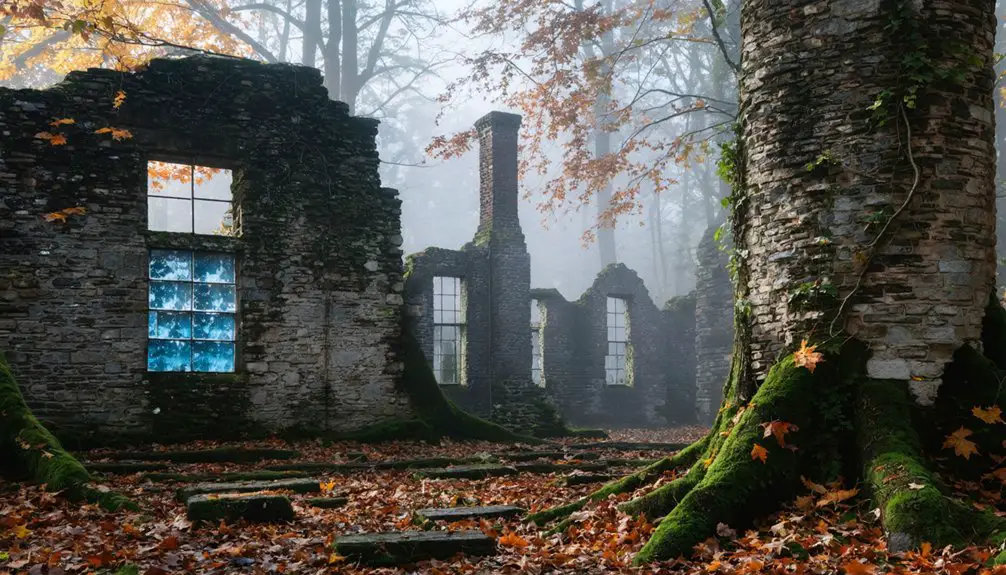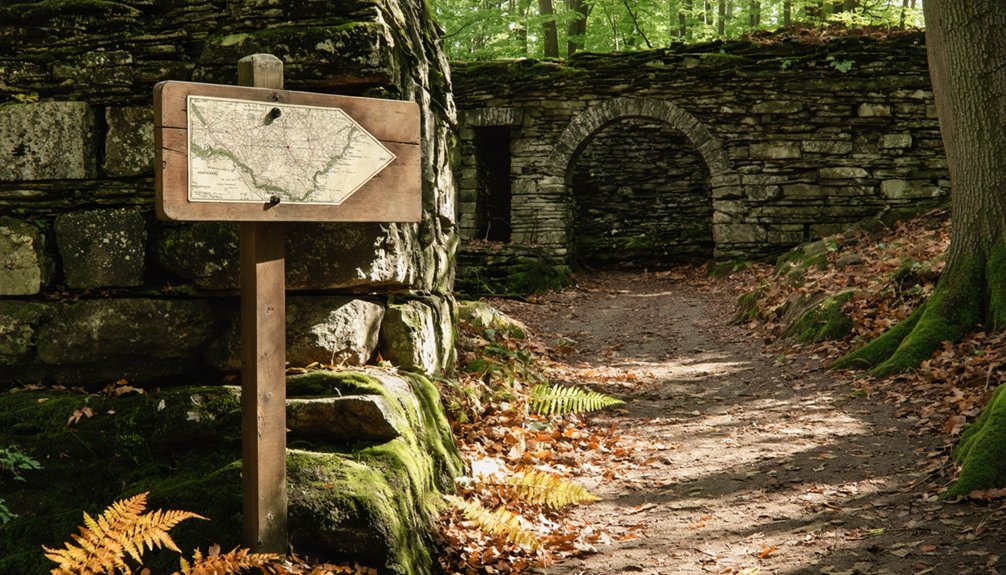
You’ll discover America’s most atmospheric ghost town just 40 miles north of Boston, where Dogtown’s 3,600 acres of wilderness await with abandoned cellar holes and mysterious carved boulders. From Route 128, take Blackburn Circle to Cherry Street, then follow Gee Avenue to the Historic Dogtown parking area—though GPS often fails here, so download AllTrails beforehand. Pack sturdy boots, water, and orange clothing for the rocky trails ranging from easy 2.5-mile loops to challenging 6.5-mile boulder hunts. The fascinating history behind those cryptic stone messages and supernatural legends will transform your hike into something unforgettable.
Key Takeaways
- Navigate to Historic Dogtown parking via Route 128 to Blackburn Circle, Cherry Street, then Gee Avenue; GPS often fails at unmarked entrances.
- Download AllTrails before departure since physical maps contain inconsistencies and trail markings are unreliable within the 3,600-acre commons.
- Explore the 2.5 to 4.2-mile Dogtown Woods Loop and discover 25 inspirational boulders carved during the Great Depression.
- Pack orange clothing, sturdy boots, plenty of water, and detailed maps for navigating the rocky New England terrain.
- Visit during spring or fall for optimal weather conditions while exploring cellar holes from America’s oldest abandoned settlement.
The Rise and Fall of America’s Oldest Ghost Town
Long before the term “ghost town” conjured images of abandoned Western mining camps, Dogtown earned its place as America’s oldest settlement to fall completely silent. You’ll discover a community that thrived for 150 years before Revolutionary War demographics triggered its downfall.
As seamen departed for battle, widows and wives remained behind. Wealthy families then migrated harborward, leaving freed Black Americans and resourceless women as final inhabitants. The environmental impact of abandonment transformed the landscape dramatically—wild dogs roamed freely through deserted streets, earning the settlement its infamous nickname.
Witches, Werewolves, and the Dark Legends of Dogtown
The desolate landscape that emerged from Dogtown’s abandonment became fertile ground for something darker than mere decay. By the early 1800s, impoverished women like Tammy Younger—the self-proclaimed Queen of Witches—survived through fortune telling practices and intimidation. She’d bewitch oxen on bridges until drivers paid tolls or surrendered food.
Her aunt Luce George cursed fishermen at Gloucester wharves, demanding portions of their catch. Peg Wasson allegedly shapeshifted into crows and hexed wood carts. These marginalized women weaponized superstition for survival, creating impacts on local economy through fear-based transactions.
Feral dogs roaming the ruins inspired werewolf tales, while the 1984 murder of a teacher convinced some that evil spirits still haunted these woods. You’re exploring where desperation bred darkness.
Roger Babson’s Inspirational Boulder Project
While witches and werewolves defined Dogtown’s mythic darkness, eccentric millionaire Roger Babson saw something entirely different in these abandoned woods—an opportunity for uplift. During the Great Depression, this MIT graduate who’d predicted the 1929 crash channeled his financial motivations toward charity, hiring 35 unemployed Finnish stonecutters to carve inspirational messaging into Dogtown’s glacial boulders.
You’ll discover 25 of these granite monuments along the 6.5-mile Babson Boulder Trail, each bearing mottos like “Never Try Never Win” and “Stay Out of Debt”—phrases Babson pulled from his personal self-help library. His family was mortified by the eccentric project, but today you’ll hike past these stone sermons standing defiant against nature’s reclamation, proof that one man’s unconventional vision created Dogtown’s most enduring legacy.
Exploring the Trails and Cellar Holes Today
Beyond Babson’s philosophical boulders, Dogtown’s 3,600 acres sprawl across Cape Ann with enough trail networks to satisfy everyone from casual Sunday strollers to serious mountain bikers. You’ll navigate dirt roads and forest paths past stone walls and cellar holes—ghostly remnants of the settlement’s 18th-century inhabitants.
The main Dogtown Woods Loop covers 2.5 to 4.2 miles with minimal elevation gain, making it accessible for families and dog-walking adventures. Trail conditions range from smooth gravel roads to rocky, root-strewn sections requiring sure footing.
Popular routes like Goose Cove Reservoir loop and Briar Swamp Loop deliver scenic viewpoints showcasing wildflowers and wildlife. Most trails earn easy ratings, though that rocky New England terrain keeps things interesting without demanding technical skills.
Getting There and What to Bring on Your Adventure
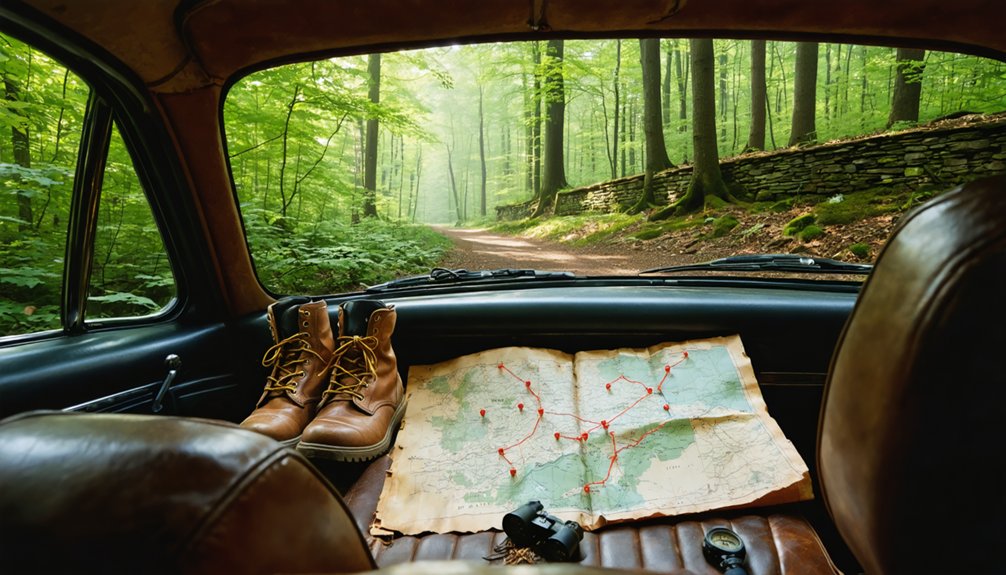
Reaching Dogtown requires patience and preparation since GPS navigation notoriously fails visitors who end up circling Cape Ann for hours searching for unmarked dirt road entrances. From Route 128, take Blackburn Circle to Cherry Street, then follow Gee Avenue to the Historic Dogtown parking area with decent ideal parking.
Alternatively, Squam Road in Rockport provides another entry point marked by a painted stone. Download AllTrails before departing—physical maps often contain inconsistencies, and trail navigation difficulties intensify once you’re inside the 3,600-acre commons where overgrown paths branch without signage.
Pack orange clothing (there’s an active shooting range nearby), weather-appropriate gear, sturdy boots for rocky terrain, plenty of water, and detailed maps. Spring and fall deliver favorable conditions for exploring this wilderness maze.
Frequently Asked Questions
Are Dogs Allowed on the Dogtown Trails?
Yes, dogs are allowed off-leash under voice control on Dogtown trails. You’ll find excellent dog friendly amenities and trail accessibility throughout the 3,600-acre area, though reactive pets aren’t recommended since locals freely exercise their dogs without leashes.
What Are the Best Months to Visit Dogtown?
You’ll find Dogtown’s best months are September through October for spectacular fall foliage, or February for winter solitude when snow-covered trails offer peaceful exploration. Spring’s May brings Dogtown Days, while summer welcomes diverse trail users.
Is Camping Permitted in Dogtown?
Unlike Thoreau’s Walden retreat, you can’t pitch your tent in Dogtown—camping isn’t permitted. No overnight accommodations exist within this ghost town, though its trails remain accessible for day hiking adventures seeking solitude and historical exploration.
As visitors traverse the remnants of this once-thriving community, they may ponder the intriguing stories that contributed to the ghost towns in New Hampshire history. Each structure tells a tale of a different era, evoking the spirit of those who called this place home. The allure of these forgotten locales invites explorers to reflect on the passage of time and the impact of change on their surroundings.
Are the Trails Suitable for Young Children?
Yes, wide dirt roads like Dogtown Road suit young children well, though rocky terrain limits trail conditions for strollers. Accessibility for mobility impaired visitors remains challenging due to uneven surfaces, roots, and rocks requiring careful footing throughout.
How Long Does It Take to Hike the Main Trail?
You’ll knock out the main 4-mile Dogtown loop in roughly 1.5-2 hours, depending on your pace and trail conditions. The terrain difficulty remains manageable—mostly easy paths with moderate rocky sections that won’t slow you down much.