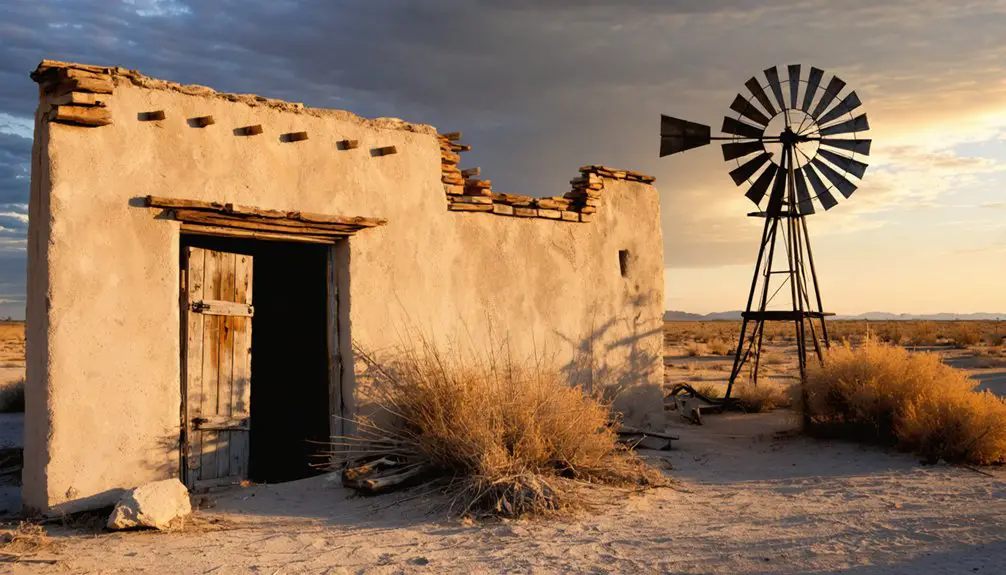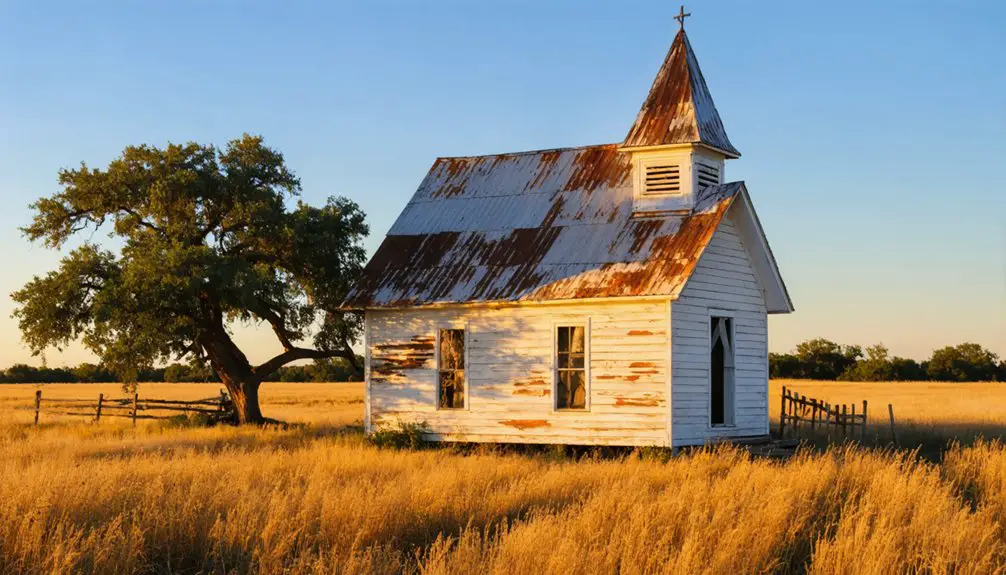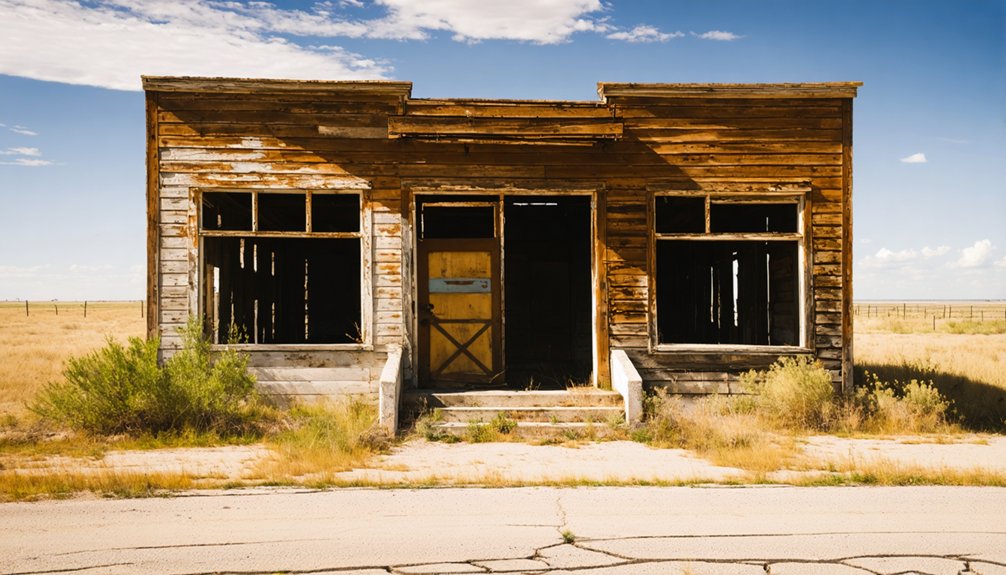
Planning a ghost town road trip to Duffau, Texas means stepping into a quiet slice of forgotten history in Erath County’s rolling hills. You’ll start in Stephenville, head southeast on Farm Road 1824, and arrive at scattered ruins that once served nearly 350 residents. Explore the old schoolhouse, the surviving Baptist church, and crumbling rock walls at your own pace. Spring and fall offer the best conditions for this hauntingly beautiful experience, and there’s plenty more to discover ahead.
Key Takeaways
- Duffau is located 15 miles southeast of Stephenville, Texas; follow Farm Road 1824 and use Duffau Creek as your navigation guide.
- Notable remnants include an old schoolhouse, rock gym ruins, and a surviving Baptist church building reflecting 19th-century Texas life.
- Visit during spring or fall for mild temperatures; winter offers clearer sightlines, while golden hour provides ideal photography lighting.
- Bring water, sturdy boots, sunscreen, a first aid kit, and a camera, as no services or guided tours are available.
- Extend your trip by visiting nearby Thurber, which features preserved ruins and a museum, or historically rich Dublin in Erath County.
What Is Duffau, Texas?
Nestled in Erath County, Texas, Duffau is a ghost town sitting about fifteen miles southeast of Stephenville near Duffau Creek and Farm Road 1824. Its name traces back to “Duffo,” a Native American buried nearby, giving Duffau history a uniquely personal origin rooted in the land itself.
Founded before 1860, Duffau once thrived as a regional commerce hub, boasting nearly 350 residents by the mid-1880s. It had steam flour mills, cotton gins, churches, and a hotel.
But when the railroad bypassed the town in the 1890s, decline followed swiftly.
Today, scattered ruins, an old schoolhouse, a rock gym, and a Baptist church define its ghost town allure. You’re stepping into a frozen moment of Central Texas history when you visit.
How Duffau Went From Boomtown to Ghost Town
By the mid-1880s, Duffau had built itself into a genuine regional powerhouse, supporting around 350 residents, steam flour mills, cotton gins, four churches, a hotel, a district school, three doctors, and two deputy sheriffs.
It was a community with real momentum and a promising future.
Then the railroad bypassed it.
Three words changed everything. The railroad chose a different path, and Duffau’s future left with it.
That single decision reshaped everything. Without rail access, commerce shifted elsewhere, businesses closed, and residents followed the opportunity.
By 1940, only 110 people remained. The ghost town history of Duffau mirrors countless other Texas communities that thrived until infrastructure left them behind.
Today, Duffau stands as a quiet piece of Texas heritage, reminding you how quickly fortune can turn.
Walking its scattered ruins, you’re stepping through a story that no railroad could ever erase.
What’s Left to See in Duffau Today
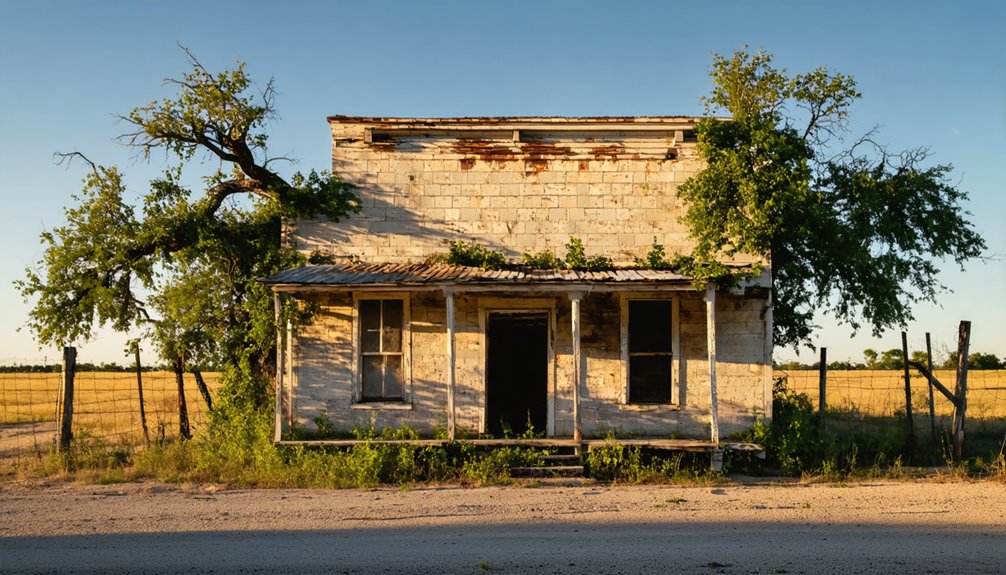
When you arrive in Duffau today, you’ll find a quiet scatter of ruins and standing structures that hint at the town’s former life.
You can still spot the Baptist church building, remnants of the old schoolhouse, and the crumbling walls of a rock gym rising from the landscape.
As you walk the site, the scattered ruins paint a vivid picture of a community that once supported 350 residents before time and progress left it behind.
Standing Structures Still Remaining
Despite being a ghost town, Duffau still has a handful of standing structures worth exploring. The old schoolhouse stands as a quiet reminder of the community’s educational roots, while the ruins of a rock gym hint at a more active past.
You’ll also find the Baptist church still holding its ground, a symbol of the town’s historical significance and the faith that once anchored daily life here.
These weathered rock buildings carry ghost town legends that fuel curiosity and imagination. As you walk through the site, you’re stepping through layers of history that most Texas towns have long since paved over.
Each crumbling wall tells a story, making Duffau one of the most authentic and rewarding ghost town stops you’ll find in Erath County.
The Baptist Church Building
The Baptist church building is arguably one of Duffau’s most striking survivors, rising from the surrounding stillness with a quiet defiance that stops you in your tracks. Its enduring presence reflects deep Baptist Heritage rooted in this community long before the railroad bypassed everything into decline.
You’ll immediately notice its Architectural Significance — the rock construction speaks to craftsmanship that modern building rarely matches. Locals built this structure to last, and it has, outliving the hotels, mills, and cotton gins that once defined Duffau’s commercial identity.
When you stand before it, you’re connecting directly with the people who gathered here through the 1880s boom and the painful years of abandonment that followed.
It’s raw, unpolished history — exactly the kind of authentic experience that makes this road trip worth taking.
Scattered Ruins Across Site
Beyond the Baptist church, Duffau scatters its remaining bones across the landscape in fragments — remnants of a rock gym structure, an old schoolhouse, and various stone buildings that refused to fully surrender to time.
Each piece carries its own historical significance, silently marking what was once a community of 350 people with flour mills, cotton gins, and real ambition.
Your ruin exploration here rewards patience. You’ll move from structure to structure, piecing together a portrait of 19th-century Texas life through weathered rock and collapsed walls.
There’s no guided tour, no entrance fee — just open land and crumbling evidence of a town that thrived, then quietly faded after the railroad chose another path.
Duffau hands you its history directly, unfiltered and unpolished.
How to Get to Duffau on Farm Road 1824
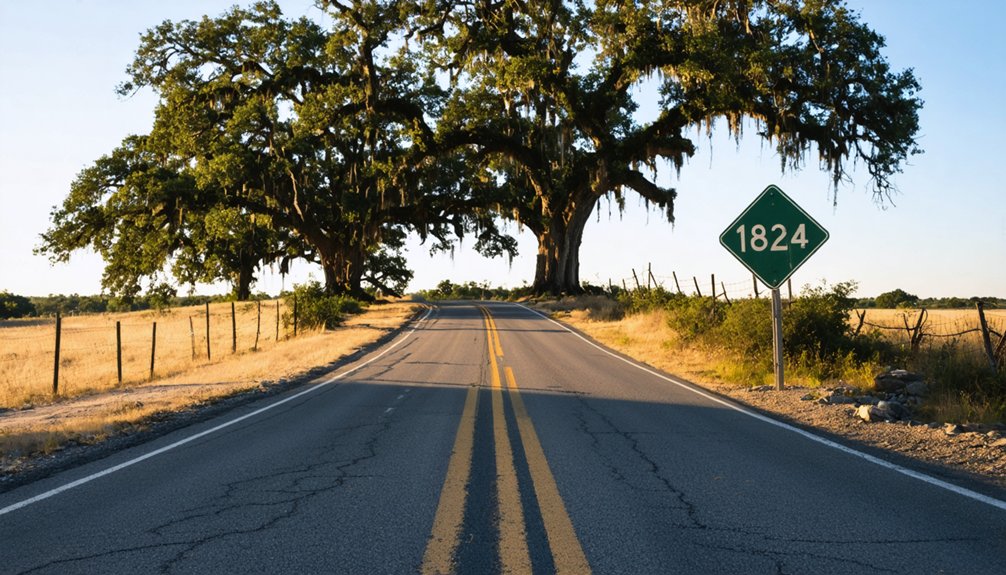
To reach Duffau, you’ll start your journey in Stephenville, a small city located fifteen miles northwest of the ghost town.
From there, you’ll follow Farm Road 1824 southeast, winding through the rural Erath County landscape until the scattered ruins of the old settlement come into view.
Once you arrive, you’ll find yourself standing in what remains of a community that once bustled with 350 residents, steam mills, and four churches.
Starting Point From Stephenville
If you’re starting your ghost town road trip from Stephenville, reaching Duffau is a straightforward fifteen-mile drive southeast on Farm Road 1824. Stephenville history runs deep in Erath County, making it a natural launching point for exploring Texas ghost towns scattered across this rugged Central Texas landscape.
From downtown Stephenville, head southeast and let the rolling terrain guide you toward Duffau Creek. The drive itself sets the mood — open roads, quiet farmland, and a sense that you’re leaving the modern world behind.
As you approach, watch for the old rock buildings that signal you’ve arrived at what was once a thriving community of 350 residents. Pack water, wear comfortable shoes, and bring a camera. Duffau rewards curious travelers who appreciate history written in crumbling stone.
Following Farm Road 1824
Farm Road 1824 gives you one clean, uninterrupted route from Stephenville straight into the heart of Duffau, covering all fifteen miles without a single confusing turn.
You’ll leave town heading southeast, and the landscape shifts quickly into open Central Texas terrain — rolling pastures, scattered oaks, and quiet farm country that sets the mood perfectly for what’s ahead.
As you drive, you’re literally tracing the same corridor that once connected Duffau to the wider region during its peak years.
That road carries real ghost town history, moving you closer to a place Texas folklore hasn’t forgotten.
Keep Duffau Creek on your radar as you approach — it signals you’re almost there.
No GPS gymnastics required. Just one road, one direction, and a genuine piece of Texas waiting at the end.
Arriving At Duffau
When the pavement of Farm Road 1824 finally delivers you into Duffau, there’s no grand entrance sign or dramatic marker — just the quiet realization that you’ve arrived somewhere time stopped caring about.
You’ll recognize the town’s historical significance through what remains standing:
- The old Baptist church, still holding its ground
- Crumbling rock buildings scattered across the landscape
- Ruins of a rock gym structure
- The remnants of a schoolhouse
- Silence so complete it carries ghost town legends on the wind
Walk slowly. Everything here whispers rather than shouts.
The creek nearby, the overgrown lots, the weathered stone — they’re all telling the same story about a community that once held 350 souls and simply got left behind when the railroad chose a different path.
Best Time of Year to Visit Duffau, Texas
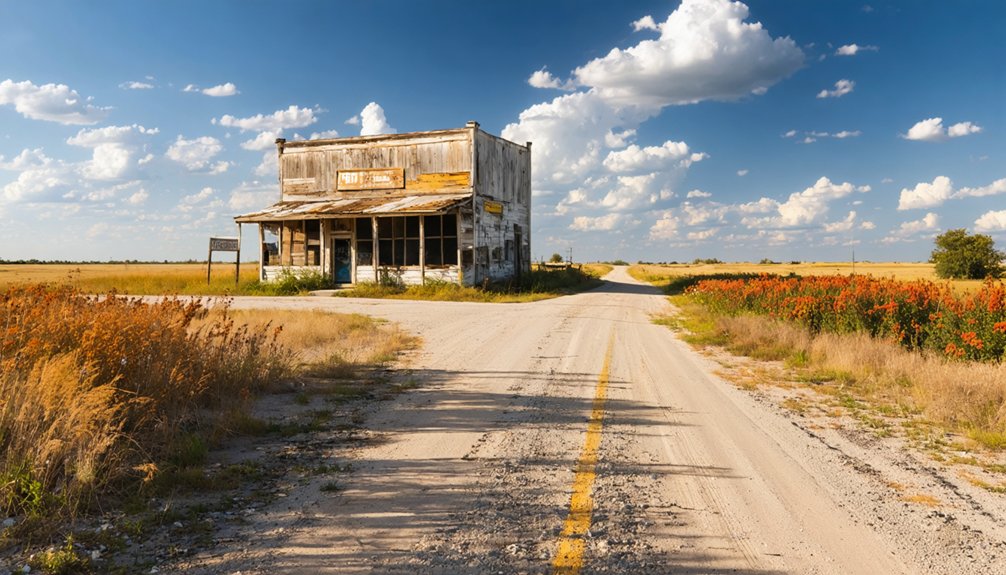
Timing your visit to Duffau makes a real difference in what you’ll experience among its scattered ruins and weathered rock buildings.
Spring and fall are the best seasons to explore this Central Texas ghost town. Mild temperatures make walking the grounds comfortable, and the light hits those old rock structures beautifully during golden hour.
Summer heat in Erath County can be brutal, turning a leisurely exploration into an exhausting slog. Winter visits work too, especially when bare trees open up sightlines to ruins you’d miss in fuller foliage.
Keep an eye on local events in nearby Stephenville, just fifteen miles away, so you can pair your ghost town stop with something else worth your time.
Weekdays offer quieter, more personal access to the site.
What to Bring for Exploring Duffau’s Ruins Safely
Exploring Duffau’s ruins rewards preparation, so pack smart before you head out. The site’s scattered rock buildings and old schoolhouse carry real historical significance, but uneven ground and crumbling structures demand respect.
Duffau’s ruins reward the prepared — pack smart, tread carefully, and let the history speak for itself.
You’ll move more confidently and stay safer when you’ve got the right gear ready.
- Sturdy boots with ankle support for uneven terrain
- Water bottles since no services exist nearby
- First aid kit for minor cuts or scrapes
- Camera or smartphone to document the historical significance of remaining structures
- Sunscreen and hat for exposure during open-site exploring
Exploring safely means you’re also protecting what’s left. Don’t disturb the ruins, and stay alert to unstable walls.
Duffau’s history deserves your curiosity and your caution equally.
Other Ghost Towns Near Duffau Worth Visiting
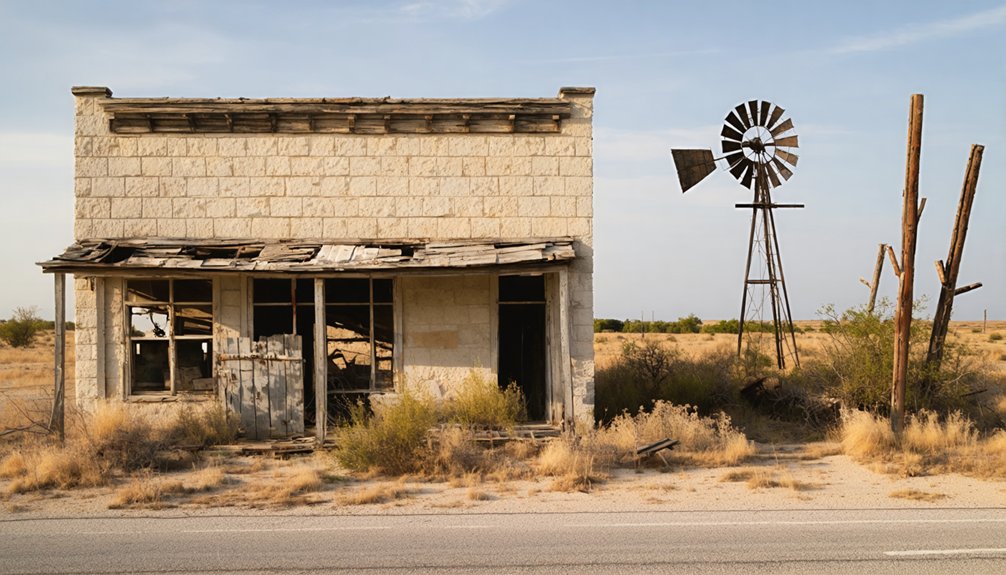
Duffau sits inside a stretch of Central Texas that hid several other forgotten communities, and a single road trip can connect more than one of them.
Erath County and its surrounding region hold pockets of Texas history where railroads never arrived and towns quietly dissolved. You’ll find ghost town attractions scattered along rural farm roads, each with its own crumbling structures and layered past.
Dublin, though not fully abandoned, carries deep historical roots worth stopping for.
Thurber, once a coal mining boomtown west of Stephenville, offers remarkable preserved ruins and a museum that punches well above expectations.
Mapping these stops alongside Duffau turns a single afternoon into a fuller journey through the communities Central Texas quietly left behind.
How to Plan a Full Erath County Day Trip Around Duffau
Pulling together a full day around Duffau works best when you treat the surrounding ghost towns not as detours but as natural stops along a single loop.
Erath County rewards the curious traveler who plans loosely but moves with purpose.
- Start early in Stephenville, grabbing supplies before heading southeast on Farm Road 1824.
- Arrive at Duffau first, when morning light hits the old rock buildings best.
- Walk the Baptist church grounds and listen for local legends tied to the site.
- Push outward to nearby ghost towns in the afternoon, keeping your route circular.
- End back in Stephenville for a meal before dark.
You don’t need a rigid itinerary—just a full tank, a good map, and an open road.
Frequently Asked Questions
Is There an Entry Fee to Visit Duffau’s Historical Ruins?
Like wanderers of the Old West, you’ll roam Duffau’s ruins freely — there’s no entry fee! You can explore its historical significance and enjoy authentic visitor experiences, accessing these haunting remnants via Farm Road 1824 at no cost.
Are Pets Allowed When Exploring the Duffau Ghost Town Site?
No official pet policies exist for Duffau, but you’re free to bring your furry companions along for pet friendly activities! Just follow ghost town etiquette—keep pets leashed and respect the historic ruins responsibly.
Can Visitors Legally Enter the Old Buildings Still Standing in Duffau?
Before you bite off more than you can chew, note that entering Duffau’s standing structures isn’t clearly permitted. You’ll want to respect historical preservation and building safety by staying outside and admiring these fascinating ruins from a safe distance.
Is There Cell Phone Service Available Near Duffau, Texas?
Cell service near Duffau, Texas can be spotty, so you’ll want to check your carrier’s network coverage before heading out. Don’t let unreliable signals hold you back—download offline maps and embrace the freedom of exploring!
Are There Any Guided Tours Specifically Offered for Duffau Visits?
You won’t find formal guided tours at Duffau, but you’re free to explore its ghost town history and local legends independently, wandering through crumbling rock buildings and uncovering fascinating stories at your own adventurous pace.
References
- https://www.ghosttowns.com/states/tx/duffau.html
- https://en.wikipedia.org/wiki/List_of_ghost_towns_in_Texas
- https://www.huffpost.com/entry/abandoned-america-night_n_4079720
- http://freepages.rootsweb.com/~gtusa/history/usa/tx.htm
- https://www.tripadvisor.com/Attractions-g28964-Activities-c47-t14-Texas.html
- https://fwtx.com/culture/travel/where-the-streets-have-no-names/
- https://myfamilytravels.com/the-spookiest-road-trips-in-texas-with-abandoned-landmarks/
- https://texasghosttours.com/2025/04/22/haunted-highways/
- https://www.texasescapes.com/CentralTexasTownsNorth/DuffauTexas.htm
- https://forum.expeditionportal.com/threads/north-texas-ghost-town-tour-daycation.172505/