Planning a ghost town road trip to Elmo, Kansas means heading 16 miles south of Abilene into a landscape where sparse signage and dead cell service are your constant companions. Founded in 1884, Elmo once hummed with railroad ambition and agricultural promise before fading into near-silence after its post office closed in 1966. Today, you’ll find a weathered church, a rusted oil tank, and fewer than ten remaining residents. There’s far more to this forgotten place than first meets the eye.
Key Takeaways
- Elmo, Kansas, located in Dickinson County, was founded in 1884 and declined after its post office closed in 1966 and railroad tracks were removed.
- Start your road trip from Abilene, the county seat, just 16 miles north of Elmo, stocking up on water, food, and fuel beforehand.
- Bring printed directions and track mileage carefully, as rural county roads have sparse signage and no cell service near Elmo.
- Key remnants include a weathered church and rusted oil tank, offering unique photography opportunities compared to other Dickinson County ghost towns.
- Treat abandoned structures as hazards, avoid entering buildings alone, and wear sturdy boots while carrying a flashlight for safe exploration.
What Is Elmo, Kansas and Why Visit This Ghost Town?
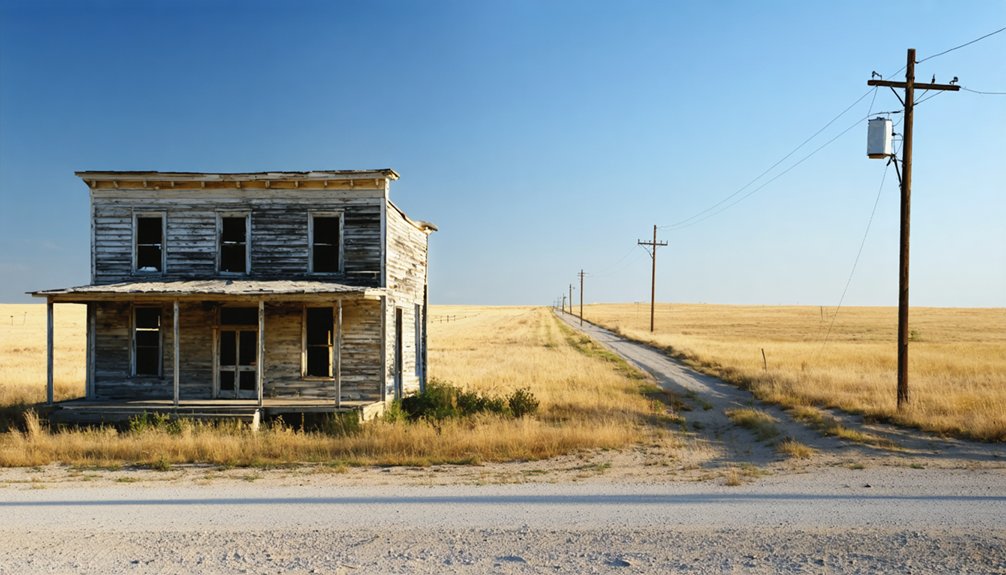
Tucked away in the rural farmland of Dickinson County, Elmo, Kansas is a ghost town that’s slowly receding into the prairie that once surrounded its bustling main street. Founded in the late 19th century, Elmo history traces back to a thriving agricultural and railroad community before the post office shuttered in 1966 and the tracks disappeared in the 1990s.
Today, scattered ruins, a weathered church, and a rusted oil tank are all that remain.
Yet ghost town significance runs deeper than decay — Elmo represents the raw, unfiltered story of Midwestern ambition, rise, and quiet collapse.
If you crave open roads, untamed history, and the freedom to explore forgotten places on your own terms, Elmo deserves a spot on your road trip map.
How to Get to Elmo From Abilene
Your journey to Elmo begins in Abilene, the Dickinson County seat where Wild West history still echoes through the streets.
Head south on rural county roads for about 16 miles, keeping your eyes sharp since signage is sparse and GPS can’t always be trusted out here.
Before you leave town, stock up on water, food, and fuel — once you’re in the open farmland, you’re on your own.
Starting Point In Abilene
Abilene, Kansas — once the storied terminus of the Chisholm Trail — makes for a natural launching point for your 16-mile drive south to Elmo.
Before you leave, fuel up your tank and stock water and food, because Elmo offers nothing in the way of services. Grab a printed map too, since GPS turns unreliable once you push into Banner Township’s rural backroads.
Abilene itself rewards a brief pause. Its streets carry local legends of cattle drives, Wild West lawmen, and a young Eisenhower finding his footing.
Let those historical anecdotes settle in your mind as you head south through open farmland, because Elmo tells a quieter, sadder chapter of the same story — a town that once thrived and then simply… didn’t.
Navigating Rural County Roads
Heading south out of Abilene, you’ll trade the familiar grid of a functioning town for the open silence of Dickinson County’s rural backroads.
Elmo sits 16 miles down roads that offer little signage and no cell service, so print your directions before leaving civilization behind.
These rural navigation tips matter: trust your map, watch your mileage, and slow down at unmarked intersections.
The land itself becomes your guide — flat farmland stretching toward a horizon dotted with abandoned structures.
When you arrive, remember basic ghost town etiquette.
You’re a visitor moving through someone else’s history. Don’t disturb remaining structures, don’t trespass on private property, and leave everything exactly as you found it.
The freedom to explore these forgotten places depends on respecting them.
Essential Travel Preparations
Before you leave Abilene, fill your tank, pack water and food, and print your directions — there’s no cell service near Elmo, and GPS becomes unreliable once you’re deep in Dickinson County’s backroads.
Head 16 miles south through open farmland, following county roads toward Banner Township. No signs will announce your arrival — that’s part of Elmo’s raw ghost town experiences.
You’re entering terrain where the infrastructure quietly vanished: post office gone since 1966, railroad pulled in the 1990s, commerce dissolved entirely.
Arrive during daylight so you can actually see the historical significance embedded in every rusted tank, crumbling foundation, and weathered church wall.
No fees, no rangers, no crowds — just you, the wind, and what Kansas once built and left behind.
The Rise and Fall of Elmo, Kansas
As you walk through Elmo’s weathered ruins, you’re standing in what was once a thriving regional hub, founded in Banner Township in 1884 when a new post office signaled the town’s ambitious beginnings.
The post office closure in 1966 marked the first death blow, sending residents fleeing to larger towns like Abilene and stripping Elmo of its last official lifeline.
Then the railroad vanished in the 1990s, sealing the town’s fate and leaving behind only rusted oil tanks and crumbling foundations as silent witnesses to its collapse.
Elmo’s Humble Beginnings
Once a modest but essential hub in Dickinson County, Elmo, Kansas, got its start in Banner Township, about a mile from where the town eventually settled. Elmo’s founding traces back to December 16, 1884, when its post office first opened, signaling real promise for the growing settlement.
Community dynamics shaped Elmo into a regional anchor during the late 19th and early 20th centuries. Farmers, merchants, and railroad workers built lives here, threading together an economy tied to agriculture and transportation.
You can almost feel that pioneer energy lingering in the Kansas air as you drive toward its scattered remains today. Elmo wasn’t just a dot on a map — it was a living, breathing community carving its place into the American frontier.
Economic Decline And Abandonment
Every thriving town carries the seeds of its own decline, and Elmo was no exception. Its economic history reads like countless Midwestern stories — promising beginnings slowly swallowed by circumstance.
When the post office shuttered on May 6, 1966, residents felt the first real tremors of rural decline. Commerce quietly disappeared, and families began drifting toward Abilene’s steadier opportunities.
Then the railroad vanished in the 1990s, severing Elmo’s last lifeline. Without rail connections, no business could realistically survive here. The exodus accelerated, leaving behind rusted machinery, crumbling foundations, and echoing silence where neighbors once gathered.
Today, fewer than ten people inhabit scattered homes among the ruins.
As you explore Elmo, you’re walking through a raw, unfiltered chapter of Kansas history — one that rewards the adventurous and humbles the curious.
Railroad Removal’s Lasting Impact
Few forces shaped — or shattered — small Midwestern towns quite like the railroad, and Elmo’s story proves that point with brutal clarity. When workers pulled up the tracks during the 1990s, they didn’t just remove steel and timber — they erased Elmo’s last lifeline.
That railroad history ran deeper than infrastructure; it carried grain, commerce, and community identity for generations.
Once the transportation legacy vanished, so did any reason for businesses or residents to stay. You can still feel that absence walking through the overgrown lots and crumbling foundations today. The silence isn’t peaceful — it’s final.
Understanding what the railroad meant to Elmo helps you read the landscape differently, transforming scattered ruins into a vivid, sobering map of everything this town once was.
What’s Left to See in Elmo Today
Although nature has reclaimed much of Elmo, you’ll still find haunting remnants of the town’s former life scattered across the Kansas prairie.
These Elmo landmarks connect you directly to ghost town history, telling stories no history book fully captures.
A small church still stands defiantly against the elements, its weathered walls echoing Sunday mornings long past.
A massive rusted oil tank rises from the earth, marking industrial ambitions that once drove this community forward.
Crumbling foundations reveal where businesses and homes once lined the main street, letting you trace Elmo’s original layout with your own footsteps.
Explore carefully and deliberately.
Every collapsed wall and broken foundation represents lives lived, dreams built, and eventually abandoned.
You’re walking through a living timeline of Midwestern settlement and decline.
What to Pack for a Place With No Water, Food, or Cell Service
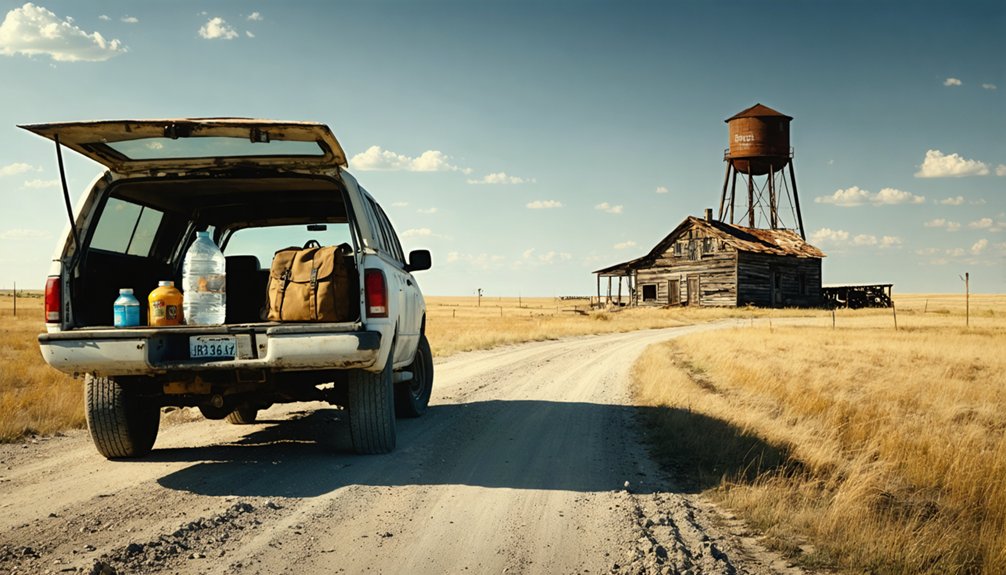
Visiting Elmo means stepping into a place that infrastructure forgot, so preparation separates a memorable adventure from a genuine emergency. No cell service reaches this stretch of Dickinson County, so download offline maps or carry printed directions before you leave Abilene.
Elmo is a place infrastructure forgot — come prepared, or a grand adventure becomes a genuine emergency.
Your packing essentials for ghost town exploration should include enough water for the full day, portable food, a first aid kit, and a charged backup battery for your devices. GPS gets unreliable once you’re traversing rural county roads with minimal signage.
Arrive with a full fuel tank, sturdy footwear for walking uneven terrain around abandoned structures, and a camera to document what remains.
Daylight hours are your safest window. Elmo rewards the self-sufficient traveler who respects its silence and comes ready for it.
How to Stay Safe Visiting Elmo’s Abandoned Structures
Abandoned structures carry silent warnings you’d be foolish to ignore. When you’re exploring Elmo’s decaying buildings, treat every floor, doorway, and ceiling as a potential hazard.
Decades of weather exposure have weakened foundations and rotted timber, so your safety tips start before you ever step inside — don’t enter alone.
Keep your eyes on the rusted oil tank and industrial building, both showing serious long-term decay. Wear sturdy boots, carry a flashlight, and avoid touching unstable walls.
Photograph abandoned structures from safe distances when interiors look compromised.
Tell someone your exact location before arriving, since no cell service exists nearby. Freedom means making smart choices, not reckless ones.
Respect the ruins, stay alert, and you’ll leave Elmo with memories rather than injuries.
How Elmo Compares to Other Dickinson County Ghost Towns
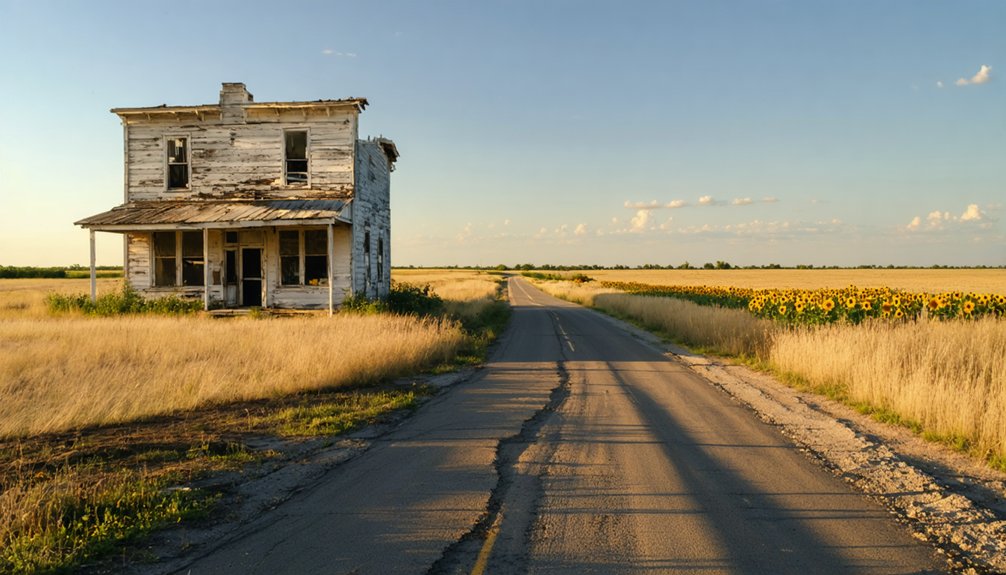
Elmo isn’t alone in its silence — Dickinson County holds several forgotten communities that share its story of railroad dependence and rural abandonment.
When you stack Elmo history against this ghost towns comparison, distinct differences emerge:
- Elmo retains a standing church and rusted oil tank, giving you tangible industrial remnants to photograph.
- Banner Township settlements vanished more completely, leaving only foundation outlines swallowed by prairie grass.
- Nearby rural communities lost their post offices earlier, accelerating population collapse faster than Elmo’s 1966 closure allowed.
- Railroad-dependent towns across the county mirror Elmo’s 1990s decline, their grain elevators crumbling identically against flat Kansas sky.
You’ll find Elmo uniquely preserved by comparison — worn but readable, still whispering the agricultural ambitions that once pushed settlers across this open land.
Frequently Asked Questions
Is There an Official Historical Marker or Sign at Elmo’s Entrance?
No official historical marker greets you at Elmo’s entrance, yet you’ll feel its historical significance immediately. Let local legends guide your adventurous spirit as you explore ruins whispering forgotten stories of Kansas’s boldly free, untamed past.
Are There Any Guided Tours Available for Visiting Elmo, Kansas?
No guided tour options exist, yet you’ll uncover Elmo’s rich local history completely on your own terms. You’re free to roam abandoned structures, piecing together forgotten stories independently — a true adventurer’s self-directed journey through Kansas’s haunting past.
Can Visitors Legally Enter and Explore Elmo’s Abandoned Buildings?
You’re free to explore Elmo’s storied ruins without fees or permits, but respect safety regulations during your urban exploration — crumbling structures carry real risks. Tread carefully through history’s remnants and let adventure guide your curious spirit responsibly.
Has Elmo, Kansas Ever Appeared in Films or Documentaries?
No documented film references exist for Elmo’s history — Hollywood hasn’t discovered this forgotten frontier yet. You’re fundamentally its first explorer, uncovering raw, untamed stories mainstream cinema hasn’t dared capture.
Are There Any Annual Events or Gatherings Held in Elmo?
You won’t find any ghost town gatherings or Elmo traditions echoing across these abandoned plains. No annual events exist here — just whispered history, rusted relics, and open skies inviting you to write your own adventure.
References
- https://www.youtube.com/watch?v=YQHVP21sYC8&vl=en-US
- https://coloradoparent.com/st-elmo-ghost-town/
- https://www.myscenicdrives.com/places/colorado/saint-elmo-ghost-town
- https://www.youtube.com/watch?v=_DLl0NgdIPo
- https://www.aspentimes.com/news/on-the-road-off-to-st-elmo/
- https://travels-with-ruby.com/semi-ghost-towns-of-kansas-2/
- https://legendsofkansas.com/kansas-ghost-town-list/
- https://legendsofkansas.com/elmo-kansas/
- https://33travels.com/ghost-towns-in-kansas/
- https://www.travelks.com/kansas-magazine/articles/post/exploring-kansas-forgotten-roads/