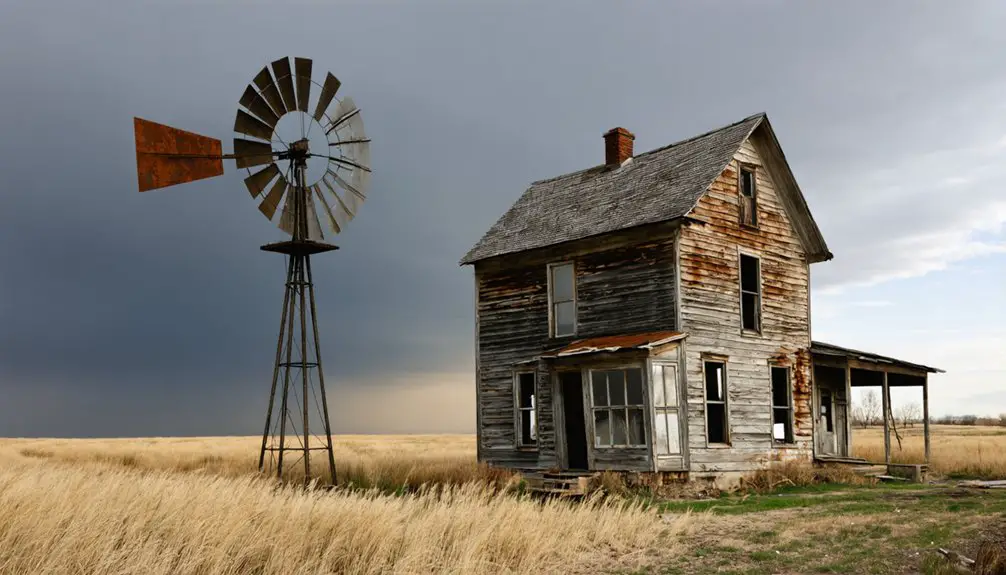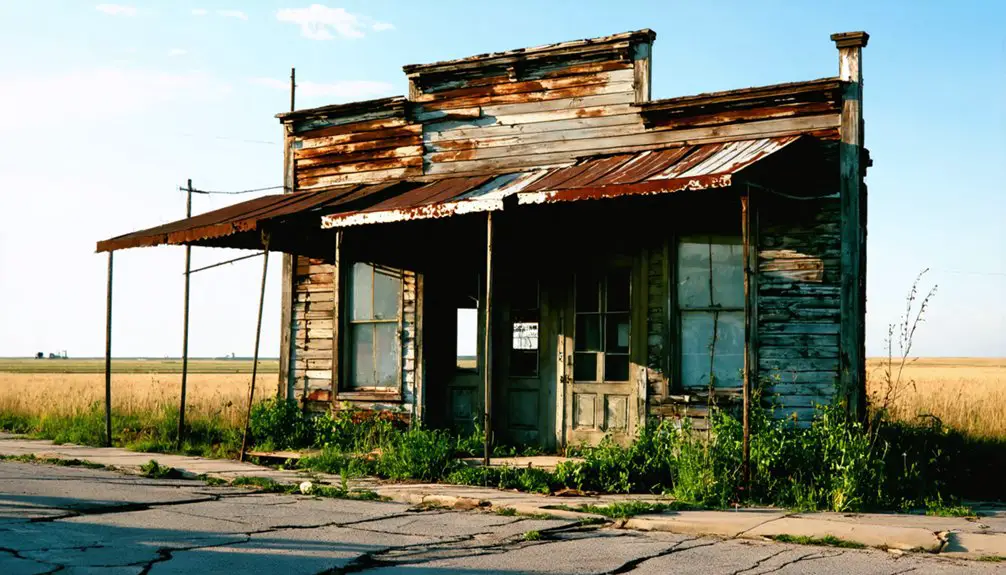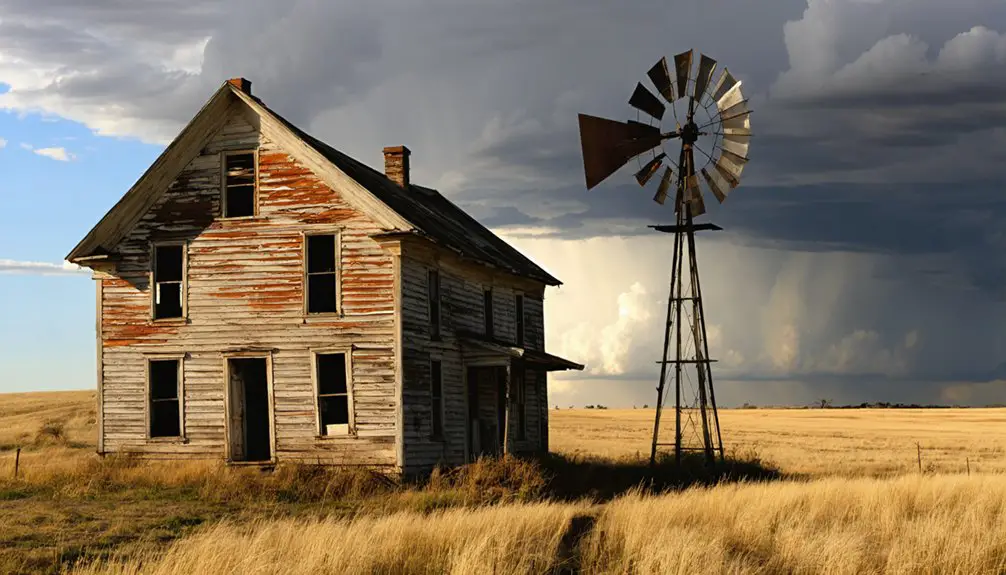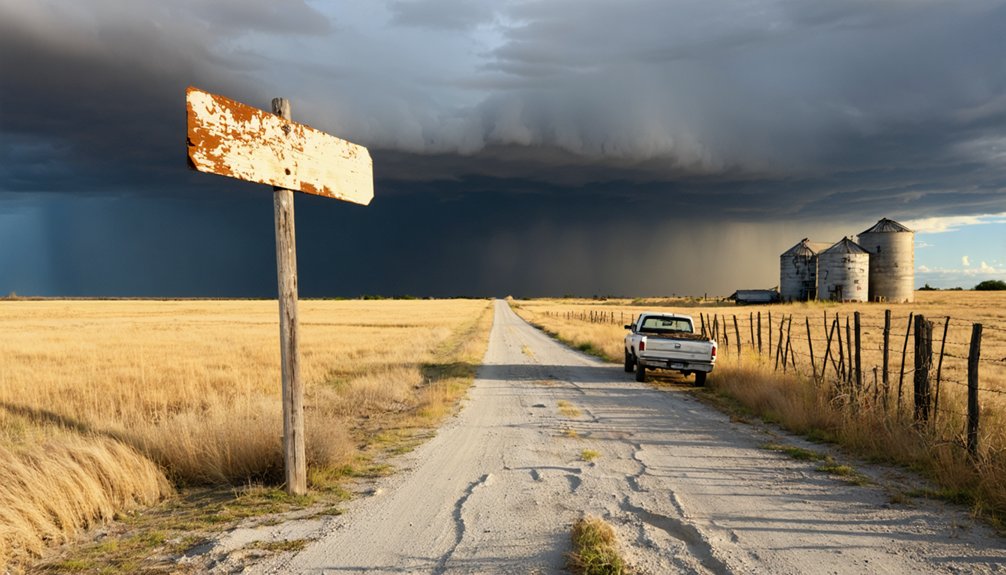
You’ll find Factoryville’s scattered remains near the south branch of Weeping Water Creek in southeastern Nebraska, where foundation fragments and tree-lined ghost streets mark George Hunt’s 1856 mill settlement. Plan your visit between mid-September and late October when roads are passable and temperatures comfortable—spring’s muddy conditions can trap vehicles. Bring navigation tools and protective gear, as precise coordinates have vanished from records since the 1890s railroad bypass triggered the town’s complete abandonment. The full story of locating this vanished settlement reveals navigation strategies that modern maps won’t show you.
Key Takeaways
- Visit mid-September to late October for optimal weather conditions with firm ground and cooler temperatures avoiding spring mud.
- Factoryville lacks official GPS coordinates; follow Missouri Pacific Railroad’s historic Nebraska City-Lincoln line through rolling grasslands.
- Expect foundation fragments, tree-lined street patterns, and shallow depressions marking former homes, stores, and the original mill site.
- Bring navigation tools, protective gear, documentation equipment, and survival basics for this remote, business-free location.
- Experience complete silence and prairie isolation along Weeping Water Creek where a thriving 1880s settlement vanished.
The Rise and Fall of a Mill Town
When George Hunt crossed the Missouri River in 1856, he saw what others had missed—the raw potential of the south branch of Weeping Water Creek. He erected a frame mill that powered continuously for nearly 24 years, transforming wilderness into opportunity.
By the time Lawrence Miller built a new structure in 1880, Factoryville was thriving. The mill’s 25-barrel daily capacity drove the local economic impact—stores lined the streets, a college educated frontier families, and the population swelled to support two blacksmith shops.
Then the railroad chose a different route.
Without rail access, the mill’s operational challenges became insurmountable. Businesses collapsed. The college shuttered. Residents fled. Today, only foundation stones pierce the prairie grass where commerce once flourished.
Getting to Factoryville: Routes and Coordinates
Though the ghost town you’ve read about rests in Nebraska’s tallgrass prairie, modern maps will betray you—directing instead to a living borough in Wyoming County, Pennsylvania. Factoryville, Nebraska’s coordinates vanished from official records when Union emerged in the 1890s, swallowing its neighbor whole. You’ll find scattered references in Perkey’s Nebraska Place-Names and pre-1890s school rosters, but no GPS waypoint exists.
The original settlement clustered near Missouri Pacific Railroad‘s ambitious line stretching from Nebraska City to Lincoln, threading through Cass County’s natural landscape. Today, you’re chasing railway history and faded memories across rolling grasslands where wooden schoolhouses once stood. The freedom of this pursuit lies in exploration itself—following dusty county roads where coordinates matter less than curiosity.
What Remains at the Site Today
You’ll find yourself standing among shallow depressions where prairie grass has swallowed entire homes, with only fragments of stone and brick foundations breaking through the earth to prove anyone lived here at all.
The wind moves across empty spaces where merchants once called out prices and children ran between storefronts, now replaced by an almost oppressive silence. Walking the ghost of those graded streets—some still shaded by the settlers’ original trees—you’re tracing the footprint of a town that vanished within decades of its birth.
Visible Foundations and Traces
The prairie grass whispers secrets at 40°48′N 95°58′W, where Factoryville’s foundations still puncture the earth like forgotten bones. You’ll discover exposed building materials scattered beneath the tallgrass—remnants of stores, hotels, and that once-mighty flour mill. Discernible roadways trace their graded paths through farmland, shadowed by the settler-planted trees that refuse to forget.
Your exploration reveals:
- Foundation outlines emerging through prairie overgrowth at former home sites
- Tree-lined street patterns marking the original 1860s town layout
- Mill site foundations standing silent where industry once thrived
- Aerial-visible traces of buildings that served the rail-dependent economy
Between Union and Nehawka along the Lincoln-Union Highway, these scattered traces tell stories of abandonment. The 1890s railroad rerouting sentenced this place to obscurity, leaving only these weathered markers for those who seek them.
Prairie Silence and Atmosphere
Standing where Factoryville’s streets once bustled with merchants and mill workers, you’ll find yourself enveloped in a silence so complete it feels almost physical. The wind whispers through prairie grass that’s reclaimed every trace of the 1890s ghost town, creating a tranquil ambiance that transports you to another century. No operational businesses have existed here since the railroad bypass sealed this settlement’s fate, leaving only nature’s quiet soundtrack.
You’re standing halfway between Union and Nehawka, where Weeping Water Creek flows through open landscapes that amplify the isolation. The abandoned spaces where laughter once echoed now offer timeless perspectives on boom-and-bust cycles. Prairie vegetation dominates former home sites, blending seamlessly into Cass County’s terrain. This profound stillness invites contemplation without modern intrusions—just you and history’s whispers.
Best Time to Visit This Prairie Ghost Town
The prairie’s moods shift dramatically with Nebraska’s seasons, transforming your ghost town experience from serene autumn wandering to challenging winter expedition.
Spring’s melting snows turn the access roads into treacherous mud ribbons that’ll trap your vehicle and leave you stranded miles from Factoryville’s crumbling foundations.
You’ll find the sweet spot between mid-September and late October, when cooler temperatures paint the tallgrass gold and the earth stays firm beneath your boots.
Seasonal Weather Considerations
Planning your visit to Factoryville requires careful consideration of Nebraska’s dramatic seasonal shifts, where prairie weather can transform from welcoming to hostile within months. Understanding precipitation patterns and wind conditions proves essential for a successful ghost town expedition.
Spring’s Volatile Nature: March through May brings increasing rainfall and unpredictable afternoon gusts reaching 30 mph, potentially hampering exploration.
Summer’s Humid Grip: June through August delivers oppressive 82-87°F temperatures with high humidity—challenging conditions for wandering abandoned structures.
Fall’s Golden Window: September and October offer ideal exploring weather with comfortable 70s temperatures and decreasing moisture.
Winter’s Harsh Reality: December through February present freezing conditions, snow accumulation, and limited daylight—effectively shutting down safe access.
You’ll find late May through early October provides the most dependable conditions for your ghost town adventure.
Avoiding Muddy Conditions
When Nebraska’s clay-heavy prairie soils absorb spring rainfall, they transform into a treachous gumbo that’ll trap your vehicle faster than you can call for help. Your transportation options narrow dramatically during wet periods—those silt loam roads become slick, impassable barriers between you and Factoryville’s ruins.
Time your escape to the prairie during late summer through fall, when drought conditions harden the earth beneath your tires. Monitor Lake McConaughy’s water levels; anything below 30% signals the firm ground you need.
Check recent rainfall—less than an inch in 48 hours keeps the mud at bay. Winter freezes offer another window, temporarily locking the clay into submission.
Study soil conditions through Nebraska’s drought monitor before you venture out, ensuring your journey stays liberation, not excavation.
What to Bring for Your Exploration
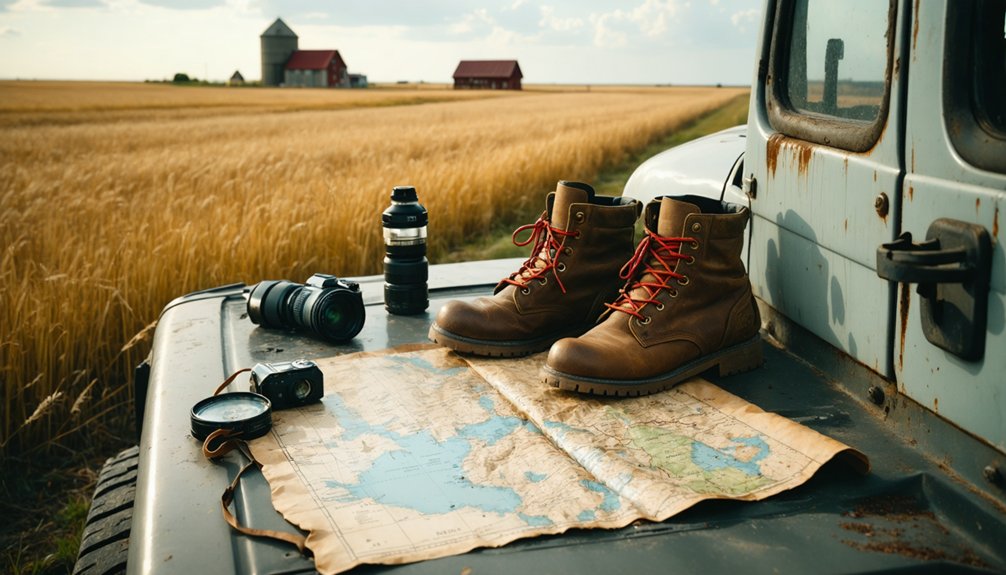
Before you venture into the windswept emptiness where Factoryville once stood, you’ll need to pack with intention—this isn’t a roadside attraction with gift shops and guardrails. Your preparation determines whether you’ll uncover history or simply endure Nebraska’s unforgiving elements.
Factoryville demands intentional preparation—no gift shops or guardrails exist where Nebraska’s elements separate history seekers from those merely enduring wilderness.
Essential gear includes:
- Navigation tools: GPS with offline maps and printed topographic charts, since cell signals vanish along Weeping Water Creek
- Protection layers: Long sleeves, DEET spray, and sturdy boots for ticks and prairie grass concealing old foundations
- Documentation equipment: Camera, notebook, and binoculars to capture details before weather erases them further
- Survival basics: Two liters of water minimum, first-aid supplies, and emergency whistle for isolated terrain
Parking and access remain primitive—no historical signage at site marks your arrival, just gravel roads and instinct.
Nearby Ghost Towns Worth Adding to Your Route
Your Factoryville expedition doesn’t have to end where the prairie swallows its foundations—Nebraska’s backroads hide entire constellations of abandoned settlements, each within striking distance of your ghost town pilgrimage.
Belmont’s rock-carved tunnel showcases abandoned rail infrastructure that outlasted the community itself, while Minersville’s collapsing coal shafts whisper tales of entrepreneurial decline south of Nebraska City.
Spring Ranch offers something tangible: a historical marker and reputedly haunted bridge marking where 100 souls once thrived beside the Little Blue River. Mars exists now only as scattered traces across Knox County farmland, its post office closed since 1910.
Each site demands different navigation skills—Belmont rewards the persistent seeker, while Spring Ranch Campground near Fairfield provides civilized basecamp for your wanderings through Nebraska’s forgotten geography.
Photography Tips for Capturing Abandoned Landscapes
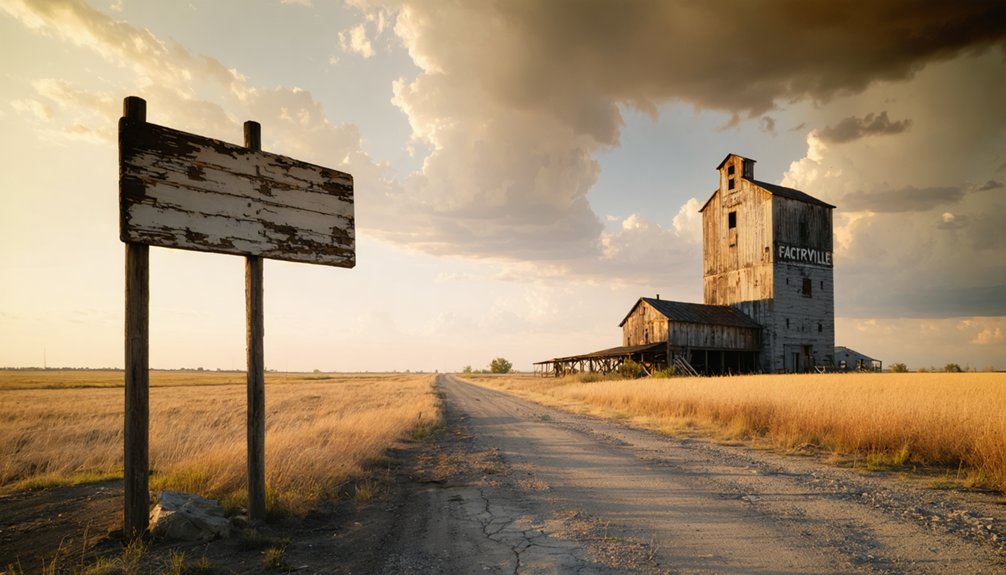
The camera doesn’t lie, but it’ll certainly struggle if you point it at Factoryville’s sun-bleached ruins at high noon. Chase the golden hours instead—early morning or late afternoon angles through broken windows create natural light modulation that transforms crumbling walls into cinematic frames.
Essentials for capturing these forgotten spaces:
- Shoot wide with a 10-20mm lens, then crouch low for perspectives that emphasize the vast Nebraska sky reclaiming what humans abandoned
- Skip the flash—ambient light preserves authentic textures and grit
- Bracket your exposures to balance harsh sunlight against shadow-filled interiors
- Focus on nature’s takeover: weathered wood splitting under new growth, rust patterns meeting wildflowers
Your goal isn’t documentation—it’s evoking emotion through composition. Let cracked foundations and windswept debris tell their stories of freedom from human constraint.
Safety Considerations for Visiting Remote Historical Sites
Crumbling floorboards that held up under decades of prairie winters won’t necessarily support your weight today. Before you step into Factoryville’s skeletal remains, assess the structural integrity of every building from outside first.
Rotted beams, sagging rooflines, and unstable walls demand your respect—exploring isn’t worth a detailed first-aid kit, tell someone your exact route, and carry backup navigation tools since cell service vanishes in these remote corners.
The freedom to wander Nebraska’s forgotten places comes with personal responsibility for your safety. Turn back when conditions warrant caution.
Frequently Asked Questions
Are There Any Restrooms or Facilities Available at the Factoryville Ghost Town Site?
No restroom availability exists at Factoryville’s unmarked location—you’ll find zero on-site amenities in this vanished settlement. You’re venturing into raw, untamed prairie where freedom means self-reliance. Pack everything you’ll need for your independent exploration adventure.
Is Camping Allowed Near the Factoryville Ruins Overnight?
Camping isn’t permitted directly at Factoryville’s ruins to protect historical artifacts, but you’ll find nearby campgrounds within driving distance. You’re free to explore during daylight, then retreat to established sites where you can sleep under Nebraska’s endless stars.
Do I Need Permission From Landowners to Access the Factoryville Site?
Yes, you’ll need landowner permission since Factoryville sits on private property. Property ownership considerations and local government regulations require you to contact the current owner through Cass County records before exploring these prairie ruins freely.
What Cell Phone Coverage Can I Expect in the Factoryville Area?
You’ll find strong Verizon and AT&T coverage near Factoryville, with cell tower locations concentrated in nearby ZIP 68030. However, network reliability concerns exist in remote spots—download coverage maps beforehand and prepare for occasional dead zones during your exploration.
Are There Any Guided Tours Available for Factoryville Ghost Town?
The road less traveled requires no guide—you’ll find no guided tours availability at Factoryville. You’re free to explore independently, discovering the town history significance through crumbling foundations and windswept prairie where settlers once dreamed beneath endless Nebraska skies.