Start your Fairfax ghost town road trip in Carbonado, then drive six miles south on SR 165 through the Carbon River Valley to reach one of Washington’s most hauntingly preserved coal settlements. Founded in 1892 and abandoned by 1941, Fairfax once housed 500 residents whose lives revolved around coking ovens that still stand today, half-swallowed by old-growth forest. Pack waterproof boots, download offline maps, and plan your visit for late summer — there’s far more to this forgotten valley than you’d expect.
Key Takeaways
- Fairfax, Washington, is an abandoned 1892 coal mining settlement in Carbon River Valley, fully deserted by 1941 after mining became uneconomical.
- Start your trip in Carbonado and drive south on SR 165 for six miles through Carbon River Valley to reach Fairfax.
- Key highlights include coking ovens, stone foundations, scattered mining artifacts, and 80 acres of old-growth forest reclaiming the landscape.
- Visit during late summer or early fall for the driest trails, firmest ground, and best visibility while exploring the site.
- Pack waterproof boots, trekking poles, moisture-wicking layers, water, snacks, and bear spray, as no services are available on-site.
What Is the Fairfax Ghost Town in Washington?
Once a thriving coal mining settlement tucked into Washington’s Carbon River Valley, Fairfax was founded in 1892 and named after Fairfax County, Virginia, by W.E. Williams.
Platted in 1897, it quickly grew into a planned community complete with white homes, a hotel, saloon, and railroad depot.
By 1901, Fairfax’s coal legacy was booming — sixty coking ovens churned out furnace-grade coal, and the population swelled to 500 by 1915.
But post-World War I shifts toward oil and gasoline made mining uneconomical, and by 1941, the town was fully abandoned.
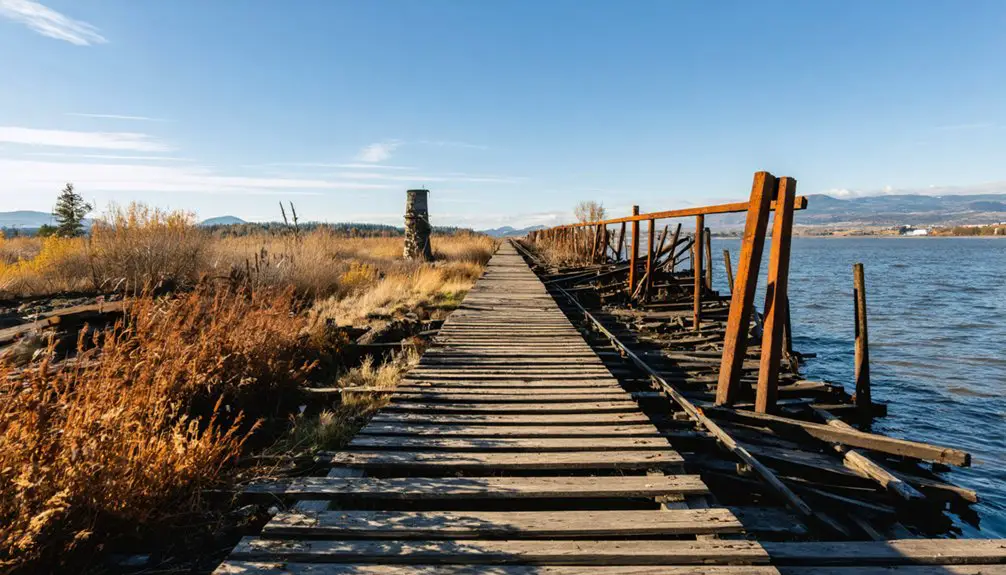
Today, Fairfax history lives on through foundations, artifacts, and a long line of preserved coking ovens within 640 acres of public open space, waiting for you to explore.
The Coal Mining History That Shaped Fairfax
Coal didn’t just fuel Fairfax — it built it from the ground up. Understanding its coal mining history adds real historical significance to every crumbling foundation you’ll walk past.
Here’s what shaped this town:
- 1896 — Western American Company launched mining operations, shipping coal by 1899.
- 1901 — Sixty coking ovens churned out 252,000 tons of furnace-grade coal monthly.
- 1902 — Thirty-five additional coke ovens made Fairfax Pierce County’s leading coke producer.
- Post-WWI — Dropping yields and the rise of oil killed coal’s profitability, ending operations around 1925.
You’re not just hiking through woods — you’re walking through an industry’s rise and collapse.
Those ovens still standing? They once powered an entire regional economy.
How To Get To Fairfax Ghost Town
Your journey to Fairfax starts in Carbonado, a former coal town that sets the historical mood before you’ve even left the pavement.
From there, you’ll head south on SR 165, following the Carbon River Valley as it carves through dense Pacific Northwest forest toward the ghost town’s remains.
It’s a straightforward 6-mile drive, but the valley’s rugged terrain reminds you why this settlement was once reachable only by railroad or pack train.
Starting Point: Carbonado
Six miles south of Carbonado on SR 165, the ghost town of Fairfax waits quietly in the Carbon River Valley, tucked beneath the shadow of Mount Rainier.
Carbonado serves as your natural launching point, giving you historical significance and community impact before you even arrive.
From Carbonado, here’s what to expect on your approach:
- Head south on SR 165 toward the Carbon River Valley.
- Watch for the towering O’Farrell Bridge — 240 feet high, once the tallest in Washington State.
- Notice the forest gradually reclaiming the landscape around you.
- Park and follow the easy trail toward the coking ovens lining the old Northern Pacific Rail corridor.
You’re not just driving a road — you’re retracing a working town’s final miles.
Taking SR 165 South
Once you’ve left Carbonado behind, SR 165 south pulls you into a quieter world — narrower shoulders, denser tree cover, and the Carbon River Valley beginning to close in around you.
This stretch of road trip delivers scenic views that hint at what’s buried beneath the forest floor: a working industrial past swallowed by time.
You’re roughly 6 miles out, following the same Northern Pacific Rail corridor that once carried Fairfax coal to market.
The road traces the Carbon River’s contours, and the elevation subtly shifts as you descend toward the ghost town‘s footprint.
Watch for the turnoff — there’s no grand entrance, just a quiet pull-off where the trees hold their ground and history waits on the other side.
The Carbon River Valley doesn’t ease you in gently — it pulls you down into its basin with tree walls closing on both sides and the river running somewhere beneath the canopy to your left.
Watch for these landmarks confirming you’re on track:
- Roadside pullouts offering scenic views across the valley floor
- Dense old-growth corridors narrowing your sightlines to cathedral-like tunnels
- Wildlife encounters — deer and elk cross freely here, so slow down
- The Northern Pacific Rail corridor appearing roadside, the same line that hauled Fairfax coal out beginning in 1899
You’re traveling working-class history now.
Every bend tightens your connection to the miners who carved their lives from this remote, unforgiving valley floor.
Safety Tips for the Fairfax Ghost Town Trail
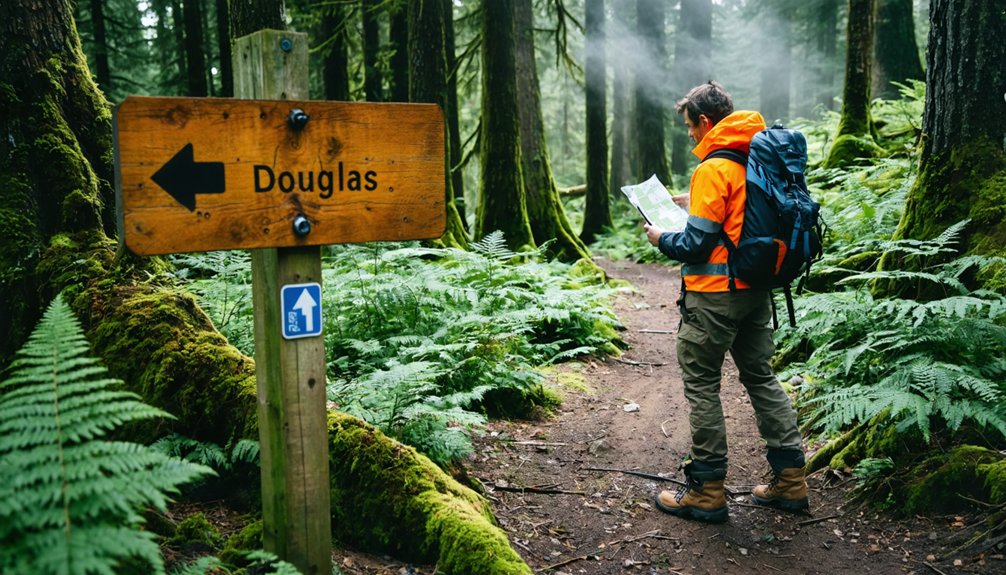
Mud, history, and quiet isolation define your experience on the Fairfax Ghost Town Trail, so coming prepared makes all the difference.
Wear waterproof boots, as wet, muddy sections can surprise even seasoned hikers. Bring trekking poles for stability near the Carbon River’s uneven terrain.
Practice solid trail etiquette by staying on marked paths, keeping noise minimal, and leaving artifacts untouched — those coking ovens and scattered foundations aren’t yours to rearrange.
Wildlife awareness matters here too; black bears and cougars roam this Carbon River Valley wilderness, so carry bear spray and travel in groups when possible.
Cell service is unreliable, so download offline maps before leaving Carbonado.
Respect this forgotten landscape’s fragile silence — it’s been reclaiming itself since 1930, and it deserves your care.
What You’ll Find on the Fairfax Ghost Town Trail?
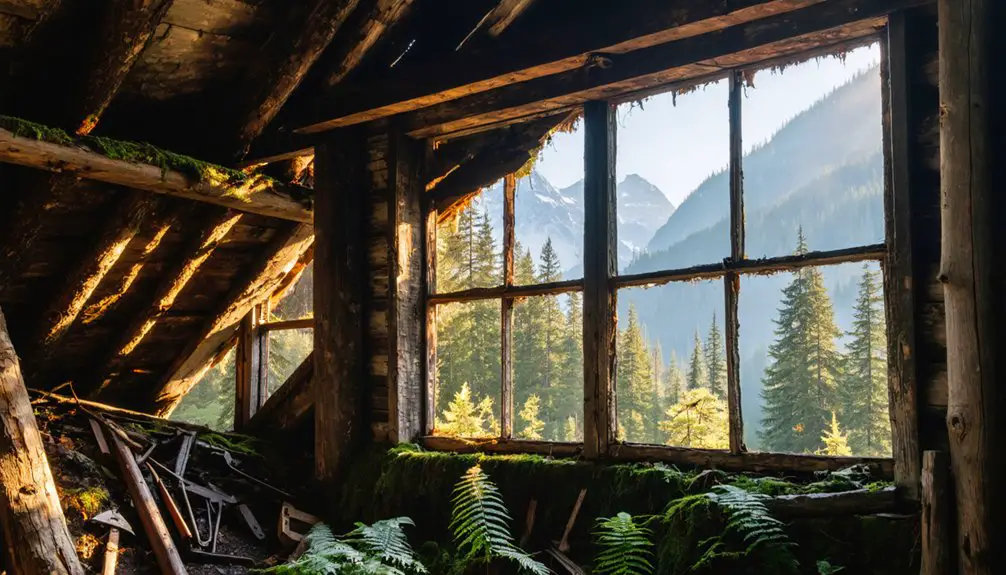
What greets you on the Fairfax Ghost Town Trail isn’t wilderness alone — it’s a layered industrial ruin quietly surrendering to moss and Douglas fir. The ghost town artifacts here carry real historical significance, connecting you directly to a coal economy that once powered the Pacific Northwest.
Expect to discover:
- Coking ovens — a long, striking row of furnace structures surviving 70+ years of abandonment
- Stone foundations — outlines of homes, a hotel, and storefronts that defined a planned working-class town
- Scattered artifacts — remnants of tools, rails, and debris embedded along muddy stretches
- Old-growth forest — 80 preserved acres reclaiming land where miners once lived
Walk slowly. Everything here rewards attention.
When Trail Conditions Make or Break Your Fairfax Visit
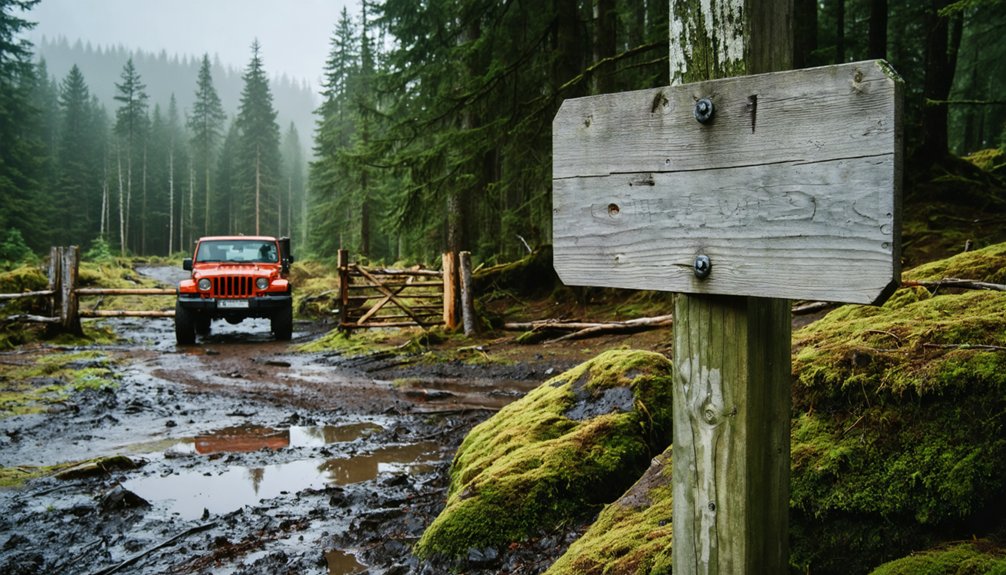
You’ll want to time your visit carefully, because the Carbon River Valley‘s wet climate turns Fairfax’s unpaved trails into stretches of deep, clinging mud that can swallow a boot whole.
Spring and fall bring the heaviest moisture, while late summer offers firmer ground and clearer sightlines through the forest that’s been steadily reclaiming this once-bustling coal town since the 1930s.
Pack waterproof boots, trekking poles for stability on uneven terrain, and layers for the valley’s cool, damp air—you’re walking through a working landscape of history, not a manicured park.
Mud and Terrain Challenges
Before you lace up your boots for Fairfax, know that the Carbon River Valley doesn’t make things easy — the same wet lowlands that once fed the region’s mining operations now conspire to swallow your ankles in thick, rust-colored mud.
Terrain navigation here rewards the prepared. Expect:
- Saturated ground year-round, especially near the old railroad corridor
- Muddy trails that deepen after rainfall, turning soft soil into boot-grabbing sludge
- Uneven surfaces around foundation remnants and coking oven ruins
- Overgrown sections where reclaiming forest obscures original pathways
None of it’s technical — but underestimating the conditions means turning back early.
Waterproof boots, trekking poles, and layered clothing transform a frustrating slog into a genuine exploration of one of Washington’s most atmospheric ghost towns.
Best Seasonal Visiting Times
Knowing when to show up matters as much as knowing what to wear. Fairfax rewards visitors who respect its rhythms.
Summer and early fall offer the driest trails, firmer ground, and the clearest views through the second-growth forest reclaiming the old mining site. That’s your window for peak visitation — plan accordingly.
Spring brings snowmelt down from Mount Rainier’s slopes, turning the Carbon River Valley floor into a muddy maze. Winter closes the experience entirely for most travelers. Seasonal weather here isn’t a minor inconvenience; it dictates whether you’re walking history or slogging through it.
Late August through October delivers the best balance — stable conditions, manageable crowds, and golden light filtering through trees that have been slowly swallowing Fairfax’s ruins for over seventy years.
Essential Gear for Trails
Fairfax’s trails demand three non-negotiables: waterproof boots, trekking poles, and layered clothing. The Carbon River Valley’s notorious mud doesn’t forgive unprepared hikers.
Pack your trail essentials deliberately—every item earns its weight here.
Your hiking gear checklist:
- Waterproof boots — ankle support prevents slips across saturated ground near century-old foundations
- Trekking poles — stabilize your footing where miners once hauled coal through these same corridors
- Moisture-wicking layers — temperatures shift quickly beneath the old-growth canopy
- Daypack with water and snacks — no services exist in this 640-acre ghost town open space
You’re walking through living history. Arriving equipped means spending less time managing discomfort and more time reading Fairfax’s remarkable, abandoned story.
What To Pack for Your Fairfax Hike?
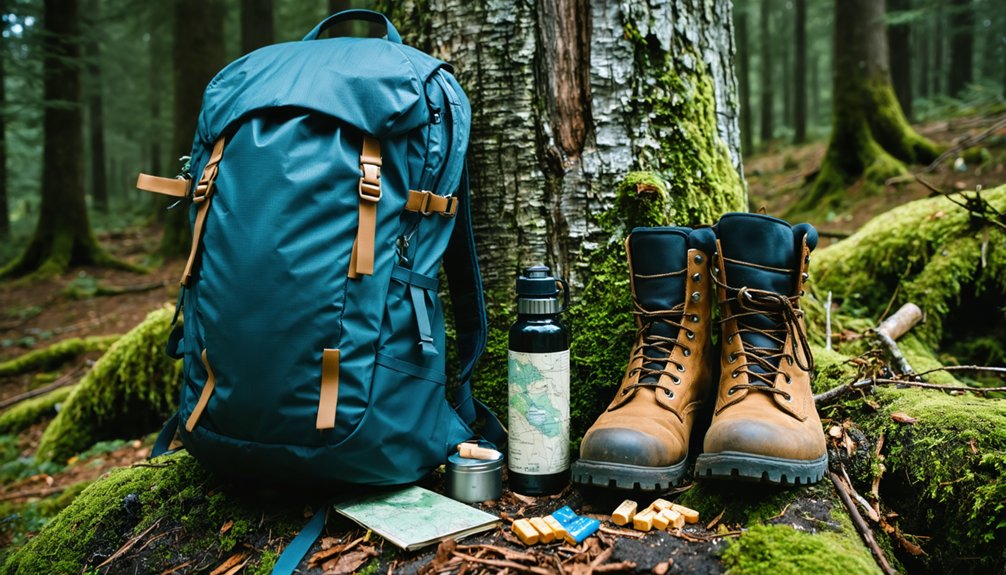
Since Fairfax sits in the wet Carbon River Valley and rewards explorers with muddy trails and overgrown ruins, you’ll want to pack smart before you lace up your boots.
Trail preparedness here means waterproof footwear, since the path through this 1890s coal town stays soggy year-round. Layer up, because Carbon River’s valley air bites cold even in summer.
Your hiking essentials list should include:
- Waterproof boots with solid ankle support
- Trekking poles for muddy, uneven terrain near the coking oven ruins
- Rain jacket and moisture-wicking layers
- Water and snacks for the 6-mile round trip from Carbonado
- Camera to document 70-year-old foundations and artifacts
- Gloves for scrambling around remnants of the old mine structures
Travel light, move freely, and explore boldly.
Nearby Ghost Towns Worth Adding to Your Route
Once you’ve walked Fairfax‘s crumbling foundations and photographed its coking ovens, you’re already positioned to hit two other Carbon River ghost towns that round out the region’s coal-mining story: Melmont and Franklin.
Both sites reward ghost town exploration with raw, unfiltered history.
Build your route around these four stops:
- Fairfax – Coking ovens, foundations, and artifacts anchoring the valley’s industrial past.
- Melmont – A collapsed mining camp with striking historical landmarks hidden beneath dense forest.
- Franklin – A labor-charged site near Black Diamond preserving the region’s worker struggles.
- Carbonado – A still-inhabited town offering context before you drive SR 165 south.
String these together, and you’ve built a freedom-driven, self-guided tour through Washington’s forgotten coal country.
Combine Fairfax Ghost Town With These Nearby Mining Sites
The Carbon River Valley holds more than Fairfax alone, and pairing it with the Northwest Improvement Company’s broader footprint turns a single hike into a full-day immersion in Washington’s coal-mining past.
Trace Fairfax history eastward toward Melmont, another abandoned company town where foundations and scattered artifacts tell parallel stories of boom-and-bust coal extraction. Franklin ghost town adds another chapter, its mining heritage shaped by the same labor tensions and railroad economics that ultimately silenced Fairfax’s coking ovens.
From there, Carbonado’s active history bridges the gap between ruin and living community. Thread these stops together along SR 165, and you’re not just visiting isolated sites—you’re following a continuous industrial corridor that once powered the Pacific Northwest.
Bring boots, bring curiosity, and move at your own pace.
Frequently Asked Questions
Did Labor Disputes at Fairfax Involve Workers of Different Racial Backgrounds?
In the 1890s, owners hired Black, then Japanese workers amid racial tensions over labor rights disputes. You’ll find that these wage conflicts shaped Fairfax’s workforce until resolution finally arrived around 1900.
Was the O’farrell Bridge Considered a Significant Engineering Achievement When Built?
Yes, you’ll find the O’Farrell architecture truly groundbreaking — its Engineering significance undeniable when completed December 17, 1921. Standing 240 feet high, it claimed the title of Washington’s tallest bridge, embodying bold, liberating human achievement over rugged terrain.
How Did Pierce County Acquire Ownership of the Fairfax Ghost Town Lands?
Covering 640 acres, Pierce County’s land acquisition happened when properties were foreclosed for unpaid taxes after the town’s abandonment by 1941. You’ll appreciate the historical significance — these surplus lands remained untouched until 2002’s open space designation.
Were There Other Mining Districts Connected to the Fairfax Town Community?
Yes, you’ll find Fairfax’s mining history stretched beyond its borders, with community connections linking the nearby Montezuma and Manley-Moore districts, expanding the region’s coal-driven identity and weaving together a broader tapestry of Carbon River Valley exploration.
Did Western American Company Operate Both Coal Mining and Coke Production Simultaneously?
Yes, Western American Company ran both operations simultaneously. You’d have witnessed their mining techniques extracting coal while sixty coking ovens blazed nearby, all under labor conditions that sparked real tension among workers demanding fair wages.
References
- http://hikingwithmybrother.blogspot.com/2012/04/fairfax-ghost-town.html
- https://en.wikipedia.org/wiki/Fairfax
- https://blackdiamondhistory.wordpress.com/2020/01/23/ghosts-of-mining-towns-along-northwest-route-to-mount-rainier/
- https://www.youtube.com/watch?v=KywUluRaUx4
- https://willamettecra.com/wp-content/uploads/2021/05/2019-NWAC-Taylor.pdf
- https://www.historylink.org/file/23396