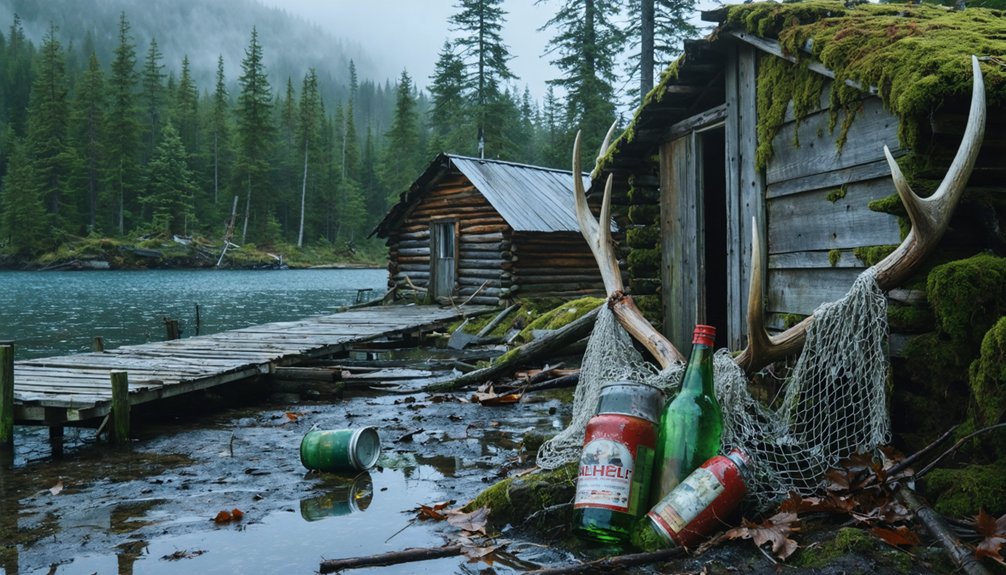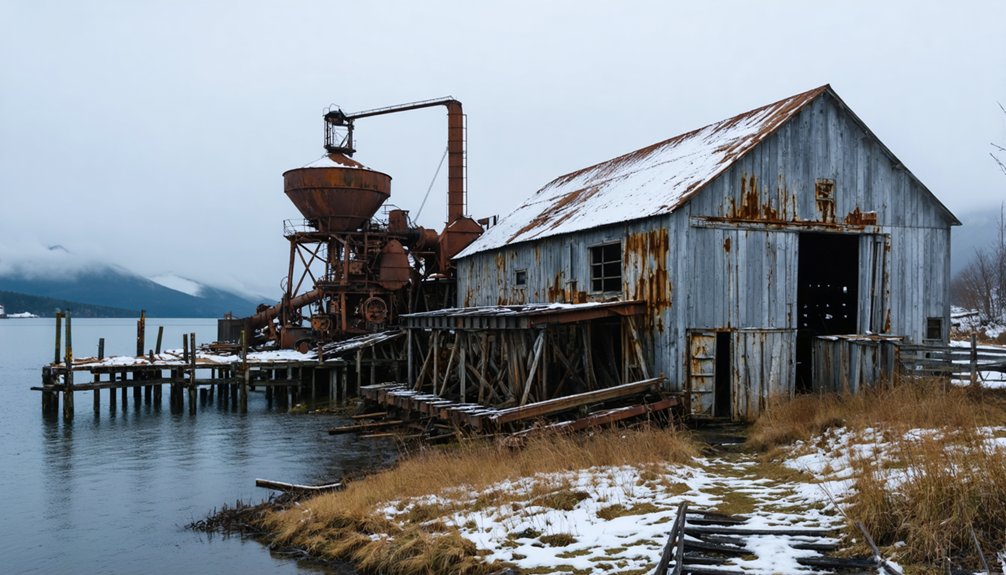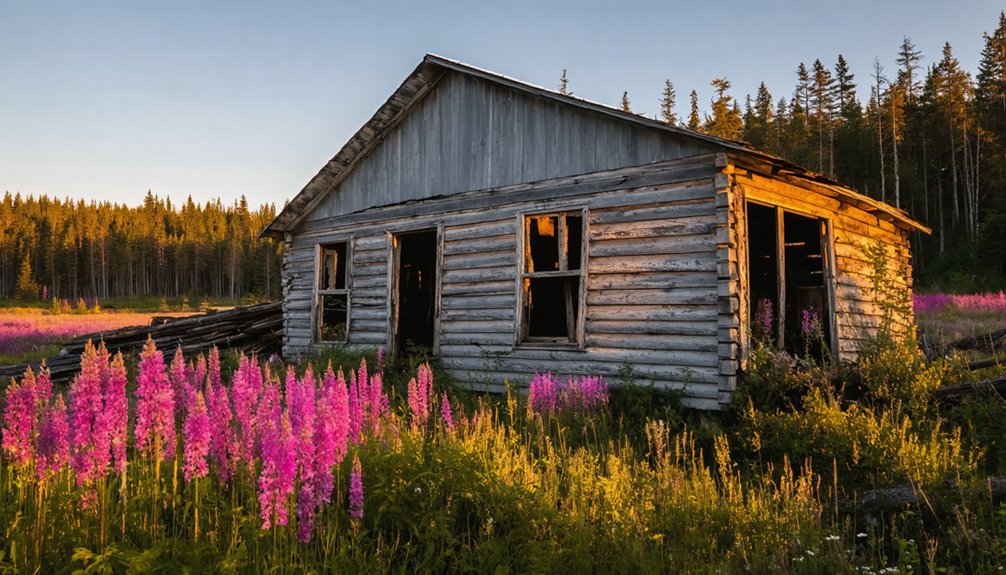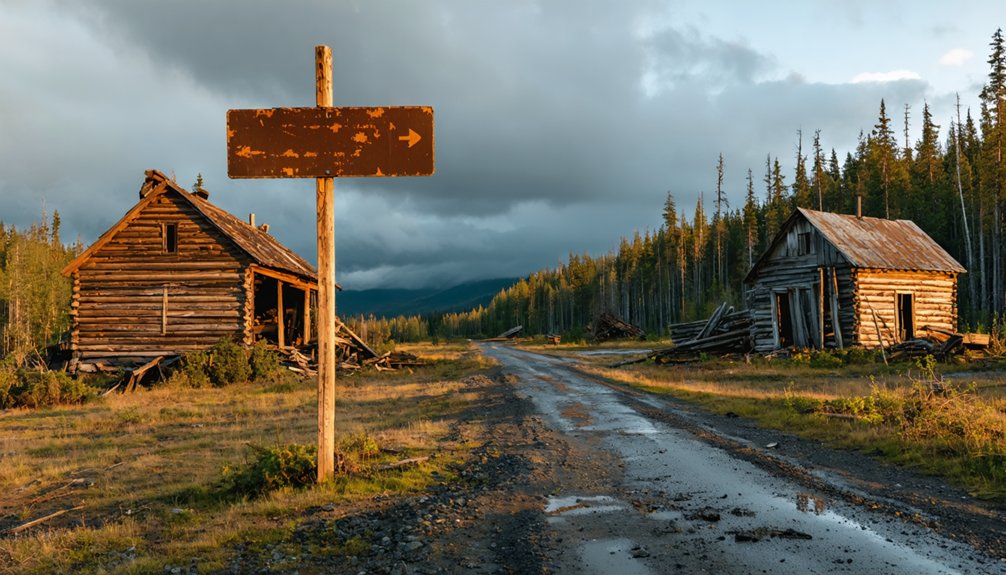
Planning a ghost town road trip to Flat, Alaska requires serious preparation—you can’t actually drive there. This remote mining settlement deep in the Kilbuck-Kuskokwim Mountains is accessible only by chartered bush plane or along the historic Iditarod Trail. You’ll need to visit between late May and early September when conditions are safest, and you must pack everything: food, shelter, emergency supplies, and communication devices. There’s no cell service, no amenities, just abandoned buildings and endless wilderness. The guide below breaks down exactly what you’ll need to survive this authentic Alaskan adventure.
Key Takeaways
- Flat is accessible only by bush plane to a gravel airstrip or via the historic Iditarod Trail, not by road.
- Visit late May through early September for mild weather, extended daylight, and passable trail conditions.
- Bring all supplies including food, shelter, emergency gear, and communication devices as there are no services available.
- Explore thirty-seven inventoried historic mining structures scattered across four camps along Flat and Otter Creeks.
- Pack high-clearance 4×4 equipment, backup navigation systems, survival gear, and photography equipment for remote backcountry access.
Getting to Alaska’s Most Remote Ghost Town
Nestled deep in Alaska’s Kilbuck-Kuskokwim Mountains at 62°27′15″N 158°0′30″W, Flat earned its reputation as one of the state’s most inaccessible ghost towns through sheer geographic isolation and deliberate human neglect. You won’t find paved roads leading here—abandoned mining claims blocked official development from day one.
Instead, you’ll navigate remnants of the historic Iditarod Trail or charter a bush plane, since conventional vehicles can’t reach this wilderness outpost.
The harsh winter climate makes visits between October and April nearly impossible without serious backcountry experience. Your best bet? Fly into the area during summer months when conditions permit landing on rough terrain. Remember, you’re truly off-grid here, seven miles from the Iditarod River junction with zero services and minimal shelter among hundreds of collapsed structures.
Best Times to Visit Flat
Timing your expedition to Flat can mean the difference between an unforgettable adventure and a dangerous ordeal in the backcountry. Target late May through early September when temperatures hover between 50-70°F and extended daylight gives you 16-24 hours for exploration.
Plan your Flat adventure for late May through early September to maximize safety and daylight exploration hours.
June and July deliver peak conditions—dry trails, accessible routes, and endless golden-hour light for scenic photography spots around weathered structures.
You’ll dodge summer crowds while maintaining trail access if you venture in May or September. Your packing checklist shifts dramatically by season: May demands layered cold-weather gear, while July allows lighter clothing. September offers solitude and northern lights potential, though expect variable conditions.
Avoid April’s spring breakup when roads become impassable mud. Winter expeditions require extreme preparation—temperatures plunge below zero and darkness dominates.
What to Expect When You Arrive
When your bush plane touches down on Flat’s makeshift gravel airstrip—smoothed from 1920s mining tailings—you’ll step into authentic isolation. No hotels, restaurants, or cell service exist here. You’re surrounded by tundra, swamp-like terrain, and the whispers of a community that once housed thousands.
The abandoned buildings tell powerful stories: a weathered schoolhouse, crumbling hotel facades, remnants of stores and newspaper offices. This ghost town culture remains remarkably preserved, offering unfiltered glimpses into early 20th-century mining life. You’ll find evidence of pools halls, laundries, and jails scattered among the wilderness.
Bring everything you need—food, shelter, emergency supplies. Winter visitors arrive via snowmachine or dogsled. Summer means traversing muddy ground between historic structures. You’re truly off-grid, experiencing Alaska’s gold rush legacy without modern interference.
Exploring the Historic Mining District
The mining district stretches across the confluence of Flat and Otter Creeks, where gold fever transformed wilderness into Alaska’s largest supply center by the 1920s. You’ll discover thirty-seven inventoried properties scattered across four nearby camps, each telling stories of stubborn prospectors who struck it rich—or went bust trying.
Mining claim disputes shaped everything here. The town couldn’t incorporate because it sat directly on active claims, and residents technically lived “illegally” until the post office closed in 2000.
Historical preservation efforts by BLM and Alaska DNR documented remaining structures from the 1930s-40s, after fires and dredging operations destroyed earlier buildings.
Watch for dredge tailings marking where massive operations like Yukon Gold’s 170-liter Yuba machine tore through creek beds. Summer brings forty seasonal miners continuing the legacy.
Essential Gear and Supplies for Your Trip
Venturing into Flat’s abandoned mining district requires strategic planning—this isn’t a Sunday drive to the corner store. You’ll need rugged remote access equipment to navigate washboard dirt roads, exhaustive survival gear for Alaska’s unpredictable wilderness, and reliable documentation tools to capture the eerie beauty of decaying structures before they’re lost to time.
Pack methodically, because the nearest hardware store sits roughly 90 miles away in Fairbanks, and cell service vanished hours ago.
Remote Access Equipment Needed
Before you even think about pointing your vehicle toward Flat, Alaska, understand this: you’re not just packing for a road trip—you’re preparing for genuine backcountry isolation where the nearest help might be hours or days away.
Your high-clearance 4×4 needs a full-size spare, winch, and traction boards—rugged terrain considerations that separate prepared adventurers from stranded tourists. Extra fuel’s non-negotiable; the last reliable station marks civilization’s edge.
Download onX Offroad before you lose signal. Pack topographic maps and a GPS unit for when trails vanish beneath tundra.
Backup communication systems matter most when they’re your only lifeline. Starlink provides satellite connectivity where phones become expensive paperweights. A compass doesn’t need batteries to guide you home through Alaska’s endless twilight.
Survival and Safety Essentials
Communication devices and maps won’t save your life when Alaska’s weather turns hostile in minutes—your survival gear will. You’re venturing beyond civilization’s safety net, where extreme weather preparation determines whether you walk out or get carried out.
Pack these non-negotiables:
- Shelter systems: Waterproof bivy sack, lightweight tarp, and 100′ parachute cord for rigging emergency protection against sudden storms
- Fire starting redundancy: Multiple lighters, waterproof matches, and fire starter rods—assume one method will fail
- First aid capability: Thorough backcountry kit with SAM splint for fractures, plus Adventure Medical supplies for serious injuries
Keep bear spray accessible and satellite communication devices on your person for backcountry rescue procedures. Your InReach device becomes your lifeline when weather grounds helicopters for days. This isn’t recreational camping—it’s survival preparation.
Photography and Documentation Gear
When frost-blackened timber frames and rusted mining equipment emerge from Alaska’s wilderness, your camera becomes an archaeological tool documenting decay that’ll vanish within decades. Pack a mirrorless or DSLR body with wide-angle lens considerations—a 14-24mm range captures Flat’s sprawling abandonment against midnight sun horizons. Prime lenses reveal intimate details: weathered tools, collapsed cabins, and artifacts frozen in time.
Maximizing low-light photography demands a sturdy tripod for those extended exposures when you’re shooting under aurora-lit skies or within darkened structures. Bring powerful LED flashlights for light-painting collapsed interiors and helping your autofocus lock onto subjects before switching to manual. Don’t forget cleaning supplies—Alaska’s dust and moisture will assault your gear. A reliable backpack protects everything during off-road treks through unforgiving terrain.
Nearby Points of Interest Along the Iditarod Trail
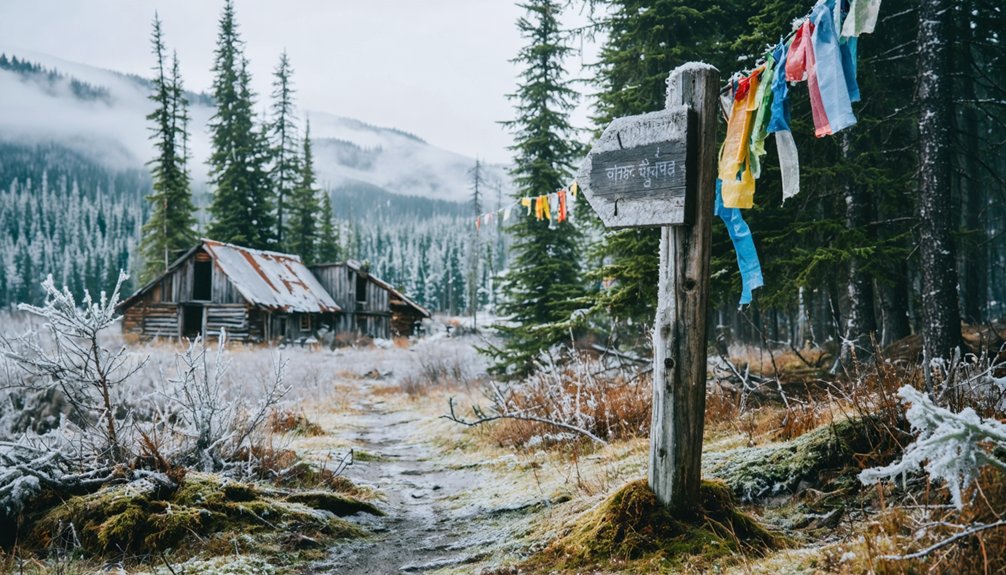
Your journey to Flat places you within reach of two remarkable sites that tell Alaska’s gold rush story. Just fifteen miles away, the ghost town of Iditarod stands frozen in time—this once-thriving mining hub served as the trail’s namesake and now offers a halfway point trophy for modern mushers who brave the southern route.
For a stark contrast between past and present, you’ll find the massive Donlin Creek Gold Mine operation nearby, where contemporary mining techniques extract the precious metal that first drew thousands of prospectors to these remote territories over a century ago.
Historic Iditarod Town Ruins
Seven miles northwest of Flat, the haunting remnants of Iditarod Town stand as a stark witness to Alaska’s boom-and-bust gold rush era. Once a thriving supply center with six hotels and two banks at its 1910 peak, this abandoned settlement offers you a raw glimpse into frontier history.
What you’ll discover wandering these ruins:
- A concrete historic bank vault rising defiantly from the wilderness—the sole intact structure among dilapidated buildings
- Depressions marking former business locations where lawyers, clothiers, and merchants once served thousands of prospectors
- Physical evidence of mass exodus as entire buildings were relocated to Flat during the 1920s-1930s decline
Donlin Creek Gold Mine
Twelve miles north of the tiny Kuskokwim River village of Crooked Creek, you’ll find Alaska’s largest undeveloped gold deposit—a staggering 39 million ounces waiting beneath ridgeline terrain that once lured stampeding prospectors along the Iditarod Trail. The proposed Donlin Creek mine would dwarf those historic operations, extracting 1.5 million ounces annually during its first five years across a 27-year lifespan.
Recent drilling hit spectacular grades: 41.91 meters averaging 11.61 grams per ton. While mine feasibility studies project impressive returns, environmental impact debates simmer over the proposed natural gas pipeline and processing requirements for this refractory ore. You’ll witness where modern gold fever meets wilderness reality—277 miles northwest of Anchorage, where billion-dollar ambitions face Alaska’s unyielding landscape.
Frequently Asked Questions
Can I Legally Stay Overnight in the Abandoned Buildings at Flat?
No, you can’t legally stay overnight—trespassing legalities apply even in ghost towns. Ironically, while seeking freedom in Flat’s abandoned structures, you’d risk legal trouble and safety hazards. Explore during daylight, respect property boundaries, and camp legally nearby instead.
Are There Still Active Mining Claims Where Visitors Cannot Explore?
Yes, active mining claims exist around Flat, creating restricted mining areas you can’t freely explore. These function as private property concerns—trespassing risks legal trouble. Always check current claim maps before venturing off established paths to protect your adventure.
What Caused the Devastating Fire That Destroyed Flat in 1924?
The devastating fire’s impact on community remains shrouded in mystery—no arson investigation details survive from 1924. You’ll find the cause went up in smoke, leaving Flat’s 6,000 residents homeless and ending the town’s golden era overnight.
Is There Cell Phone Service or Emergency Communication Available in Flat?
You’ll find no cell phone service in this remote ghost town—limited cell coverage doesn’t reach Flat’s wilderness. Pack a satellite phone for emergencies, ensuring you’re connected when exploring this isolated frontier beyond civilization’s reach.
Do I Need Special Permits to Visit This Unplatted Ghost Town?
You won’t need special permits to explore Flat’s abandoned buildings, but respect private property rights—some structures remain claimed. The town’s historical significance draws adventurers like you seeking Alaska’s authentic frontier spirit without bureaucratic hassles.