Plan your Flint, Idaho ghost town road trip by heading southwest through Long Gulch along the same historic stage route that miners and soldiers once traveled. It’s a 13-mile one-way journey, so budget time for the full 26-mile round trip. Bring water, navigation tools, and written permission before you go. Fall and spring offer the best trail conditions. Stick to the trail at crossroads, and stay ready — Flint’s haunted history runs far deeper than its ruins suggest.
Key Takeaways
- The route to Flint follows a historic stage path through Long Gulch, totaling 26 miles round trip and accommodating ATVs, bikes, and hikers.
- Remnants include standing frame houses, mill ruins, and a cemetery with two brick tombs located west across the creek.
- Indian raids significantly impacted Flint’s history, with violent conflicts accelerating the town’s mining decline despite cavalry intervention.
- Visit during fall, spring, or summer for best trail access, as winter snow can make the journey difficult.
- Bring written permission, sufficient water, navigation tools, and sturdy boots to safely navigate the rocky terrain.
How to Reach Flint Ghost Town From Silver City
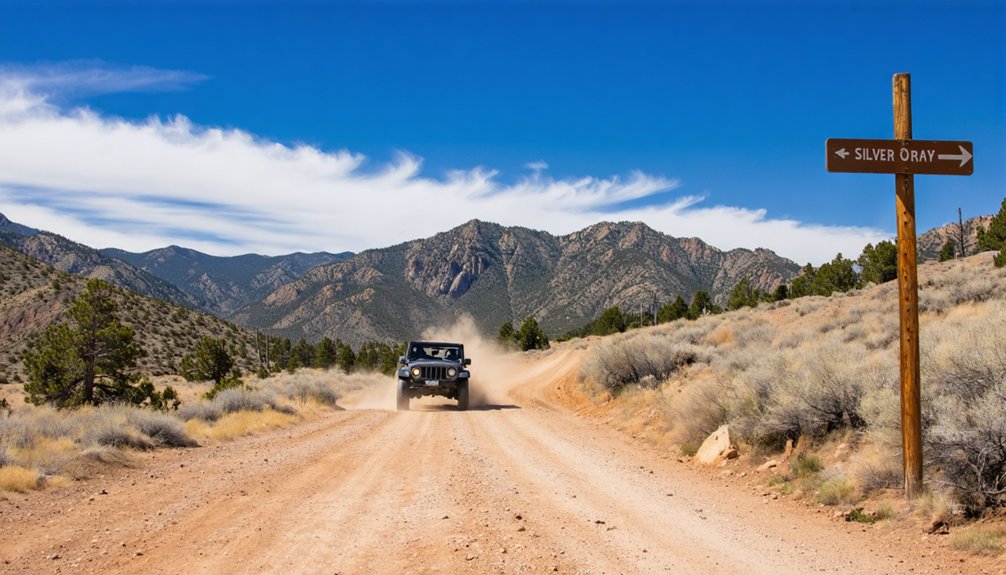
Once you leave Silver City behind, the journey to Flint follows the same rugged stage route that miners, merchants, and cavalry soldiers once traveled.
Head southwest through Long Gulch, covering roughly 13 miles one way before reaching the site. The trail access accommodates ATVs, mountain bikes, and foot travel, giving you flexibility in how you choose to explore.
Head southwest through Long Gulch — 13 miles of trail open to ATVs, mountain bikes, and foot traffic alike.
Watch for a crossroad about a third of the way in — keep straight and don’t second-guess yourself. The route traces Idaho’s mining history at every turn, winding through terrain shaped by silver fever and frontier survival.
The round trip clocks 26 miles total, so plan accordingly. Since Flint sits on private property, you’ll need permission before setting foot on the grounds.
What Still Stands at Flint Ghost Town Today
Although time and harsh winters have stripped away much of what Flint once was, enough survives to make the journey worthwhile.
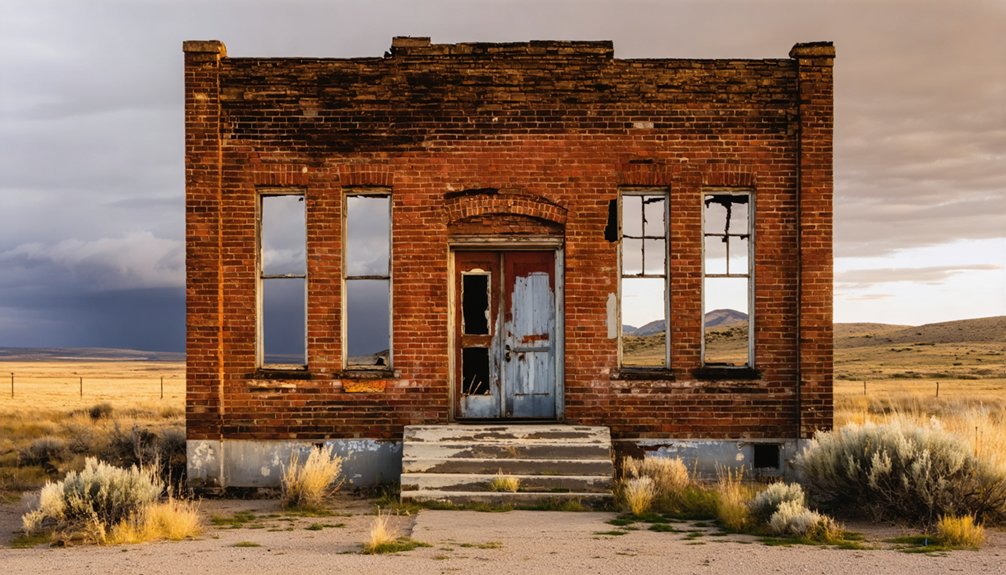
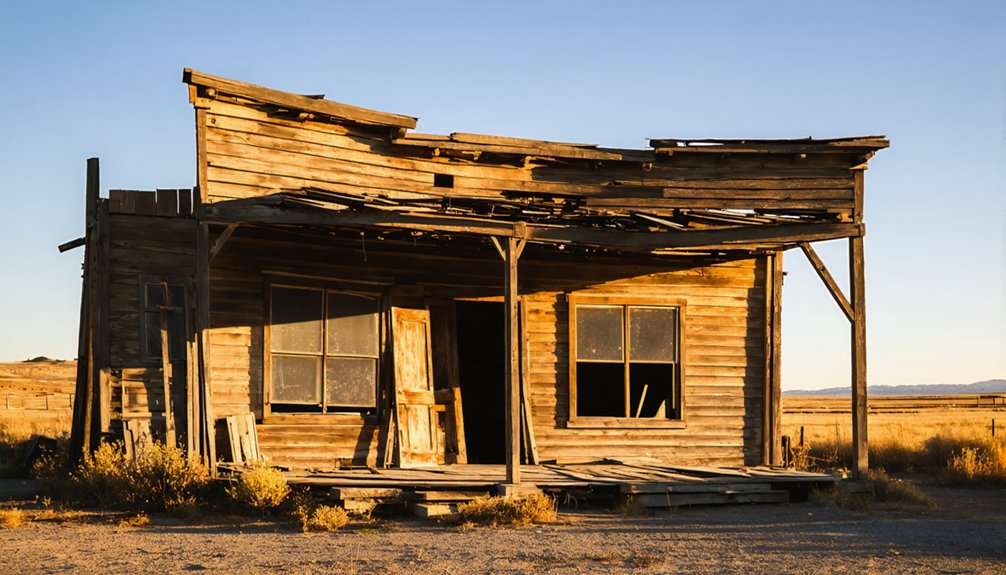
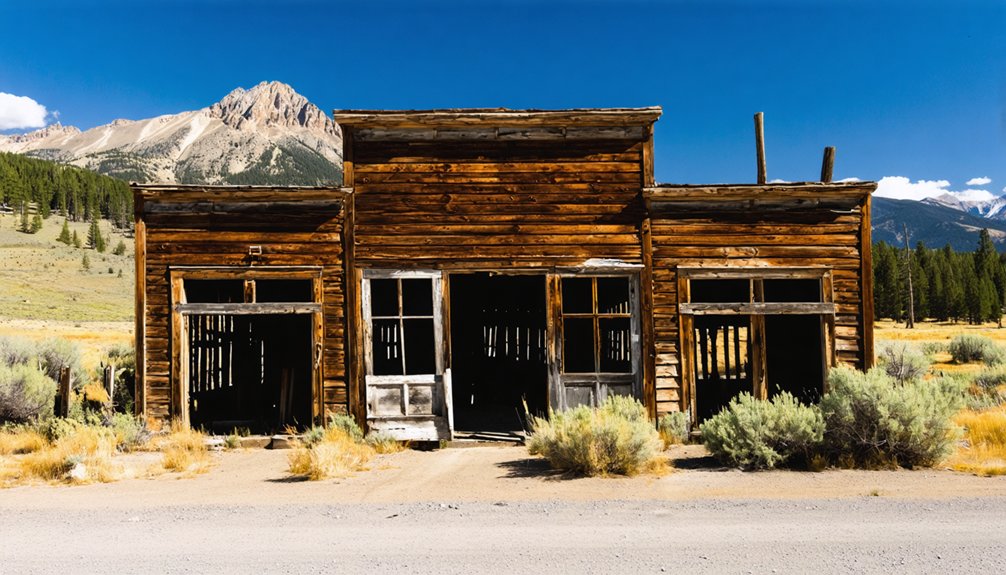
You’ll find mill ruins standing as silent monuments to the silver rush that once drew 1,500 souls to these remote hills. Several frame houses still hold their ground, and the remaining structures give you a tangible sense of the community that thrived here.
Cross the creek heading west, and you’ll discover the cemetery, where two brick tombs and scattered headstones anchor the stories of those who never left.
These historical artifacts connect you directly to lives shaped by ambition, danger, and frontier grit. Flint doesn’t hand you a polished museum experience — it hands you raw, unfiltered history worth every step of the trail.
How Indian Raids Ended Flint’s Thriving Mining Community
Flint’s silver boom attracted fortune-seekers, but it also drew the town into violent conflict with Native Americans who saw their land steadily overtaken. Indian conflicts claimed prominent citizens and created constant dread among residents.
William L. Black met his end from an arrow fired from Saddle Rock the moment he stepped outside his cabin — a chilling reminder of how exposed Flint’s community truly was.
These relentless raids accelerated mining decline, eroding the confidence that once drew 1,500 souls to this remote canyon. Community resilience kept Flint breathing temporarily, but the violence demanded outside help.
Cavalry intervention eventually suppressed the uprising, restoring fragile order. Yet the damage was done. Flint never fully recovered, and the population quietly dissolved, leaving behind only ruins, graves, and silence.
Flint Ghost Town’s Cemetery and Its Most Haunting Graves
Death left its marks on Flint in more than one place. The cemetery sits west across the creek, reachable by a steep, rocky trail that demands sure footing and genuine curiosity.
Two brick tombs and scattered headstones anchor the site, quiet monuments to forgotten lives cut short by silver fever and frontier violence.
But the most haunting history lies elsewhere. Climb southwest of town to a juniper-covered hilltop, and you’ll find two remote graves belonging to William L. Black and Emma Myers, his daughter-in-law.
Black died from an Indian arrow fired from Saddle Rock the moment he stepped from his cabin — a brutal, sudden end.
These isolated graves don’t just mark death. They mark the raw, unfiltered cost of chasing freedom on the frontier.
Best Time to Visit Flint Ghost Town and What to Pack
Timing your visit to Flint matters more than you might expect. The best seasons are fall, spring, and summer, when the trails through Long Gulch stay passable and the high desert landscape rewards exploration.
Timing your visit to Flint right opens up Long Gulch when the high desert is worth every step.
Winter brings snow and cold that’ll shut down your adventure fast.
Pack your essential gear deliberately. You’re heading into remote terrain across private property, so bring written permission, plenty of water, and navigation tools since cell service won’t save you here.
Sturdy boots handle the steep, rocky cemetery trail without punishment. Layers manage unpredictable mountain temperatures, and a camera captures the mill ruins and weathered headstones before the light shifts.
Whether you’re riding ATVs, mountain bikes, or hiking in, respect the land, move deliberately, and let Flint’s silence tell its story.
Frequently Asked Questions
What Other Ghost Towns Can I Visit Near Flint, Idaho?
You’ll find Silver City’s 70+ abandoned structures just 10 miles away, steeped in local legends. Wickahoney’s another nearby stop worth exploring. Together, they’ll satisfy your hunger for freedom and adventure across Owyhee County’s historic mining past.
Is Special Permission Required to Access Flint Ghost Town?
Like a gatekeeper of history, Flint’s ghost town regulations require you to secure access permissions before visiting — it’s situated on private property, so you’ll need to reach out and get the owner’s blessing before exploring its storied ruins.
What Silver Mining Operations Originally Made Flint Historically Significant?
You’ll find Flint’s silver discovery fueled intense mining operations that once drew 1,500 bold souls chasing fortune. Though specific mining techniques aren’t fully documented here, those extracted silver veins built a thriving, albeit dangerous, frontier community worth exploring.
How Large Did Flint’s Population Grow During Its Mining Peak?
At its peak, you’d have found Flint’s population growth reaching nearly 1,500 bold souls, all drawn by mining impact. Silver fever fueled this wild, freedom-chasing community, transforming a remote Idaho gulch into a thriving, bustling frontier town.
What Businesses and Services Did Flint Offer During Its Peak?
At its 1,500-person peak, you’d’ve found a post office, livery stable, stores, and saloons — each a historic landmark steeped in local folklore, buzzing with the adventurous spirits of free-roaming miners chasing silver dreams.
References
- https://www.ghosttowns.com/states/id/flint.html
- https://gearjunkie.com/adventure/ghost-town-silver-city-idaho
- https://www.onlyinyourstate.com/trip-ideas/idaho/haunting-road-trip-id
- https://www.youtube.com/watch?v=RNCaxrY62ZI
- https://visitidaho.org/things-to-do/ghost-towns-mining-history/
- https://www.evansoutdooradventures.com/adventure-log-june-1-16-2019-part-2-pintler-scenic-route-granite-ghost-town-skalkaho-falls/