Planning a ghost town road trip to Trading Post, Kansas means exploring the state’s oldest settlement, founded around 1825 along the Marais des Cygnes River. Take Exit 69 off Highway 69, head east on Highway 52, and you’ll find a community frozen in frontier history. Visit between April and November for museum access, Civil War artifacts, and genealogy records. Grab a free Southeast Kansas Museum Alliance Passport — there’s far more to uncover here than you’d expect.
Key Takeaways
- Trading Post, Kansas, established around 1825, is the oldest existing settlement in Kansas, now resembling a ghost town with limited daily activity.
- Take Exit 69 off Highway 69 at the Butler exit, then head east on Highway 52 to reach Trading Post.
- Visit between April 1 and November 1, Wednesday through Saturday, 10 AM to 2 PM, for museum access.
- The Trading Post Museum features Civil War artifacts, Indian flint, early weapons, and an 1886 schoolhouse worth exploring.
- Nearby ghost towns like Pleasanton, Mound City, and Mapleton complement the trip; grab a free Southeast Kansas Museum Alliance Passport.
Why Trading Post Is Kansas’ Oldest: and Most Overlooked: Settlement
While most travelers zoom past the Butler exit on Highway 69, they’re unknowingly bypassing a piece of American history that predates Kansas statehood by decades.
Trading Post earned its name honestly — Cyprian Chouteau established this frontier legacy as a Native American trading hub around 1825, making it the oldest existing settlement in Kansas.
Trading Post didn’t inherit its name — Cyprian Chouteau earned it, building Kansas’s oldest settlement from a single trading hub in 1825.
This overlooked history runs deep. Before border conflicts erupted, before Civil War bullets scarred the landscape, this quiet Marais des Cygnes River community was already thriving.
Stores, mills, and schoolhouses defined its settlement significance long before neighboring towns existed.
Today, most road-trippers don’t even know Trading Post exists. That’s exactly what makes discovering it so rewarding.
You’re not following a crowd — you’re uncovering a forgotten chapter of American frontier independence on your own terms.
The History Behind Kansas’ Oldest Settlement
That frontier legacy Chouteau built didn’t happen by accident. In 1825, he established one of the earliest settlements in what would become Kansas, creating a trading hub with deep cultural significance for both Native Americans and westward-pushing settlers.
By the 1850s, the site transformed into a heated battleground. Pro-slavery Missouri settlers used it as headquarters during Kansas Territory’s turbulent organization, while abolitionist Montgomery raided the post, destroying whiskey supplies and driving out border ruffians.
You’re walking ground where real freedom was contested. By 1865, the community had stores, a mill dating to 1857, and a schoolhouse.
Dr. Massey and George Crawford finally platted the town in 1866, cementing these early settlements into what you can still explore today.
How Trading Post Went From Frontier Headquarters to Ghost Town
After all that fire and conflict, Trading Post’s decline came quietly. The 1865 Montgomery Town plat failed before it ever took hold, and the original site never fully recovered its momentum.
By 1866, Dr. Massey and George Crawford replatted the town, but the frontier legacy that once made this place a regional powerhouse couldn’t sustain a growing population.
Even after replatting in 1866, Trading Post’s frontier glory couldn’t keep pace with a population hungry for more.
Community decline accelerated when rural free delivery replaced the need for a centralized trading hub. Residents no longer depended on the town’s core, and the population dropped to just 146 by 1910.
Today, Trading Post resembles a ghost town, with seasonal museum hours signaling how little daily activity remains. Yet that quiet stillness is exactly what makes visiting so compelling — you’re walking through living history.
How to Get to Trading Post, Kansas
To reach Trading Post, Kansas, you’ll take Exit 69 off the highway at the Butler exit, then head east on Highway 52.
Once you’re on Highway 52, watch for 4th Street, which will guide you directly into this historic settlement on the banks of the Marais des Cygnes River, six miles north of Pleasanton.
The route is straightforward, making this ghost town adventure easily within reach for any road tripper ready to step back into Kansas’s oldest settlement.
Highway Routes and Exits
Getting to Trading Post, Kansas is straightforward once you know the route. Take Exit 69 on the highway at the Butler exit, then head east on Highway 52 until you reach 4th Street.
You’ll find Trading Post sitting along the Marais des Cygnes River, six miles north of Pleasanton.
Highway conditions along this stretch are generally manageable, making your road trip comfortable year-round. As you cruise east on Highway 52, you’ll catch scenic views of rolling Kansas countryside that set the mood perfectly for exploring one of the state’s oldest settlements.
Keep your eyes open for the 4th Street turn — it’s your gateway into history. The drive itself builds anticipation, pulling you deeper into Kansas’ frontier past with every mile you cover.
Local Roads and Landmarks
Once you’ve turned onto 4th Street, the local roads guide you directly into Trading Post‘s quiet, time-worn landscape along the Marais des Cygnes River.
This scenic route rewards you with sweeping river views and a palpable sense of frontier history.
Watch for local landmarks like the Trading Post Museum, the preserved 1886 schoolhouse, and the Amos Tubbs cabin — each one anchoring you deeper into Kansas’ oldest settlement.
The surrounding rural terrain feels deliberately unhurried, letting you absorb the weight of 1825 history without distraction.
You’re only 6 miles north of Pleasanton here, yet the isolation feels complete.
Keep your eyes open, move slowly, and let the landscape tell its story before you even step out of the car.
Best Time to Visit Trading Post (and When to Skip It)
Planning your visit around the museum’s schedule makes all the difference at Trading Post. The Trading Post Museum opens April 1 through November 1, welcoming explorers Wednesday through Saturday, 10 AM to 2 PM.
These are your best seasons to experience the full depth of Kansas’ oldest settlement, from Civil War artifacts to the 1886 schoolhouse. If you’re traveling outside those hours, call ahead to arrange an appointment — the curators accommodate serious visitors.
Skip a spontaneous winter detour unless you’re content exploring the outdoor surroundings alone.
Visitor tips worth remembering: grab your free Southeast Kansas Museum Alliance Passport to maximize the journey across regional sites.
Spring and fall offer comfortable road-tripping weather, making those months the sweet spot for your ghost town adventure.
What You’ll Find at the Trading Post Museum
Once you step inside the Trading Post Museum, you’ll encounter a compelling mix of Indian flint, early weapons, Civil War bullets, and pioneer household goods that bring Kansas’s oldest settlement to life.
You can also dig into Linn County’s past through tax ledgers dating to 1863, census records, cemetery logs, and a large genealogy library packed with area photographs and marriage records.
The museum’s open April 1 through November 1, Wednesday through Saturday, 10 AM to 2 PM, with appointments available outside those hours.
Artifacts And Historical Displays
Step inside the Trading Post Museum and you’ll discover a carefully curated collection that brings Kansas’ oldest settlement to life. The artifacts significance here runs deep — you’re looking at Indian flint tools, early weapons, and clothing that shaped this frontier crossroads.
Civil War bullets recovered from the local battle remind you that freedom wasn’t free on this contested ground.
Beyond weapons and relics, the museum’s commitment to historical preservation shines through its 1886 schoolhouse, Amos Tubbs cabin, and working machine shop tours.
You’ll also access Linn County tax ledgers dating to 1863, census records, cemetery documents, and a substantial genealogy library.
Whether you’re tracing ancestors or absorbing raw frontier history, every corner of this museum delivers something genuinely worth your time.
Genealogy And County Records
If you’re tracing your family’s roots through early Kansas history, the Trading Post Museum’s genealogy resources will stop you in your tracks. These historical archives hold treasures that serious researchers dream about discovering.
Dig into records that paint vivid pictures of frontier life:
- Linn County tax ledgers dating back to 1863
- Census records, school documents, and marriage records
- Cemetery records and historical obituaries
- Photographs of area residents throughout the generations
You’ll find yourself lost for hours exploring documents that connect real people to this wild, storied landscape.
Whether you’re hunting down a specific ancestor or simply absorbing Kansas frontier history, these resources deliver raw, unfiltered access to the past. The museum’s collection transforms a casual road trip stop into a genuine historical expedition.
Museum Hours And Access
After you’ve spent time buried in those genealogy records, you’ll want to know when you can actually get through the museum’s doors.
Museum accessibility follows a seasonal schedule, so plan accordingly. From April 1 through November 1, the museum welcomes visitors Wednesday through Saturday, 10 AM to 2 PM.
Outside those hours, you’re not out of luck — appointments keep the seasonal offerings available for dedicated explorers who can’t make standard hours. This flexibility suits road-trippers working around unpredictable schedules.
Getting there’s straightforward: take Exit 69 at the Butler exit off Highway 69, then head east on Highway 52 to 4th Street.
With a little planning, you’ll gain access to this remarkable slice of Kansas history without hitting a dead end.
The Civil War History Trading Post Preserved for 150 Years
Trading Post, Kansas holds over 150 years of Civil War history within its museum walls, and you’ll find the evidence right where the battles once unfolded. This ground witnessed real conflict, and the museum preserves what remains.
You’ll discover artifacts that connect you directly to those turbulent years:
- Civil War bullets recovered from the local battle site
- Early weapons carried by soldiers and settlers
- Linn County tax ledgers dating back to 1863
- Records documenting the border warfare that defined this region
Trading Post served as headquarters for pro-slavery border ruffians before Montgomery’s raid dismantled their operations.
Walking these grounds means standing where American freedom was actively contested. The museum doesn’t just display history—it keeps the raw, unfiltered story of this land alive for every visitor.
Why Genealogists Keep Coming Back to This Museum
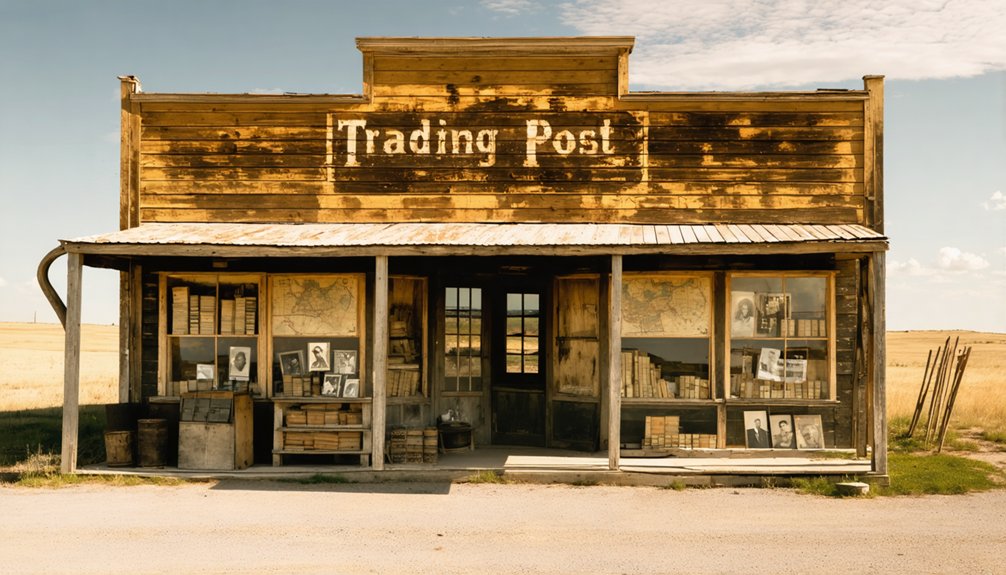
If you’re tracing your roots in Kansas, you’ll find the Trading Post Museum‘s genealogy library is a treasure trove that’s hard to match anywhere else in the state.
You can dig through Linn County tax ledgers dating back to 1863, census records, school documents, obituaries, marriage records, and cemetery logs all under one roof.
Rare photographs of area residents round out the collection, giving you faces to match the names you’ve been chasing across history.
Rare Historical Records Access
Tucked inside the Trading Post Museum lies a genealogist’s treasure trove that keeps researchers returning season after season.
You’ll find rare Linn County records with genuine historical significance, carefully maintained through dedicated document preservation efforts. Immerse yourself in collections that reveal your family’s past:
- Tax ledgers dating back to 1863, offering detailed financial snapshots of early settlers
- Census and school records, tracing community growth across generations
- Obituaries, marriage, and cemetery records, connecting family lines with precision
- A large genealogy library paired with area resident photographs, putting faces to forgotten names
You won’t find this concentration of frontier-era documentation just anywhere.
Plan your visit between April 1 and November 1, Wednesday through Saturday, and come ready to uncover stories that textbooks simply don’t tell.
Extensive Genealogy Library Resources
Beyond the records themselves, the Trading Post Museum’s genealogy library is what truly keeps researchers hooked. You’ll find yourself surrounded by historical archives that paint vivid portraits of early Kansas settlers — their lives, struggles, and legacies preserved in remarkable detail.
The genealogy resources here go deep. You’re not just skimming surface-level documents; you’re uncovering area resident photographs, cemetery records, marriage certificates, obituaries, and census data all under one roof.
It’s the kind of place where you arrive expecting an hour and leave four hours later. Whether you’re tracing family roots or simply fascinated by frontier history, this library delivers something genuinely rare — accessible, well-organized records from one of Kansas’ oldest settlements.
Serious researchers make the drive down Highway 52 repeatedly, and you’ll understand why the moment you step inside.
Ghost Towns Near Trading Post Worth Adding to Your Route
While you’re exploring Trading Post, several ghost towns nearby are worth adding to your route through southeast Kansas. This region’s rural history runs deep, and ghost town discoveries await around every bend.
Consider extending your drive to include:
- Pleasanton – Just 6 miles south, offering additional Linn County historical context.
- Boicourt – The rural free delivery hub that contributed to Trading Post’s decline.
- Mound City – A nearby Linn County seat with preserved 19th-century character.
- Mapleton – A quiet remnant community reflecting classic Kansas prairie settlement patterns.
Each stop layers another chapter onto southeast Kansas’s border warfare and pioneer story.
Grab the free Southeast Kansas Museum Alliance Passport at Trading Post—it grants access to additional participating sites across the region, maximizing every mile you drive.
How to Build a Full Day Around Trading Post, Kansas
Mapping out a full day around Trading Post transforms those nearby ghost town stops into a cohesive, rewarding adventure rather than a scattered collection of roadside detours.
Start your road trip early, arriving at the Trading Post Museum when doors open at 10 AM. Spend two hours exploring Civil War artifacts, genealogy records, and the 1886 schoolhouse. Grab your free Southeast Kansas Museum Alliance Passport before leaving.
After lunch, push north or south to hit neighboring ghost towns you’ve already scouted. Return to Trading Post before 2 PM if you need a second look.
You’ll cover meaningful ground without rushing, letting each abandoned settlement breathe and tell its story. That’s the kind of freedom a well-planned road trip delivers.
Frequently Asked Questions
Can Children Participate in the Trading Post Museum’s Machine Shop Tours?
Coincidentally, you’ll love that children’s engagement thrives here! Kids can actively join the machine shop tours, making educational activities come alive. You’re free to explore history hands-on at Trading Post Museum’s adventurous, open tours together!
Is Photography Allowed Inside the Trading Post Museum’s Exhibits?
The museum’s exhibit photography policies aren’t explicitly documented, so you’ll want to check their museum visitor guidelines directly when you visit! Call ahead and confirm—you’re free to capture history’s wild, untamed spirit firsthand!
Are There Restroom Facilities Available at the Trading Post Museum?
Like Lewis and Clark planning ahead, the knowledge doesn’t confirm restroom accessibility or visitor amenities at Trading Post Museum. You’d want to contact them directly before your adventure begins to avoid any unexpected surprises!
Does the Museum Offer Guided Tours for Large Groups or School Visits?
The museum doesn’t explicitly list guided tours or group discounts, but you can arrange visits by appointment! Contact them directly to explore tour availability for your school group or adventure-seeking crew before April 1st opening season.
Is There an Admission Fee to Enter the Trading Post Museum?
No admission fee traps you here — you’re free to explore Trading Post’s ghost town history and local legends! The Southeast Kansas Museum Alliance Passport grants access to participating sites, letting your adventurous spirit roam these storied, artifact-filled halls freely.
References
- https://ksgenweb.org/archives/1912/t/trading_post.html
- https://www.youtube.com/watch?v=8dtIPX7pIqI
- https://archives.kansaspreservationalliance.org/chouteau-trading-post-station-and-post-office-site/
- https://www.potawatomi.org/blog/2024/10/31/researchers-search-for-uniontown/
- https://www.visitoldmeadecounty.com/newpage815e5c49
- https://www.travelks.com/listing/trading-post-museum/1690/