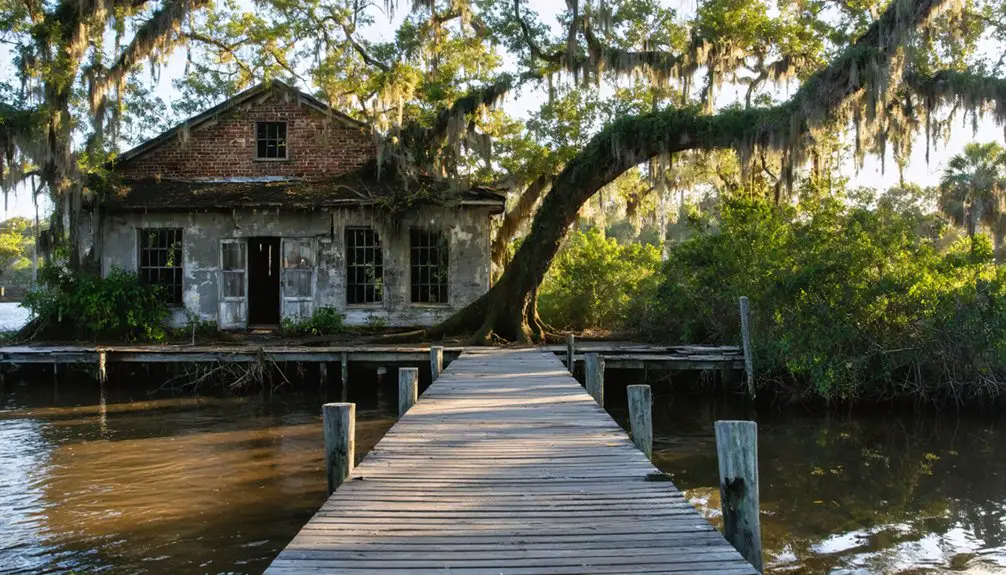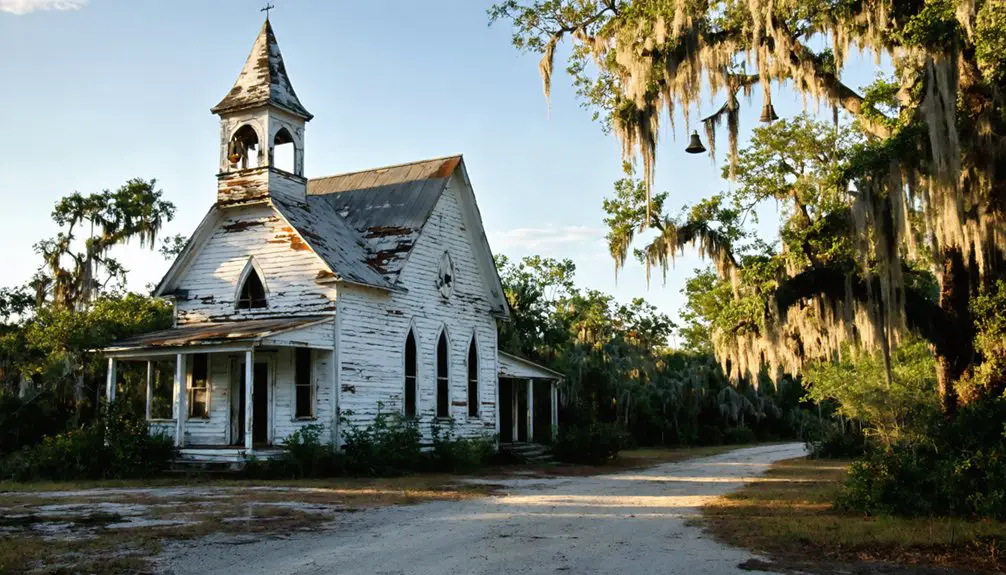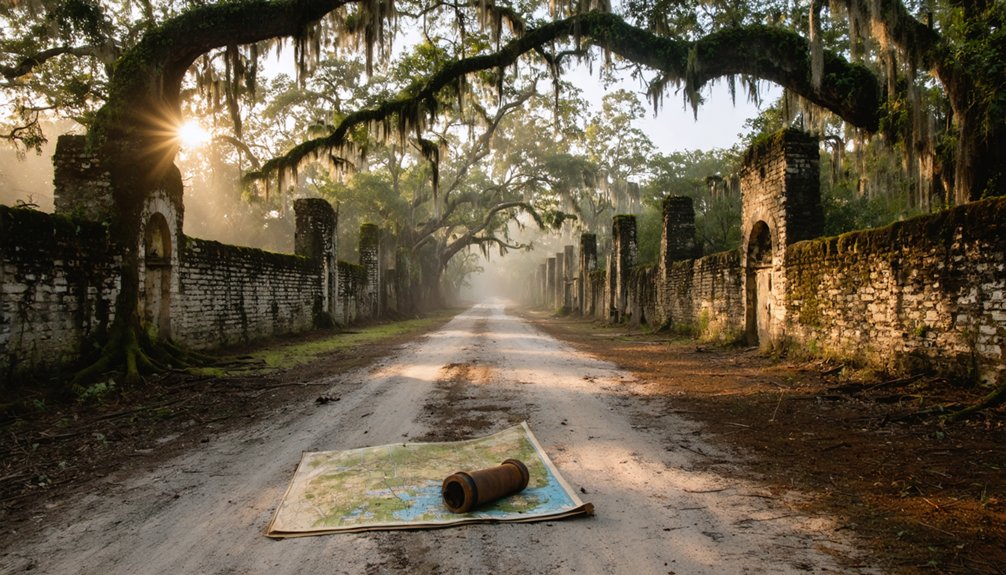
You’ll need to book a ferry from Fort De Soto or Hubbard’s Marina ($20-$75) to reach Fort Dade’s haunting ruins on Egmont Key. Once there, you’ll wander six miles of brick pathways threading through five crumbling artillery batteries, skeletal barracks, and overgrown military structures abandoned since the 1920s. Gopher tortoises navigate the same historic corridors where soldiers once marched, while osprey nest atop decaying gun emplacements. The complete guide below covers ideal visiting times, essential supplies, and combining your ghost town exploration with beach activities.
Key Takeaways
- Fort Dade requires ferry access from Fort De Soto or Hubbard’s Marina, with fares ranging $20-$75 and 30-60 minute journeys.
- Ferries depart seasonally at 9am/11am from Fort De Soto and 10am/12pm from Madeira Beach; plan accordingly for round trips.
- Explore five crumbling 1898 artillery batteries, deteriorating barracks, and nearly a mile of intact brick streets threading the island.
- Visit the historic 1848 lighthouse and witness hurricane-damaged gun emplacements, ammunition bunkers, and partially submerged battery structures.
- Encounter wildlife including gopher tortoises, nesting osprey, migratory birds, and nearshore manatees throughout the abandoned military complex.
Getting to Egmont Key: Ferry Access and Transportation Options
Since Egmont Key sits isolated in the mouth of Tampa Bay with no bridges or roads connecting it to the mainland, your only access to Fort Dade requires a ferry ride across turquoise Gulf waters. You’ll find transportation alternatives from two primary departure points: Fort De Soto Boat Ramp in Tierra Verde and Hubbard’s Marina at Johns Pass in Madeira Beach.
Ferry schedule flexibility varies by season, with Fort De Soto offering morning departures at 9am and 11am during regular season, while Madeira Beach runs trips at 10:00 AM and 12:00 PM. Expect to pay between $20-$75 depending on your chosen operator.
The 30-60 minute journey delivers dolphin sightings and coastal views before depositing you on pristine shores where Fort Dade’s ruins await exploration. The approximately 46-foot ferry features both covered and open seating areas for your comfort during the crossing. Once you arrive, the ferry provides 3 hours to explore the island’s historic grounds and natural beauty. Book ahead—these intimate vessels accommodate maximum 49 passengers.
What to Expect at Fort Dade’s Abandoned Military Complex
You’ll encounter a haunting landscape where nature has reclaimed military history—crumbling gun batteries with walls up to 20 feet thick slowly surrendering to encroaching vegetation and relentless coastal erosion.
The gutted shells of the mess hall and post-jail stand as skeletal sentinels among the ruins, while spotted deer, gopher tortoises, and seabirds now inhabit spaces once occupied by soldiers. Among the accessible ruins, you can also explore the remnants of officer quarters and a hospital that once served the fort’s military population.
Some battery structures have partially submerged beneath the waves, their footers exposed by the same erosive forces that have steadily consumed the island since Fort Dade’s abandonment in 1923. The site’s deterioration accelerated after devastating hurricanes struck in 1921, followed by fires in 1925 and 1927 that destroyed major structures including the barracks.
Crumbling Infrastructure and Batteries
Towering concrete batteries emerge from the overgrown landscape like sentinels of a forgotten war, their massive earthworks still dominating Fort Dade’s shoreline despite a century of abandonment. You’ll discover five artillery batteries constructed in 1898, now stripped of their 12-inch coastal defense mortars. Underground compartments that once stored powder and shells sit in shadowy darkness, while erosion has claimed several structures, pulling them partially underwater. These fortifications represented the island’s first formal military presence, as no fortifications existed on Egmont Key before the Spanish-American War.
As you explore beyond the batteries, brick streets stretch nearly a mile through the wilderness, remarkably intact after decades of tropical storms. The decaying military hospital stands gutted alongside officers’ quarters, while the abandoned blacksmith workshop has vanished beneath jungle growth. Hurricane damage from 1921 destroyed the wharf, and subsequent fires razed the barracks, leaving only concrete foundations and memories of coastal defense.
Wildlife Among the Ruins
Nature has reclaimed Fort Dade with remarkable vigor, transforming the abandoned military complex into a thriving wildlife sanctuary where concrete bunkers serve as unlikely havens for coastal species. You’ll spot gopher tortoises forming colonies near crumbling walls, their burrows integrated into historic pathways.
Threatened reptile habitats emerge among overgrown structures, while box turtles navigate the forested ruins. Osprey nest atop deteriorating military infrastructure, and brown pelicans glide over coastal batteries. During spring and fall, migratory bird species converge here—royal terns, sandwich terns, and black skimmers claim protected zones. Watch for white ibis at the southern end’s restricted nesting areas.
The island’s shrinking shoreline exposes these habitats to erosion, yet wildlife persists. Manatees frequent nearshore waters while black rats and potential pythons lurk within the shadowy bunkers. Strangler fig trees now grow around bunker entrances, their roots slowly enveloping the concrete structures as nature continues its patient reclamation of the military site.
Exploring the Historic Ruins and Military Structures
As you traverse the six miles of brick pathways threading through Egmont Key, you’ll encounter the skeletal remains of Fort Dade’s five artillery battery complexes, their concrete gun emplacements still commanding the northwest shore like silent sentinels.
The gutted shells of the 109-man barracks, mess hall, and post-jail stand exposed to the elements, their walls fractured and overtaken by invasive jungle growth that’s slowly reclaiming the military compound.
Below ground, the crumbling ammunition bunkers and mine storage facilities reveal themselves through collapsed ceilings and eroded entrances, some sections now submerged beneath rising tides.
The fort’s namesake, Major Dade, was killed by the first shot during the infamous 1835 ambush that sparked the Second Seminole War, a conflict that would rage for seven years across Florida’s wilderness.
Standing since 1848, the island’s historic lighthouse has witnessed not only military occupation but also the darker chapter of Seminole internment that preceded the fort’s construction.
Coastal Defense Battery Complexes
Scattered across Egmont Key‘s windswept landscape, the concrete skeleton of Fort Dade‘s coastal defense batteries stands as a memorial to early 20th-century military engineering. You’ll discover Battery McIntosh‘s two-story fortress, once armed with 8-inch disappearing rifles, now stripped bare but accessible for exploration.
Battery Mellon reveals its powerplant and mounting stations, while crumbling gunpowder magazines hint at the island’s explosive past. Hidden underground tunnels connect strategic positions throughout the complex.
Battery Burchsted rests beneath the surf, its 6-inch guns relocated to Fort De Soto, creating a popular dive site. Battery Howard’s single-story structure clings to the shoreline, its emplacements succumbing to erosion.
These five permanent installations, constructed between 1898 and 1906, represent America’s coastal defense evolution before aircraft rendered them obsolete. During its operational years, the fort featured rapid-fire guns as part of its high-tech weaponry arsenal during the Spanish-American War. The fort’s infrastructure once included over 75 buildings that supported the defense of Tampa Bay before the devastating 1921 hurricane forced its closure two years later.
Deteriorating Infrastructure and Buildings
Beyond the concrete batteries, Fort Dade’s deteriorating infrastructure reveals a haunting grid of red brick streets that still cuts through dense jungle overgrowth. You’ll discover fractured block walls from mining support facilities, now crowned with palm trees replacing their original roofs. Large barracks once housing 100+ servicemen have collapsed into vegetation, while officer quarters and civilian homes exist only as scattered remnants.
Climate change impacts accelerate the decay—coastal erosion undermines foundations as inexorably as it threatens the entire island’s existence. Temporary retaining walls fight losing battles against advancing sands and waves. These artifact preservation challenges intensify as jungle vines simultaneously destroy and stabilize crumbling structures.
The skeletal infrastructure persists despite nature’s relentless reclamation, offering you an unfiltered glimpse into abandonment’s transformative power.
Underground Ammunition Storage Areas
Where else can you descend into darkened chambers that once held enough explosives to obliterate half an island? Fort Dade’s underground ammunition storage areas reveal a hidden world beneath Egmont Key’s surface. These compartments, constructed in 1898, served multiple conflicts through World War II.
You’ll discover underground bunker features designed for three strategic purposes:
- Powder and shell storage for five permanent gun emplacements established by 1906
- Mine depot operations during World War I, stockpiling harbor defenses
- Munitions off-loading facilities where merchant ships transferred explosive cargo before entering Tampa Bay
The underground munitions transport system connected these shadowy vaults to coastal batteries. Today, you’re free to explore these atmospheric ruins where minimal sunlight penetrates—a stark reminder of when this island bristled with destructive potential.
The Operational Lighthouse and Island’s Maritime Heritage
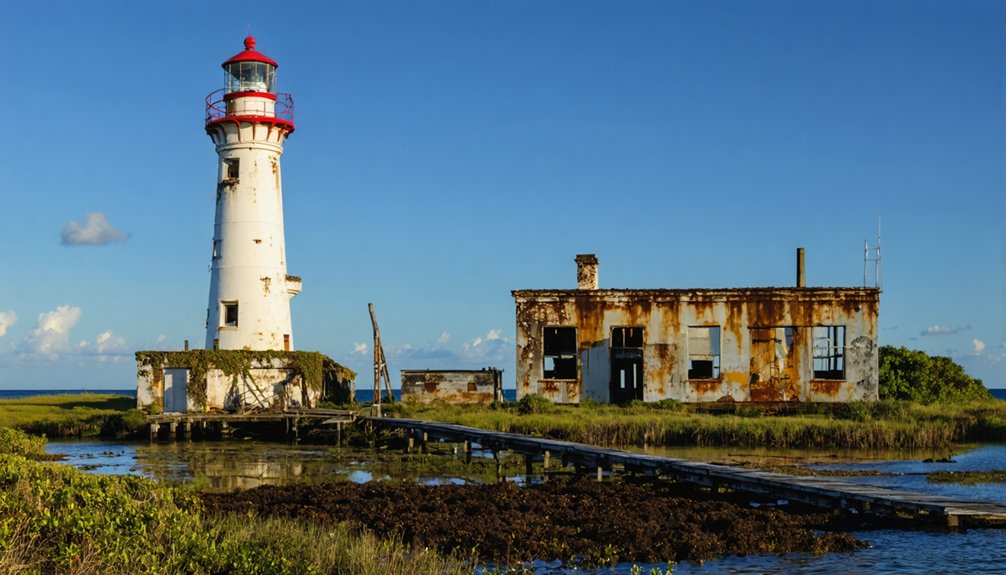
Standing sentinel since 1848, the Egmont Key lighthouse represents the oldest structure in the Tampa Bay area still serving its original purpose. You’ll discover this 40-foot beacon has weathered hurricanes, wars, and abandonment while guiding vessels through treacherous waters.
The historic lightkeeper’s residence, rebuilt in 1857 after devastating storms, once housed keepers who maintained the light’s critical maritime signal usage between St. Marks and Key West.
During the Civil War, Union forces transformed the lighthouse into a strategic watchtower, spotting Confederate blockade-runners attempting to slip past Tampa Bay’s defenses.
Today, the Coast Guard maintains this operational beacon and 55 acres of island property. You can explore six miles of brick trails winding past lighthouse foundations, connecting you to Florida’s untamed maritime frontier where pilots once protected the bay from environmental catastrophe.
Wildlife Refuge: Gopher Tortoises and Natural Attractions
Egmont Key’s lighthouse may guide ships through Tampa Bay’s channels, but the island’s sandy terrain shelters a different kind of navigation system—the extensive underground burrows of gopher tortoises. These threatened reptiles thrive in the island’s coastal dunes and scrub, where you’ll discover Florida’s premier example of protected species conservation through ecotourism education.
Watch for tortoises basking on warm afternoons as you explore trails through open vegetation. Their burrows—some stretching 40 feet—create underground villages for over 350 species:
- Eastern indigo snakes seeking cool refuge
- Gopher frogs hiding from predators
- Florida mice establishing family networks
You’re witnessing keystone species ecology in action. The well-drained sandy soils and sparse canopy that characterize this wilderness preserve demonstrate how coastal habitats support interconnected life beyond human settlement.
Best Times to Visit and What to Bring
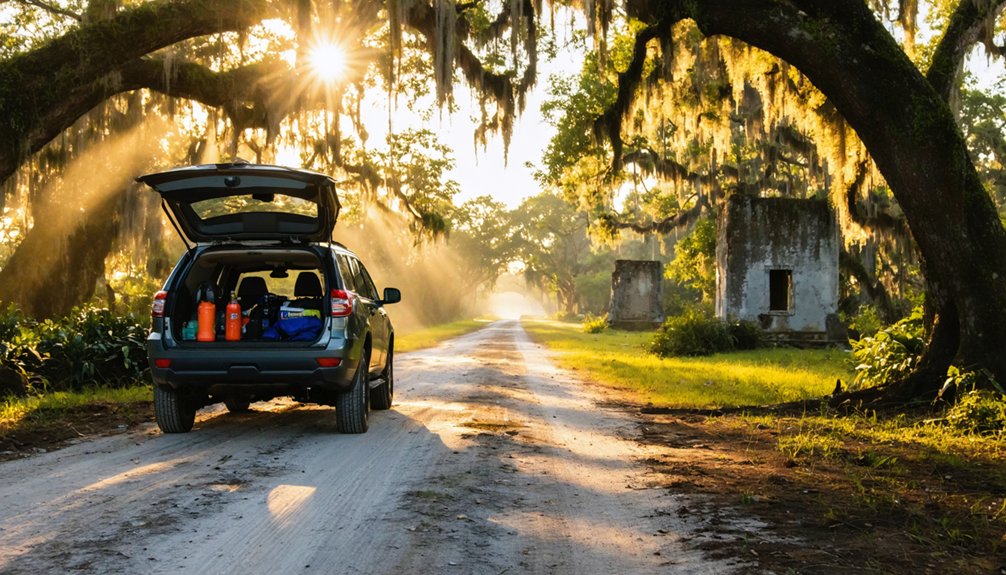
Timing your expedition determines whether you’ll face swarms of mosquitoes or enjoy pristine exploration conditions. You’ll want to avoid Florida’s storm season when late afternoon thunderstorms roll across Tampa Bay, threatening ferry schedules and turning your adventure into a waterlogged ordeal. Plan morning departures—the 9am ferry from Fort De Soto gives you three hours before weather deteriorates.
Pack your essentials: sunscreen, insect repellent, comfortable walking shoes for crumbling brick roads, and plenty of water. You’ll need $45 for adult ferry tickets, so bring correct payment. Storm season considerations mean booking earlier visits maximizes your exploration time at Battery Mellon’s ruins.
The island’s open year-round from 8am to sunset, but summer’s mosquito-heavy periods and hurricane erosion make shoulder seasons your best bet for unrestricted wandering.
Combining History and Beach Activities on Your Trip
Your exploration of Fort Dade offers a rare combination that few historical sites can match—crumbling military fortifications just steps from sugar-white beaches where gopher tortoises wander past swimming spots. You’ll discover an unhurried day of self-guided interpretive walking tours through brick-paved streets and military batteries, then cool off in crystalline Gulf waters.
- Morning exploration of powder magazines, barracks foundations, and the 1848 lighthouse
- Midday swimming and snorkeling with potential underwater archaeological surveys near historic structures
- Afternoon beach lounging on pristine, crowd-free sand
The island’s secluded location means you’re never far from both worlds. Pack snorkeling gear to explore submerged ruins offshore, then return to photograph gymnasium walls emerging from jungle vegetation. This isolated refuge delivers authentic adventure without artificial constraints.
Frequently Asked Questions
Are There Any Food or Drink Vendors Available on Egmont Key?
No vendors operate on Egmont Key—you’ll find no food selection or beverage availability on this pristine island. You’re free to explore untamed wilderness, but you must pack everything in and carry it back out.
Can Visitors Explore the Underground Powder and Shell Compartments Safely?
You’ll find the underground compartments accessible, but they present underground safety hazards and structural stability concerns. Time’s erosion has compromised these century-old passages, so you’re exploring at your own risk without official supervision or maintenance.
Is Overnight Camping or Staying on the Island Permitted?
Unfortunately, you’ll be absolutely heartbroken to learn that overnight camping isn’t permitted on the island. Given Fort Dade’s limited island accessibility and transportation options requiring boat access, day trips only are allowed for your ghost town exploration adventure.
Are There Restroom Facilities Available for Visitors on the Island?
No restroom facilities exist on Egmont Key. You’ll find no designated restroom locations at Fort Dade or anywhere on this remote island. Plan accordingly—accessibility of facilities is nonexistent, so you must prepare for complete self-sufficiency during your adventure.
Does the Ferry Operate Year-Round or Only During Specific Seasons?
Like a faithful tide, the ferry runs year-round with seasonal operation adjustments. You’ll find daily departures during spring and summer, while ferry schedule changes bring reduced frequency in cooler months—though service continues nearly every day, keeping your adventure accessible.
References
- https://www.iheart.com/content/2023-10-13-historic-landmark-named-floridas-creepiest-ghost-town/
- https://www.onlyinyourstate.com/experiences/florida/historic-ghost-town-fl
- https://www.thetravel.com/unique-history-of-fort-dade-abandoned-town/
- https://www.youtube.com/watch?v=pjRdqRH_rHw
- https://www.legendsofamerica.com/fort-dade-egmont-key/
- https://www.ghosttowns.com/states/fl/fortdade-egmontkey.html
- https://abandonedfl.com/fort-dade/
- https://www.ocean-florida.co.uk/things-to-do/egmont-key-ferry-from-ft-desoto-park/
- https://stpetebeachtoday.com/business/egmont-key-ferry/
- https://egmontkeytickets.com