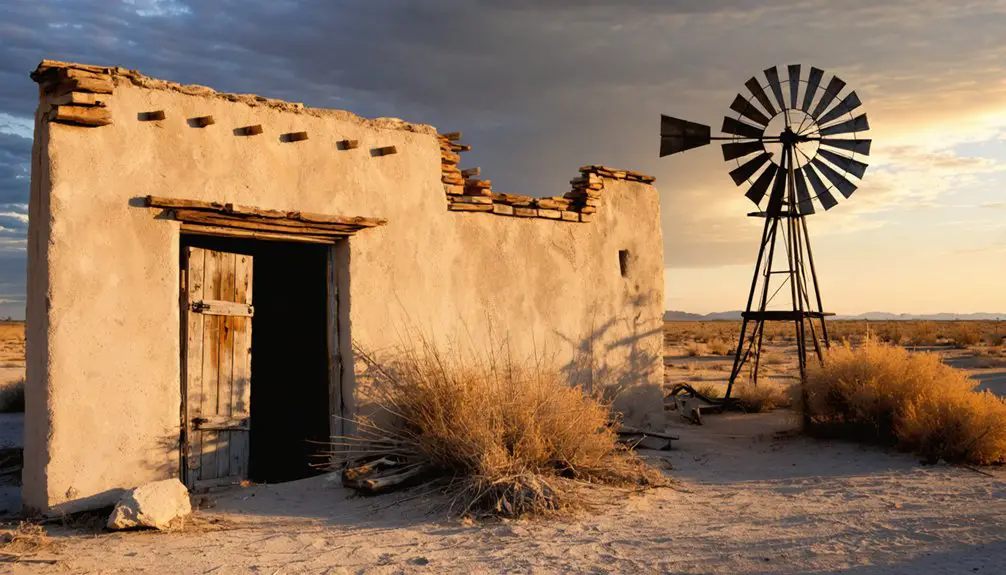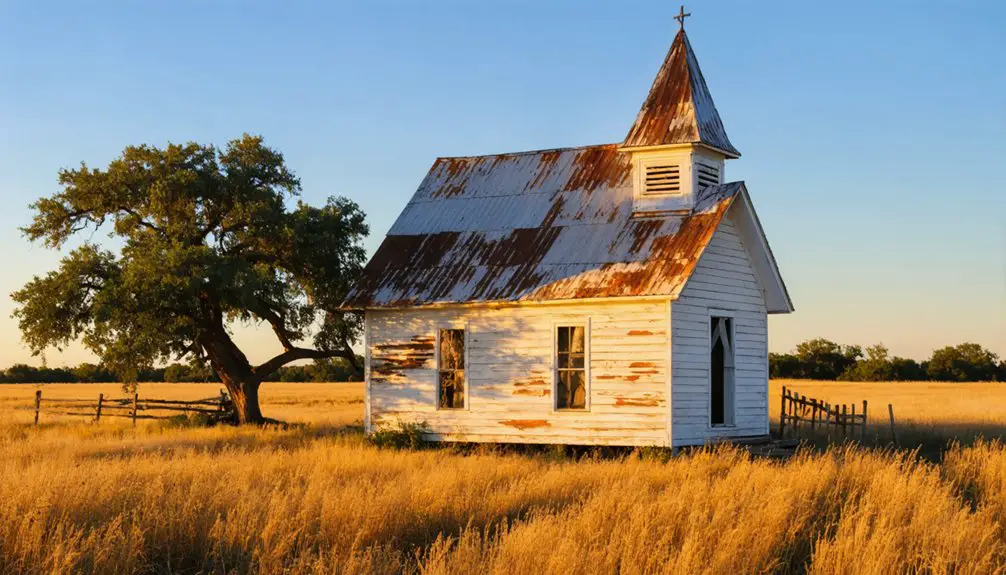
You’ll find Fort Griffin State Historic Site in north-central Texas, where one of the frontier’s most lawless chapters comes alive through preserved ruins and living history. This former military outpost and boomtown earned the nickname “Babylon on the Brazos” during the 1870s, when vigilante justice ruled and legendary figures like Wyatt Earp walked its streets. Today, you can explore restored military buildings, encounter the Official Texas State Longhorn and Buffalo herds, and discover why this notorious settlement rose and fell within just fifteen years.
Key Takeaways
- Fort Griffin State Historic Site is open daily 8 a.m. to 4:30 p.m. with admission starting at $5 and pet-friendly grounds.
- Explore preserved ruins including restored mess hall, enlisted barracks, bakery, powder magazine, and the 1878 Masonic Lodge stone structure.
- Visit the Official Texas State Longhorn Herd and Texas State Buffalo Herd roaming the historic grounds since 1948.
- Enjoy riverside camping, catfish fishing, hiking interpretive trails, and monthly astronomy events under dark skies at the site.
- Experience living history demonstrations year-round, with special Annual Living History Days held every October showcasing frontier life.
The Wild History of Texas’s Most Notorious Outpost
On July 31, 1867, four companies of the Sixth U.S. Cavalry established what would become Texas’s most notorious frontier outpost. Under Lt. Col. Samuel D. Sturgis, they built Camp Wilson—later renamed Fort Griffin—on the Clear Fork of Brazos River to shield settlers from Comanche and Kiowa raids.
You’ll discover this wasn’t just another military post. Daily life within the fort’s walls centered on constant vigilance, as Buffalo Soldiers from the 9th, 10th Cavalry, and 24th Infantry launched campaigns into hostile territory.
Military struggles against native tribes defined the garrison’s existence, culminating in the decisive Red River War of 1874-1875.
The fort served as the anchor for westward expeditions and supplied escorts for wagon trains traversing dangerous country—true frontier defense in action.
Outlaws, Gunfighters, and Legendary Lawmen Who Walked These Streets
The Flat attracted some of the American West’s most infamous characters, where the line between lawman and outlaw often blurred beyond recognition.
You’ll discover that sheriffs rustled cattle, deputies ran vigilante groups, and legendary gunfighters drifted through town during Fort Griffin’s wildest years. This wasn’t Hollywood fiction—men like John Larn enforced the law from his jail cell while simultaneously stealing livestock, until vigilante justice caught up with him in that same cell.
The Flat’s Notorious Residents
Lawlessness defined Fort Griffin’s “Flat” during the 1870s, where the line between lawman and outlaw often blurred beyond recognition. Sheriff John M. Larn exemplified the Flat‘s volatile social dynamics, controlling the Tin Hat Brigade vigilantes while simultaneously running cattle rustling operations. His outlaw law enforcement tactics eventually led to his own death—shot by his former vigilante allies inside his own jail.
The settlement’s notorious characters included:
- John Selman, Larn’s deputy who participated in rustling before fleeing and later killing John Wesley Hardin in 1895
- Joe Bowers, saloonkeeper whose poker dispute with J.B. Cockrell escalated into a May 1872 shotgun killing
- The Tin Hat Brigade, vigilantes who enforced their own brutal justice throughout “Babylon on the Brazos”
These men thrived where traditional law couldn’t reach.
Famous Lawmen and Gunmen
Between 1874 and 1879, Fort Griffin attracted some of the American West’s most legendary figures—men whose names would echo through history long after the settlement crumbled into dust. You’ll discover famous lawmen associations here included Patrick F. Garrett, Wyatt Earp, and Doc Holliday, all drawn to this notorious frontier outpost.
The town’s most infamous resident was Sheriff John M. Larn, who controlled the Tin Hat Brigade vigilante group while simultaneously rustling cattle—he’d eventually die inside his own jail. His deputy, John Selman, worked both sides of the law before disappearing, only to resurface nearly two decades later as the man who killed John Wesley Hardin.
These notorious outlaw encounters defined Fort Griffin’s reputation as “Babylon on the Brazos,” where law and lawlessness blurred into one.
Vigilante Justice and Violence
When formal law enforcement collapsed on the Texas frontier, ordinary citizens took justice into their own hands with brutal efficiency. Fort Griffin’s Tin Hat Brigade, formed in 1874, became Texas’s most active vigilante committee. They’d hang horse thieves from pecan trees, leaving bodies by the river as grim warnings to others who’d challenge their authority.
The committee operated through intimidation and swift execution:
- Night raids: Vigilantes warned offenders to leave within 30 days or face hanging
- Public displays: Bodies left with picks and shovels beneath them deterred would-be criminals
- Eight executions: In three months following April 1876, they shot two thieves and hanged six more
Yet corruption among vigilantes ran deep—Sheriff John Larn rustled cattle while enforcing “order.” The decline of vigilante era came when Texas Rangers arrived in 1877, restoring legitimate law.
Why This Frontier Fort Became “Babylon on the Brazos”
You’ll find that Fort Griffin’s reputation as “Babylon on the Brazos” wasn’t exaggerated—lawless saloons, gambling dens, and violent confrontations defined daily life in The Flat.
The collision between notorious outlaws like John Wesley Hardin and legendary lawmen created a powder keg atmosphere where vigilante justice often replaced official law enforcement.
When conditions spiraled out of control, authorities occasionally imposed martial law to restore order, though the wild frontier spirit persisted until the fort’s closure in 1879.
Outlaws and Lawmen Collide
By 1874, the settlement sprawling beneath Fort Griffin’s military grounds had earned a dark distinction—locals called it “Babylon on the Brazos.” Buffalo hunters fresh from the kill, cowboys driving herds north, and gamblers seeking easy marks packed the saloons and dance halls.
The TinHatBrigade vigilantes hanged horse thieves from pecan trees, leaving picks and shovels below the bodies as grim warnings. Their leaders, Sheriff John M. Larn and Deputy John Selman, controlled both law enforcement and cattle rustling operations.
You’ll find legendary figures who walked these streets:
- John Wesley Hardin – credited with killing at least 21 men
- Doc Holliday and Wyatt Earp – met here between shootouts
- Pat Garrett – future lawman among the chaos
The corruption peaked when authorities discovered six branded hides behind Larn’s house in 1878.
Martial Law Cleans Streets
A poker game turned deadly on February 18, 1872, when bullets flew at Fort Griffin’s first saloon, leaving the owner dead on the floor. The fort commander immediately imposed martial law on “The Flat,” demonstrating swift martial law effectiveness that transformed the frontier settlement overnight.
Cavalry forces expelled booze peddlers, gamblers, and prostitutes, creating a remarkably orderly community.
You’ll find that social reforms during control lasted two years, keeping the peace until Shackleford County’s organization in 1874. The town remained dull but stable under army oversight.
However, when buffalo hunters arrived from Kansas and military control ended, Fort Griffin exploded back into chaos. The brief period of forced order couldn’t withstand the economic pull of the buffalo boom and cattle trails that followed.
What Caused Fort Griffin’s Rapid Rise and Fall
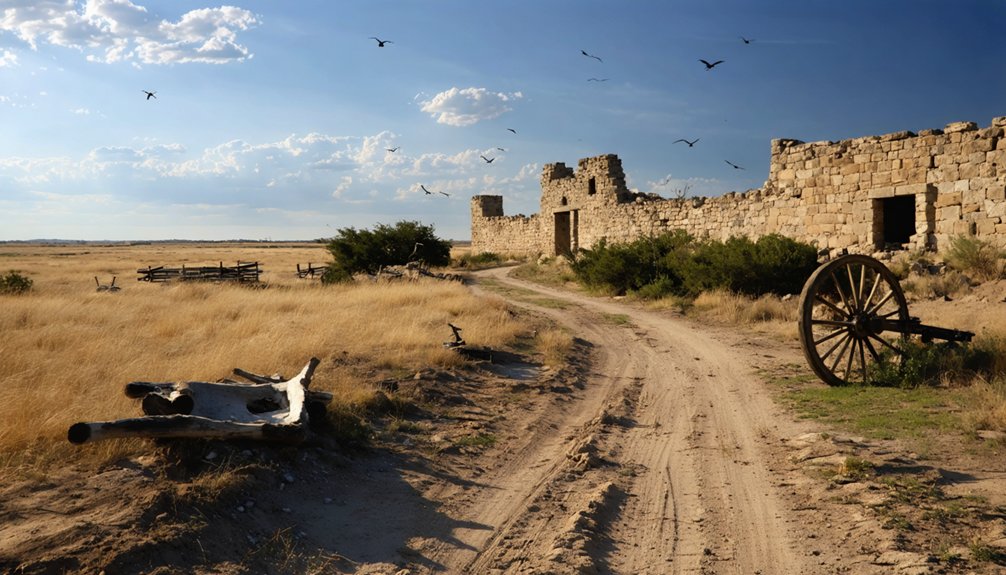
When four companies of the Sixth Cavalry rode up the hill overlooking the Clear Fork of the Brazos River on July 31, 1867, they couldn’t have imagined the wild boom-and-bust cycle their outpost would trigger. Fort Griffin‘s explosive growth stemmed from three converging forces:
- Military protection against Comanche and Kiowa raids drew settlers to northern Texas
- Buffalo hunting boom made it a central supply point for Dodge City hide shipments
- Frontier lawlessness attracted everyone from outlaws to gunfighters seeking opportunity
The town’s demise proved equally swift. After the 1874 Red River War ended Indian threats, military presence waned. The buffalo hide trade collapsed by 1878 when hunters depleted the southern herd. When Texas Central Railroad bypassed Griffin for Albany in 1881, the exodus began immediately.
Exploring the Fort Griffin State Historic Site Today
Today’s Fort Griffin State Historic Site transforms the once-rowdy frontier outpost into an immersive journey through Texas history. You’ll explore at your own pace with audio tours and golf carts traversing the fort remains. The visitor center opens daily 8 a.m. to 4:30 p.m., offering exhibits that bring frontier life into focus.
Living history demonstrations throughout the year let you witness Buffalo Soldier reenactments and Old West scenarios. October’s Annual Living History Days stand out as premier events. You can also attend monthly astronomy events under some of Texas’s darkest skies.
Beyond historical exploration, you’ll encounter the Official State of Texas Longhorn Herd and roaming buffalo. Camp riverside, fish for catfish, or hike interpretive trails. Admission starts at just $5, with pet-friendly grounds welcoming adventurous spirits.
Structures and Ruins You’ll Discover on Your Visit
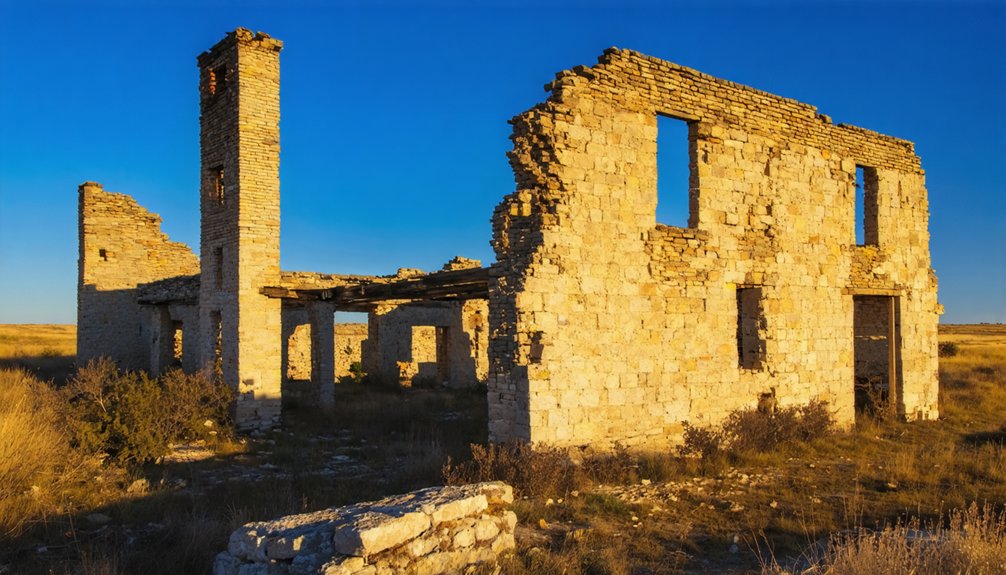
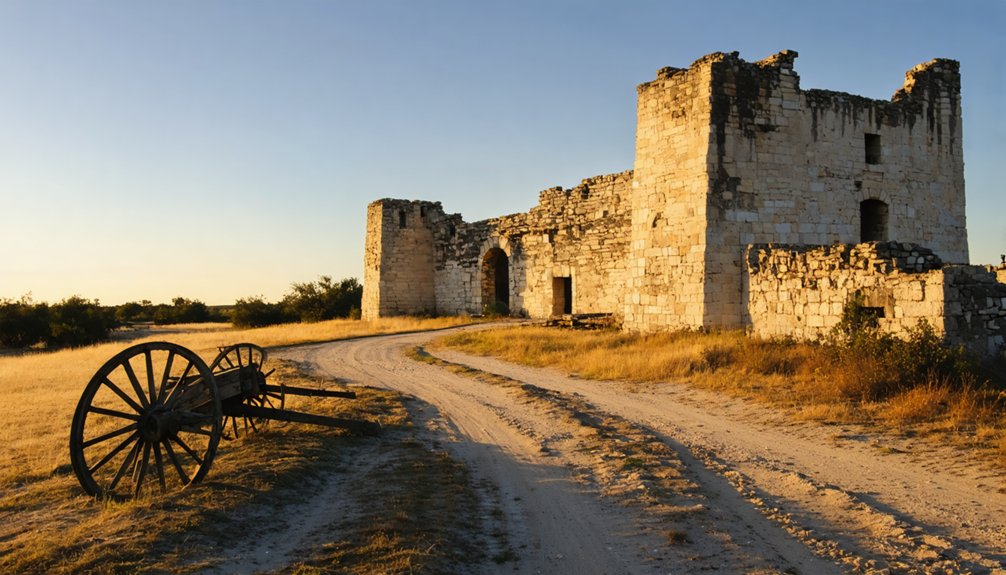
Perched on a windswept hill overlooking the Clear Fork of the Brazos River, Fort Griffin’s ruins tell the story of frontier military life through stone foundations and partially restored walls. You’ll explore key preservation efforts that’ve maintained these historic structures since the Texas Historical Commission took over in 2008.
The restored historic structures you can’t miss include:
- The mess hall – the primary surviving building where soldiers once gathered
- Enlisted barracks – reconstructed quarters that housed six men each
- The bakery – fully restored from original designs
Beyond these, you’ll discover the intact powder magazine, a hand-dug well, stone cisterns, and foundations marking 90+ original buildings. Down the hill, the 1878 Masonic Lodge stands as the town’s sole surviving all-stone structure.
The Official Texas State Buffalo Herd
Since 1948, Fort Griffin State Historic Site has served as the permanent home to the Official State of Texas Longhorn Herd, a living connection to the cattle drives and ranching empires that defined the American frontier. Under the herd management expertise of Will Cradduck, Ph.D., these magnificent animals represent more than just cattle—they’re symbols of frontier resilience and independence.
The historical significance of this herd extends beyond impressive horn spans. These longhorns embody the spirit of the Great Western Trail, when cowboys pushed thousands of cattle northward to market. You’ll encounter these icons while exploring fort ruins overlooking the Clear Fork of the Brazos River, where their ancestors once grazed. The Texas Historical Commission maintains this living legacy, ensuring future generations can witness authentic pieces of Wild West history roaming freely.
Getting to Fort Griffin and Planning Your Trip
After witnessing these majestic longhorns roaming the historic grounds, you’ll want to know how to experience Fort Griffin yourself. The site sits at 1701 N. US Hwy 283 in Albany, Texas, with straightforward transportation options via Highway 283 northbound. Plan your visit Wednesday through Saturday, 8:00 AM – 4:30 PM, with guided tours lasting 1-2 hours.
Essential Planning Tips:
- On-site parking and pet-friendly access make exploring effortless
- Nearby accommodations include riverside camping with RV hookups under shade trees
- Check the events calendar for living history demonstrations and monthly stargazing under minimal light pollution
The site offers hiking trails, catfish fishing in the Clear Fork of Brazos River, and amenities including restrooms and a gift shop. This State Archeological Landmark welcomes independent explorers seeking authentic Texas frontier experiences.
Frequently Asked Questions
Are There Camping Facilities Available at Fort Griffin State Historic Site?
You’ll find fantastic Fort Griffin camping facilities with primitive camping available across 33 sites. Choose from full RV hookups, electric/water connections, or tent spots with water access points. Enjoy riverside recreation, stargazing, and exploring Texas’s official Longhorn herd territory.
What Are the Admission Fees and Operating Hours for Visitors?
Admission fees start at $5 for adults, with discounts for seniors and children. You’ll find the site open daily from 8 a.m. to 4:30 p.m., giving you plenty of time to explore this historic frontier outpost.
Can Visitors Safely View the Buffalo Herd up Close?
No, you can’t view buffalo up close safely. You’ll need to maintain 50 yards following safe distance guidelines and wildlife viewing etiquette. Use the thumb test—if your thumb doesn’t cover the bison, you’re too close.
Are Guided Tours Available or Is It Self-Guided Exploration Only?
You’ll find both options available! While guided tours are offered through Texas Historical Commission programs and by request, you can also enjoy self-guided access using golf carts to explore fort ruins with interpretive signage throughout the site.
What Nearby Towns Offer Lodging and Dining for Overnight Visitors?
You’ll find lodging and dining in Albany, Breckenridge, and Graham. These towns offer restaurants with local cuisine and attractions beyond historic site visits. Albany’s just 12 miles away, while Breckenridge and Graham provide additional options for your overnight stay.