You’ll find Fort Hudson’s haunting remains off Texas Highway 163, where a solitary historical marker and weathered gravestone mark what was once a bustling cavalry outpost. Plan your visit for April when temperatures hover between 62°F and 80°F, and pack sun protection, sturdy boots, and plenty of water for the desolate terrain. The site sits on private property with limited access, so respect boundaries while exploring this windswept corner of Texas history. Nearby Fort Lancaster and Fort Davis offer additional frontier experiences that complete the full story of this unforgiving landscape.
Key Takeaways
- Fort Hudson lies off Texas Highway 163 with informal parking near a historical marker and gravestone in harsh Devils River terrain.
- Visit in April for ideal 62°F to 80°F temperatures; avoid oppressive August heat reaching 94°F with high humidity.
- No structures remain since the 1980s, only a 1936 Texas Historical Commission marker and small gravestone mark the site.
- Bring topographic maps, sun protection, sturdy boots, layers, and ample water while respecting private property boundaries throughout your visit.
- Combine with nearby Fort Lancaster, Fort Stockton, Fort Davis, and Fort Concho to explore authentic frontier cavalry patrol routes.
Getting to Fort Hudson: Directions and Route Planning
Since Fort Hudson exists more in the whispers of Texas history than on any modern GPS, finding this ghost town requires old-fashioned navigation skills and a sense of adventure. You’ll need to dig into hidden history before hitting the road—study historical maps and connect with locals who know the land’s secrets.
The coordinates place it in remote Texas territory where maintained roads give way to ranch paths and unmarked trails. Your best approach involves researching county records and speaking with area ranchers who guard this local lore. Bring detailed topographic maps, plenty of water, and respect for private property. This isn’t a destination you’ll stumble upon; it’s one you’ll earn through preparation, persistence, and reverence for the stories buried in Texas soil.
What to Expect When You Arrive at the Historic Site
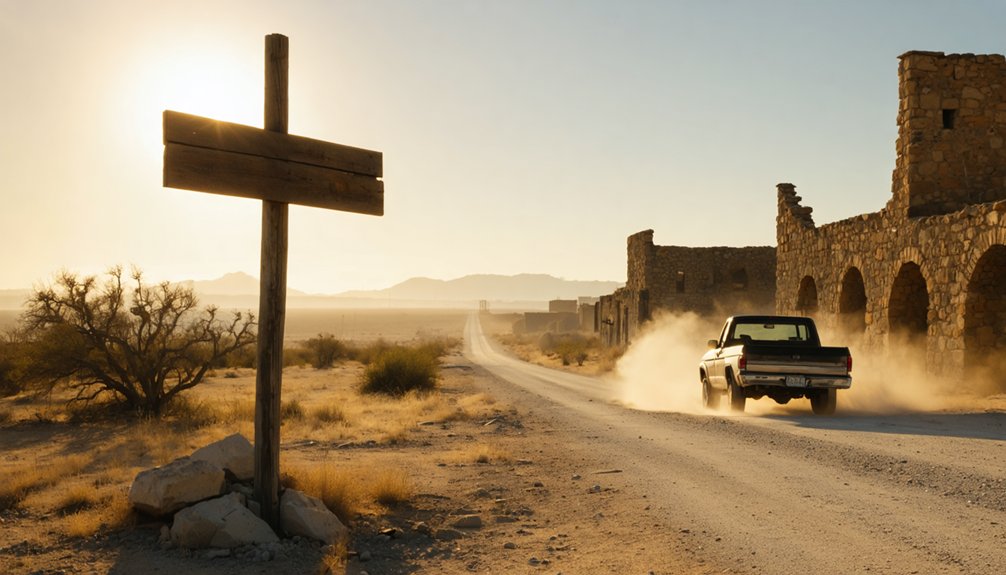
After miles of dusty roads and careful navigation, you’ll pull off Texas Highway 163 onto a desolate, rock-strewn field that feels untouched by time. Visitor parking access is informal—simply find level ground near the historical marker. The interpretive signage quality provides essential context about the fort’s 20-year operational history, though don’t expect elaborate displays or facilities.
You’ll discover three tangible remnants of frontier military life:
- A weathered state historical marker detailing the post’s role protecting westbound mail routes
- A solitary gravestone marking unknown remains from the 1850s-1870s garrison
- Deteriorated gravel-and-lime construction materials scattered across the site
The harsh landscape surrounding Devils River speaks volumes about the isolation soldiers endured here, making this authentic ghost town experience worth the remote journey.
Exploring the Remaining Structures and Military Ruins
The stark reality of Fort Hudson hits hardest when you realize there’s almost nothing left to explore. By the 1980s, every building had vanished, leaving only a state marker and small gravestone on this rock-strewn field. You’re standing where soldiers once inhabited walls made from gravel and lime—structures that kept them cool during scorching summers and warm through bitter winters.
Without archeological surveys, you’ll find no visible stone foundations or adobe remnants. The Texas Historical Commission’s 1936 centennial marker provides your only tangible connection to the cavalry companies who patrolled this desolate outpost. Historical artifacts remain buried beneath your feet, but accessing them isn’t an option—you’re on private property, free only to imagine what once stood here.
Best Time to Visit and What to Bring
Planning your Fort Hudson visit means timing it right—April stands out as the sweet spot when temperatures hover between 62°F and 80°F, giving you comfortable conditions to wander this barren historical site. Understanding weather patterns helps you avoid August’s oppressive 94°F heat and suffocating humidity that’ll drain your energy fast.
Pack smart for varying seasonal comfort levels:
- Lightweight layers and rain gear – precipitation strikes year-round, peaking at 5.31″ in August
- Breathable clothing and sun protection – October through February offers clearest skies for photography
- Sturdy boots and insect repellent – humid conditions breed mosquitoes around crumbling structures
Winter visits work too, with mild 46°F lows, but you’ll miss that perfect spring window when exploration feels effortless and the ruins reveal themselves under ideal conditions.
Nearby Attractions and Other Texas Frontier Forts Worth Visiting
While Camp Hudson stands as your primary destination, the surrounding San Antonio-El Paso corridor holds a constellation of frontier military posts that transform a single ghost town visit into an epic Texas history expedition.
Exploring ghost towns near Cibolo Settlement allows you to uncover fascinating stories of pioneers and settlers who shaped the region. Each crumbling structure tells a tale of resilience and adventure, inviting visitors to walk through time. Whether it’s the remnants of an old saloon or a deserted schoolhouse, these sites offer a glimpse into the past that enriches your journey through Texas history.
Fort Lancaster sits twenty-one miles southeast, where nearby interpretive signage details its role protecting the Chihuahua Trail.
Continue westward to Fort Stockton, site of the 1867 ambush that prompted Camp Hudson’s reactivation.
Fort Davis, nestled against dramatic mountain escarpment, showcases regional geology features that defined defensive positioning.
Further north, Fort Concho preserves intact officer’s quarters and barracks.
Each installation reveals how military strategists exploited terrain advantages—creeks, elevation, and natural corridors—to establish this protective network.
You’ll cover genuine frontier ground where cavalry companies once patrolled against hostile forces.
Frequently Asked Questions
What Was Daily Life Like for Soldiers Stationed at Fort Hudson?
Your days involved patrolling dusty roads, escorting stagecoaches, and pursuing raiders into Mexico. During leisure time pursuits, you’d share stories around campfires, maintain equipment, and endure isolation in this remote outpost where daily routine activities meant survival.
How Many Soldiers Were Typically Stationed at the Fort During Operations?
You’ll find soldier census records show Fort Hudson’s garrison fluctuated dramatically—from just 63 men in 1871 to over 100 cavalry troops by 1876. Military supply logistics had to adapt constantly to these changing numbers throughout operations.
Were There Any Famous Military Figures Who Served at Fort Hudson?
You won’t find A-list famous military figures here, but you’ll discover authentic frontier heroes like Lt. Col. George Pearson Buell and Lt. Louis Henry Orleman, who fought in notable conflicts protecting settlers against Apache raids along Texas’s borderlands.
What Happened to the Fort’s Buildings After Military Abandonment in 1877?
After abandonment, you’d have watched natural reclamation slowly consume Fort Hudson’s stone and adobe structures. Indians scavenged wood for fuel, while wind and rain eroded the abandoned buildings until nothing remained by the 1980s—total wilderness victory.
Are There Any Documented Ghost Stories or Paranormal Activity at the Site?
No documented ghost stories exist at Camp Hudson’s desolate site. Despite its violent history and lonely cemetery remnant, you’ll find no paranormal investigations or reports of unexplained phenomena—just windswept silence across the rock-strewn Texas frontier.