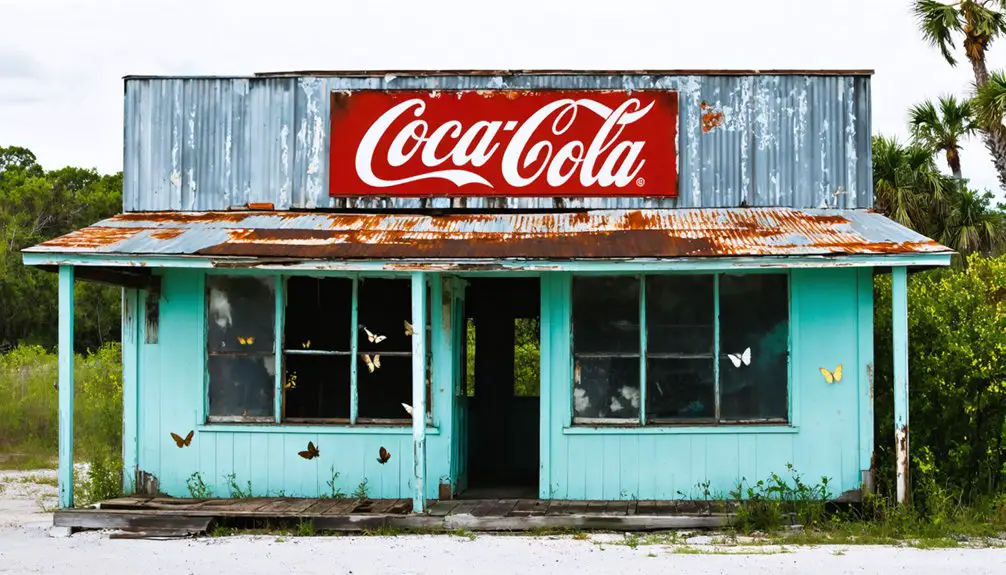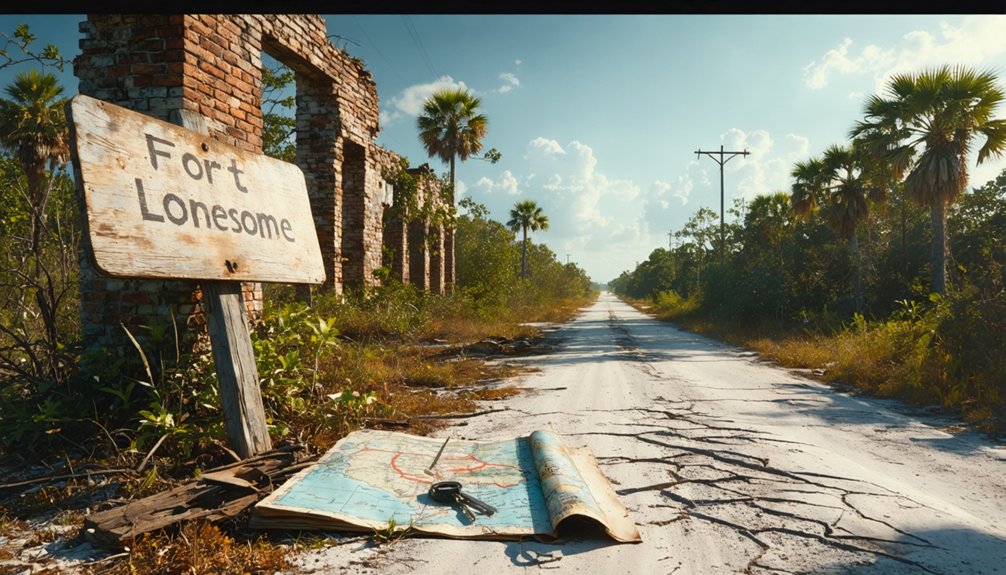
You’ll find Fort Lonesome at the dusty intersection of State Roads 39 and 674, where a weathered 1929 grocery store stands as the sole remnant of this vanished community. Plan your visit during spring or fall when temperatures hover in the comfortable 70s-80s, avoiding summer’s brutal humidity that transforms the crossroads into a shimmering mirage. The roads stay passable year-round, though thunderstorms can temporarily flood the pavement. Nearby, the Alafia River and Little Manatee offer scenic escapes from this haunting landscape where phosphate dust clouds drift across forgotten homesteads and cattle range.
Key Takeaways
- Fort Lonesome sits at the intersection of State Road 39 and State Road 674, accessible year-round with no seasonal closures.
- The 1929 Fort Lonesome Grocery remains the town’s sole landmark, preserving authentic Old Florida atmosphere without modern commercialization.
- Visit during spring or fall for comfortable temperatures in the 70s-80s, clear visibility, and optimal exploration conditions.
- Avoid summer’s oppressive heat and humidity; winter offers crisp mid-60s temperatures ideal for atmospheric ghost town exploration.
- Combine your visit with nearby attractions like Alafia River State Park, Little Manatee River kayaking, or Giraffe Ranch safaris.
The Haunting History Behind the Name
The name “Fort Lonesome” clings to this desolate stretch of Hillsborough County like morning fog over cypress swamps, yet nobody can quite agree on how it got there. You’ll find competing legends: Dovie Stanaland’s isolated general store, where she christened the crossroads out of sheer desperation; fruit fly inspectors in 1929 who hung their sardonic sign at a roadblock checkpoint; phantom military wives during the Seminole Wars mourning their nonexistent garrison.
No fort ever stood here—that’s documented fact. What persists is the loneliness itself, amplified by demographic shifts and regional economic decline that scattered twenty-odd homesteads across barren flatlands. Newspaper reporters immortalized the melancholy moniker on paper, cementing your destination’s reputation as Florida’s monument to isolation.
What Remains of Fort Lonesome Today
You’ll find Fort Lonesome reduced to a single weathered crossroads where the 1929 grocery store stands guard over empty asphalt. The building’s peeling paint and twin gas pumps mark the spot where a town once gathered, now surrounded by nothing but citrus groves and the low rumble of phosphate trucks in the distance.
Pull up to this last outpost of old Florida, and you’re standing at the edge of a place that’s more memory than municipality.
The Historic Grocery Store
Standing at the dusty crossroads where State Road 674 meets County Road 39, you’ll find Fort Lonesome Grocery—the weathered sentinel of a town that barely exists anymore. This unpainted way station hasn’t seen fresh color since 1955, and that’s exactly what makes it authentic.
Where Gus Haywood’s original store‘s layout once anchored the southwest corner during the 1930s sawmill boom, today’s convenience store carries the torch with gas pumps and cold drinks for scattered ranch hands and phosphate miners.
The bygone era atmosphere lingers thick as Florida humidity. You’re stepping into genuine Old Florida—no theme park polish, just peeling wood and honest service.
This outpost sustains maybe two dozen rural families who appreciate that some places refuse to change, offering regular at $3.29 and reminders that progress isn’t always necessary.
Empty Crossroads and Remnants
What remains when a town fades into Florida’s scrubland? You’ll find the desolate crossroads where State Road 39 meets State Road 674—empty asphalt stretching through citrus groves and cattle pastures. Around twenty scattered homes dot the landscape, their porches overlooking fields where bygone timber operations once thrived. The 1930s steam-powered sawmill vanished without trace after flames consumed it, leaving no markers to commemorate the boom it sparked.
Dense hardwood forests press against narrow roads while marshy streams wind through the terrain. Phosphate mines now dominate the horizon—open pits and structures replacing the isolated homesteads that survived earlier decades. Dust clouds from extraction operations drift across what’s left, obscuring roads and transforming this forgotten crossroads into something resembling its lonesome namesake.
Getting There and What to Expect
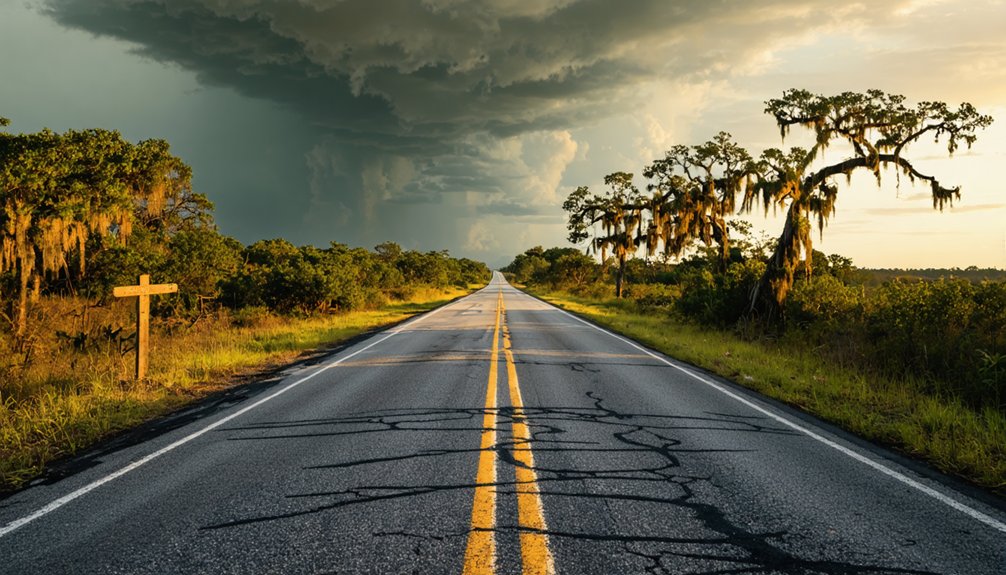
The journey to Fort Lonesome carries you thirty-six miles southeast of Tampa into the agricultural heartland of Hillsborough County, where State Road 674 slices through sprawling farmland before intersecting with County Road 39S. Your standard two-wheel-drive vehicle handles these well-maintained roads without issue, though don’t expect infrastructure upgrades or rural amenities along this route.
At 121 feet elevation, the crossroads reveals itself gradually—a solitary convenience store, humming power substation, and gas station punctuating the landscape. You’ll find no restaurants, no lodging, no entertainment here. Just open sky, scattered farmhouses, and the ghost of a community that briefly flickered during the 1930s sawmill boom.
The entire visit requires maybe fifteen minutes, capturing photographs of emptiness itself before you roll onward into genuine Florida backcountry.
Must-See Stops at the Crossroads
At this weathered crossroads where asphalt meets agricultural expanse, your exploration centers on the Fort Lonesome Grocery Store and Filling Station—the sole survivor of a 1930s settlement that once supported dual general stores. You’ll stand where Gus Haywood’s establishment outlasted “Runt” Carter’s competing business after the sawmill’s fiery demise. The modern convenience store occupies the southwest corner, replacing Haywood’s original structure where hand-operated gas pumps once served timber workers.
Beyond the store, you’ll discover sawmill infrastructure remnants near the electric substation—ghostly markers of the steam-powered operation that birthed this community. Historic land surveys reveal no official post office existed despite the town’s designation. Wander the narrow roads threading through citrus groves, where cattle graze and hardwood forests echo with stories of transient workers who sheltered in canvas tents during the logging boom.
Nearby Attractions Worth Exploring
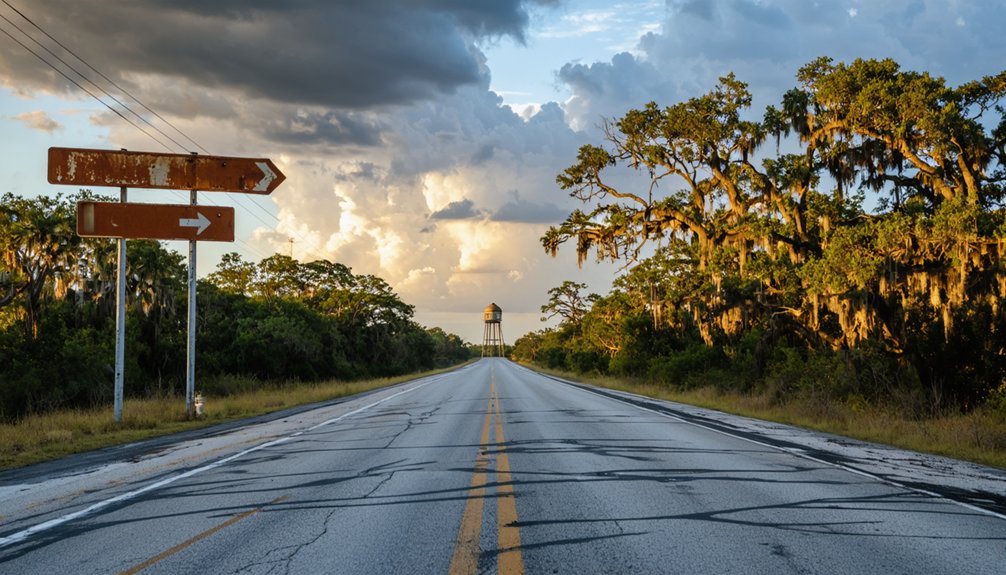
Beyond Fort Lonesome’s dusty crossroads, adventure beckons through a constellation of wild Florida landscapes where reclaimed phosphate mines transform into adrenaline-pumping bike parks and blackwater rivers carve through ancient cypress cathedrals.
Where phosphate scars become playgrounds and blackwater currents whisper through cypress shadows—this is Florida unfiltered.
Your journey expands into untamed territory:
- Alafia River State Park challenges mountain bikers with IMBA single-track trails carved through dramatic phosphate hills
- Little Manatee River provides exceptional kayaking opportunities through 40 miles of pristine Outstanding Florida Water
- Hillsborough River’s Class II rapids test paddlers while calm stretches offer prime nature photography spots among ancient oaks
- Withlacoochee State Forest sprawls endlessly with horseback trails threading through Green Swamp wilderness
- Giraffe Ranch safaris bring African plains to Florida’s heartland
Each destination delivers genuine wilderness experiences—no crowds, no restrictions, just raw Florida waiting for you to explore on your terms.
Best Time to Visit and Road Conditions
The ghost town whispers differently across Florida’s seasons, and you’ll want to choose your arrival wisely. Spring and fall deliver that sweet spot where comfortable temperatures meet manageable crowds, letting you explore Fort Lonesome’s weathered crossroads without battling oppressive heat or summer thunderstorms.
The rural roads leading to this forgotten settlement remain accessible year-round, though winter’s cooler months offer the clearest skies and emptiest highways for those seeking solitude among the remnants.
Seasonal Weather Considerations
Since Fort Lonesome sits in central Florida’s humid subtropical zone, you’ll find that timing your ghost town road trip around the state’s dramatic seasonal shifts can make or break your experience. Historic weather patterns reveal distinct windows for exploration, while seasonal tourism fluctuations work in your favor at this forgotten settlement.
Consider these sensory realities:
- March-April: Sun-drenched roads stretch endlessly, temperatures hover near perfect 70°F, ideal for photographing weathered structures
- Summer: Oppressive 100°F heat radiates off cracked pavement, sudden thunderstorms drench abandoned buildings
- Fall: Hurricane-season winds howl through empty streets, though October brings relief
- Winter: Crisp 52°F mornings sharpen details, occasional cold fronts clear skies dramatically
Spring and autumn offer the sweetest escape—comfortable wandering without summer’s suffocating humidity or winter’s unpredictable chill.
Road Accessibility Year-Round
Getting to Fort Lonesome won’t test your driving skills—State Road 39 and County Road 674 intersect at this forgotten crossroads with the straightforward reliability of old Florida infrastructure. You’ll find both routes passable throughout the year, though summer’s afternoon thunderstorms can transform these humble roads into temporary rivers. There aren’t seasonal closures here; the pavement endures.
SR 674 doubles as a hurricane evacuation route, built sturdy enough to handle nature’s tantrums. Weather-related hazards emerge mainly during tropical systems when standing water claims the shoulders and visibility drops to nothing. Winter brings the clearest skies and firmest ground—your tires gripping asphalt that’s seen decades of wanderers pass through. The roads remain open, patient, waiting for those willing to venture off Florida’s beaten path.
Avoiding Summer Heat
When June arrives, Fort Lonesome transforms into a furnace—the asphalt shimmers with heat mirages, and the humidity wraps around you like a wet wool blanket the moment you step from your air-conditioned car. High humidity mitigation becomes essential as temperatures soar into the 90s, draining both your energy and your vehicle’s coolant.
The landscape hydration needs mirror your own as parched grass crunches beneath your boots.
Smart travelers choose spring (March–May) or fall (September–October) when temperatures hover comfortably in the 70s–80s:
- Dawn drives reveal strawberry fields without midday exhaustion
- Clear visibility replaces summer’s oppressive haze
- Wildlife remains calm, not heat-stressed
- Your water bottles last longer
- Evening exploration feels invigorating, not punishing
Winter offers mid-60s alternatives, letting you breathe crisp air while ghost hunting.
Frequently Asked Questions
Are There Any Restaurants or Dining Options Available in Fort Lonesome?
You won’t find local diner options in this ghost town, but you’ll discover freedom in packing your own provisions. Occasionally, community potluck events bring wanderers together, where shared stories and home-cooked meals create unexpected connections under Florida’s endless sky.
Can You Camp Overnight Near Fort Lonesome or at the Crossroads?
Under star-blanket skies, you’ll find freedom calling. While primitive campsites aren’t available directly at the crossroads, designated campgrounds nearby at Alafia River State Park offer you full hookups, hot showers, and untamed natural beauty just minutes away.
Is Fort Lonesome Safe to Visit Alone or at Night?
Fort Lonesome’s A+ safety rating suggests low risk, but you’ll want to ponder visiting during daylight hours. The sparse, rural crossroads means you should avoid isolated areas after dark when amenities close and emptiness prevails.
Are There Any Guided Tours Available for Fort Lonesome’s History?
No guided walking tours or historical reenactments exist at Fort Lonesome—you’ll explore independently through dusty crossroads and weathered structures. The crumbling grocery store stands silent, inviting your own discovery without scheduled tours constraining your wandering spirit.
What Cell Phone Coverage Can Visitors Expect in the Area?
You’ll find solid cell signal strength from major carriers like Verizon and AT&T in Fort Lonesome, though network reliability may fluctuate in this remote ghost town. Check your specific carrier’s coverage map before venturing into Florida’s backcountry.