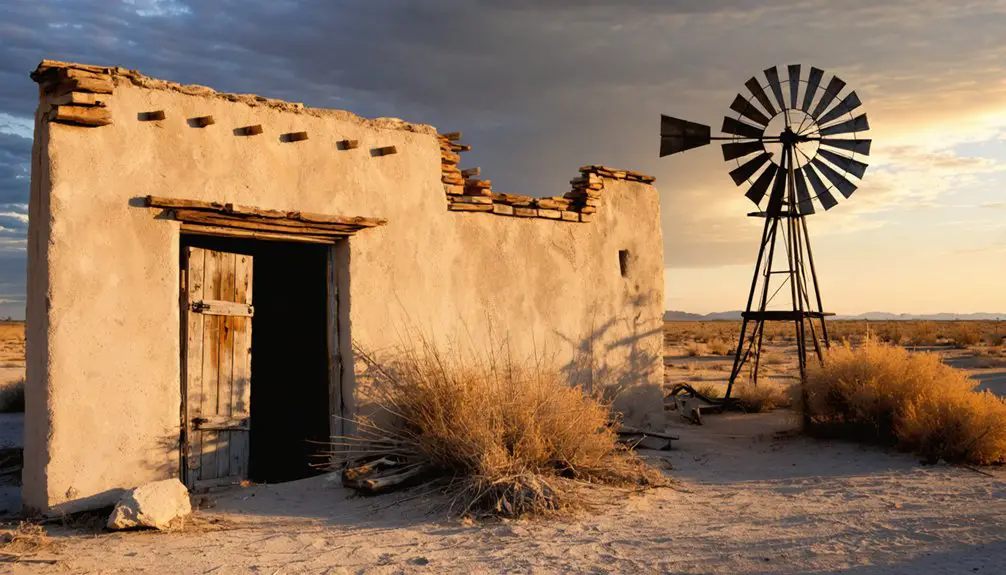
Frio Town, Texas is a forgotten ghost town sitting about 16 miles northwest of Pearsall along Farm Road 140. Once a bustling county seat established in 1871, it collapsed almost overnight after the railroad bypassed it in 1882. Today you can visit the crumbling courthouse ruins, the old jail, and the roadside cemetery. Plan your trip during fall or winter to beat the brutal South Texas heat. There’s far more to this story than you’d expect.
Key Takeaways
- Frio Town, established in 1871, sits about 16 miles northwest of Pearsall along Farm Road 140, near Presidio Crossing on the Frio River.
- The railroad bypassing Frio Town in 1882 triggered rapid decline, making Pearsall the new county seat within two years.
- Crumbling courthouse ruins and a jail remain on private ranch land; the Frio Town Cemetery is accessible roadside.
- Visit during fall or winter to avoid extreme heat and capture the best photography lighting of the ruins.
- Bring offline maps, respect private property boundaries, and explore nearby ghost towns like Tilden and Cotulla for a fuller experience.
What Was Frio Town, Texas?
Frio Town didn’t start out as a ghost town — it started out as the seat of power for an entire Texas county. A. L. Oden laid out the settlement in 1871 under the name Frio City, positioning it around a strategic river crossing on the Frio River in northwest Frio County. That location wasn’t accidental. River crossings meant travelers, trade, and the kind of foot traffic that built early Texas communities fast.
Within a year, the town had a courthouse and a stone jail. For a brief stretch, it was the center of local governance and frontier commerce.
But railroad tracks have a way of rewriting maps, and Frio Town couldn’t outrun that reality. What thrived became a ghost town within a generation.
How Frio Town Became Frio County’s First County Seat
When A. L. Oden laid out the settlement in 1871, Frio Town didn’t just appear on a map — it stepped into a governing role. The newly organized Frio County needed a seat of county governance, and this raw frontier community answered that call immediately.
By January 1872, residents had completed the first courthouse using cypress shingles hauled all the way from Leakey. Workers also raised a stone jail, giving the town real civic weight.
To cut costs, locals built their own cypress-shingle mill, brick factory, and limekiln — exactly the kind of self-reliant hustle that defines frontier life.
For roughly a decade, Frio Town ran the county. It wasn’t polished, but it was functional, independent, and very much alive.
That wouldn’t last forever.
Why the Railroad Killed Frio Town Almost Overnight
When the International-Great Northern Railroad arrived in 1882, it bypassed Frio Town completely, laying its tracks through a new settlement called Pearsall instead.
You can almost picture the moment the town’s fate sealed itself — businesses packed up, residents followed the rails, and Pearsall stripped Frio Town of its county seat within two years.
What had taken a decade to build unraveled almost overnight, leaving little behind but a courthouse, a jail, and scattered stone foundations slowly disappearing into the South Texas brush.
Railroad Bypassed The Town
The blow that ended Frio Town came fast and from a direction no one could stop. In 1882, the International-Great Northern Railroad arrived in Frio County and bypassed the town completely. That single decision destroyed town prosperity almost overnight.
Here’s how the railroad impact reshaped everything:
- Pearsall received the rail line, instantly attracting merchants, settlers, and capital.
- Businesses abandoned Frio Town and relocated toward the tracks.
- Within two years, Pearsall replaced Frio Town as county seat.
- Without governance or commerce, residents simply left.
You can’t negotiate with a railroad route. Whoever controlled that decision controlled the region’s future. Frio Town had no leverage, no alternative, and no second chance.
The tracks determined who thrived and who disappeared into the brush.
Pearsall Stole The Seat
Pearsall didn’t wait long to seize what Frio Town had spent over a decade building. Within two years of the railroad’s 1882 arrival, Pearsall’s growth pulled enough residents, businesses, and political weight to strip Frio Town of its county seat status.
That transfer wasn’t just administrative — it was a death sentence for a frontier community that had fought hard to establish itself along the Frio River crossing.
You can still feel Frio’s legacy when you stand near those crumbling courthouse walls. The town built real infrastructure — a jail, a brick factory, a limekiln — only to watch Pearsall absorb the future while Frio Town absorbed the silence.
Freedom sometimes means accepting that progress moves on, and Frio Town learned that lesson the hard way.
Decline Came Swiftly
Railroad towns rise fast, and ghost towns fall faster — Frio Town proved both truths within a single decade.
Once the International-Great Northern Railroad bypassed the settlement in 1882, residents followed the rails toward Pearsall, abandoning structures and civic life almost overnight.
The collapse unfolded in clear stages:
- Railroad bypassed Frio Town entirely in 1882
- Commerce shifted toward Pearsall within months
- County seat transferred within two years
- Population dissolved, leaving ruins behind
You can still feel that historical significance standing among the remaining foundations and crumbling walls.
The abandoned structures don’t hide what happened here — they announce it.
Frio Town didn’t fade slowly. It emptied the way a river crossing loses purpose once a better road gets built elsewhere.
What You Can Still See at Frio Town Today
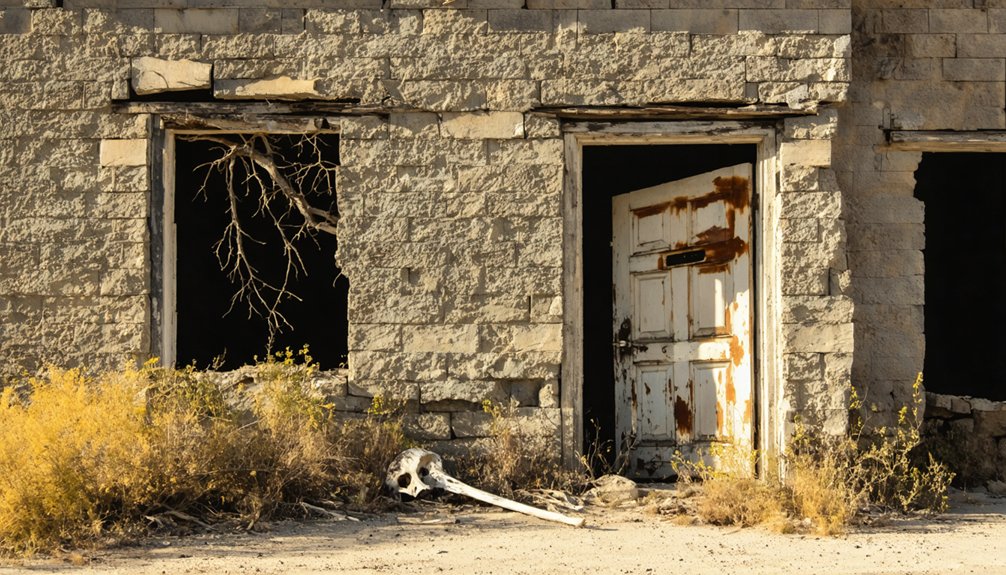
A handful of crumbling structures still mark where Frio Town once stood, though most of the site sits on private ranch land and isn’t freely accessible.
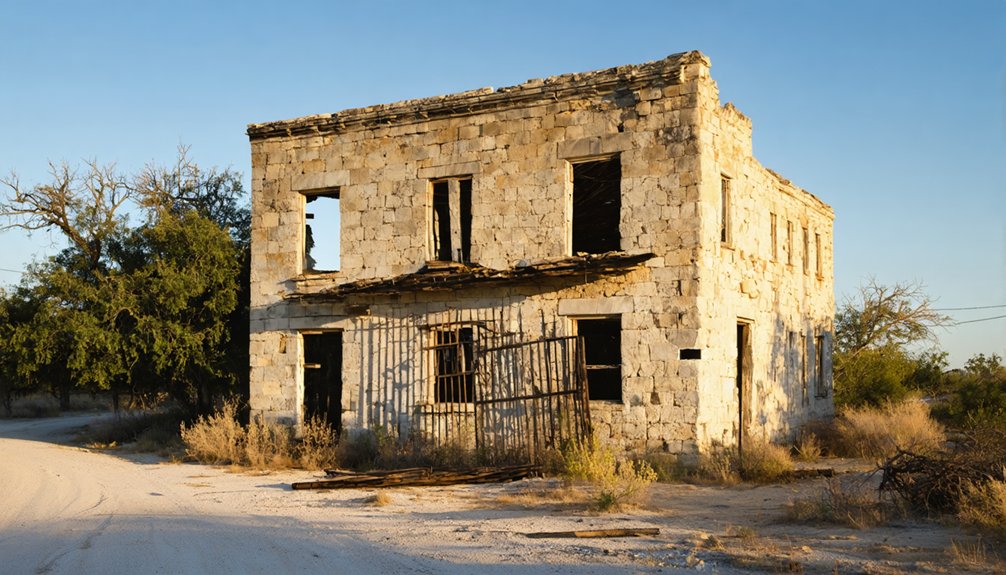
You’ll find the old courthouse and original jail among the most striking historic landmarks, both weathered but still standing as quiet reminders of the town’s early authority. Stone chimneys and scattered foundations trace where homes once stood.
The Frio Town Cemetery remains your most accessible stop, offering cemetery ruins and worn grave markers you can reach from the road without trespassing.
It’s a sobering, honest look at how completely a community can disappear. Bring water, wear sturdy shoes, and expect dense brush. The rawness of the place is exactly what makes it worth the detour.
When Is the Best Time to Visit Frio Town?
If you’re planning a trip to Frio Town, aim for fall or winter when cooler temperatures make the brushy, rural site far more comfortable to explore.
Summer in Frio County hits hard, with intense heat that’ll turn a short heritage stop into an exhausting ordeal.
For photographers, overcast winter days deliver soft, even light that brings out the texture of the crumbling courthouse and weathered stone ruins beautifully.
Cool Season Visits
Frio Town sits in the South Texas brush country, where summer heat can push temperatures well past 100°F and turn an outdoor heritage stop into an endurance test.
Cool weather transforms the experience entirely, giving you genuine seasonal charm alongside manageable conditions for exploring ruins and walking the cemetery grounds.
Plan your visit between November and March for the best experience:
- Temperatures stay mild, typically ranging from 50°F to 75°F
- Brush thins out, revealing stone foundations and chimneys more clearly
- Softer winter light improves photography of the crumbling courthouse ruins
- Fewer insects make lingering around the cemetery far more comfortable
You’ll move freely across the site, absorb the history at your own pace, and leave with sharper photos and a clearer sense of what Frio Town once was.
Summer Heat Warnings
Summer flips that experience on its head. South Texas heat turns brutal fast, and Frio Town’s rural, brush-covered terrain offers zero shade relief.
Temperatures regularly push past 100°F, making outdoor exploration genuinely dangerous rather than just uncomfortable. If you’re committed to summer activities in the area, take heat precautions seriously — carry more water than you think you’ll need, start exploring before 9 a.m., and get back to your vehicle before midday.
Wear light, breathable clothing and keep a first-aid kit handy. The site’s overgrown surroundings trap heat rather than filter it, and there’s no infrastructure nearby for emergencies.
Summer visits aren’t impossible, but the conditions demand respect. You’ll have a much better experience saving Frio Town for a cooler month.
Best Photography Conditions
Beyond the safety concerns, timing your visit also shapes what you’ll actually capture on camera. For the best photography tips at Frio Town, light and season matter more than you’d expect.
- Golden hour mornings cast warm, dramatic light across the crumbling courthouse walls, revealing texture and depth.
- November through February delivers cooler air, clearer skies, and manageable brush that opens your best angles on the ruins.
- Overcast days soften harsh shadows, making the stone jail and cemetery markers photograph cleanly without blown highlights.
- Late afternoon creates long shadows that emphasize foundations and chimney silhouettes against open ranchland.
Arrive early, move slowly, and let the decay tell its story.
Frio Town rewards patient photographers who respect both the land and its forgotten history.
How Do You Get to Frio Town on a Road Trip?
Getting to Frio Town takes you deep into the brushy ranch country of northwest Frio County, about 16 miles from Pearsall along Farm Road 140.
When you’re traversing routes through this stretch of South Texas, Pearsall makes the most logical starting point for your road trip. From there, head northwest on FM 140 until you approach the Presidio Crossing on the Frio River.
The ghost town sits just south of that historic crossing. You won’t find signs pointing the way, so download an offline map before you leave. Cell service gets unreliable fast out here.
The courthouse ruins and jail sit on private ranch land, but the Frio Town Cemetery remains accessible from the roadside. Park responsibly, stay aware of property boundaries, and you’re set to explore.
Which Nearby Ghost Towns Pair Well With Frio Town?
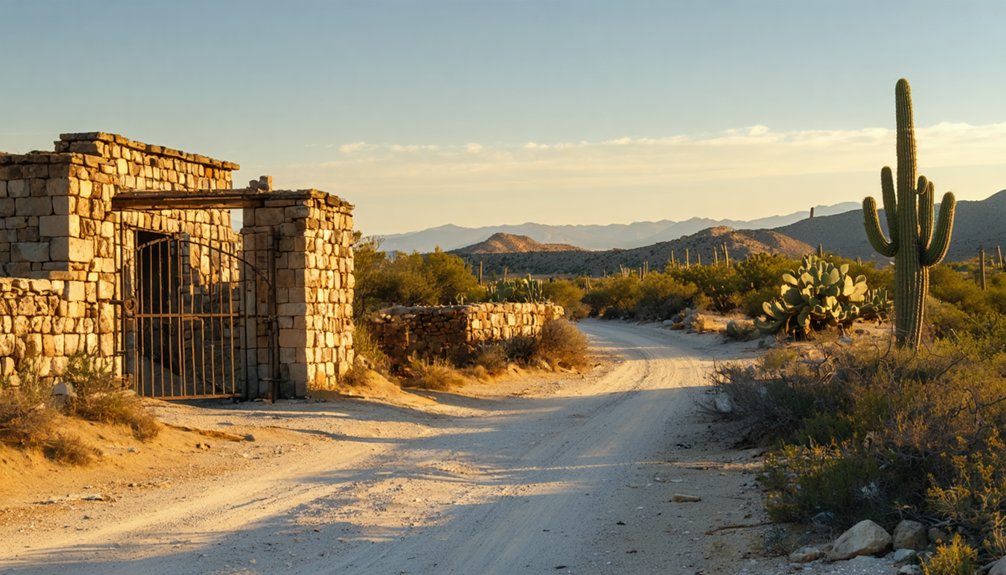
Once you’ve covered Frio Town, the surrounding stretch of South Texas opens up several ghost town detours worth folding into your route.
The region’s ghost town history runs deep, and these nearby attractions keep the momentum going:
The region’s ghost town history runs deep — and there’s no shortage of forgotten places to keep you chasing it.
- Tilden – A quiet former ranch town in McMullen County with remnants of early frontier life.
- Carrizo Springs area settlements – Dimmit County holds scattered ruins tied to late-1800s ranching communities.
- Cotulla – Once a rough cattle-drive stop along the Nueces Strip with layered historical character.
- Uvalde County ghost sites – Several abandoned communities sit within driving distance, each connected to early Texas settlement patterns.
String these stops together, and you’ll build a route that trades tourist traps for raw, unfiltered South Texas history.
Frequently Asked Questions
Was Frio Town’s Jail Really Used to Hold Sam Bass?
Local legends claim Frio Town’s jail history includes holding notorious outlaws like Sam Bass, and you’ll find that story fascinating. Whether it’s fully verified or myth, it adds undeniable intrigue to your ghost town adventure.
What Materials Were Used to Build Frio Town’s First Courthouse?
You’ll find that Frio Town’s first courthouse featured cypress shingles hauled from Leakey, giving it real courthouse architecture with historical significance. Workers completed it in January 1872, proving frontier communities could build lasting civic structures despite rugged, resource-scarce conditions.
Is the Frio Town Cemetery Open to the Public?
You can access the Frio Town Cemetery from the road, making it one of the few spots you’ll freely explore. Respect cemetery history by practicing proper ghost town etiquette — stay mindful, tread lightly, and honor those who rest there.
Who Originally Laid Out and Founded the Settlement of Frio Town?
Like a seed planted in frontier soil, A. L. Oden laid out the settlement in 1871, sparking Frio Town history and inspiring the founding families who’d shape this bold, free Texas community.
Is the Frio Town Courthouse Ruin on Private Property?
Yes, you’ll find Frio Town’s courthouse ruin sitting on private property, so you can’t freely roam it. Respecting property rights while admiring this ghost town’s historical significance lets you honor both freedom and the past.
References
- https://www.youtube.com/watch?v=fO8ohVaayjo
- https://en.wikipedia.org/wiki/Frio_Town
- https://www.ksat.com/news/2019/02/20/abandoned-courthouse-jail-is-all-that-is-left-of-frio-town-texas/
- https://www.tshaonline.org/handbook/entries/frio-town-tx
- https://texastimetravel.com/cities/pearsall/
- http://files.usgwarchives.net/tx/frio/history/friohistory.txt
- https://www.ghosttowns.com/states/tx/friotown.html
- https://www.texasescapes.com/TexasGhostTowns/Frio-Town-Texas.htm
- https://www.texasalmanac.com/places/frio-town
- https://www.youtube.com/watch?v=4l1h29ihnM0