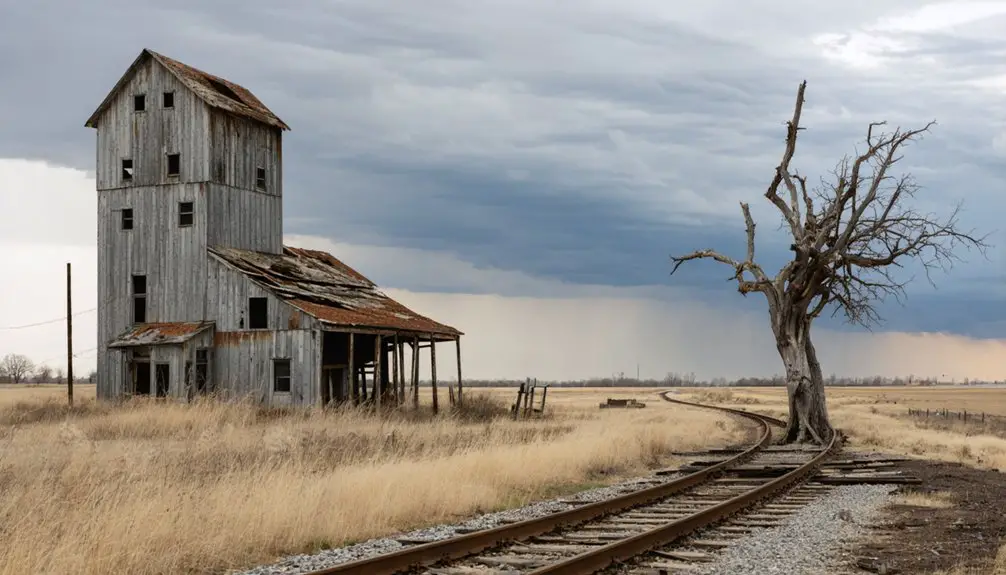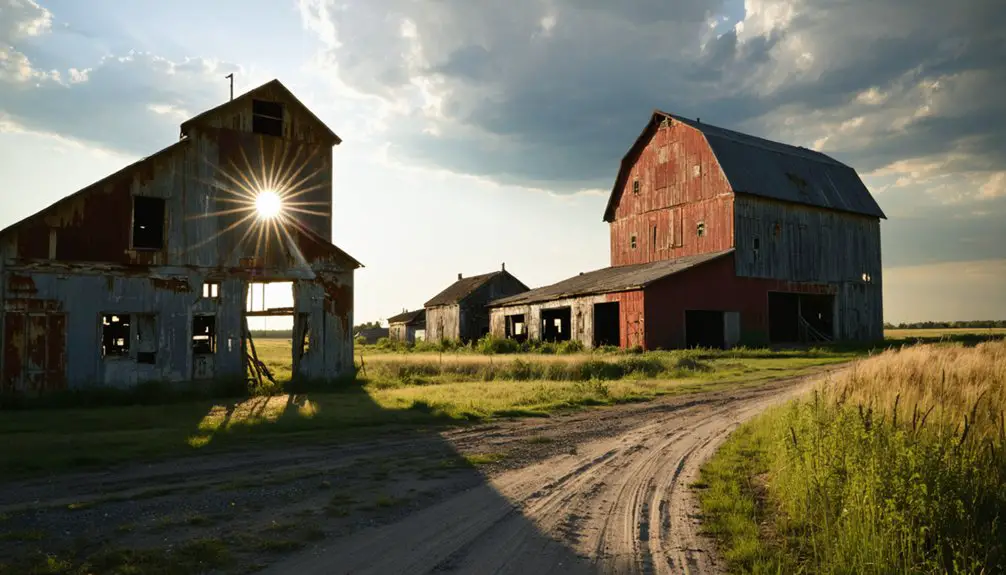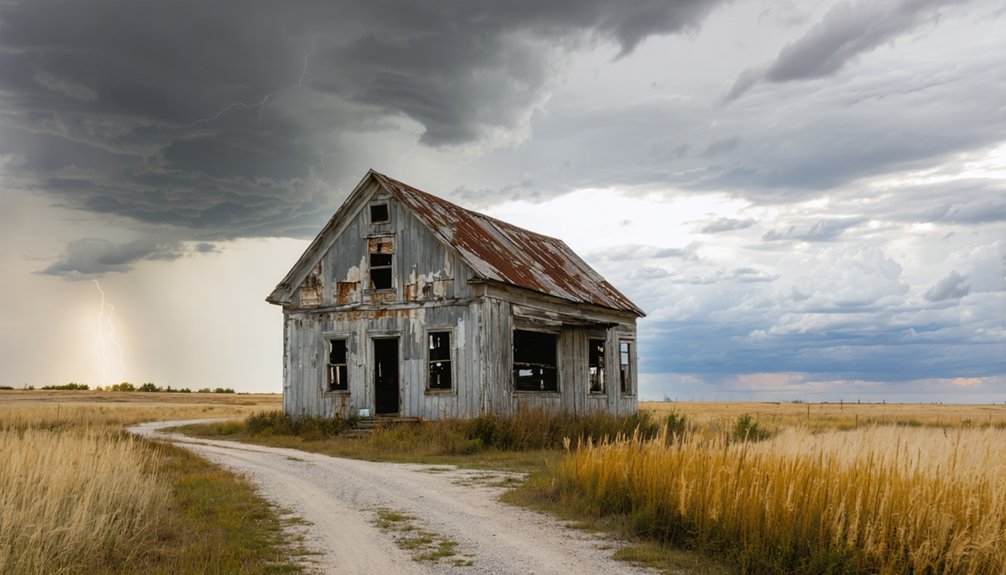
Planning a ghost town road trip to Garen, Minnesota means stepping into Blue Earth County’s forgotten past, where crumbling foundations and overgrown paths mark what was once a thriving frontier settlement. You’ll want a reliable vehicle, sturdy boots, and offline maps for traversing remote county roads. Visit in late spring or early fall for the best conditions. Keep exploring, and you’ll uncover everything you need to make this an unforgettable journey.
Key Takeaways
- Garen, located in Blue Earth County, Minnesota, features remnants like an old Congregational Church, sawmill traces, and scattered store and blacksmith foundations.
- Access Garen via rural county roads using GPS and a paper map backup, with a reliable vehicle recommended for gravel stretches.
- Visit during late spring or early fall for mild temperatures, avoiding winter snow and spring muddy road conditions.
- Pack sturdy waterproof boots, a flashlight, layered clothing, a first-aid kit, and offline maps for safe exploration of uneven terrain.
- Nearby ghost towns like Bath, Medo Township, and Blue Earth County settlements offer additional historical stops worth including in your itinerary.
How Garen, Minnesota Became a Ghost Town
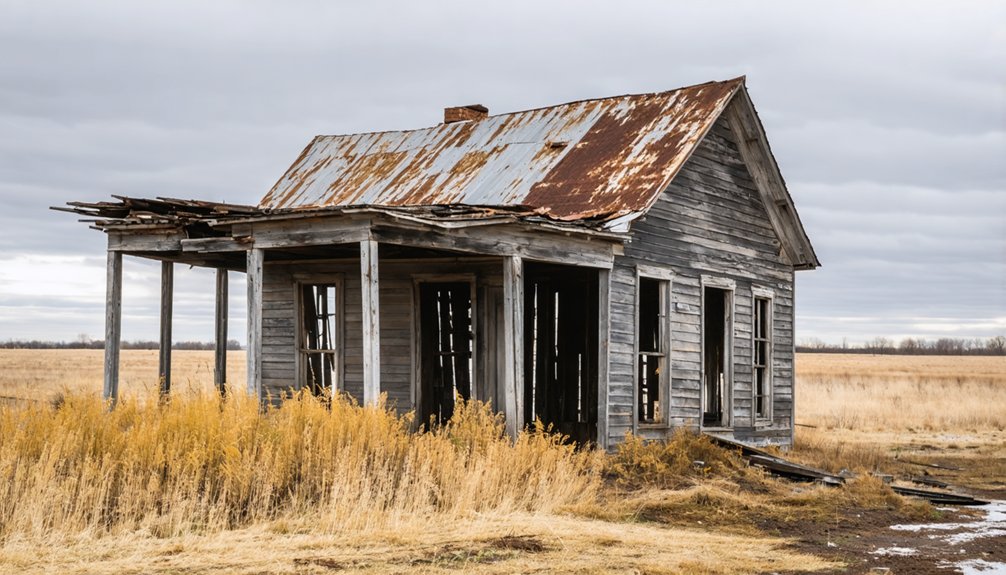
Once a promising settlement in Blue Earth County, Garen, Minnesota followed a path familiar to many small frontier towns — a burst of early optimism followed by a slow, quiet disappearance.
By 1859, the community had a general store, two sawmills, and a blacksmith shop. Moses Bennett’s sawmill anchored early growth, and a Congregational Church organized around 1857 or 1858 signaled real community ambition.
By 1859, Garen boasted a general store, two sawmills, a blacksmith shop, and a church — early ambition made visible.
But Garen legends don’t paint a triumphant ending. By 1870, hopes for lasting town development had quietly collapsed.
The post office held on until 1900, with stagecoach mail keeping a thin thread of life alive.
Garen history reminds you that frontier survival demanded more than early momentum — it required sustained connection to trade, people, and purpose that Garen ultimately couldn’t maintain.
What’s Left of Garen, Minnesota Today?
Today, Garen is little more than a memory pressed into the Blue Earth County landscape. Yet, you can still uncover traces of its Garen history if you know where to look. Local legends keep the spirit of this vanished community alive.
Here’s what you’ll find:
- Remnants of the post office site, which operated until 1900 via stagecoach mail
- The old Congregational Church location, organized between 1857 and 1858
- Traces of the original sawmill built by Moses Bennett
- Scattered foundations where a general store and blacksmith shop once stood
Each site tells a story of ambition and abandonment. Exploring these remnants connects you directly to the pioneers who built something from nothing — and ultimately walked away.
How to Get to Garen: Directions and Road Conditions
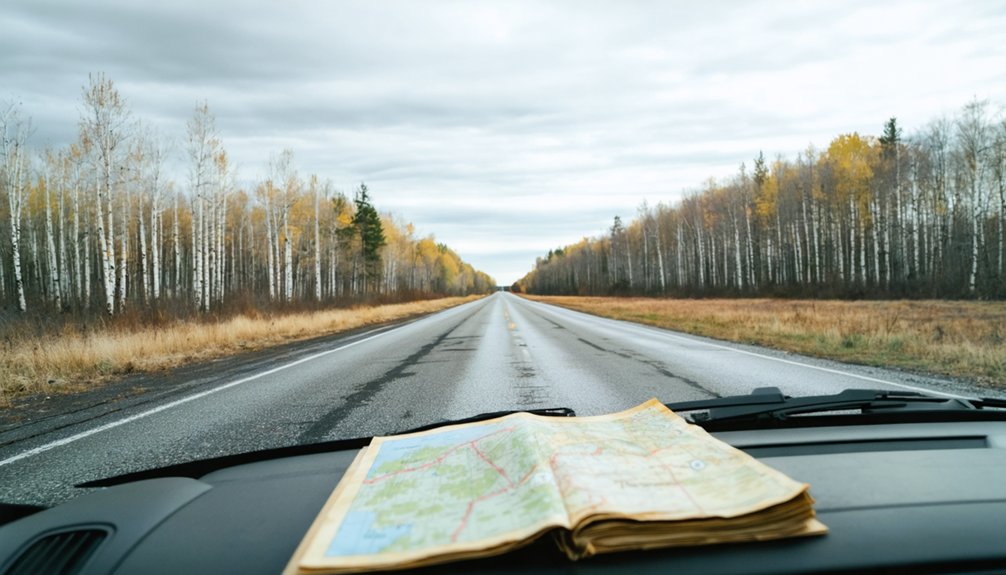
Knowing what’s left of Garen sharpens the urge to see it for yourself, so let’s get you there.
Knowing what’s left of Garen sharpens the urge to see it for yourself — so let’s get you there.
Garen sits in southern Minnesota, accessible via rural county roads that cut through open farmland. You’ll want a reliable vehicle — gravel stretches and seasonal road conditions can catch unprepared travelers off guard.
Head toward Blue Earth County and use a GPS, but cross-reference with a paper map since signal drops in remote areas. Locals familiar with Garen history can point you toward the exact site, and asking around often surfaces local legends that no app will tell you.
Visit in late spring or early fall for the best road conditions. Avoid heavy rain periods — unpaved sections get muddy fast and can leave you stranded far from anything resembling civilization.
Best Time of Year to Visit Garen
Late spring and early fall offer you the best conditions for exploring Garen, when mild temperatures make walking the old town site comfortable and the landscape remains clear enough to spot foundations and remnants.
You’ll want to avoid winter visits, when snow can obscure historical features and rural roads turn treacherous.
Summer works too, though heavy vegetation can hide structural details that cooler months keep visible.
Ideal Visiting Seasons
Summer and early fall are your best bets for visiting Garen, Minnesota, when mild temperatures and longer daylight hours give you plenty of time to explore the remnants of this forgotten community.
You’ll uncover ghost town legends and local folklore that bring this abandoned settlement to life.
Plan your visit around these ideal conditions:
- June–August: Long days maximize exploration time across open terrain.
- September–October: Crisp air and fall foliage create dramatic photography backdrops.
- Avoid winter: Snow conceals historical remnants and makes rural roads treacherous.
- Skip spring: Muddy back roads and unpredictable flooding limit access considerably.
Pack light layers for cool mornings, and always carry water.
Garen rewards those who arrive prepared and ready to roam freely on their own schedule.
Weather Considerations For Travelers
When you’re planning a ghost town road trip to Garen, Minnesota, timing matters more than you might expect.
Weather patterns here shift dramatically, and seasonal changes can make or break your experience.
Summer offers warm, accessible roads and long daylight hours, perfect for exploring abandoned structures.
Spring brings muddy back roads that can trap unprepared vehicles.
Fall delivers stunning foliage that frames decaying buildings beautifully, though temperatures drop quickly after sunset.
Winter transforms Garen into an eerie, snow-blanketed landscape — breathtaking but potentially dangerous.
Roads become treacherous, and exposed ruins grow hazardous under ice.
Your best window runs from late June through early October.
Pack layers regardless of season, watch local forecasts closely, and always tell someone your route before you disappear into Minnesota’s forgotten countryside.
What to Pack for Your Garen Ghost Town Trip

Before you hit the road to Garen, pack a sturdy pair of boots, a flashlight, and a first-aid kit to handle the uneven terrain and unpredictable conditions of an abandoned site.
You’ll also want to download offline maps or bring a paper topographic map, since cell service in rural Minnesota can disappear as fast as the towns themselves.
Layer your clothing for shifting temperatures, because southern Minnesota weather swings hard between morning chills and afternoon heat, especially in spring and fall.
Essential Gear To Bring
Exploring a ghost town like Garen demands thoughtful preparation, so pack smart before you hit the road.
You’ll want gear that keeps you comfortable while you uncover ghost stories and trace local legends across forgotten landscapes.
- Camera or smartphone – Capture crumbling structures and eerie details worth documenting.
- Sturdy walking shoes – Uneven terrain and debris make solid footwear non-negotiable.
- Water and snacks – Remote locations offer zero amenities, so bring your own fuel.
- Notebook and pen – Jot observations, sketch layouts, or record details for research later.
Travel light but intentionally.
Garen’s isolated setting rewards those who arrive prepared rather than scrambling for basics.
Smart packing means you spend more time exploring and less time wishing you’d planned better.
Once you’ve packed your gear, finding Garen itself becomes your next challenge. Ghost towns don’t advertise themselves, so you’ll need reliable navigation apps like OnX Maps or Google Maps offline downloads before you lose cell service on rural Minnesota roads.
Screenshot coordinates and save them locally — connectivity disappears fast once you’re deep into the countryside.
Supplement your digital tools with physical map resources. A detailed Minnesota county road atlas gives you backup when batteries drain or signals vanish. Topographical maps reveal terrain features that standard GPS apps often miss, helping you identify old settlement boundaries and abandoned road networks.
Mark waypoints before departing, not after arriving. Freedom on the open road means preparation, not improvisation. Knowing exactly where you’re headed lets you explore confidently rather than wasting daylight searching aimlessly.
Weather-Appropriate Clothing Choices
Minnesota’s weather shifts fast, so packing smart separates a memorable ghost town adventure from a miserable retreat back to the car. Seasonal changes hit hard across southern Minnesota, and weather patterns around Garen can swing dramatically within hours.
Pack these four essentials before hitting the road:
- Layered clothing — lightweight base layers with a windproof shell handle unpredictable temperature swings.
- Waterproof boots — overgrown ghost town terrain stays muddy and uneven year-round.
- Wide-brim hat — shields against both summer sun and unexpected drizzle.
- Moisture-wicking socks — keeps feet dry during extended exploration sessions.
Check local forecasts the morning you depart. You’re chasing history on your own terms, and smart preparation keeps you free to explore longer without weather forcing you home early.
Ghost Towns Near Garen Worth the Detour
While Garen itself rewards curiosity, several nearby ghost towns make the surrounding region a rich destination for history lovers.
Bath, settled in 1857, holds the title of Freeborn County’s longest-established ghost town, with its population once reaching 950 souls in 1880. Its historical significance draws visitors enthusiastic to walk ground that shaped southern Minnesota’s earliest communities.
Head toward Blue Earth County and you’ll discover a settlement that thrived briefly before abandonment by 1870, its general store, sawmills, and blacksmith shop now just memories.
Medo Township offers three vanished villages — Little Cobb, Cream, and Medo — each carrying ghost stories rooted in Indigenous history and frontier ambition. These stops transform your road trip into something far deeper than simple sightseeing.
Where to Eat and Sleep Near Garen
After a long day of exploring vanished towns and reading the quiet language of abandoned lots, you’ll want a hot meal and a comfortable bed. Mankato serves as your best base for local dining and nearby accommodations.
Here’s what you’ll find within easy reach:
- Diners and cafés in Mankato offering hearty, no-fuss Midwestern meals
- Chain hotels along Highway 169 with reliable amenities and flexible check-in
- Local bed-and-breakfasts for travelers who prefer character over convenience
- Grocery stores and gas stations stocked for packing your own road snacks
You’re free to move at your own pace, so choose what fits your style.
Keep your itinerary loose, your tank full, and your next ghost town already mapped.
How to Photograph Garen Like a Pro
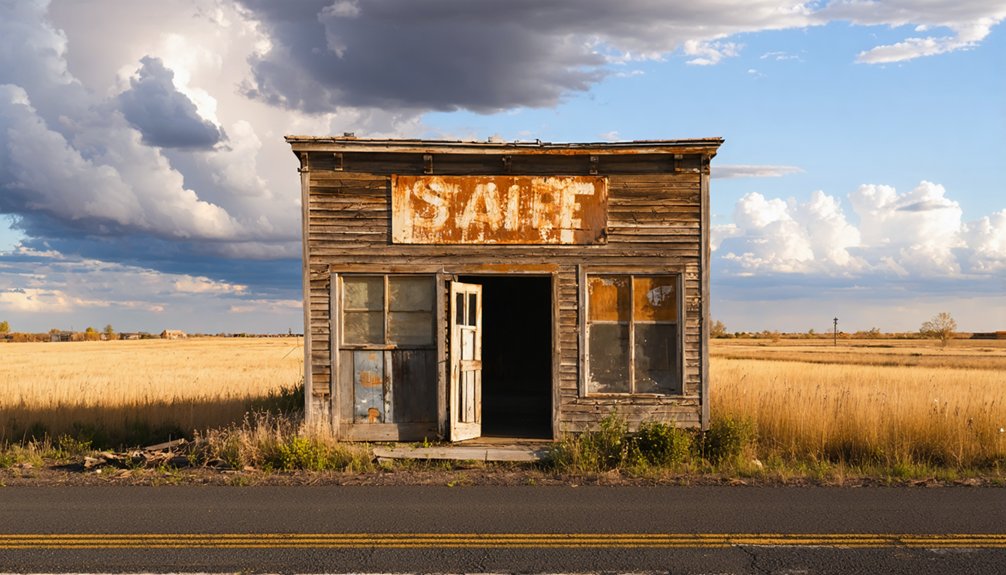
Photographing a ghost town well means training your eye to find meaning in absence. At Garen, you’re not chasing grand architecture — you’re capturing ghost town aesthetics through decay, shadow, and stillness.
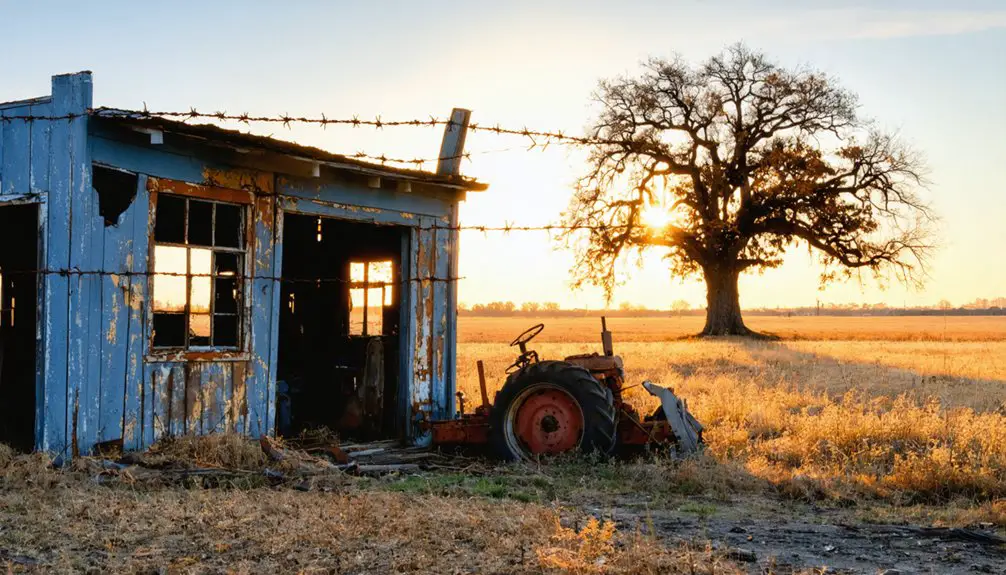
Use natural light during golden hour to pull warmth from weathered wood and rusted metal. Consider photography composition carefully: frame crumbling structures against open sky to emphasize isolation.
Golden hour light breathes life into decay, turning rust and weathered wood into something quietly beautiful.
Get low, shoot through broken windows, or position overgrown vegetation in your foreground to create depth. Black-and-white conversions often intensify Garen’s haunted atmosphere, stripping away distraction.
Bring a wide-angle lens for sweeping contextual shots, then switch to a prime lens for tight, textural details. You’re telling a story of what was — let the emptiness speak.
Frequently Asked Questions
Is Garen, Minnesota Listed on Any Official Ghost Town Registries?
Ironically, you won’t find Garen history on any official ghost town registries, yet its ghost town significance speaks volumes. You’ll discover this forgotten Minnesota gem carries real historical weight beyond any formal list.
Were Any Famous or Notable People Born in Garen?
You won’t find records of famous residents tied to Garen’s historical significance, as the small ghost town’s story remains largely undocumented. Its quiet legacy invites you to uncover forgotten narratives through personal exploration and local historical research.
Did Garen Ever Have a Local Newspaper or Publication?
“Knowledge is power” — sadly, there’s no record of Garen ever having a local newspaper or publication to document its local history or community events, but you can uncover its fascinating past through Minnesota’s historical archives.
Are There Any Active Preservation Efforts for Garen’s History?
There’s no documented evidence of active preservation efforts for Garen’s historical significance, but you’d find that community involvement from local historians and organizations like the History Center of Freeborn County helps keep Minnesota’s ghost town stories alive.
Can Visitors Legally Take Artifacts or Souvenirs From Garen?
Like treasure hunters tempted by gold, you shouldn’t pocket artifacts from Garen. Artifact preservation laws protect these remnants, and souvenir ethics demand you leave history untouched. Take only photographs; leave only footprints.
References
- https://www.youtube.com/watch?v=EoOpycaZC00
- https://blueearthcountyhistory.com/2020/09/23/ghost-towns-in-blue-earth-county/
- https://www.thetravel.com/minnesota-finland-is-ghost-town-with-toxic-issues-today/
- https://www.cbsnews.com/minnesota/video/why-taconite-harbor-a-once-thriving-minnesota-community-is-now-a-ghost-town/