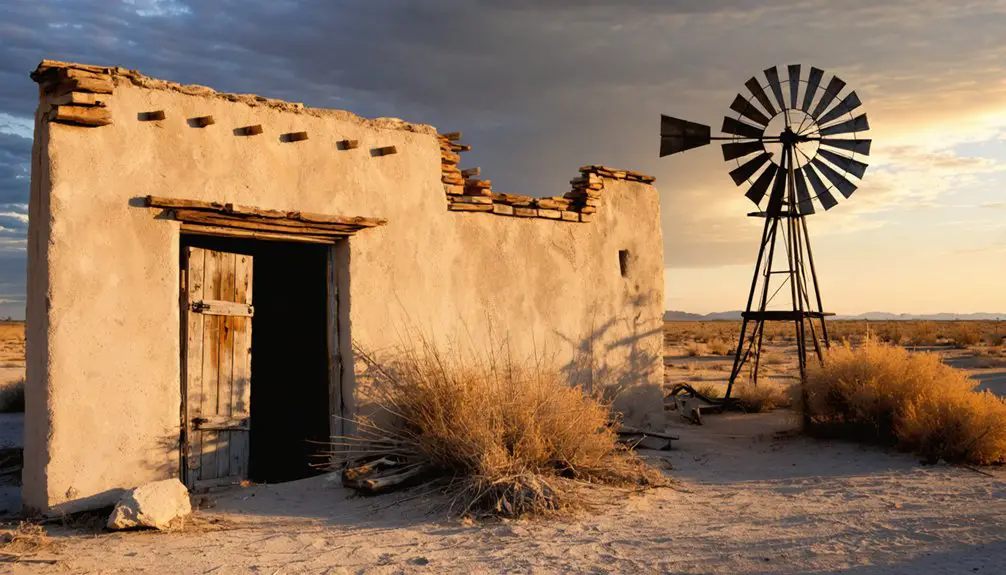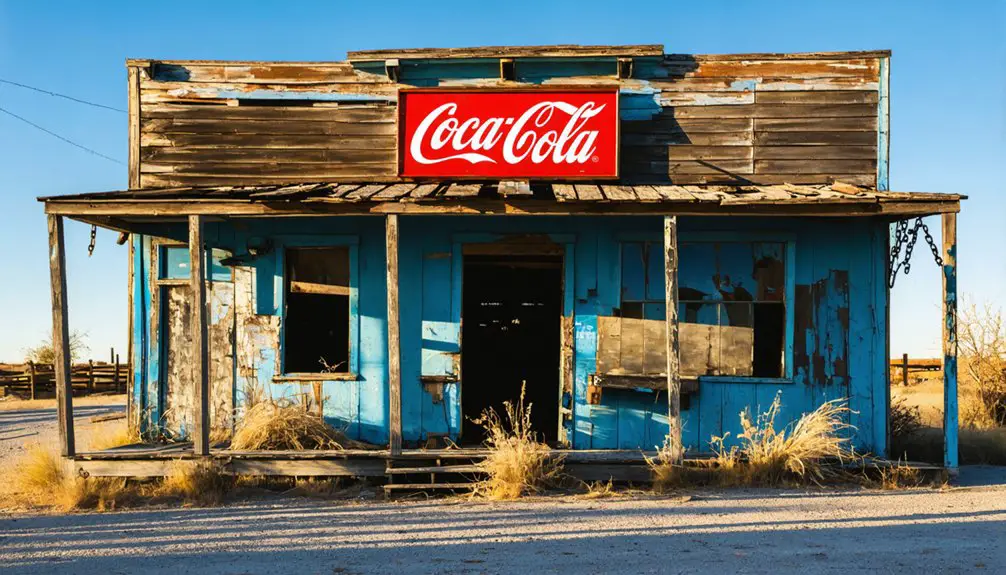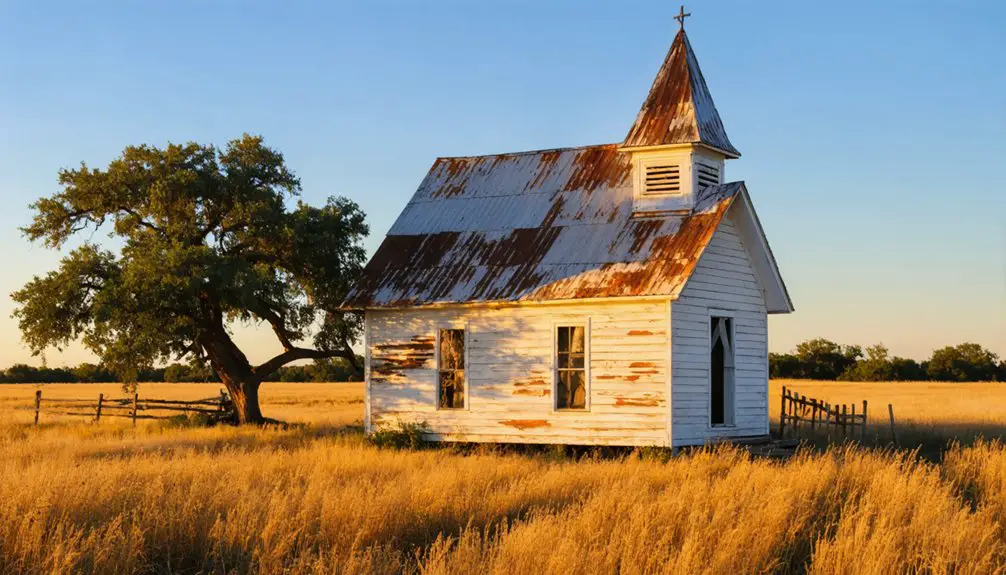
You’ll find two Girvins in Pecos County—the original ghost town sits one mile from modern Girvin near abandoned railway tracks, accessible via US Highway 67 and FM 11. Visit between October and April to photograph the sun-scorched Social Club, skeletal Helmers store walls, and the striking pink brick schoolhouse where 15 families still gather for reunions. Fort Stockton lies 32 miles southwest for supplies, but you’ll need serious preparation for this isolated terrain where rattlesnakes shelter in roofless buildings and summer heat exceeds 100°F—discoveries await those who venture into this vanished cattle empire.
Key Takeaways
- Girvin has two locations: the original ghost town sits one mile from modern Girvin near abandoned railway tracks and Pecos River.
- Fort Stockton, 32 miles southwest on US Highway 67, serves as the nearest supply hub for provisions and fuel.
- Visit October through April to avoid brutal summer heat exceeding 100°F in Pecos County’s semiarid climate.
- Photograph the pink brick schoolhouse, sun-scorched Social Club, and roofless Helmers store walls for authentic ghost town imagery.
- Pack extra water, watch for rattlesnakes and scorpions, and prepare for isolation in this remote terrain.
The Rise and Fall of a Cattle-Shipping Hub
The Kansas City, Mexico and Orient Railway carved through Pecos County in 1912, and where the tracks crossed the desert rangeland, Girvin sprang to life. Named after rancher John H. Girvin, this shipping point became legendary—more livestock cars rolled through here than any other Santa Fe station between Presidio and Kansas.
The lifestyle and culture of the cattle era thrived in holding pens covering one and a half sections, where cowboys pushed cattle and sheep toward northern markets. You’d have found a depot, hotel, saloon, and general store serving ranchers who’d finally escaped the grueling overland drives.
For twenty profitable years, this economic boom and bust town epitomized freedom on the open range. Then Route 67 bypassed Girvin in 1933, and the rails fell silent.
What Remains at the Original Townsite Today
Today, Girvin’s skeletal remains tell stories of abandonment across the windswept Pecos County landscape. You’ll find roofless concrete walls where the Helmers’ store once thrived, now surrendering to mesquite and spider webs.
Abandoned commercial establishments dot the terrain—a sun-scorched Social Club with shattered windows, a Western-style facade propped by rotting 2-by-4s, and a former filling station stripped by arson. The railroad tracks still cut through silent earth, though the depot vanished in 1944.
Among the ruins, one structure defies decay: a pink brick 1930s schoolhouse stands as Girvin’s beating heart. This survivor among educational and civic buildings hosts annual reunions where fifteen families gather to honor their ghost town heritage. It’s your voting location, community center, and reminder that some Texas places refuse complete erasure.
Getting There: Routes and Locations to Know
Traversing to Girvin requires comprehending that two distinct locations share this name across Pecos County’s vast landscape. The original townsite sits one mile from modern Girvin, where historical cattle drives once crossed the Pecos River near abandoned railway tracks.
You’ll navigate local geology and terrain that’s shaped this region’s character for generations.
Key navigation points:
- New Girvin: US Highway 67 and FM 11 intersection at coordinates 31.06293° N, 102.38847° W
- Original Girvin: Follow tracks toward the Pecos River crossing, one mile from the highway junction
- Fort Stockton: Your supply hub lies 32 miles southwest on US 67
- Girvin Cemetery: A landmark guiding you through this 2,326-foot elevation terrain
The pink brick schoolhouse stands as your visual beacon between both locations.
Must-See Abandoned Structures for Photography
Once you arrive at this windswept crossroads, your camera will find endless subjects scattered across two distinct settlement sites. The sun-scorched SocialClub—a former railroad depot turned bar—offers prime vintage signage documentation with its weathered facade and corrugated metal roof.
Near the tracks, roofless concrete walls mark the original Helmers general store, its debris-strewn interior framing mesquite growth perfect for wildlife habitat exploration. Next door, a skeletal Western storefront leans on 2-by-4 braces, exposing raw timber against desert sky. The collapsed gas station rafters create dramatic foreground elements.
Don’t overlook the pink brick schoolhouse—still functioning as a community center—which provides striking contrast to surrounding decay. Each structure tells its own story of frontier commerce gradually surrendering to West Texas elements.
Best Times and Tips for Exploring Safely
Planning your visit between October and April will spare you from Pecos County’s punishing summer temperatures, when the mercury regularly climbs past 100°F and transforms this exposed landscape into an oven. Winter through spring offers comfortable exploration conditions across the mesquite-covered terrain.
Avoid Pecos County’s brutal summer heat exceeding 100°F—visit between October and April when temperatures allow comfortable exploration of this exposed terrain.
Essential Safety Preparations:
- Hydration is critical – Pack more water than you’d expect in this semiarid climate where dehydration strikes quickly
- Watch your footing around roofless walls and debris-strewn structures with broken windows threatening injury
- Prepare for isolation – Fort Stockton sits 35 miles away, making self-reliance mandatory
- Stay alert for wildlife sightings – rattlesnakes and scorpions inhabit abandoned buildings
You’ll discover local folklore at the pink brick schoolhouse, still serving as a community center, where remaining residents gather to preserve Girvin’s fading stories.
Frequently Asked Questions
Are There Any Local Regulations About Entering Abandoned Buildings in Girvin?
No local regulations specifically govern abandoned buildings in Girvin, but you’ll face legal liability concerns under Texas trespass laws. Take safety precautions seriously—private ownership still applies, and entering without consent risks misdemeanor charges and civil damages.
What Amenities or Services Are Available Nearby for Road Trip Supplies?
You’ll find minimal services in Girvin itself—just ghost town ruins. For gas stations and grocery stores, you’ll need to venture to larger towns like Fort Stockton or Sheffield, so stock up before exploring this remote frontier outpost.
Can Visitors Camp Overnight Near the Ghost Town Sites?
Overnight campsites aren’t available directly at Girvin’s abandoned structures, raising abandoned site safety concerns. You’ll find freedom camping at nearby boondocking spots or dedicated RV parks in surrounding West Texas, where you can legally settle for the night.
Are There Guided Tours Available for Exploring Girvin’s Historical Locations?
No guided tours are offered for Girvin’s scattered ruins, leaving you to navigate independently through Old Town’s weathered structures. You’ll find private property access limited, so respect boundaries while exploring the schoolhouse and crumbling commercial buildings along abandoned railroad tracks.
What Other Ghost Towns Are Worth Visiting Near Girvin, Texas?
Within 160 miles, you’ll discover four compelling ghost towns: Lobo’s abandoned swimming pool ruins, Langtry’s preserved historical landmarks including Judge Roy Bean’s saloon, Plata’s desert stone foundations, and Adobe Walls’ prairie buildings with abandoned cemeteries marking frontier settlements.
As you explore these fascinating locations, you might also want to check out the ghost towns near Luxello, Texas, which offer a glimpse into the past with their crumbling structures and eerie quiet. Each site tells a unique story of the people who once inhabited these areas, making them a hauntingly beautiful destination for history buffs and adventurers alike. The remnants of these towns serve as poignant reminders of the challenges faced by early settlers in the Texan landscape.