Planning a ghost town road trip to Hayrick, Texas puts you in the heart of Coke County history. Start in Robert Lee, then head five miles northeast toward Hayrick Mountain, the distinctive hay mound silhouette that named the town. You’ll find a historical marker and the 1892 Hayrick Cemetery, the town’s only remaining physical evidence after losing its county seat status in 1891. Stick around, and you’ll uncover the surprising forces that erased an entire community from the map.
Key Takeaways
- Hayrick, Texas, is located in southeastern Coke County, five miles northeast of Robert Lee, making Robert Lee an ideal base for your visit.
- Use Hayrick Mountain’s distinctive 2,424-foot hay mound silhouette as a natural landmark to guide your road trip through the West Texas plains.
- Visit the Hayrick Cemetery, the only physical remnant of the town, established in 1892 by the Hayrick Masonic Lodge on 11.7 acres.
- Extend your trip by exploring nearby Robert Lee Town Square, the Coke County Courthouse, and historic commercial buildings along the Colorado River.
- Prepare for open Texas terrain, check travel conditions in advance, and time your visit to maximize daylight for exploring the area’s historical markers.
How Hayrick, Texas Went From County Seat to Ghost Town
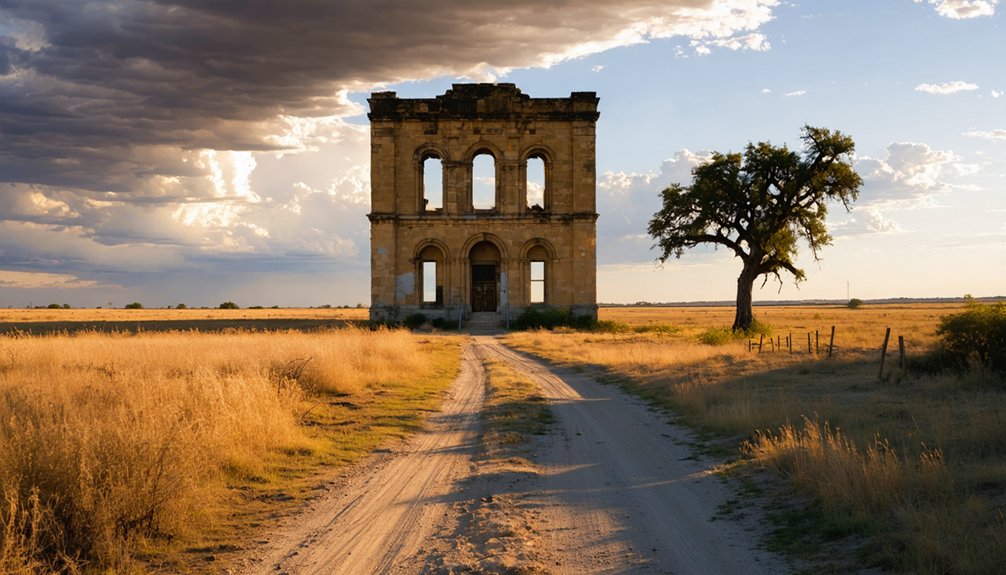
Hayrick, Texas had everything a frontier town needed to thrive — except staying power. Founded in 1887, it became Coke County’s first county seat just two years later.
But trouble arrived fast. The courthouse burned, destroying most official records. Then an 1891 election handed county seat status to Robert Lee by just 48 votes.
That loss triggered a swift population exodus. You can’t blame the settlers — Robert Lee sat along the Colorado River, offering something Hayrick desperately lacked: reliable water.
When you lose the county seat to a town with a river, the writing’s on the wall.
Landowner L.B. Harris sweetened the deal by offering free town lots to every family who owned a home in Hayrick. People packed up and left.
Within years, the once-promising settlement had vanished, leaving only its cemetery behind as proof it ever existed.
Why Only a Cemetery Remains in Hayrick, Texas Today
When a town loses its county seat status, it rarely survives — and Hayrick proved no exception. After residents relocated to Robert Lee, Hayrick simply vanished.
Today, one enduring symbol of cemetery preservation keeps its memory alive.
What you’ll find at the historic site:
- The burial ground — An 11.7-acre cemetery deeded to Hayrick Masonic Lodge No. 696 on September 29, 1892
- A State of Texas historical marker — Erected in 1936 (Marker No. 2414), honoring Hayrick’s historical significance as Coke County’s first county seat
- Silence — No buildings, no residents, just open Texas landscape surrounding the graves of early settlers
You’re fundamentally standing where a functioning government once operated.
That’s a powerful reminder of how quickly freedom-seeking communities rise — and disappear.
The Hayrick Cemetery and Its 1892 Origins
Just three years after the county seat election sealed Hayrick’s fate, the Hayrick Lodge Cemetery Association officially formed on September 29, 1892 — giving the dying town its most enduring institution.
Officers L.B. Harris and Eugene Cartledge, representing the Austin & Northern Land and Cattle Company, deeded 11.7 acres to Hayrick Masonic Lodge No. 696 for just one dollar.
That transaction anchored Masonic heritage permanently into Hayrick’s story. The lodge held the grounds exclusively for members, relatives, and friends — creating a sacred space that outlasted every building, business, and resident the town once had.
The Masonic lodge created a sacred space that outlasted every building, business, and resident Hayrick ever had.
Cemetery preservation kept Hayrick’s memory alive long after its population vanished. When you visit today, you’re walking through the only physical evidence that twenty-five determined settlers once built something meaningful here.
Hayrick Mountain: The Landmark That Named a Town
Rising 2,424 feet above the West Texas plains, Hayrick Mountain stands five miles northeast of Robert Lee at coordinates 31°58′ N, 100°24′ W — a natural landmark so distinctive that early settlers couldn’t resist naming their town after it.
Understanding the mountain’s significance reveals a deeper appreciation of Hayrick history.
The mountain shaped everything about this settlement’s identity:
- Visual reference — Its hay mound silhouette made it unmistakable across open terrain, guiding travelers naturally toward the settlement.
- Naming inspiration — “Hayrick,” a synonym for haystack, directly mirrors the mountain’s distinctive shape.
- Community anchor — Settlers oriented their lives around this geographic marker, making it their defining landmark.
You’re fundamentally reading a landscape that told people exactly where they were.
Where Hayrick, Texas Is and How to Find It
Southeastern Coke County holds what’s left of Hayrick — and “what’s left” means a cemetery, a historical marker, and the mountain that gave the town its name.
To reach this ghost town, head five miles northeast of Robert Lee, Texas, near coordinates 31°58′ N, 100°24′ W. Hayrick Mountain rises 2,424 feet above sea level, making it an unmistakable landmark you’ll spot before you arrive.
Robert Lee serves as your best base. From there, the drive is short, and the historical significance of the area unfolds quickly once you’re on the road.
You’ll pass through open Texas terrain before the distinctive hay-mound silhouette of Hayrick Mountain comes into view. Let that shape guide you — it’s been pointing travelers toward this site since 1887.
Other Historic Sites Near Hayrick, Texas
While you’re in the area exploring Hayrick’s ghostly remnants, you won’t want to miss the Robert Lee Town Square, where you can soak up the living history of the county seat that ultimately replaced Hayrick back in 1891.
Coke County’s historical sites tell a broader story of frontier settlement, political rivalry, and survival, giving you rich context for everything you’ve already seen at Hayrick’s lonely cemetery.
The nearby Colorado River, which once lured Hayrick’s own residents away with its promise of reliable water, still winds through the landscape as one of the region’s most enduring and scenic landmarks.
Robert Lee Town Square
Just five miles southwest of where Hayrick once stood, Robert Lee’s town square offers a glimpse into the community that fundamentally absorbed its neighbor’s population after the 1891 county seat election.
Understanding this town history helps you appreciate why Hayrick vanished while Robert Lee thrived.
When you visit the square, look for:
- The Coke County Courthouse – built after Robert Lee secured county seat status, representing the political victory that sealed Hayrick’s fate.
- Colorado River access – the reliable water supply that made Robert Lee the practical choice over water-scarce Hayrick.
- Historic commercial buildings – structures that likely housed families who accepted L.B. Harris’s donated lots and relocated from Hayrick.
Walking this square, you’re basically standing in what Hayrick could’ve become.
Coke County Historical Sites
Coke County holds more history than what’s buried in Hayrick’s cemetery or anchored in Robert Lee’s town square. The region’s historical significance stretches across ranching heritage, frontier settlement, and the Colorado River corridor that shaped early Texas life.
You’ll find weathered limestone structures, old ranch boundaries, and roadside markers that tell stories of survival and community building. The 1936 state historical marker commemorating Hayrick’s role as the county’s first seat stands as a tangible reminder of political struggles that reshaped entire communities overnight.
As you explore Coke County, you’re tracing a landscape where water determined destiny and geography dictated power. Every crossroads and abandoned foundation carries weight. Bring a map, slow down, and let the land speak for itself.
Colorado River Landmarks
The Colorado River runs like a quiet spine through this part of West Texas, and once you’ve stood at Hayrick’s empty cemetery, following it downstream reveals a different chapter of the same story.
Robert Lee sits along these banks, thriving precisely because Hayrick couldn’t compete with its water access.
These Colorado River historic landmarks reward explorers who push further:
- E.V. Spence Reservoir — A man-made lake transforming the Colorado’s flow into recreational freedom
- Robert Lee’s Historic Downtown — Walk the streets that absorbed Hayrick’s displaced families after 1891
- Coke County Courthouse — The institutional successor to Hayrick’s courthouse that burned before the removal election
Each stop deepens your understanding of why water, not politics, ultimately determines where communities survive.
Frequently Asked Questions
Is There an Entrance Fee to Visit the Hayrick Cemetery?
You’ll find no entrance fee when exploring Hayrick’s cemetery history! Visiting regulations appear open and free, letting you roam this hauntingly preserved 11.7-acre ghost town remnant and connect with Texas’s fascinating frontier past independently.
What Is the Best Time of Year to Visit Hayrick?
Imagine crisp October air as you explore Hayrick’s cemetery grounds. You’ll find spring and fall offer the best seasonal attractions, with local weather patterns staying mild — avoiding West Texas’s brutal summer heat and unpredictable winter storms perfectly.
Are There Guided Ghost Town Tours Available Near Hayrick, Texas?
No dedicated guided tours exist, but you’ll discover Hayrick’s local legends and historical significance independently. Explore the cemetery, locate the 1936 state marker, and let Coke County’s rich, untamed history fuel your own self-guided adventure.
Is the Road to Hayrick Paved or Suitable for All Vehicles?
Sure, your luxury sports car will *love* the rugged Texas terrain! Seriously though, road conditions to Hayrick aren’t well-documented, so you’d better take vehicle recommendations seriously — bring a sturdy, high-clearance 4WD for worry-free exploration.
Can Visitors Camp Overnight Near the Hayrick Ghost Town Site?
The knowledge doesn’t confirm official camping spots near Hayrick, so you’ll want to research local camping regulations beforehand. Embrace the freedom of the Texas landscape, but stay mindful of local wildlife roaming this rugged, remote terrain!
References
- https://www.tshaonline.org/handbook/entries/hayrick-tx
- http://siouxsue.blogspot.com/2010/12/another-texas-ghost-town-hayrick-texas.html
- https://www.texasescapes.com/TexasTowns/Hayrick-Texas.htm
- https://www.hmdb.org/m.asp?m=82903
- https://www.tshaonline.org/handbook/entries/hayrick-mountain
- http://files.usgwarchives.net/tx/coke/newspapers/history/oralhist.txt
- https://en.wikipedia.org/wiki/List_of_ghost_towns_in_Texas
- https://authentictexas.com/texas-ghost-towns/