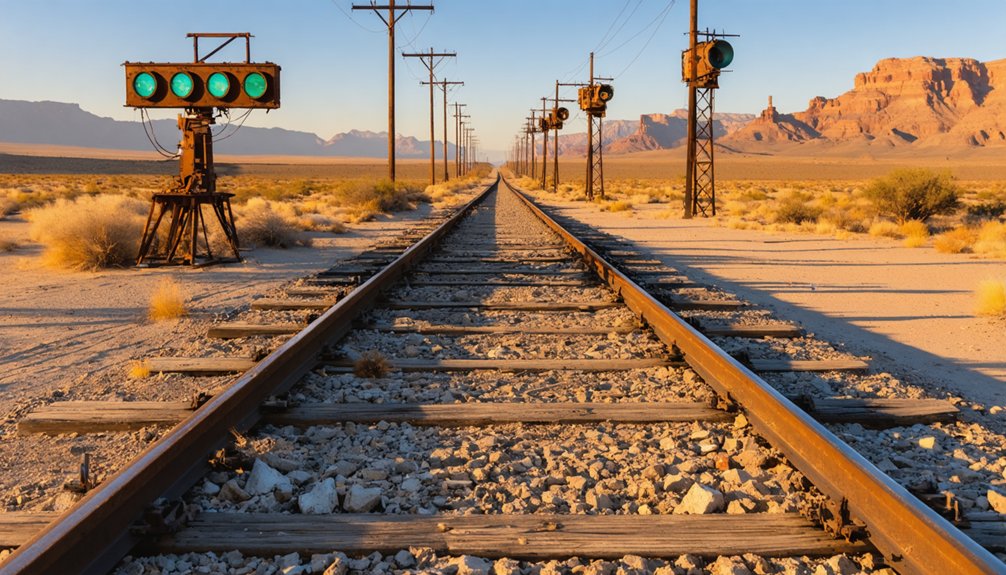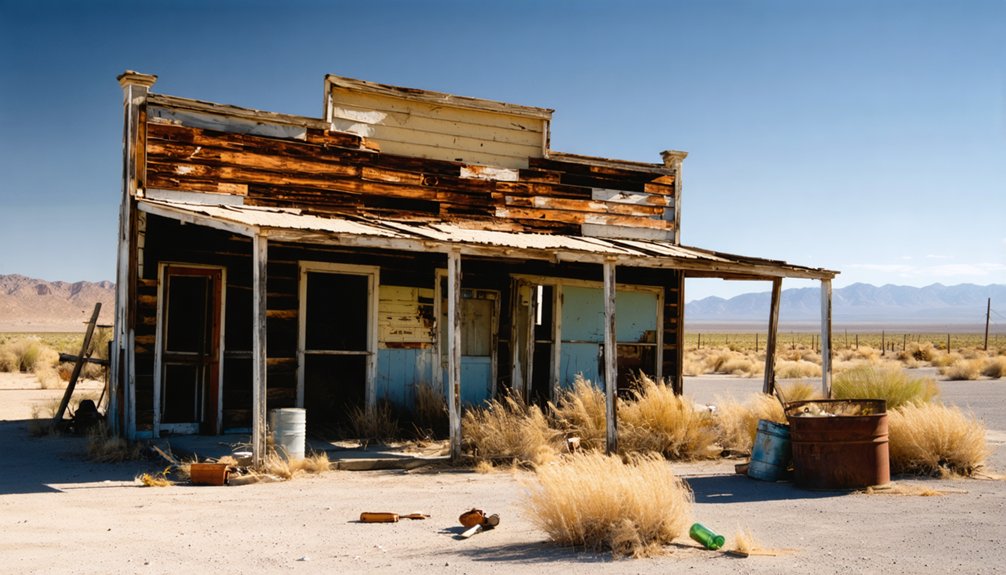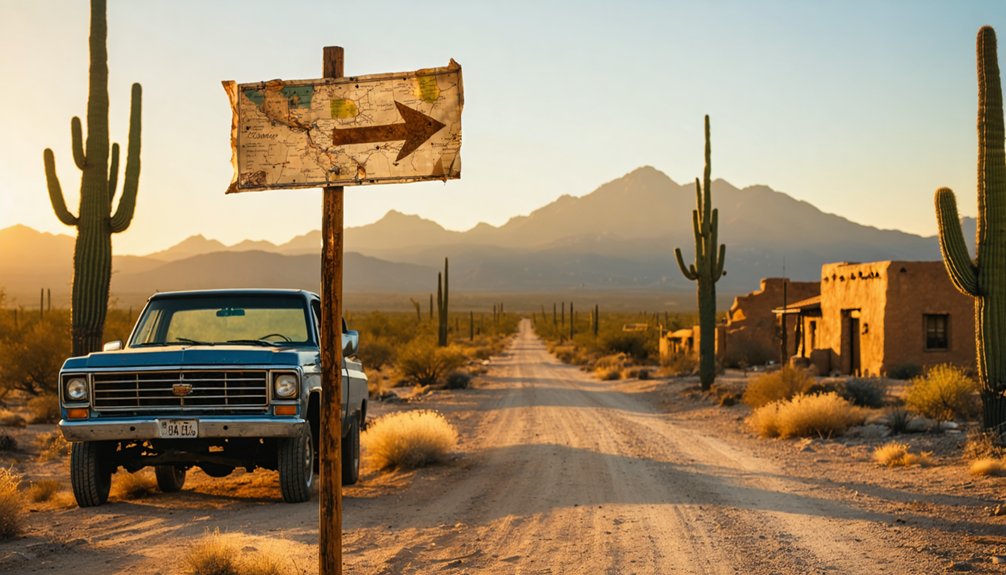
You’ll need a high-clearance vehicle and adventurous spirit for this 40-mile journey southeast of Tucson into the Santa Rita foothills. Plan your visit between fall and spring when temperatures won’t test your survival skills, and pack excessive water, sturdy boots, and sun protection for exploring copper-era ruins. The unpaved roads wind past 175-ton smelter remnants, weathered cemetery headstones, and mine shafts where fortune-seekers once carved their dreams into unforgiving rock. This raw backcountry adventure requires respecting active mining boundaries and preparing for unreliable cell signals in terrain that reveals its secrets to those properly equipped.
Key Takeaways
- Located 40 miles southeast of Tucson requiring a high-clearance vehicle for unpaved roads and remote desert terrain.
- Visit fall through spring for comfortable temperatures; summer heat reaches dangerous levels with 40°F temperature swings.
- Explore historic copper mining remnants including a 175-ton smelter, stone foundations, cemetery, and accessible mine shafts.
- Pack excessive water, sun protection, sturdy boots, and rain jacket for monsoon storms in July-August.
- Respect active mining boundaries, stay on designated routes, and prepare for unreliable cell signals and GPS.
Getting There: Directions and Road Conditions
Tucked into the northwestern foothills of the Santa Rita Mountains, Helvetia sits roughly 40 miles southeast of Tucson—a deceptive measurement that translates to nearly two hours of driving as pavement gives way to graded dirt. You’ll navigate unpaved roads demanding a high-clearance vehicle, winding through remote desert terrain where cell signals vanish and GPS becomes unreliable. Download offline maps before departure.
Active mining operations have reshaped this landscape, creating access restrictions around certain zones. While you can’t freely roam everywhere—fences mark boundaries near the Helvetia-Rosemont area—the Ray Mine and weathered cemetery remain open to exploration. Stick to marked paths; private homes and working ranches still occupy this territory.
Check road conditions beforehand, as weather transforms these routes overnight, turning accessible passages into impassable challenges.
Best Time to Visit and What to Bring
Timing your Helvetia adventure around the desert’s moods makes the difference between memorable exploration and miserable endurance. Fall through spring delivers comfortable temperatures for wandering among collapsed structures, while summer’s brutal heat can reach dangerous levels. You’ll experience dramatic day-night temperature swings up to 40°F, so layer your clothing accordingly.
Desert temperatures shift wildly—layer up for 40-degree swings between scorching days and surprisingly cold nights at Helvetia.
Pack smart for total self-reliance:
- High-clearance vehicle with extra water and snacks
- Sturdy boots for traversing debris-strewn ruins
- Sun protection: hat, sunscreen, sunglasses against relentless desert rays
- Rain jacket for sudden monsoon storms July-August
Winter months offer exceptional photography opportunities when low-angled sunlight illuminates weathered timbers and rusted mining equipment. The cooler temperatures let you linger among the flora and fauna without rushing back to air conditioning. January’s crisp mornings prove perfect for unhurried exploration.
Exploring the Mining History and Remaining Structures
When you stand among Helvetia’s scattered ruins today, it’s hard to imagine this silent canyon once thundered with ore crushers and belched black smoke from towering smelter stacks.
Between 1875 and 1910, this district produced $400,000 in copper from ore averaging 8-10 percent purity. You’ll find remnants of the 175-ton smelter that processed ore hauled by narrow-gauge railroad from mines like Heavy Weight and Copper World.
Mining technology developments included steam-powered rail spurs and furnaces that separated copper from slag through intense heat. Yet labor force challenges, water shortages, and coke supply issues plagued operations.
Look for stone foundations, weathered timber supports, and rusted equipment—tangible evidence of fortune-seekers who carved their dreams into these unforgiving hills before economic pressures forced them onward.
What You’ll Find at the Site Today
Today’s Helvetia offers a haunting snapshot of abandonment punctuated by signs of continuing life. You’ll discover a landscape where past and present collide—occupied homes standing near crumbling foundations, active ranches bordering fenced-off mining operations.
Hidden artifacts emerge from scattered slag heaps and waste rock piles, while preservation challenges mount as the proposed Rosemont copper project looms nearby.
What awaits your exploration:
- Historic cemetery blanketed in spring wildflowers, marking miners’ final resting places
- Foundation walls and smelter ruins rising from the desert floor, evoking the camp’s layout
- Accessible mine shafts at the Ray Mine area with visible copper extraction evidence
- Filming locations from the 1967 western Hombre
You’ll need high-clearance transportation and self-sufficiency—no services exist here, just raw history waiting forty miles southeast of Tucson.
Safety Tips and Visitor Guidelines
Before you venture into Helvetia’s sun-scorched remains, understand that this isn’t a manicured historical park with guardrails and gift shops—it’s raw backcountry where preparation separates memorable exploration from dangerous mishap.
Pack excessive water and sun protection—the Arizona heat shows no mercy. Wear sturdy, closed-toe boots; crumbling structures and cacti don’t care about your comfort. Your high-clearance vehicle needs a spare tire for those rocky approaches.
Respect the fenced boundaries around active mining operations—only the cemetery and Ray Mine welcome visitors.
Open carry restrictions and pet regulations follow standard BLM guidelines, so research before arriving. No shooting within 150 yards of structures, and absolutely no campfires outside developed sites. Remove every shell casing and target. Stay on designated routes—cross-country wandering isn’t just prohibited, it’s foolish in this unforgiving terrain.
Frequently Asked Questions
Are There Any Guided Tours Available for Helvetia Ghost Town?
No guided tours by local historical societies exist at Helvetia—you’ll explore independently. Self-guided audio tours aren’t available either, so you’re free to wander weathered buildings at your own pace, discovering history through sun-bleached wood and whispered desert winds alone.
Can I Camp Overnight Near the Helvetia Townsite?
You’ll need to venture beyond Helvetia itself—there’s no overnight camping at the townsite. However, nearby camping options exist in surrounding Coronado National Forest lands, where overnight accommodations availability lets you embrace true backcountry freedom under Arizona’s starlit skies.
Is There an Entrance Fee to Visit Helvetia?
No entrance fee exists—you’ll find free access to Helvetia’s ruins. Parking availability is limited along rough desert roads, but accessibility for visitors remains unrestricted. You’re free to explore this abandoned mining camp at your own pace and pleasure.
Were Any Famous Historical Figures Associated With Helvetia’s Mining Operations?
Like prospectors following veins of precious ore, you’ll discover Helvetia’s legacy trails back to famous mining company owners like Louis Zeckendorf and influential mine managers Pinckney Tully and Esteban Ochoa, who pioneered this wild frontier’s copper riches.
What Happened to the Residents After the Town Was Abandoned?
The fate of former residents saw families scattering to Tucson and nearby towns after 1923. The town’s abandonment fractured the close-knit community, forcing miners and merchants to rebuild lives elsewhere, leaving only desert winds through empty adobes.