Planning a ghost town road trip to Hope, Oklahoma means heading roughly 9-10 miles northeast of Duncan via Plato Road, where crumbling church ruins and weathered structures wait inside dense, reclaimed woodland. You’ll need a high-clearance or 4WD vehicle, offline maps, and plenty of water since there’s no cell signal or facilities out here. Spring and fall offer the best conditions for exploring this raw, forgotten place. Stick around — there’s a lot more to know before you go.
Key Takeaways
- Hope, Oklahoma, a ghost town northeast of Duncan, features church ruins and deteriorating structures reclaimed by nature, offering an unfiltered historical experience.
- Access requires a high-clearance or 4WD vehicle via Plato Road, approximately 9-10 miles northeast of Duncan, as standard sedans are unsuitable.
- No gas stations are nearby, so confirm fuel, tires, and vehicle readiness before departing and inform others of your travel plans.
- Spring and fall offer the best visiting conditions, while summer heat, humidity, and winter ice create significant challenges.
- Bring offline maps, water, and safety gear, as the site has no facilities, cell signal, or marked trails.
The Church Ruins and Scattered Remains Still Standing at Hope
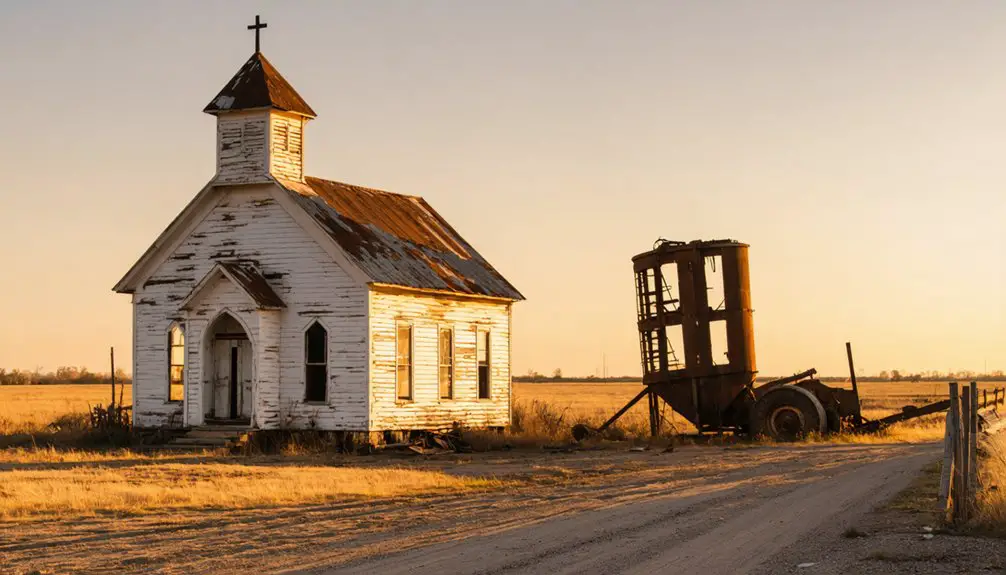
Although Hope has faded into Oklahoma’s long list of forgotten places, it hasn’t disappeared entirely. When you push through the rough, wooded terrain northeast of Duncan, you’ll find the remains of a church still holding its ground, along with a couple of other crumbling structures scattered across the landscape.
These remnants carry real historical significance, connecting you to the early settlement patterns that once shaped Stephens County. Don’t expect a preserved downtown or restored facades — preservation challenges have left very little standing. Nature has reclaimed most of what once existed here.
But that raw, unpolished quality is exactly what makes Hope worth the detour. You’re not visiting a museum. You’re standing inside a forgotten moment in Oklahoma history, largely untouched and entirely yours to explore.
Is Hope, Oklahoma Worth the Trip Before You Drive Out?
Before you load up the truck and head out on Plato Road, you should know that Hope offers very little in the way of standing structures — just church ruins and a couple of weathered remnants swallowed by dense woods.
The rough terrain demands a high-clearance or 4WD vehicle, so you’re not making this trip in a standard sedan.
If you set your expectations around a quiet, off-the-beaten-path historical stop rather than a walkable ghost town with a visible past, you’ll leave satisfied instead of disappointed.
What Remains There
If you’re planning the drive out to Hope, you’ll want to know what’s actually waiting for you — and the honest answer is: not much. The site holds the remains of a church and a couple of other structures, but they’re scattered, deteriorating, and barely standing.
There’s no artifacts preservation effort underway, no signage, and zero visitor amenities — no parking area, no trail markers, nothing curated for your arrival. What you’ll find instead is a wooded, rough-terrain setting where history quietly disappears into the landscape.
For explorers who value raw, unfiltered discovery over polished attractions, that authenticity carries its own weight. Just go in with realistic expectations, keep your eyes sharp, and let the silence of the place do the talking.
Access and Terrain
Knowing what’s left at Hope sets the stage for a bigger question: can you actually get there? Hope sits roughly nine to ten miles northeast of Duncan, accessed via Plato Road heading east toward Clear Creek.
The terrain is wooded and rough, so you’ll need a high-clearance vehicle or 4WD to make the drive without trouble. This isn’t a paved pullover — it’s an honest backcountry push through central Oklahoma wilderness.
Expect dense tree cover, uneven ground, and limited landmarks to guide you. Wildlife encounters are real out here, so stay alert.
Locals carry their own stories about the area, and local legends about the site add a layer of mystery worth researching before you go. Come prepared, and the journey itself becomes part of the experience.
Managing Your Expectations
Hope earns its ghost town label honestly — there’s not much left. You’ll find the remains of a church and a couple of crumbling structures swallowed by dense woods, not a preserved downtown or interpretive signage. If you’re chasing dramatic ruins, this site will disappoint you.
But if you value raw, unfiltered history and the quiet of a forgotten place, Hope delivers something real. The wooded surroundings create genuine photography challenges — limited sightlines, shifting light, and encroaching vegetation all demand patience and creativity.
You’ll also share the space with local wildlife, so stay alert and move quietly.
Think of Hope as a detour rather than a destination. Pair it with other Stephens County stops, keep your expectations grounded, and you’ll leave satisfied rather than frustrated.
How to Get to Hope Ghost Town From Duncan
Reaching Hope from Duncan means heading northeast roughly 9 to 10 miles, starting out on Plato Road east of town toward Clear Creek. The route carries you through wooded terrain where historical context starts to feel real and local legends seem less distant.
Come prepared, because the road demands respect:
- Bring a high-clearance or 4WD vehicle — rough terrain isn’t optional out here
- Download offline maps before leaving Duncan, since landmarks thin out fast
- Check road conditions seasonally, especially after heavy rain
- Tell someone your plans — the isolation is part of the appeal, but safety matters
You’re orienteering toward one of Oklahoma’s quieter forgotten places, so treat the drive itself as part of the experience rather than just the path to it.
Is Your Vehicle Tough Enough for the Road to Hope?
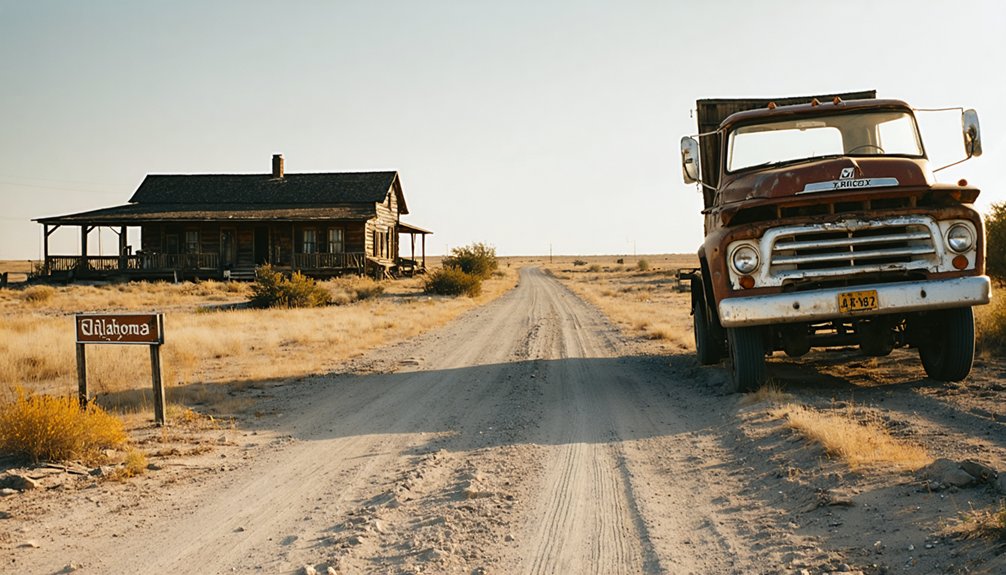
Before you commit to this trip, check what’s sitting in your driveway — because the road to Hope doesn’t forgive unprepared drivers. The terrain challenges here are real: wooded surroundings, rough cuts through central Oklahoma land, and conditions that demand serious vehicle durability.
A standard sedan won’t cut it. You’ll want a high-clearance vehicle, and four-wheel drive isn’t just recommended — it’s practically required. The road eats up anything underequipped and leaves you stranded far from help.
Before you roll out, confirm your tires, your clearance, and your fuel. There’s no gas station waiting near a ghost town. Freedom means being self-sufficient, and out here, that starts with knowing your vehicle’s limits before the terrain tests them for you.
Best Time to Visit Hope Ghost Town
Timing your visit to Hope can make or break the experience. Seasonal weather plays a huge role in what you’ll encounter on those rough back roads, and visitor safety depends on choosing conditions that work in your favor.
Timing your visit to Hope matters — seasonal weather shapes every back road experience and determines whether you stay safe.
Spring and fall offer the clearest advantages:
- Spring (March–May): Mild temperatures and manageable terrain before summer heat sets in.
- Summer (June–August): Avoid if possible — heat, humidity, and overgrown vegetation limit visibility and comfort.
- Fall (September–November): Cooler air, thinning foliage, and drier roads make ruins easier to spot.
- Winter (December–February): Muddy or icy conditions can make 4WD roads genuinely dangerous.
Fall is your strongest bet. You’ll get better sightlines through the woods, firmer ground under your tires, and a more rewarding overall experience.
No Facilities, No Cell Signal: What to Expect on Site
Once you’ve locked in the right season, the next step is understanding what you’re actually heading into — and Hope gives you very little to work with on-site. There are no restrooms, no parking areas, no trail markers, and no cell signal to bail you out if something goes wrong.
The wooded terrain swallows what little remains, and preservation challenges mean the church remnants and scattered structures won’t announce themselves. You’ll need to navigate independently, so download offline maps before you leave Duncan.
Local folklore may point you toward certain spots, but don’t count on signage confirming any of it. Bring water, a charged battery pack, and a buddy. Hope rewards the self-sufficient explorer — but it has zero tolerance for the unprepared.
Frequently Asked Questions
What Was Hope, Oklahoma’s Estimated Population at Its Peak?
No records confirm Hope’s peak population — you won’t find exact figures tied to its historical landmarks or local legends. It’s a mystery that fuels your free-spirited curiosity as you explore this forgotten Oklahoma ghost town.
Are There Any Entry Fees or Permits Required to Visit Hope?
No fees, no permits — just open land awaiting your exploration. Hope’s ghost town preservation remains unofficial, with zero visitor amenities, so you’re free to roam its rugged, wooded terrain and discover scattered remnants entirely on your own terms.
Was Hope Ever Officially Incorporated as a Town in Oklahoma?
You don’t find clear records confirming Hope’s official incorporation. Its historical preservation remains murky, and unlike polished tourist attractions, it’s a raw, forgotten settlement you’ll explore freely, uncovering Oklahoma’s untamed, undocumented past on your own terms.
Are There Other Ghost Towns Near Hope Worth Combining Into One Trip?
You’ll find nearby ghost towns worth combining—each holding secrets of historical preservation and local legends. Explore Duncan’s surrounding Stephens County stops, where abandoned communities whisper forgotten stories, making your freedom-fueled road trip richer and more hauntingly unforgettable.
Who Owns the Land Where Hope Ghost Town Currently Sits Today?
You won’t find clear records on who owns Hope’s land today. Ghost town history often involves complex land ownership nuances — it could be private, county, or state-held property, so you’ll want to research before visiting.
References
- https://www.facebook.com/groups/7281843785168302/posts/27576689238590458/
- http://www.ou.edu/news/articles/2024/may/ou-researcher-unveils-book-of-oklahomas-ghost-towns.html
- https://www.okhistory.org/publications/enc/entry?entry=GH002
- https://www.youtube.com/watch?v=NwKbt1Z5XJQ&vl=en-US
- https://www.instagram.com/reel/CzaHmN8OR2h/
- https://www.ghosttowns.com/states/ok/hope.html
- https://en.wikipedia.org/wiki/List_of_ghost_towns_in_Oklahoma
- https://www.travelok.com/articles/oklahomaghosttowns
- https://www.youtube.com/watch?v=XaTDBmiAaOA
- https://www.youtube.com/watch?v=pRIJ7Iq6-6g