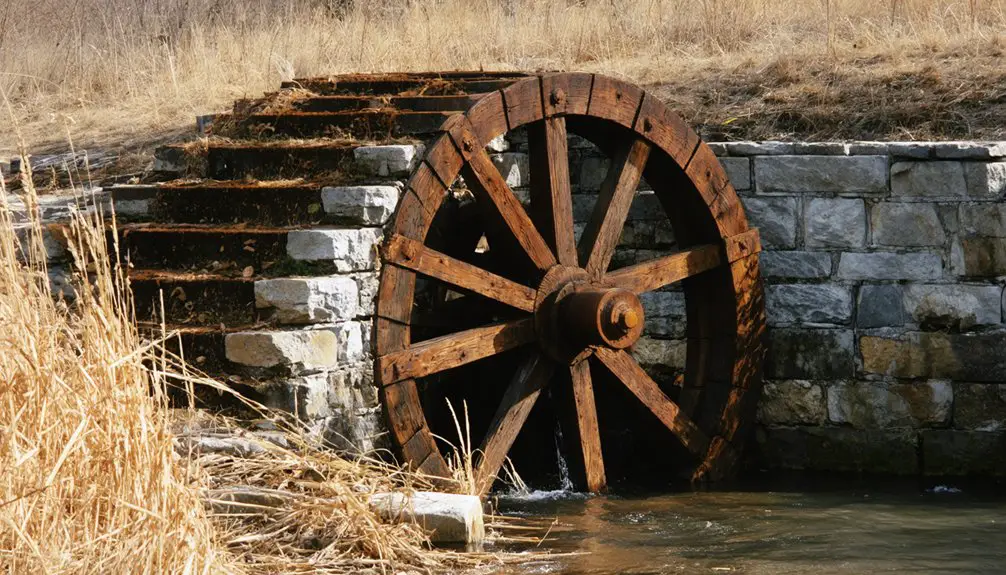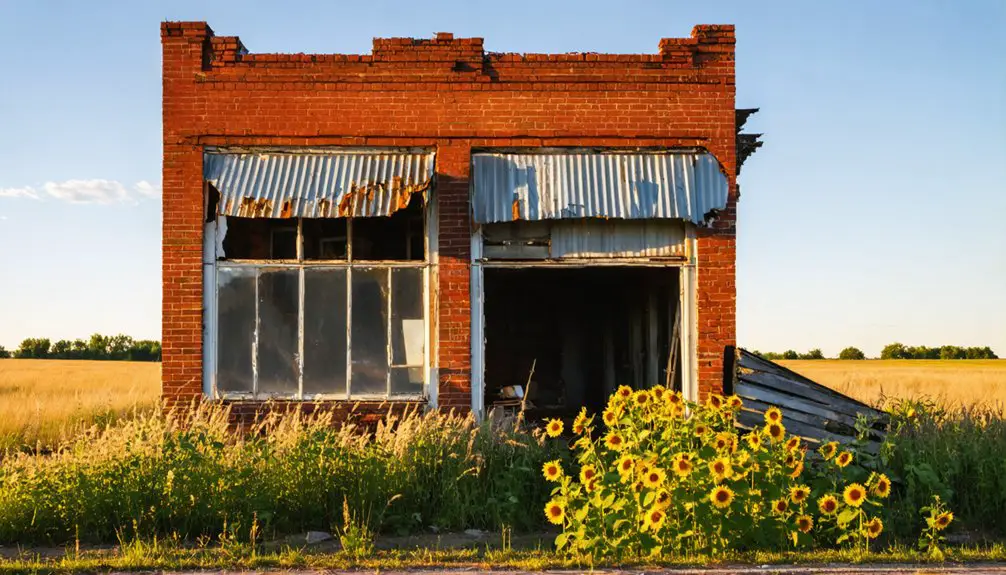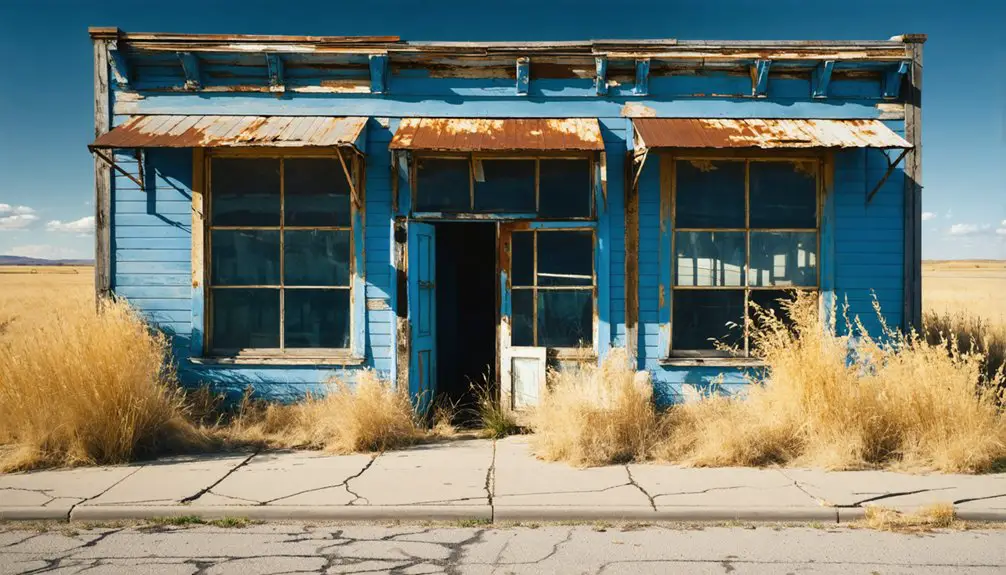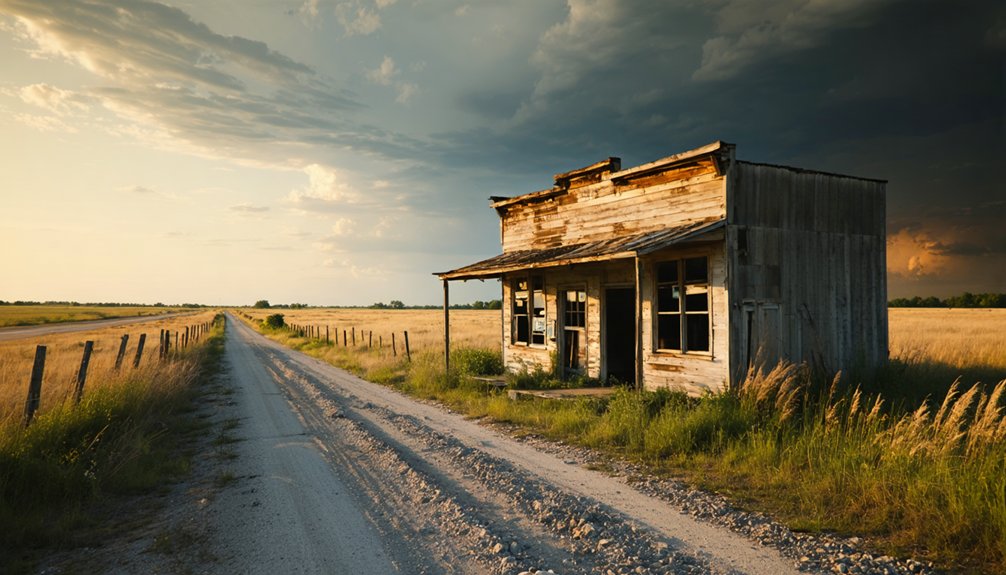
Planning a ghost town road trip to Voltaire, Kansas means heading to Sherman County’s far northwestern corner, where crumbling storefronts and a weathered brick high school mark what was once a thriving 1885 settlement. You’ll reach it best from Goodland via K-27, ideally in late spring or early fall when roads stay accessible. Voltaire rose fast, lost the county seat race, survived a brutal winter, and collapsed by 1889. There’s far more to this haunting story ahead.
Key Takeaways
- Voltaire, Kansas, is best accessed from Goodland via K-27, located in Sherman County’s far northwestern corner.
- Visit in late spring or early fall for mild weather, accessible roads, and optimal visibility across the prairie.
- Key ruins include a deteriorating brick high school, weathered storefronts, and residential foundations with no tourist amenities available.
- Pack sturdy boots, water, snacks, paper maps, and offline GPS, as cell service is unreliable in the area.
- Nearby ghost towns like Eustis, Sherman Center, and Itasca offer additional exploration stops along your road trip route.
What Is Voltaire, Kansas: and Why Does It Matter?
Tucked into the windswept plains of Sherman County, Kansas, Voltaire was once a thriving frontier settlement of 143 residents and 45 buildings — built fast, lived briefly, and abandoned by 1889.
Founded in 1885 and named after the French philosopher, it rose quickly on government land before collapsing under the weight of a failed county-seat bid and a brutal winter that drove settlers away for good.
Born in 1885, named after a philosopher, and dead by 1889 — Voltaire rose fast and fell faster.
Today, you’ll find weathered historical landmarks — crumbling storefronts, residential ruins, and a deteriorating brick high school — standing as raw evidence of Kansas’s frontier boom-and-bust cycle.
Unlike sites with active preservation efforts, Voltaire remains largely untouched and unpolished. That’s exactly what makes it worth your time.
It offers you an honest, unfiltered look at history on your own terms.
How Voltaire, Kansas Rose and Collapsed in Four Years
When you trace Voltaire’s story, you find a town that exploded onto the Kansas prairie in 1885, pulling in 143 residents and 45 buildings within its first year alone.
Its momentum stalled, though, after it lost a brutal county seat battle against rivals in Sherman County, draining confidence and pushing settlers toward better-positioned towns.
Then the winter of 1886–87 delivered the killing blow, with temperatures plunging near -40°F and driving out nearly everyone who remained.
Voltaire’s Rapid Prairie Settlement
Few ghost towns pack as much drama into such a short timeline as Voltaire, Kansas. Founded on June 15, 1885, by settlers from Rawlins County, this prairie outpost exploded into a community of roughly 143 residents within its first year. You’d find about 45 buildings and homes dotting the government land, including general stores and a post office that kept daily life humming.
That rapid growth makes Voltaire one of the more compelling tourist attractions in northwest Kansas’s ghost-town corridor. The settlement mirrored the broader Kansas frontier boom — fast, ambitious, and fragile.
Today, historical preservation efforts remain limited, so what you see reflects raw, unfiltered collapse. Understanding how quickly Voltaire rose helps you appreciate just how dramatically it would soon fall.
The County Seat Defeat
Voltaire’s ambitions didn’t stop at building a thriving prairie community — settlers wanted political power, too. They launched a bold bid to claim the Sherman County seat, believing that political designation would cement Voltaire’s future. They lost.
That defeat hit harder than any blizzard. Residents who’d staked everything on Voltaire’s rise suddenly questioned their commitment. Without the county seat’s economic pull, businesses weakened, and families started leaving.
Local legends suggest the election loss broke the town’s spirit almost overnight.
For historical preservation enthusiasts, this collapse reveals how fragile frontier towns truly were — political outcomes mattered as much as weather or resources. You can trace that vulnerability in Voltaire’s timeline. One lost vote accelerated an entire community’s erasure from Kansas’s landscape.
Winter’s Final Blow
The winter of 1886–87 delivered the killing blow. After losing the county seat battle, Voltaire’s remaining settlers faced temperatures plunging near -40°F, relentless blizzards, and zero margin for survival.
Most packed up and headed to Atwood, promising themselves they’d return in spring. They never did.
These community stories tell a familiar frontier truth — political defeat plus brutal weather equals abandonment:
- Temperatures dropped to nearly -40°F
- Blizzards made daily survival nearly impossible
- Residents relocated to Atwood for winter shelter
- A lone caretaker family stayed behind temporarily
How to Get to Voltaire, Kansas
Tucked into the far northwestern corner of Kansas, Voltaire sits in Sherman County—the same county as Goodland, which serves as your most practical base of operations. From Goodland, you’ll navigate rural roads through open prairie to reach the ghost town site.
K-27 is your primary north–south corridor for planning travel through Voltaire Township. Once you’re moving through this stretch of Kansas, you’ll feel the wide-open freedom that once drew 143 settlers here chasing new beginnings.
The drive rewards patient explorers—keep your eyes open for historical architecture still standing against the plains sky, and listen for local legends surrounding the town’s dramatic rise and collapse.
Bring a paper map as backup, since cell service across Sherman County’s remote reaches can be unreliable.
What Ruins Can You Still See at the Voltaire Site?
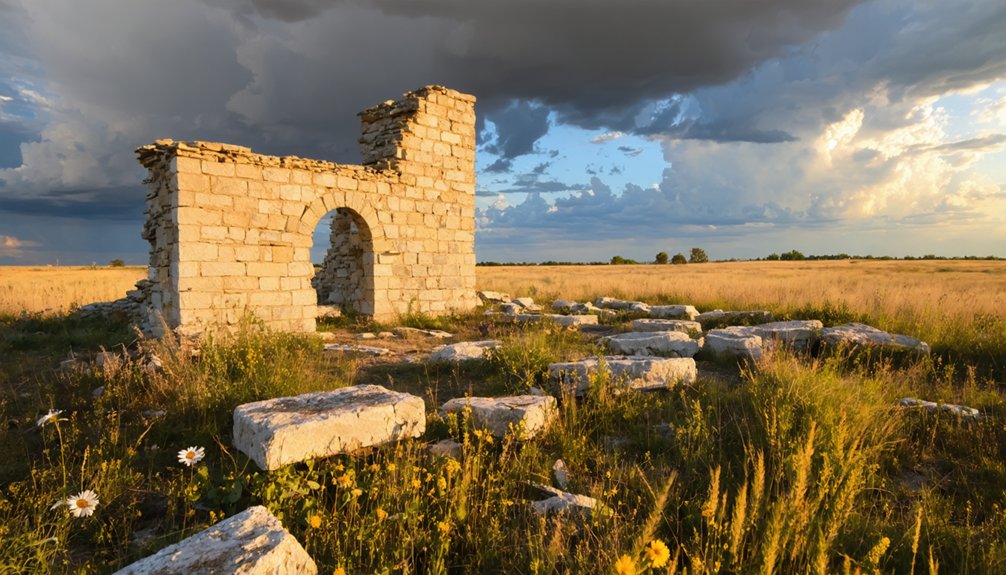
When you arrive at the Voltaire site, you’ll find weathered business buildings and residential structures still clinging to the prairie landscape. This historical architecture tells a raw, unfiltered story of boom and collapse.
Weathered walls and crumbling facades cling to the Kansas prairie — mute witnesses to a town’s rise and ruin.
Preservation challenges mean nobody’s protecting these remnants, so explore them while they still stand.
Notable ruins you’ll encounter include:
- Crumbling brick high school – the site’s most striking structural survivor
- Weathered storefronts – remnants of the original general stores
- Residential foundations – outlines of homes that once sheltered 143 residents
- Scattered debris fields – evidence of salvage and decades of deterioration
Walk the grounds carefully and read the landscape like a timeline. Each cracked wall represents 1885 ambition meeting 1886–87 brutal reality. No tour guide exists here — just open Kansas sky and silence.
When Is the Best Time to Visit Voltaire, Kansas?
You’ll find Voltaire most accessible in late spring or early fall, when mild temperatures and dry ground make exploring the remote Sherman County site far more comfortable.
Summer heat in northwestern Kansas can push well past 100°F, while winter roads near K-27 can turn treacherous with ice and blowing snow — conditions that claimed the town itself back in 1886–87.
Before you go, check local road conditions, since unpaved rural routes can become impassable after rain or early snowfall.
Ideal Visiting Seasons
Since Voltaire sits in the wide-open plains of northwestern Kansas, the season you choose to visit makes a real difference in what you’ll experience on the ground. Each season carries its own character, shaping how well you can explore historical preservation efforts and chase down local legends tied to this forgotten frontier settlement.
- Spring (April–May): Mild temps, manageable roads, and green prairie backdrops make photography rewarding.
- Summer (June–August): Long daylight hours maximize exploration time, though heat can be intense.
- Fall (September–October): Cooler air and golden light create dramatic atmosphere around the weathered ruins.
- Winter (November–March): Harsh conditions echo Voltaire’s fatal 1886–87 winter — visit only if you’re well-prepared.
Fall and spring remain your strongest choices for a comfortable, meaningful visit.
Weather and Road Conditions
Planning a road trip to Voltaire means reckoning with northwestern Kansas weather, which can shift quickly and turn dirt access roads into muddy obstacles. Spring thaws bring unstable ground, making your vehicle vulnerable on unpaved routes near the site.
Summer offers dry, firm roads and long daylight hours ideal for exploring whatever historical preservation remains standing, including weathered structures and crumbling walls that local legends say still echo the town’s frantic boom years.
Autumn delivers cooler temperatures and clear skies, giving you sharp visibility across the open prairie.
Avoid winter entirely — temperatures near -40°F once devastated Voltaire itself, and ice-covered rural roads pose serious risks.
Always check Sherman County road conditions before departure, carry extra water, and tell someone your route along K-27.
What to Pack for Exploring Voltaire’s Open Ruins
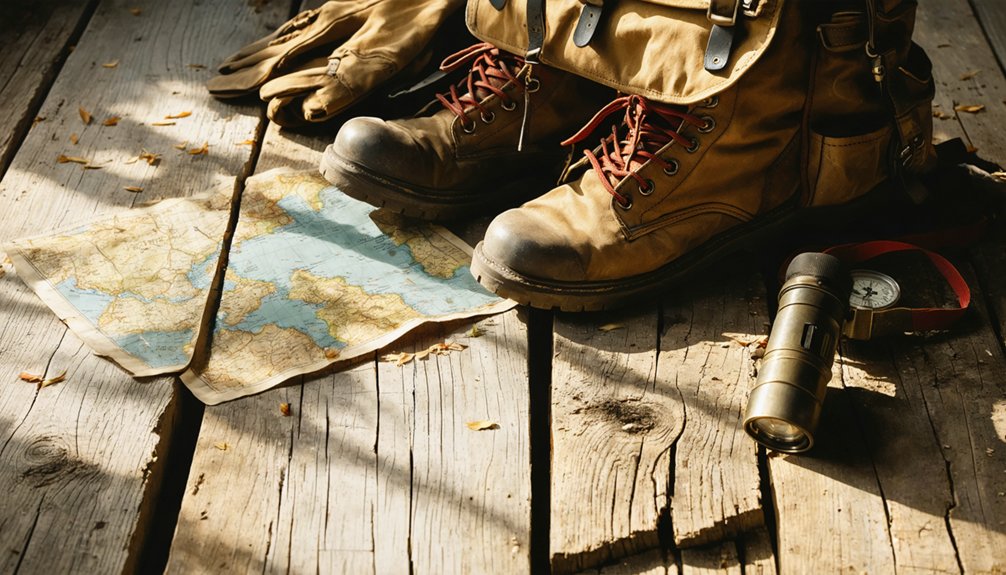
Exploring an unpreserved ghost town like Voltaire means maneuvering through crumbling brick, uneven ground, and zero modern amenities, so packing smart makes the difference between a rewarding trip and a miserable one. The ruins reward prepared visitors with genuine historical artifacts and stunning photography opportunities.
Pack these essentials before you go:
- Sturdy boots with ankle support for traversing unstable debris around the weathered business buildings and collapsed structures
- A wide-angle and macro lens to capture photography tips in action, from sweeping ruin landscapes to close-up brick textures
- Water and snacks since northwestern Kansas offers no services nearby
- A detailed map or downloaded offline GPS because cell coverage along K-27 corridors can disappear fast
Leave nothing behind except footprints, and take nothing except photographs.
Which Other Lost Towns Near Voltaire Are Worth Visiting?
Once you’ve walked Voltaire’s crumbling streets, the surrounding Sherman County landscape pulls you deeper into northwest Kansas’s ghost-town corridor, where Eustis, Sherman Center, Itasca, and Gandy each tell their own version of the same hard story — boom, bust, and abandonment.
None of these sites offer tourist amenities, so you’re traveling raw, self-directed terrain. That freedom is exactly the appeal.
Sherman Center once competed seriously for county-seat status, making it a natural companion stop when you’re tracing the political rivalries that killed towns like Voltaire.
Historical preservation across this corridor remains minimal, which means what you find today won’t be here forever.
Move through these sites deliberately, photograph everything, and treat the ruins with respect.
Northwest Kansas rewards travelers who plan carefully and arrive ready to read a landscape that time has nearly erased.
Where to Find Sherman County Ghost Town Records and Maps
Tracking down Sherman County ghost town records takes deliberate effort, but the sources exist if you know where to look.
Historical preservation efforts have kept key documents accessible for travelers serious about understanding places like Voltaire.
Start your research here:
- Sherman County Historical Society – holds local maps, photographs, and founding documents
- Kansas State Historical Society – archives township plats and post office closure records
- Kansas Memory digital database – lets you search from anywhere before you hit the road
- Goodland Public Library – local legends and oral histories fill gaps that official records miss
Cross-referencing these sources gives you a clearer picture of Voltaire’s 1885 founding, its 143 residents, and its 1889 abandonment.
You’ll arrive at the site informed rather than guessing.
Frequently Asked Questions
Is There an Admission Fee or Permit Required to Visit Voltaire?
Roam free — you don’t need an admission fee or permit to visit Voltaire! No formal visitor guidelines or historical preservation program exists, so you can explore this abandoned Kansas ghost town on your own terms.
Can You Metal Detect or Collect Artifacts at the Voltaire Site?
Before you grab your metal detector, know that metal detecting regulations on Kansas public lands restrict removing historical artifacts. You’ll want to verify current rules with local authorities to avoid penalties and respect Voltaire’s fragile, irreplaceable remnants.
Are There Any Guided Ghost Town Tours Available in Sherman County?
Like a treasure waiting to be uncovered, Sherman County’s guided tours aren’t widely documented, but you’ll find local legends and historical preservation efforts through Sherman County historical societies that can point you toward meaningful ghost town experiences.
Is the Voltaire Site on Private Land or Publicly Accessible Property?
The knowledge doesn’t confirm Voltaire’s land ownership status, so you’ll want to research historical preservation records before visiting. Always verify land ownership details locally to guarantee you’re exploring freely and legally.
Are There Any Nearby Campgrounds for Overnight Ghost Town Road Trips?
Like a wanderer seeking shelter after a long trail, you’ll find campgrounds near Goodland, Kansas offering essential camping amenities. Pack your road trip essentials, set up camp, and let Sherman County’s ghostly past fuel tomorrow’s adventure.
References
- https://www.youtube.com/watch?v=alC1wDdSVvg
- https://johnsoncoks.cottonhills.net/historic-records/old-towns.html
- https://www.kcur.org/arts-life/2022-04-09/ghost-towns-are-all-around-kansas-city-if-you-know-where-to-look
- https://www.facebook.com/christopherkirkhamphotography/posts/it-is-seriously-wild-to-think-about-just-how-many-ghost-towns-just-kansas-has-th/1253642993583063/
- https://digging-history.com/2014/09/17/ghost-town-wednesday-ghost-towns-of-sherman-county-kansas/
- https://en.wikipedia.org/wiki/Voltaire_Township
- https://legendsofkansas.com/eustis-kansas/