Planning a ghost town road trip to Hopewell, Mississippi means heading to Calhoun County, where this forgotten settlement once thrived around a post office that closed in 1905. You’ll find overgrown lots, crumbling structures, and eerie silence where a community once buzzed with daily life. Visit during fall or winter for cooler temps and clearer views of hidden architectural details. Pack sturdy boots, offline maps, and a camera — there’s far more to this haunting destination than first meets the eye.
Key Takeaways
- Hopewell, located in Calhoun County, Mississippi, operated as a community from 1840 until its post office closed in 1905, marking its permanent decline.
- Visit during fall or winter for cooler temperatures, clearer views of abandoned structures, and reduced risks from dense vegetation and snakes.
- Bring sturdy boots, water, snacks, a first aid kit, a camera, and offline maps due to unreliable cell service in the area.
- Explore abandoned structures, overgrown lots, old fence lines, and scattered artifacts that reveal the town’s fascinating, forgotten history.
- Nearby Rodney, once almost Mississippi’s state capital, offers additional ghost town exploration, including an 1850 Baptist Church and crumbling Masonic Lodge.
Hopewell, Mississippi: The Ghost Town Most People Drive Past
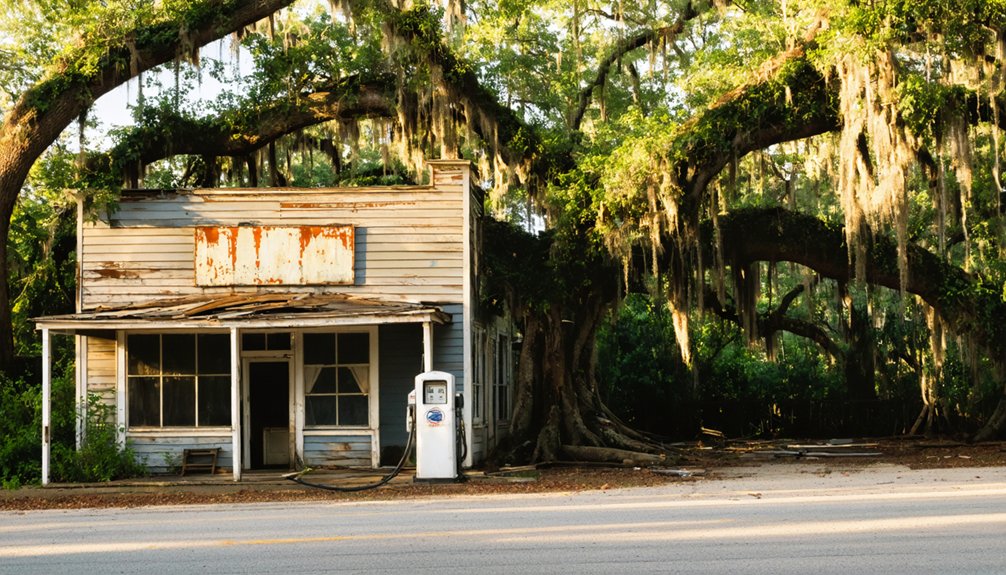
Tucked away in Calhoun County, Mississippi, Hopewell is the kind of ghost town you’d never find unless you were looking for it.
Most travelers blow past it without a second glance, unaware they’re missing a place thick with history and local legends. Once active enough to support its own post office from 1840 to 1905, Hopewell hummed with daily life before quietly emptying out.
Most travelers speed past Hopewell without a second glance, unknowingly bypassing decades of history and forgotten local legends.
Nobody’s left to tell you the ghost stories firsthand, but the silence speaks volumes. The empty structures and forgotten roads hint at a community that thrived, then faded when economic opportunity shifted elsewhere.
If you crave destinations that feel genuinely undiscovered, Hopewell delivers exactly that — raw, unpolished, and completely free from tourist crowds.
Why Did Hopewell Empty Out?
When Hopewell’s post office shuttered in 1905, it marked more than a bureaucratic change — it signaled that the town’s population had already begun its quiet retreat.
You can trace the decline to a familiar pattern: once the economic engine driving a settlement sputters, residents follow opportunity elsewhere, leaving buildings to weather in silence.
Larger nearby towns pulled people away with better jobs, roads, and resources, stripping Hopewell of the critical mass it needed to survive.
Post Office Closure Impact
Few signals mark a community’s decline as clearly as the closure of its post office. When Hopewell’s post office shut its doors in 1905, it wasn’t just losing a mail service — it was losing its last official pulse.
Post office significance runs deeper than sorted letters; it confirms a town’s identity, its reason to exist on a map. For Hopewell, that confirmation disappeared after 65 years of operation.
Community decline rarely happens overnight, but a post office closure makes it permanent and undeniable. Without it, residents had little reason to stay anchored to a fading address.
People drifted toward larger towns offering better opportunities, leaving structures standing and streets growing quiet. That 1905 closure fundamentally wrote Hopewell’s final chapter.
Economic Opportunities Shifted
Behind every shuttered post office, there’s an economic story that started unraveling long before the final letter got sorted.
Hopewell’s emptying wasn’t random — it followed a familiar pattern of economic decline that reshaped countless rural Mississippi communities.
When neighboring towns grew larger, they pulled jobs, commerce, and ambition with them. New roads or railways likely bypassed Hopewell entirely, redirecting the flow of money and people toward more connected destinations.
Natural resources may have depleted, stripping away whatever originally anchored settlers here.
Rural migration accelerated as residents chased better opportunities elsewhere, leaving behind structures but taking the community’s heartbeat with them.
You’re not just visiting an abandoned town when you come here — you’re standing inside a quiet monument to the moment possibility packed up and moved on.
The Best Time to Visit Hopewell and Rodney
Timing your visit to Hopewell and Rodney can make the difference between a memorable road trip and a miserable one.
The best seasons for exploring these ghost towns are fall and winter, when cooler temperatures make walking through overgrown ruins far more comfortable. Summer’s heat brings dense vegetation and, more importantly, snakes — particularly around Rodney’s abandoned structures and cemetery.
Winter strips the trees bare, revealing hidden architectural details and lending an eerie atmosphere perfect for uncovering local legends surrounding these forgotten communities.
You’ll navigate muddy roads more easily in dry, cooler months. Arrive early morning when mist still clings to Rodney’s crumbling Baptist church walls, creating a genuinely haunting experience that connects you directly to Mississippi’s layered, complicated past.
How to Get to Hopewell in Calhoun County
Reaching Hopewell in Calhoun County takes you deep into central northern Mississippi’s quiet rural interior, where GPS becomes your most reliable companion alongside a good set of local county maps.
Your clearest approach runs through Mississippi Highway 8, connecting you to surrounding county roads that weave through open farmland and scattered timber.
For ghost town exploration like this, you’ll want to confirm your route before leaving Grenada, roughly 30 miles southwest, since cell service grows unpredictable the deeper you travel.
Rural navigation demands patience here — unnamed roads and unmarked intersections can disorient even experienced travelers.
Embrace the freedom of the open road, stay flexible with your timing, and treat every unmarked turn as part of the adventure rather than an obstacle.
What You’ll See at Hopewell Today
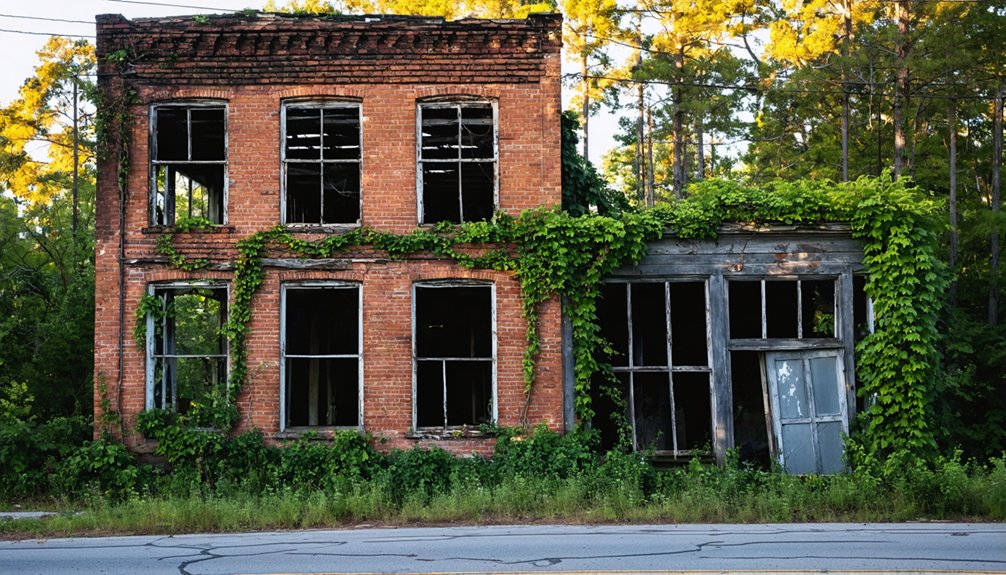
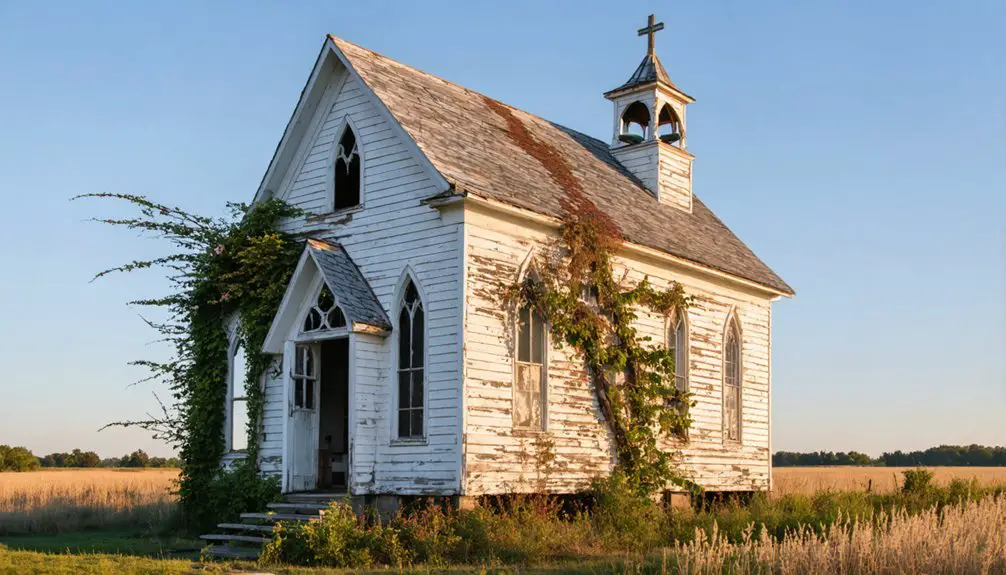
When you arrive at Hopewell today, you’ll find empty historic structures standing quietly against the Mississippi sky, their weathered walls hinting at the community that once thrived here.
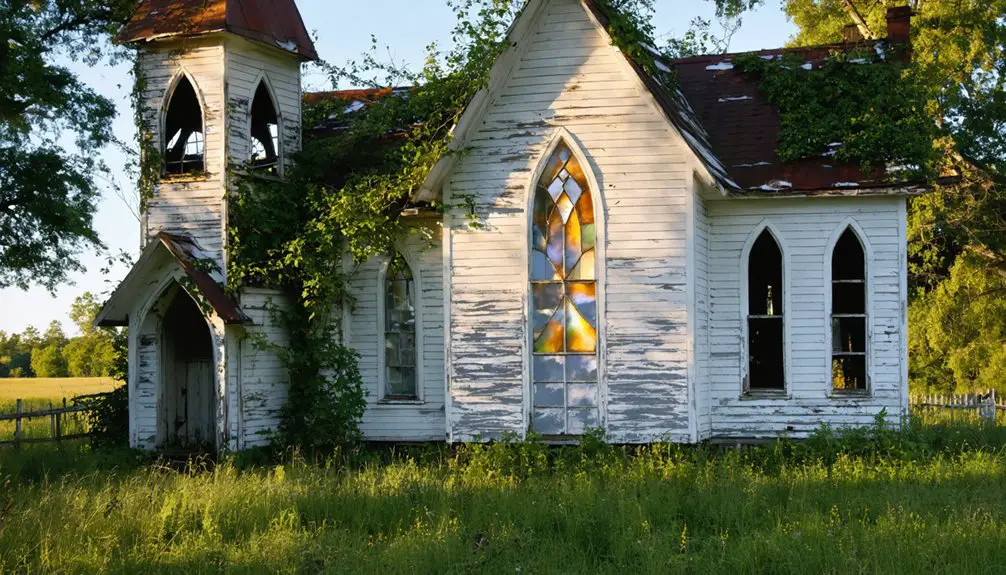
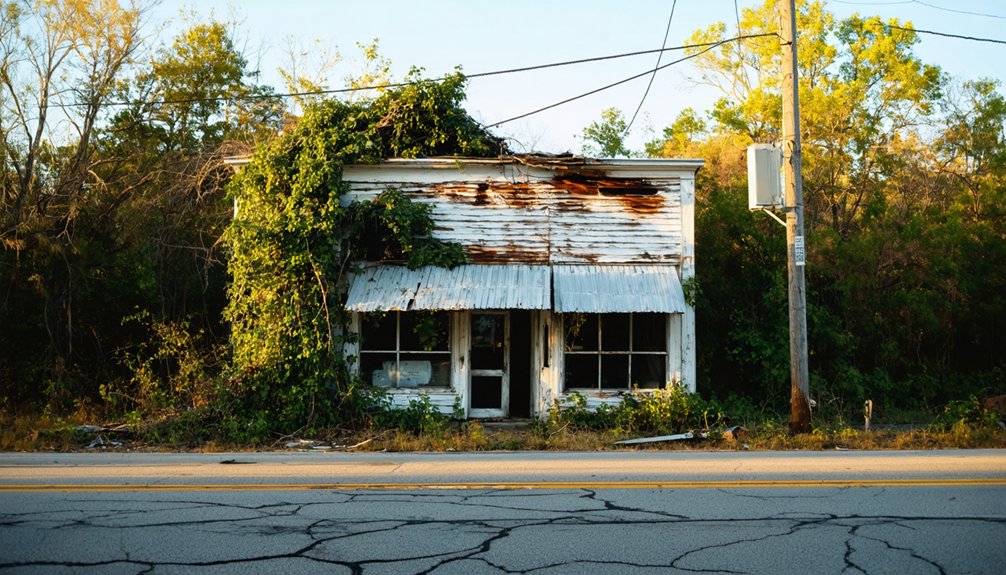
Overgrown lots swallow the spaces between buildings, with vines and brush reclaiming what residents left behind decades ago.
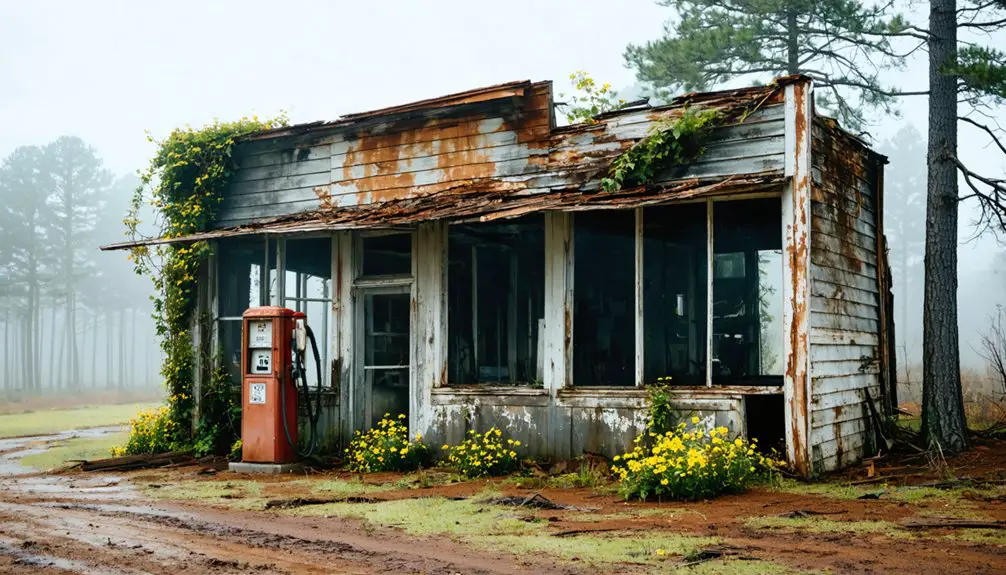
Look closely, and you’ll spot remnants of past life — old foundations, rusted fixtures, and forgotten details that paint a vivid picture of Hopewell’s busier days.
Empty Historic Structures
Stepping into Hopewell today, you’ll find a quiet shell of what was once a thriving Mississippi settlement. Abandoned architecture dots the landscape, each structure whispering forgotten histories of families, commerce, and community.
You’re walking through an open-air museum with no admission fee.
Watch for these remnants as you explore:
- Weathered wooden structures — original buildings slowly reclaimed by nature
- Crumbling foundations — outlines of homes and businesses long vacated
- Overgrown pathways — former roads now swallowed by Mississippi vegetation
- Rusted remnants — hardware and fixtures frozen in time
Bring your camera, because every angle tells a story.
The silence here isn’t emptiness — it’s history breathing slowly. You’ll leave understanding why preserving these spaces matters for future generations seeking authentic American stories.
Overgrown Abandoned Lots
Beyond the standing structures, nature has quietly staged its own takeover across Hopewell’s abandoned lots. You’ll notice overgrown vegetation creeping across former foundations, swallowing fence lines, and reclaiming land that once supported a thriving community.
Vines curl around abandoned buildings, wildflowers push through cracked earth, and cedar trees root themselves where families once gathered.
This natural reclamation isn’t just decay — it’s a visible timeline. Every tangled thicket marks a spot where someone once built something meaningful. You’re fundamentally reading history through layers of overgrowth.
Wear sturdy boots and bring long pants, since the dense brush conceals uneven ground and wildlife. Explore freely, but tread carefully. These forgotten lots reward the curious traveler who slows down enough to notice what’s hiding beneath the green.
Remnants of Past Life
Though little remains of Hopewell’s once-active community, what you’ll find scattered across the landscape tells a surprisingly full story.
These ghostly echoes of daily life reveal forgotten stories worth pausing over.
Look for these remnants as you explore:
- Crumbling foundations – Stone and brick outlines mark where homes and businesses once stood.
- Old fence lines – Rusted wire and rotting posts trace property boundaries nobody legally owns anymore.
- Overgrown pathways – Dirt trails hint at roads neighbors once traveled daily.
- Scattered artifacts – Broken pottery, glass fragments, and metal scraps surface after rain.
Each detail rewards a curious eye.
You’re not just wandering abandoned land — you’re reading a community’s final chapter, written in decay and reclaimed by Mississippi’s persistent wilderness.
What to Bring to Mississippi’s Ghost Towns

Exploring ghost towns like Hopewell and Rodney means venturing into remote, rural terrain where preparation makes all the difference.
You’ll want sturdy boots for traversing overgrown paths and crumbling foundations. Pack water, snacks, and a first aid kit since these isolated spots offer zero nearby services.
For capturing nostalgia and exploring history effectively, bring a quality camera to document weathered structures, forgotten cemeteries, and silent streets.
A GPS device or downloaded offline maps are essential since cell service gets unreliable fast in Calhoun and Jefferson Counties.
Visit during winter months to avoid snakes lurking in tall grass. Carry insect repellent regardless of season.
Respect private property boundaries, especially around Rodney. Your freedom to roam these forgotten landscapes depends on traveling responsibly and staying prepared.
Add Rodney to Your Ghost Town Road Trip
Few ghost towns in Mississippi rival Rodney’s haunting backstory. This former river port nearly became the state capital in 1817, but a shifting Mississippi River sandbar killed its economic lifeline by 1870.
Today, only about 8 residents remain. Its ghost town experiences deliver raw, unfiltered history.
With only 8 souls remaining, Rodney offers ghost town exploration that feels genuinely unscripted and historically raw.
Plan your visit carefully:
- Access Rodney via dirt road from the Old Country Store on Highway 61 near Lorman
- Explore remnants including an 1850 Baptist church, Masonic Lodge, and overgrown cemetery
- Visit during winter months to avoid snakes in the dense vegetation
- Respect private property boundaries throughout your exploration
Rodney’s historical significance makes it a perfect companion stop to Hopewell, adding a powerful 2-3 hour detour along the Natchez Trace Parkway.
How to Reach Rodney
Reaching Rodney takes some navigational patience, but the journey rewards you with one of Mississippi’s most atmospheric drives. From Highway 61, you’ll turn onto a dirt road near the Old Country Store in Lorman, following it until Rodney’s abandoned structures emerge through the trees.
You’ll also find Rodney accessible via the Natchez Trace Parkway, making it a natural stop along that iconic corridor. Keep your GPS handy, as rural signage is sparse and unreliable.
These travel tips matter most here: visit during winter months to avoid snakes thriving in summer vegetation, and always respect private property boundaries. Ghost towns like Rodney demand both curiosity and courtesy.
That combination guarantees you experience this forgotten Mississippi River settlement honestly, leaving it undisturbed for the next adventurous traveler.
What Makes Rodney Worth the Detour
Once you arrive in Rodney, you’ll understand immediately why the detour earns its miles. This ghost town significance runs deep — Rodney nearly became Mississippi’s state capital in 1817 before a river shift sealed its fate.
Rodney history offers something rare: tangible ruins you can actually witness.
Rodney doesn’t just tell its history — it lets you touch it, walk through it, and feel it crumble.
Four highlights make Rodney unforgettable:
- 1850 Baptist Church — still standing, weathered but hauntingly intact
- Masonic Lodge — a crumbling monument to Rodney’s ambitious past
- Overgrown cemetery — generations of forgotten residents rest quietly here
- Mississippi River sandbar — the geographic event that erased Rodney’s economy overnight
With only around eight residents remaining, you’re walking through living history.
Respect private property, visit in winter to avoid snakes, and bring your camera.
Frequently Asked Questions
What Is Hopewell’s GNIS Feature ID for Mapping Purposes?
Congratulations, you’ve found ghost town history’s most thrilling fact! Hopewell’s GNIS feature ID is 683378, giving its mapping significance real weight. Use it to pinpoint this forgotten Mississippi relic and navigate your freedom-seeking adventure confidently.
What Area Code Covers Hopewell, Mississippi?
You’ll dial 662 to reach Hopewell, Mississippi’s area code — a number connecting you to rich Hopewell history and whispered local legends echoing through Calhoun County’s forgotten, freedom-calling landscapes where abandoned structures silently guard their timeless secrets.
How Long Did Hopewell’s Post Office Operate Before Closing?
Hopewell’s post office ran for 65 years, from 1840 to 1905—a remarkable stretch of postal history. You’ll find its historic significance deeply moving, as it quietly served a community that’d eventually fade into Mississippi’s forgotten landscape.
How Many People Currently Live in Rodney Today?
You’ll find only around 8 residents call Rodney home today. This ghost town tourism gem’s Rodney history whispers of a once-thriving river port, now nearly abandoned, inviting you to freely explore its hauntingly beautiful, forgotten streets.
What Year Did Rodney Nearly Become Mississippi’s State Capital?
In 1817, Rodney’s Rodney history almost rewrote the map — it nearly became Mississippi’s State capital! You’d have tweeted about that plot twist. This freedom-seeker’s gem nearly ruled the state before fate intervened dramatically.
References
- https://kids.kiddle.co/Hopewell
- https://mississippifolklife.org/articles/haunted-by-a-ghost-town-the-lure-of-rodney-mississippi
- https://www.susantregoning.com/p/rodney-ghost-town-mississippi-history
- https://www.youtube.com/watch?v=R8iRBp335Lc
- https://backroadplanet.com/haunting-rodney-mississippi/
- https://www.youtube.com/watch?v=pRwwTB53x-Y
- https://www.facebook.com/groups/7169712926449384/posts/8281596258594373/
- https://en.wikipedia.org/wiki/List_of_ghost_towns_in_Mississippi
- https://www.tripadvisor.com/Attraction_Review-g28945-d10045204-Reviews-Rodney_Ghost_Town-Mississippi.html
- https://passionsandplaces.com/rodney-mississippi-ghost-town/