Planning a ghost town road trip to Pryor, Colorado means embracing rugged mountain roads, weathered timber frames, and the haunting silence of a town that gold built and time abandoned. You’ll need a high-clearance 4WD vehicle, solid navigation tools, and emergency supplies before tackling steep switchbacks. Visit between late June and early October for the best conditions. Everything you need to make this journey unforgettable is waiting just ahead.
Key Takeaways
- Pryor’s gold rush ruins, ore mill, and aligned building footprints offer a hauntingly rich glimpse into Colorado’s boom-and-bust mining history.
- High-clearance 4WD vehicles with locking differentials, all-terrain tires, and skid plates are essential for navigating Pryor’s rocky switchbacks safely.
- Visit between late June and early October for accessible roads, wildflowers, golden aspens, and ideal photography conditions.
- Carry topographic maps, a GPS unit, vehicle recovery gear, and emergency supplies, as cell service is unreliable in remote terrain.
- Book lodging early, fuel up, and connect with locals for road condition updates before departing for this remote destination.
The Structures and Mining Ruins Still Standing at Pryor
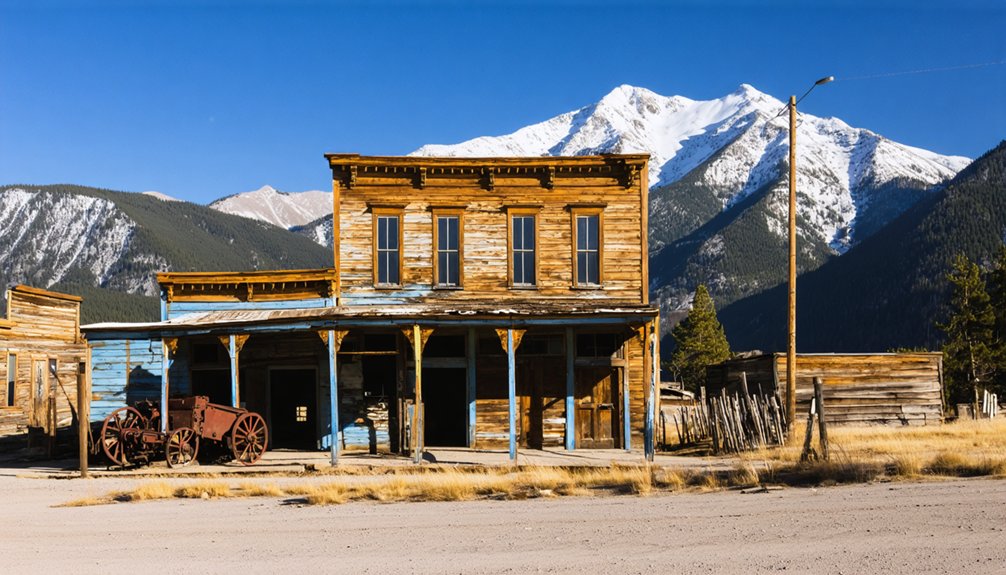
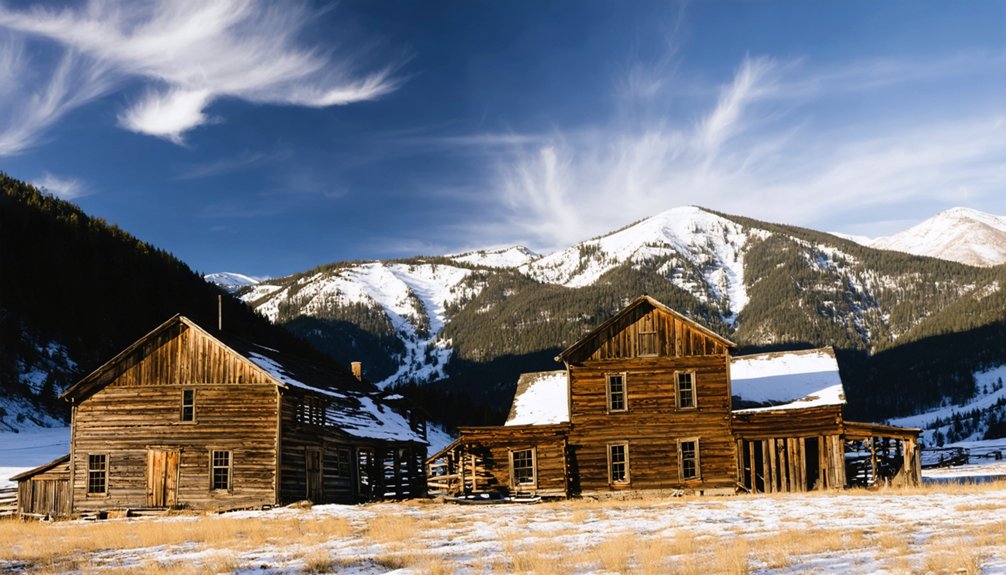
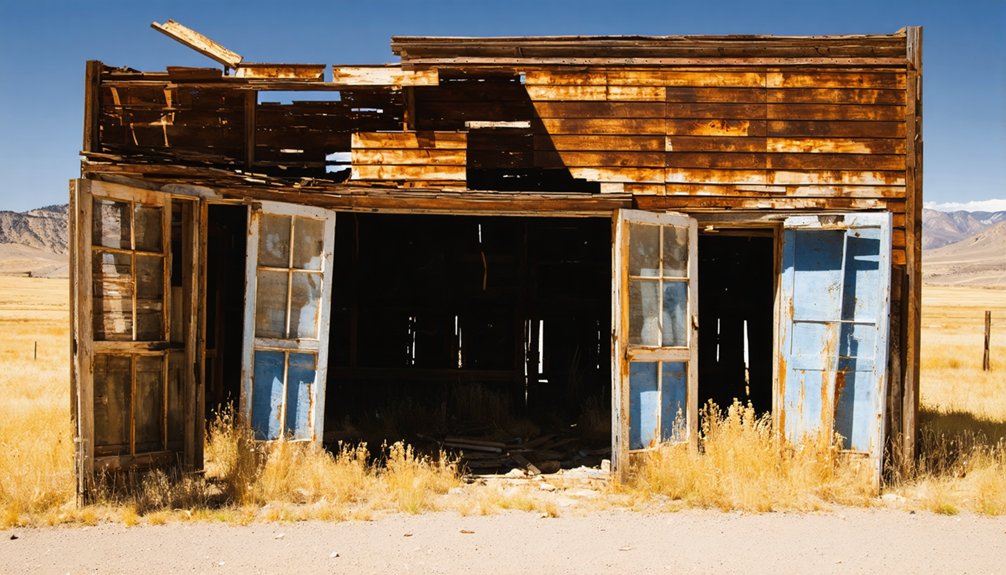
Walking into Pryor feels like stepping into a photograph that time forgot to finish developing — half-formed structures frozen mid-collapse, their weathered timber frames still reaching skyward against Colorado’s sharp mountain light.
Pryor lingers like an unfinished photograph — timber bones frozen mid-collapse, still haunting Colorado’s relentless mountain light.
You’ll find abandoned structures scattered across the townsite, each telling a fragment of the same story: ambition built fast, fortune fled faster.
The old ore mill commands immediate attention, its rusted machinery still suggesting the grinding rhythm of peak production days.
Wander carefully through remaining foundations and you’ll discover mining artifacts embedded in the landscape — processing equipment, shaft remnants, iron hardware oxidized to deep amber.
Main Street’s ghost is visible in aligned building footprints cutting through encroaching alpine vegetation.
Every weathered plank here represents someone’s calculated gamble against Colorado’s unforgiving mountain odds.
Why Pryor Boomed, Then Emptied Out Almost Overnight
When gold fever gripped central Colorado in the late 1800s, towns like Pryor didn’t grow — they erupted, pulling prospectors, merchants, and opportunists into the mountains faster than lumber could be cut and nailed.
Mining history moved at a brutal pace here. When the ore flowed, everything flourished — supply stores, saloons, boarding houses, families building lives on pure geological luck.
Then the veins ran thin.
Economic collapse didn’t announce itself gently. Once the precious metal deposits depleted, there wasn’t much reason to stay. Wages disappeared, businesses shuttered, and families loaded wagons almost overnight.
The mountain didn’t care about anyone’s investment or sacrifice. What you’ll find walking Pryor’s remnants today is the physical echo of that ruthless cycle — boom, bust, and beautiful, haunting silence.
What Vehicle You Actually Need to Reach Pryor
Getting to Pryor isn’t a Sunday drive — the mountain roads leading into Colorado’s high-altitude ghost town corridors demand real mechanical capability, not just confidence. Your 4WD options matter enormously here. Choose wisely:
- High-clearance 4WD trucks or SUVs handle rocky switchbacks without scraping essential components.
- Locking differentials provide traction control across loose shale and unpredictable terrain.
- All-terrain tires grip steep, narrow passages where pavement surrendered decades ago.
- Skid plates protect your undercarriage against jagged mountain debris.
Following basic off-roading tips — checking tire pressure, carrying recovery gear, and knowing your departure angles — separates prepared explorers from stranded ones.
Pryor’s rugged corridors reward those who respect the landscape’s raw demands, connecting you authentically to the same isolated wilderness miners once navigated daily.
How to Get to Pryor Without Getting Stuck
Three critical checkpoints separate a successful Pryor run from a recovery operation: knowing your entry route, reading the terrain before committing to it, and carrying the right gear when conditions shift unexpectedly.
Pryor’s geology tells the story beneath your tires. The same fractured quartz veins and loose shale that once guided miners toward gold deposits now create unpredictable road surfaces. Study the rock formations ahead before you roll forward.
Where historic mining techniques carved into hillsides, erosion follows, destabilizing slopes and washing out tracks without warning.
Keep a recovery strap, traction boards, and a shovel accessible, not buried under gear. Check weather at elevation before departure. Mountain afternoons change fast.
Gear you can’t reach in seconds might as well be gear you left at home.
Trust your instincts when terrain feels wrong, because Pryor’s rewards belong to those who arrive prepared, not those who improvise halfway up.
Best Time of Year to Visit Pryor, Colorado
Timing your visit to Pryor separates a rewarding experience from a frustrating one. Colorado’s mountain seasons dramatically shape what you’ll encounter on those rugged roads.
The best season for exploring Pryor follows a clear pattern:
- Late June–August: Ideal weather, wildflowers blooming, roads fully accessible
- September–early October: Crisp golden aspens, lighter crowds, stunning photography conditions
- November–April: Heavy snowpack closes mountain routes, turning adventure into misadventure
- May–early June: Unpredictable mud season makes 4WD mandatory and progress uncertain
You’ll want those roads dry and firm beneath your tires, the sky wide open above you.
Chase late summer or early fall, and Pryor’s forgotten streets will reveal themselves exactly as you’ve imagined them.
Ghost Towns Near Pryor Worth the Detour
While you’re already out exploring Pryor’s weathered remains, you’d be shortchanging yourself not to push further into the surrounding mountain corridors, where entire clusters of abandoned mining settlements wait in quiet decay.
Colorado’s central ranges packed dozens of boom-and-bust towns within miles of one another, meaning a single day’s drive can carry you through multiple ghost towns that once hummed with the same desperate, ore-hungry energy.
Keep your maps close and your tank full, because these regional mining pockets reward the curious traveler willing to chase one more dusty road toward another forgotten Main Street.
Nearby Ghost Town Discoveries
Once you’ve soaked in Pryor’s quiet ruins, the surrounding mountains hold even more ghost towns worth chasing down. These hidden treasures aren’t on every map, but local legends point the way for those willing to explore.
- Abandoned ore mills rising against jagged ridgelines tell stories of backbreaking labor and fading fortune.
- Crumbling Main Street storefronts preserve the ghostly ambiance of communities that once thrived on silver dreams.
- Forgotten mining shafts scattered across alpine meadows reveal the desperate scale of extraction efforts.
- Weathered residential foundations hint at families who carved lives from unforgiving mountain terrain.
Pack your maps, trust your instincts, and let Colorado’s remote corridors reward your curiosity.
Each discovery deepens your understanding of the restless human spirit that shaped these peaks.
Regional Mining Settlement Clusters
Spreading outward from Pryor like the spokes of a broken wagon wheel, Colorado’s central mountain corridors hide entire clusters of forgotten settlements that rewarded nineteenth-century miners with silver and gold — and rewarded today’s explorers with silence and ruin.
Understanding regional mining patterns reveals why these towns emerged together, flourished briefly, then collapsed within the same decade. Ore veins didn’t respect township lines, so settlement dynamics pushed prospectors outward constantly, spawning satellite camps whenever a promising strike justified another rough-hewn cabin and a hand-lettered sign.
You’ll find these clusters tucked behind ridgelines, their remnants connected by faint two-tracks barely visible on topographic maps.
Each detour you take adds another layer of authenticity to your journey, transforming a single destination into an entire vanished civilization worth exploring.
What to Pack Before You Drive Out to Pryor

Before you head out to Pryor, you’ll want to pack your rig as thoughtfully as those long-ago miners loaded their mules — every item chosen with purpose. Toss in a paper map alongside your GPS, a high-lift jack, recovery straps, extra fuel, and enough water and food to outlast an unexpected delay on the mountain.
Your vehicle needs the same attention: check your spare tire, test your 4WD engagement, and confirm your brake fluid can handle steep, switchbacking descents before the trailhead disappears in your rearview mirror.
Essential Gear and Supplies
Packing smart separates a memorable ghost town adventure from a frustrating one, especially when you’re heading somewhere as remote and rugged as Pryor.
Before you roll out, gather these essentials:
- Navigation tools – Detailed topographic maps and a GPS unit, because cell service vanishes fast in Colorado’s high-altitude terrain.
- Vehicle recovery gear – Tow straps, a hi-lift jack, and traction boards for unpredictable rocky passages.
- Field guides – Reference materials covering local flora and historical legends tied to Colorado’s mining settlements.
- Emergency supplies – Water, food, first aid, and weather-appropriate layers for alpine temperature swings.
You’re chasing freedom out here, not convenience.
Pryor rewards the prepared traveler who respects its rugged character and arrives ready for whatever the mountain roads demand.
Vehicle Preparation Checklist
Getting your rig dialed in before you point it toward Pryor’s forgotten streets is half the adventure. Colorado’s mountain road conditions don’t forgive careless preparation, so treat vehicle safety like gospel before departure.
Run through this checklist:
- 4WD system: Engage it, test it, trust it
- Tires: Full tread, properly inflated, spare mounted and ready
- Fluids: Oil, coolant, brake fluid topped off completely
- Brakes: Inspect pads before tackling steep descents
- Recovery gear: Tow strap, traction boards, hi-lift jack
- Fuel: Top off in the last town — stations disappear fast out here
- Undercarriage: Check clearance; rocky terrain punishes low-riding vehicles
Pryor’s silence has waited over a century. Arrive prepared, and those weathered structures will finally tell you their stories.
Where to Stay and Stock Up Near Pryor
Stocking up and finding a comfortable base camp before venturing into Pryor’s remote terrain is half the adventure. Explore accommodation options in nearby mountain towns, where weathered lodges carry their own nostalgic charm.
Before you hit those rugged roads, prepare deliberately:
- Book lodging early — small mountain towns fill quickly during peak seasons
- Stock essential supplies — fuel, water, and trail food before leaving civilization behind
- Research nearby attractions — neighboring ghost towns and historic mining districts reward curious explorers
- Connect with locals — storekeepers and innkeepers often hold invaluable unpublished knowledge about road conditions
Freedom tastes sweetest when you’re genuinely prepared. That dusty general store in the nearest mountain town isn’t just a supply stop — it’s your last handshake with civilization before Pryor swallows you whole.
Frequently Asked Questions
Is Pryor, Colorado Listed on the National Register of Historic Places?
The available research doesn’t confirm whether Pryor history earns that official recognition. You’ll want to verify ghost town preservation status directly with Colorado’s historic registry before you chase those sun-bleached, freedom-calling remnants of a vanished mining era.
Are Guided Tours Available for Visiting Pryor Ghost Town?
Sure, because every ghost town legends experience needs a guide holding your hand! Jokes aside, you’d want to verify tour availability directly, as Pryor’s historical significance remains sparsely documented, leaving your adventurous spirit gloriously unchained.
What Precious Metals Were Originally Discovered and Mined at Pryor?
You’d have struck your fortune chasing gold mining dreams and silver extraction riches at Pryor. Those precious metals lured adventurous souls westward, their picks ringing against Colorado’s rugged mountain rock, fueling an era of breathtaking, untamed possibility.
Are There Interpretive Centers or Museums Dedicated to Pryor’s History?
Dust-covered memories whisper from weathered walls, but you won’t find dedicated interpretive centers or museums solely for Pryor. However, you can uncover its historical significance and local legends through regional Colorado mining heritage museums nearby.
Can Photography and Videography Be Conducted Freely Throughout Pryor?
You’ll find urban exploration and photography thrive freely among Pryor’s weathered remnants, though historical preservation principles guide respectful documentation. Capture every crumbling facade, rusted relic, and forgotten doorway — your lens becomes a powerful storyteller honoring this town’s untamed spirit.
References
- https://tranquiltrekker.com/central-colorado-ghost-towns-independence-pass/
- https://www.onlyinyourstate.com/trip-ideas/colorado/co-ghost-town-road-trip
- https://www.nationalgeographic.com/travel/article/ghost-towns-colorado-road-trip
- https://newcountry991.com/the-ultimate-ghost-town-road-trip-through-colorado/
- https://www.youtube.com/watch?v=8QWmACBsznI
- https://www.youtube.com/watch?v=-zRmL1-0twA
- https://www.colorado.com/articles/colorado-ghost-towns
- https://axlengear.com/1150-2/
- https://www.youtube.com/shorts/fCN8y7RJrGc
- https://www.pinterest.com/pin/392798398732253910/