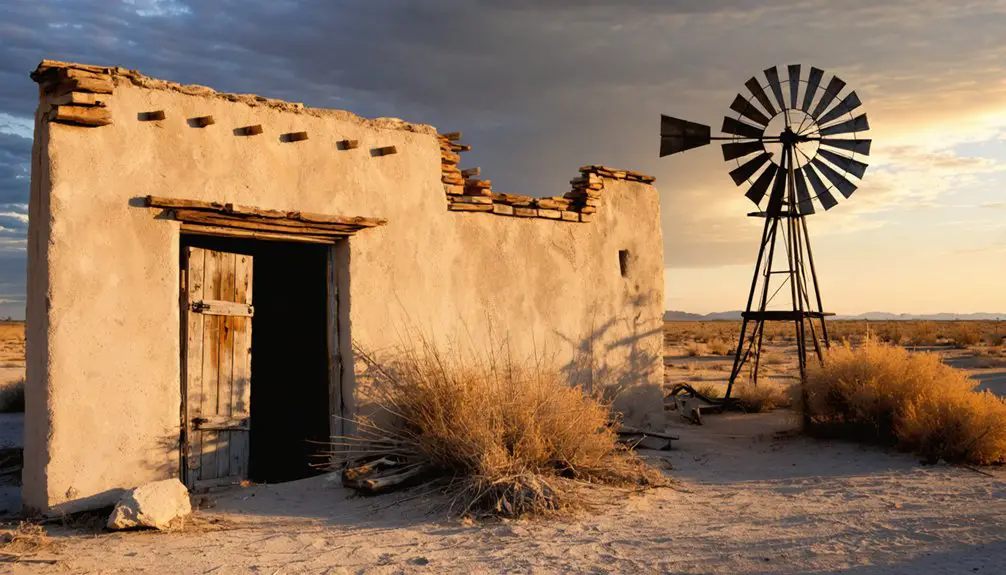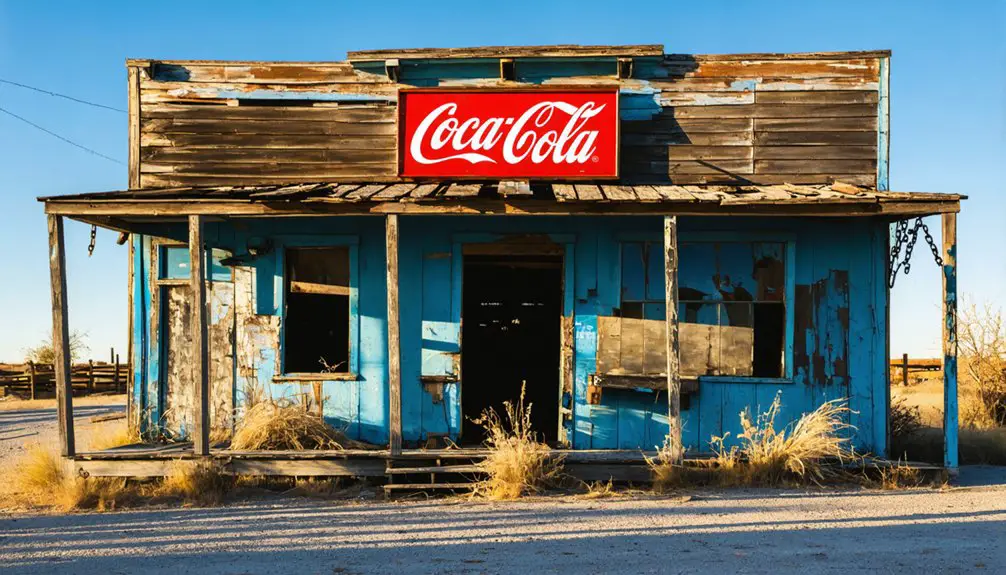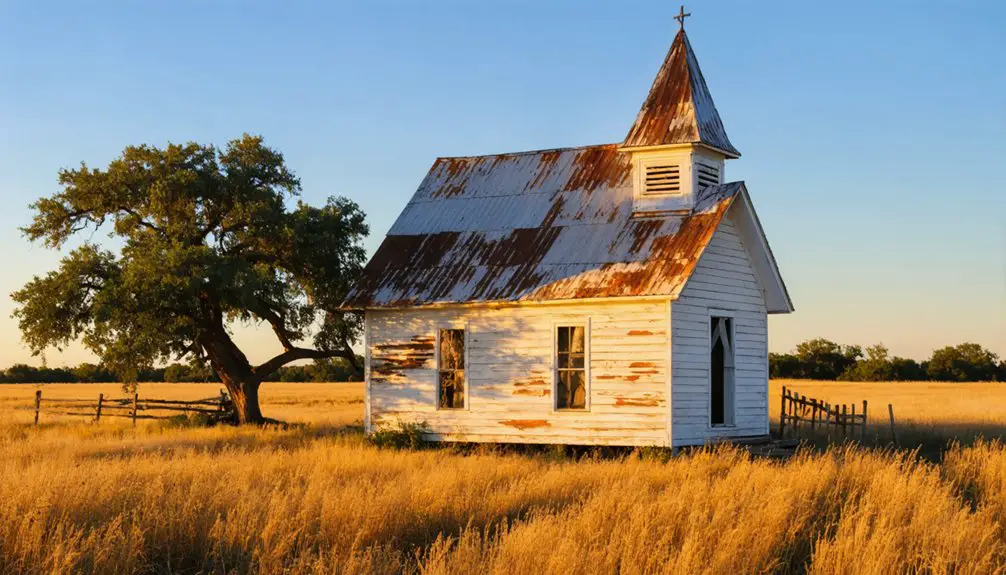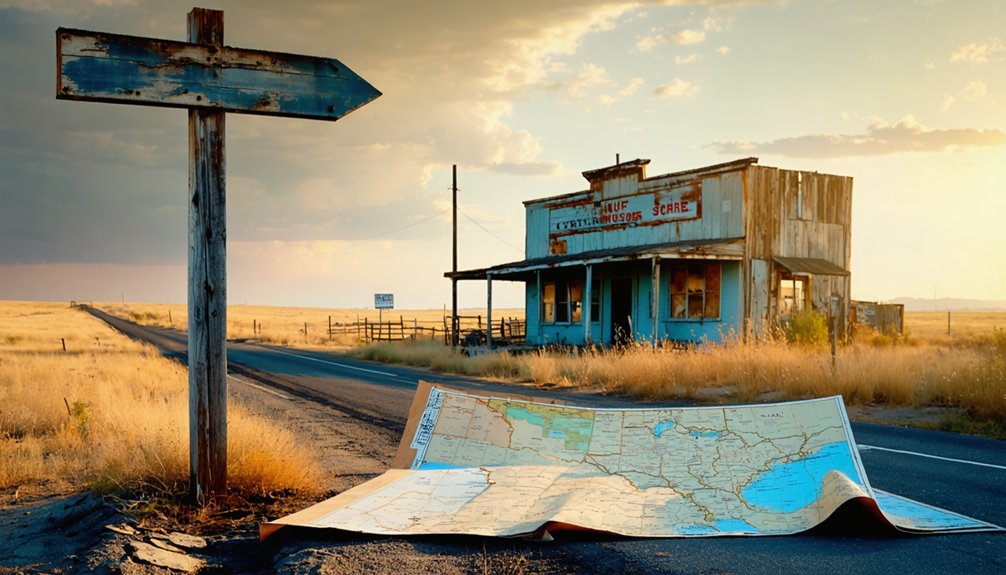
You’ll find Huff 8 miles south of Lakeside City on Highway 79, where grain elevators pierce the sky above scattered foundations and silent streets. This 1908 railroad ghost town beckons exploration spring through fall, when temperatures hover around 80°F and wildflowers frame crumbling cisterns. Watch for the eastern spur road toward Lake Creek—that’s your gateway to abandoned dreams and rusted rails. Respect private property boundaries, pack your camera, and prepare for profound silence broken only by wind through prairie grass and the stories waiting beneath your boots.
Key Takeaways
- Huff is located 8 miles south of Lakeside City on Texas State Highway 79, with grain elevators marking the site.
- Visit during spring, fall, or November when daytime highs reach 80-84°F with clear evenings and fewer crowds.
- Explore scattered home foundations, main street traces, and a massive stone cistern built for steam locomotives.
- Much of Huff sits on private property, so obtain permission before accessing and leave all artifacts untouched.
- Combine your trip with nearby ghost towns, Route 66 sites, and watch for north winds gusting to 20 mph.
The History Behind This Forgotten Railroad Town
Deep in the windswept plains of Archer County, where cattle ranches stretch toward distant horizons, the ghost town of Huff tells the familiar story of railroad ambition meeting harsh Texas reality.
You’ll find this forgotten settlement eight miles south of Lakeside City, born in 1908 when attorney Charles C. Huff’s namesake railway carved a switching site from raw prairie. The Wichita Falls and Southern Railway built community infrastructure that included a massive concrete cistern, blacksmith shop, general store, and schoolhouse—everything needed for frontier independence.
For a brief window, this railroad hub thrived. Settlers clustered around the tracks, drawn by employment and opportunity. But the post office closed in 1913, signaling trouble ahead. By 1936, only scattered dwellings remained, leaving cultural legacies that whisper through abandoned foundations.
Getting to Huff: Routes and Directions
Reaching Huff requires traversing the lonely stretch of Texas State Highway 79 that cuts through northeastern Archer County’s ranch land. You’ll find the turnoff eight miles south of Lakeside City, where a spur road branches east toward Lake Creek.
The grain elevators rise like sentinels above the prairie, marking what remains of this forgotten railroad settlement. Follow the old rail bed’s path as it curves past historic property ownership markers and commercial buildings remnants that barely cling to existence.
The drive itself becomes part of the adventure—windows down, dust trailing behind, nothing but open sky and abandoned dreams ahead. Park where the pavement ends and step into Texas history frozen in time, 981 feet above sea level.
What Remains: Exploring the Ghost Town Today
Once you arrive at Huff’s weathered crossroads, the silence hits you first—a profound quiet broken only by wind whistling through skeletal structures and the occasional creak of rusted metal. You’ll find scattered foundations where homes once stood, their stories etched in crumbling limestone and weather-beaten wood fragments.
Before exploring, check land ownership status—much of Huff sits on private property requiring permission to access.
What you can observe from public roads includes remnants of the old schoolhouse’s foundation and traces of the main street’s layout. No official preservation efforts protect these ruins, so they’re gradually surrendering to nature’s reclamation. Document your visit through photographs, but leave artifacts untouched. This ghost town’s future depends on respectful visitors honoring its past.
The Giant Cistern and Railroad Heritage
The rusted rails that carved through Huff’s landscape tell only half the story—beneath the earth lies an engineering marvel that once sustained this railroad community. The giant cistern’s architectural design reveals how frontier settlements conquered their greatest challenge: water scarcity in unforgiving Texas terrain.
You’ll find this underground reservoir where the railroad line’s former route intersects with what remains of the town center. Built to supply steam locomotives and the community they supported, the massive stone structure still stands as monument to 19th-century ingenuity. Peer into its depths and you’re witnessing the lifeline that made Huff possible.
The cistern’s vaulted chambers echo with memories of a time when water meant survival and prosperity rolled in on iron wheels.
Best Time to Visit and Weather Considerations
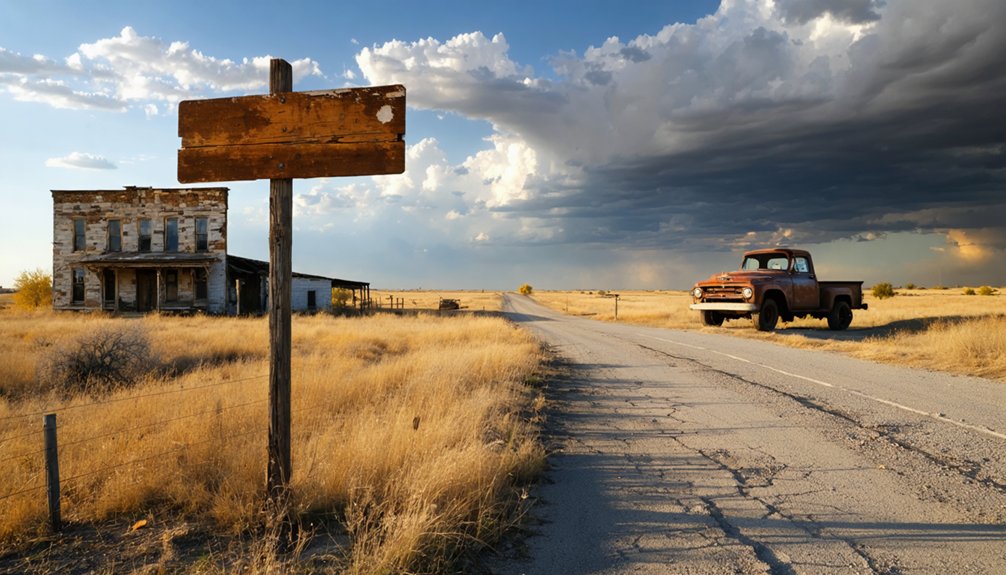
Planning your ghost town expedition means timing it right with Texas’s temperamental skies. You’ll find the sweetest exploration windows during spring and fall, when seasonal temperature ranges hover between 64-78°F—perfect for wandering Huff’s forgotten corners without battling oppressive heat.
As you explore ghost towns in Texas, be sure to visit places like Terlingua and Glenrio for a glimpse into the past. Each town has its own unique stories and remnants that capture the spirit of bygone eras. Don’t forget your camera; the haunting landscapes provide a perfect backdrop for unforgettable photographs.
Spring and fall deliver that perfect 64-78°F sweet spot for exploring Huff’s abandoned corners without Texas heat slowing you down.
Winter delivers cooler 57-73°F days with fewer crowds cluttering those rural roads, while crisp nights can drop to 37°F under brilliant star-filled skies.
For ideal weather conditions, target November’s daytime highs of 80-84°F paired with clear evenings. Monday through Wednesday typically brings sunny stretches with minimal precipitation—perfect for photographing the giant cistern and railroad remnants.
Watch for north winds gusting to 20 mph, which can kick up dust around those weathered structures. Fair air quality prevails year-round, though sensitive travelers should monitor conditions during your approach.
Nearby Attractions and Points of Interest
Your Huff adventure doesn’t end at crumbling cisterns and forgotten railroad beds—West Texas spreads a treasure map of ghost towns and curiosities across its sun-baked plains. Route 66 beckons northward through Glenrio, Vega, and Adrian, where you’ll snap photos beside rusted gas pumps and explore a museum annex housing a giant wind turbine blade.
Southwest toward Big Bend, Terlingua’s 100 residents keep the desert scenery alive with annual chili cook-offs and Día de los Muertos celebrations featuring candlelit altars. Continue to Marfa’s mysterious lights viewing area, eight miles west on Highway 90, where unexplained phenomena meet art galleries and cultural events.
Medicine Mound’s dolomite hills reveal Comanche ceremonial sites, while Independence preserves Sam Houston’s baptism church—each stop enriching your off-grid odyssey.
Photography Tips for Ghost Town Explorers
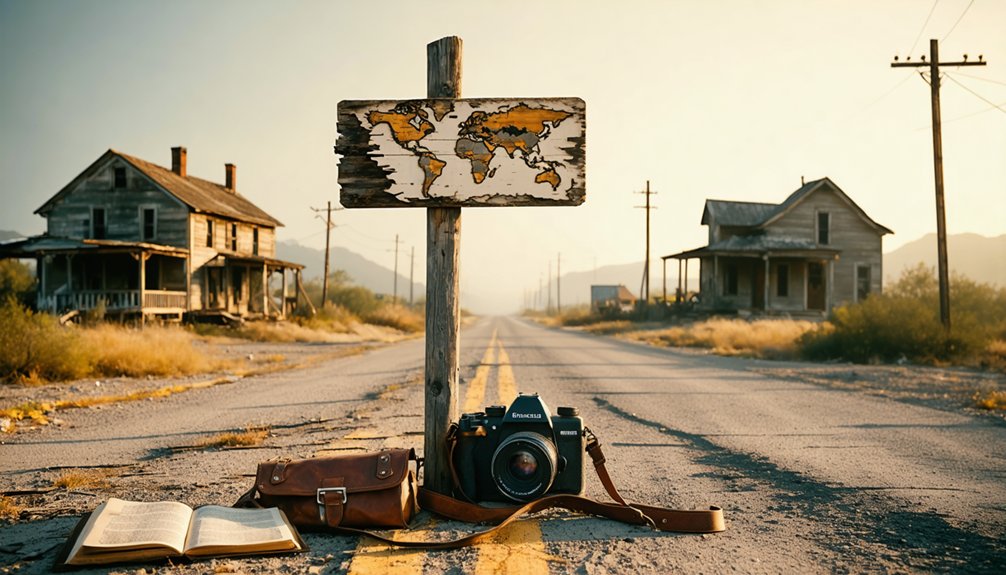
Capturing Huff’s weathered beauty demands more than pointing and shooting—you’ll need deliberate preparation to immortalize peeling paint, skeletal timber frames, and rust-streaked corrugated metal before the desert reclaims them entirely. Pack your tripod for long exposures during golden hours when shadows carve dramatic depth across abandoned storefronts.
Desert ruins won’t wait—master your equipment and timing now, before wind and sand erase these fragile monuments to forgotten lives.
Wide-angle lenses capture entire structures, while unique composition angles—shooting from ground level or through broken windows—reveal perspectives others overlook.
Essential gear for your expedition:
- Headlamps and flashlights to illuminate pitch-black interiors
- Cleaning kit protecting lenses from relentless dust
- LED panel for controlled lighting without bulk
Experiment with environmental portraiture by positioning subjects against crumbling facades. Keep horizons level, bracket exposures merging harsh sunlight with shadowy interiors, and curate scenes focusing on compelling details: warped doors, faded signage, forgotten artifacts that whisper stories of lives once lived.
Safety Guidelines for Your Visit
When you’re plotting your route to Huff, Texas, remember that rural roads can shift from maintained pavement to rough gravel without warning, so download offline maps and pack extra water for unexpected detours.
Once you arrive, treat every weathered structure as potentially unstable—rotted floorboards and crumbling walls hide beneath picturesque decay, making sturdy boots and a cautious distance your best allies.
You’ll want to arrive with plenty of daylight remaining, since exploring these abandoned buildings after sunset isn’t just eerie—it’s genuinely dangerous when you can’t see where you’re stepping.
Traversing the weathered backroads to Huff, Texas demands more than just a sense of adventure—it requires deliberate preparation and heightened awareness. Before departing civilization’s edge, you’ll need essential navigation tools and a full fuel tank, as services vanish beyond populated areas.
Proper headlight operation becomes critical on these unlit stretches—switch to high beams when alone, but drop to low beams for approaching vehicles to prevent dangerous glare.
Safe following distances of three to four seconds protect against sudden stops on unpredictable terrain. Consider these essentials:
- Current GPS devices and physical maps for backup navigation
- Reduced speeds around blind curves and unmarked intersections
- Angled approaches to ruts and surface changes
Scout conditions carefully, inspect your vehicle after undercarriage contact, and never cross water without verifying depth.
Ghost Town Exploration Precautions
Before your boots touch the crumbling threshold of Huff’s abandoned structures, understand that ghost town exploration ranks among the most hazardous recreational pursuits—where a single misstep through rotted floorboards or beneath sagging rooflines can transform adventure into tragedy.
Essential personal safety equipment includes ankle-supporting boots, cut-resistant gloves, long sleeves, and a respirator rated for asbestos particles lurking in decades-old dust.
Group exploration procedures demand three people minimum—if someone’s injured, one stays while another seeks help. Test every staircase before committing your weight, watch for concealed elevator shafts, and move deliberately across questionable floors.
Pack multiple flashlights, first-aid supplies, water, and your cell phone. Inform a trusted contact about your location and expected return. Freedom thrives on intelligent preparation, not reckless abandon.
Frequently Asked Questions
Is Camping Allowed Near the Huff Ghost Town Site?
The background information doesn’t mention camping facilities at Huff ghost town specifically. You’ll need to research nearby campgrounds in the area, as designated sites with proper amenities guarantee you’re camping legally while exploring this abandoned Texas settlement freely.
Are There Any Guided Tours Available for Huff, Texas?
No organized group tours exist for Huff—you’re free to blaze your own trail. This forgotten ghost town rewards self-guided tours where you’ll explore independently, following whispers of history without schedules or crowds constraining your adventure.
Can I Bring My Dog to Explore the Ghost Town?
You can bring your dog, though no pet friendly amenities exist at this abandoned site. Texas leash requirements apply, keeping your companion controlled near crumbling structures and Lake Creek’s wild terrain where cattle ranchers still gather.
Is Cell Phone Service Available in the Huff Area?
You’ll find practically zero cell tower coverage in Huff’s remote wilderness—it’s like falling off the digital grid entirely. Cellular data connectivity vanishes completely, so download maps beforehand and embrace the disconnected freedom of true exploration.
Do I Need Permission to Access Private Property in Huff?
Yes, you’ll need landowner permission requirements before exploring Huff’s ruins. Trespassing concerns are real—Texas property laws protect owners’ rights. Respect posted signs, seek consent from owners, and you’ll enjoy authentic exploration without legal troubles.