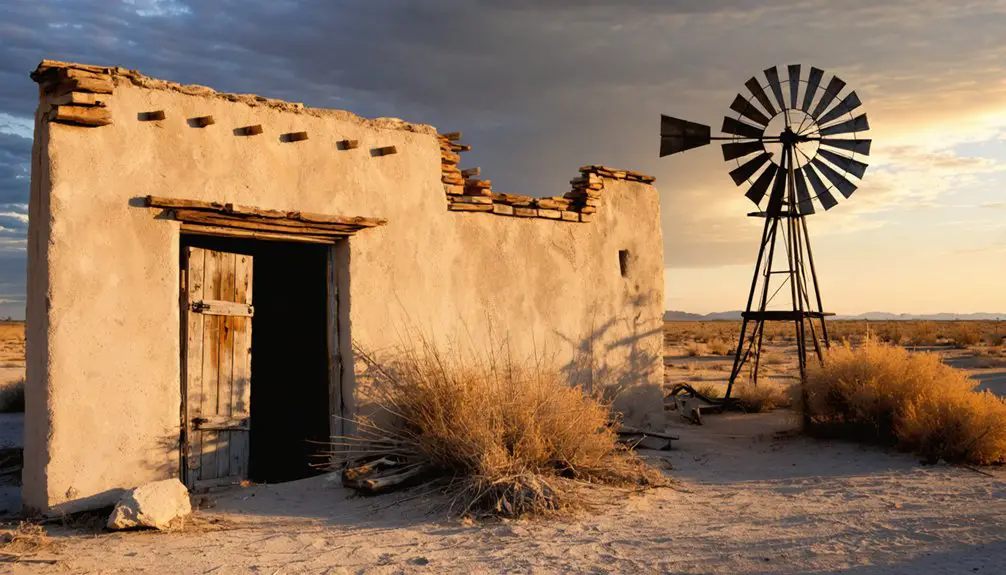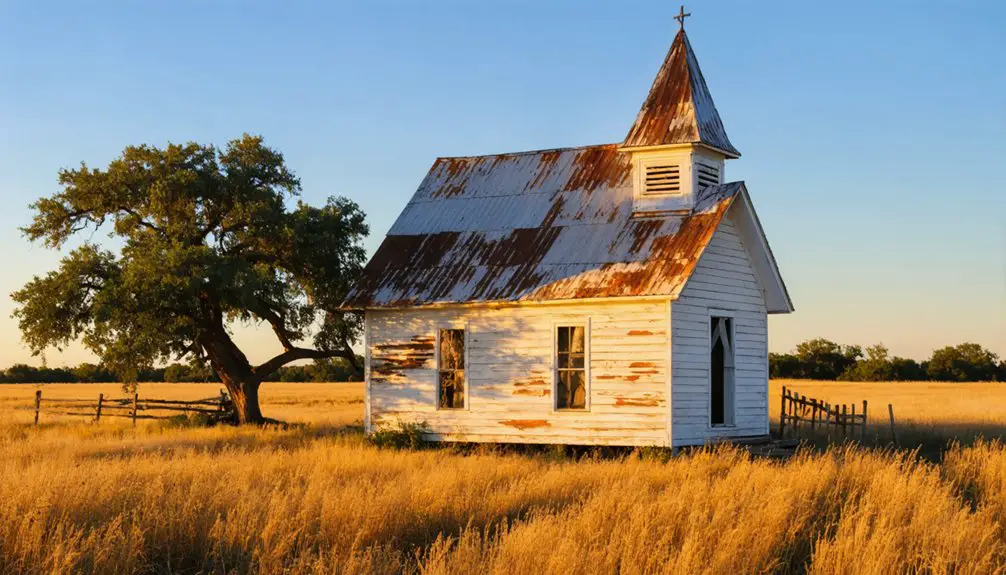
Your ghost town road trip to Huron, Texas starts in Hill County’s windswept prairies, where this post-Civil War settlement faded gradually rather than collapsing dramatically. You’ll find minimal ruins from this mercantile community near the Fort Graham area. Combine your visit with nearby abandoned sites like Terlingua’s mercury mines, Medicine Mound’s healing legends, and Glenrio’s Route 66 nostalgia. Bring your camera, GPS device, and sturdy boots—you’ll discover how proper documentation and preservation ethics transform casual exploration into meaningful stewardship of these forgotten places.
Key Takeaways
- Huron is located near Fort Graham in Hill County, established after the Civil War by the Jehu McPherson “Huron” Gist family.
- Unlike industrial ghost towns, Huron relied on mercantile trade and experienced gradual decline with minimal remaining ruins.
- Combine your trip with nearby abandoned sites like Terlingua’s mercury mines, Medicine Mound, Glenrio, and Independence for Route 66 nostalgia.
- Always secure landowner permission before exploring and document sites through photography and GPS coordinates rather than collecting artifacts.
- Practice zero-trace exploration by staying on established paths, leaving all items undisturbed, and packing out all trash.
Understanding Huron’s Mysterious Past in Hill County
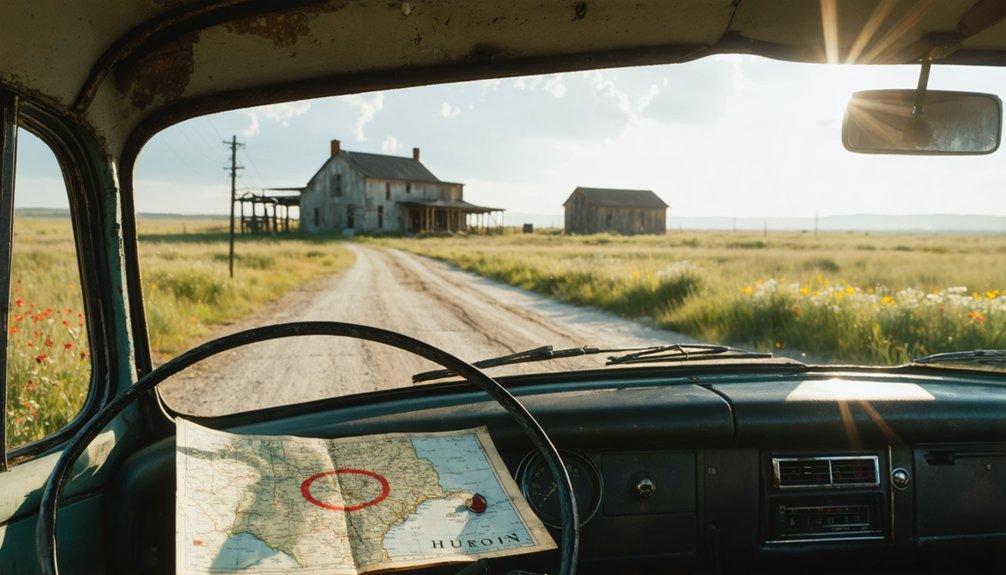
The windswept prairies of Hill County hold secrets that most travelers miss as they speed along modern highways. You’ll find Huron near the Fort Graham area, where U.S. Army troops first sparked settlement in 1849.
Hidden beneath Hill County’s windswept plains lie forgotten stories that rush-hour drivers never pause to discover along their hurried journeys.
The fort closed just four years later, but its presence shaped everything that followed.
After the Civil War, the Jehu McPherson “Huron” Gist family arrived and established the town’s modest beginnings, earning a post office that marked their early settler significance.
Today, only Cedar Creek Baptist Church remains standing—a legacy to local church history that refuses to fade. One resident maintains this solitary structure, keeping watch over what was once a community.
The barren landscape tells stories of abandonment that echo across Texas’s forgotten townships.
What Makes Huron Different From Michigan’s Ghost Towns
Scattered across two vastly different American landscapes, ghost towns named Huron tell contrasting stories of ambition and abandonment. Your Texas destination emerged through family driven development—a storekeeper’s son inspired its modest creation in Hill County’s inland prairie.
As you delve into the history surrounding these remnants, you may feel the whispers of the past urging you to explore chalk mountain ghost towns that once thrived in the shadows of towering peaks. Each location, bustling with life during its prime, now stands as a testament to dreams unfulfilled and the relentless passage of time. Unraveling the mysteries behind these forgotten places can provide a deeper appreciation for the stories woven into the fabric of American culture.
Michigan’s Huron County ghosts, however, collapsed under industrial weight when timber vanished and salt wells proved unprofitable.
Key differences you’ll notice:
- No boom-bust scars: Texas Huron avoided lumber mills and mining catastrophes that devastated Michigan’s Thumb region
- Resource extraction absence: Unlike Michigan’s sawmills and fisheries, Huron relied on simple mercantile trade
- Gradual fade: No dramatic depletion or railroad bypass—just quiet dissolution
- Minimal ruins: You won’t find cemeteries or colonial artifacts like Michigan’s Ora Labora remnants
This subtle abandonment offers freedom from over-commercialized ghost town experiences. You’re exploring authentic emptiness.
Essential Stops on Your Texas Ghost Town Journey
Beyond Huron’s quiet emptiness, your Texas ghost town odyssey demands strategic stops where history shouts from weathered walls and desert silence.
Terlingua anchors your southwestern route—mercury mine ruins crumbling against Big Bend’s volcanic backdrop, where you’ll navigate flooded shafts and photograph handmade crosses in a cemetery that chronicles miner tragedies.
Medicine Mound’s three dolomite hills reveal local folklore significance through Native American healing legends, while the museum at 292 Spur 91 S preserves early settler histories.
Glenrio delivers pure Route 66 nostalgia—1950s neon signs frozen mid-advertisement, abandoned motels straddling the New Mexico border.
Indianola’s coastal ruins tell hurricane devastation stories along Matagorda Bay.
Independence connects you to Sam Houston’s residence and Baylor University’s skeletal beginnings, complete with cemetery whispers.
Nearby Abandoned Settlements Worth Exploring
- Architectural restoration needs become apparent in Lobo’s collapsed adobe walls, revealing century-old construction techniques
- Geological curiosities abound at Toyah’s exposed salt formations and ancient spring systems
- Photograph weathered wood against dramatic desert sunsets
- Explore without restrictions or admission fees
Best Time to Visit and What to Bring
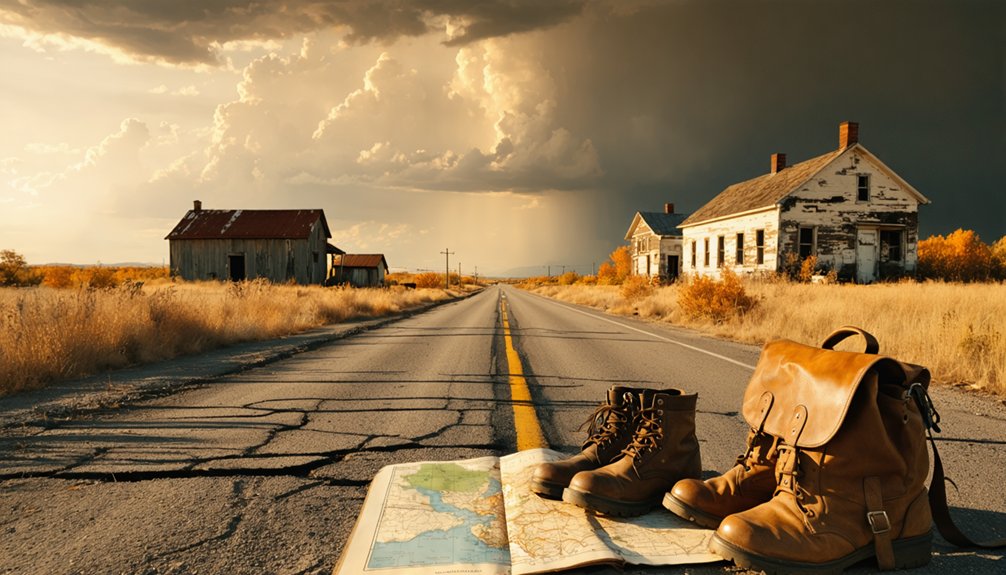
You’ll want to plan your Huron expedition for late fall through early spring, when Texas heat won’t turn your ghost town adventure into an endurance test. The cooler months between October and March offer comfortable exploration conditions and clearer skies for photography, though you should check recent weather since sudden storms can make dirt roads impassable.
Pack more water than you think you’ll need, sturdy boots for traversing debris, and a first-aid kit—abandoned structures don’t come with safety guarantees.
Optimal Seasonal Visiting Windows
Timing your visit to Huron’s weathered remains can transform a simple roadside stop into an unforgettable Hill Country experience. Spring wildflower season draws crowds, but late April offers crowd avoidance strategies with bluebonnets still blooming.
Fall delivers comfortable temperatures and solitude—ideal for off season visitation considerations that let you explore at your own pace.
Prime visiting windows:
- Early March or late April – Wildflowers without peak-season congestion
- Late October through November – Stunning foliage and 60-80°F temperatures
- December to February – Complete tranquility for uninterrupted exploration
- Avoid June-August – Intense midday heat limits outdoor time
Winter’s frosty mornings create haunting atmospheres around Cedar Creek Baptist Church, while clear skies deliver spectacular stargazing. You’ll find year-round accessibility via standard vehicles, though spring and fall maximize comfort during extended wandering through Huron’s scattered foundations.
Essential Exploration Gear List
Before you load your vehicle for Huron’s dusty streets, assembling the right gear separates comfortable discovery from cut-short misery. Your specialized layering recommendations start with long-sleeve shirts blocking relentless sun, topped by a lightweight jacket against unpredictable winds that whip through skeletal structures.
Wide-brim hats aren’t optional—they’re survival.
Terrain suitable footwear options demand hiking boots with ankle support for rubble-strewn paths and rock plates protecting against sharp debris. Pack gaiters to seal out invasive dust infiltrating every crevice.
Essential exploration tools include headlamps illuminating pitch-black interiors, GPS devices charting where cell signals vanish, and sturdy gloves handling rusted metal relics. Carry two liters of water minimum, high-SPF sunscreen, and a first-aid kit. Freedom means self-sufficiency when civilization disappears behind you.
Photographing and Documenting Your Ghost Town Adventure
Your camera becomes a time machine when you’re capturing Huron’s weathered structures and fading traces of frontier life. Pack a versatile lens (24-70mm works beautifully), extra batteries since there’s no power for miles, and a sturdy tripod for those moody interior shots where light filters through broken boards.
You’ll want to photograph architectural details—hand-forged hinges, original signage, foundation stones—before they crumble further, creating both a personal travel record and a historical document for future generations.
Essential Camera Gear Tips
When exploring abandoned settlements like Huron, the right camera equipment transforms fleeting moments into lasting documentation. You’ll want a full-frame body like the Nikon D810 for exceptional high ISO performance in dimly lit interiors.
Camera rig customization matters—pair a wide-angle lens (14-24mm f/2.8) with a sturdy lightweight tripod for those critical 30-second exposures that capture star-strewn Texas skies above crumbling structures.
Your essential ghost town kit:
- Wide-angle zoom lens for expansive landscape shots capturing Huron’s desolate beauty
- Sturdy tripod enabling long exposures in complete darkness
- Powerful LED flashlight for navigation and dramatic light painting effects
- Sensor cleaning kit protecting against West Texas dust infiltration
Consider seasonal lighting considerations—summer’s golden hour bathes ruins in warmth, while winter’s harsh light reveals stark architectural details you’d otherwise miss.
Preserving Historical Site Details
The abandoned structures of Huron whisper stories that deserve meticulous preservation—not through collection, but through careful documentation. You’ll capture history’s essence by recording GPS coordinates, photographing weathered placards, and noting structural details in your field journal.
Approach each site with cultural sensitivity—these ruins represent communities, not just curiosities. Leave artifacts undisturbed; your camera preserves what your hands shouldn’t touch.
Document responsibly by minimizing environmental impact: stick to existing paths, avoid staging decay for dramatic shots, and never remove items from ghost towns. Record timestamps and historical facts like Huron’s 1882 platting or the location of its original fifty homes.
Share your images with organizations like the Texas State Historical Association, transforming your adventure into lasting archival contributions that honor these forgotten places.
Preservation Ethics and Safety Guidelines for Explorers
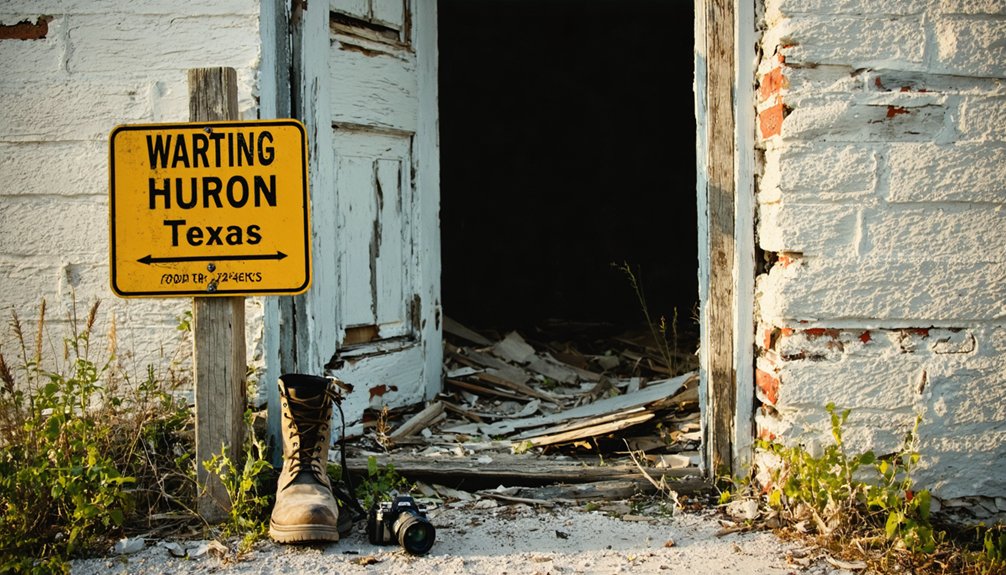
Before you set foot in Huron’s weathered structures, you’ll need to understand that exploring ghost towns carries both legal responsibilities and moral obligations. Your adventure begins with landowner communication—securing permission protects both you and these irreplaceable sites. Historical significance awareness transforms casual exploration into meaningful preservation.
Essential Guidelines for Responsible Exploration:
- Leave every artifact, timber, and nail exactly where you found it—your photos preserve memories, not souvenirs
- Fill any holes you dig and pack out all trash, leaving zero trace of your visit
- Never camp near ghost town structures, as fires devastate these century-old landmarks
- Stay on established paths and respect all barriers protecting fragile areas
You’re not just a visitor—you’re a temporary steward of Texas history, ensuring future wanderers can experience Huron’s authentic character.
Frequently Asked Questions
Are There Guided Tours Available for Huron Ghost Town Exploration?
You won’t find guided tour availability here—Huron’s abandoned streets belong entirely to you. Self-guided exploration options let you wander freely through crumbling buildings and overgrown roads, discovering hidden stories at your own pace without restrictions.
What Local Accommodations Exist Near Huron in Hill County?
You’ll find bed and breakfast options scattered throughout Hill County, offering charm and character near Huron. Local campgrounds provide budget-friendly alternatives where you can camp under starlit Texas skies, embracing total freedom during your ghost town adventure.
Can I Legally Access Private Property at Abandoned Texas Sites?
No, you can’t legally enter without permission. Texas property ownership laws remain enforced at abandoned sites, and you’ll face trespassing liability despite the allure of exploration. Always seek the title holder’s consent before venturing onto private ghost town properties.
Are There Restaurants or Gas Stations Close to Huron?
You won’t find convenience stores nearby or gas stations—Huron’s gloriously off-grid. Basic amenities availability requires driving to Terlingua, where cafes and fuel await your dusty arrival. Pack provisions beforehand; this ghost town rewards the self-reliant adventurer seeking genuine solitude.
Do I Need Special Permits to Explore Huron Ghost Town?
You’ll need private property access permission since Huron sits on privately owned land. While no official permits are required for visiting, you should take safety precautions around decaying structures and always respect landowner boundaries.