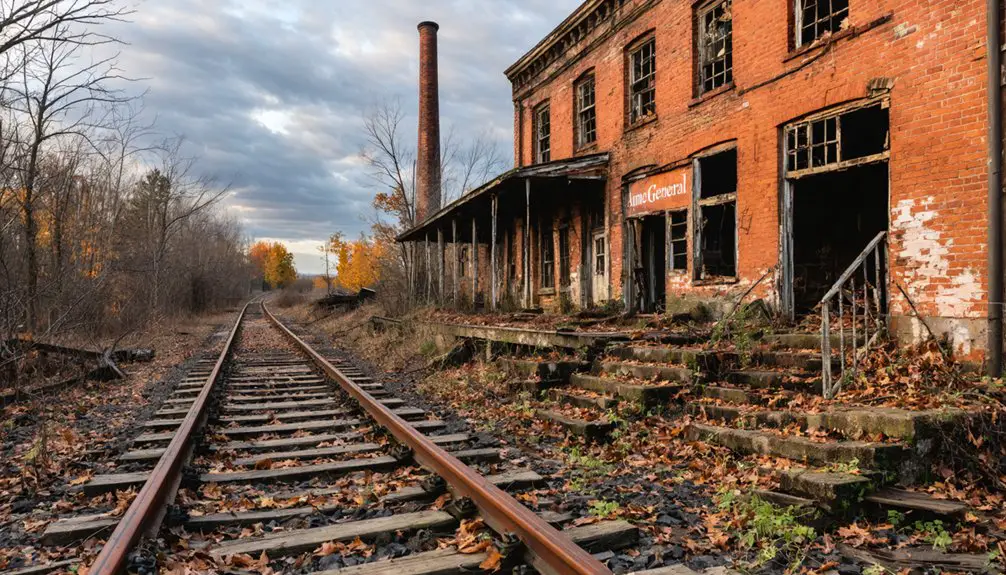
If you’re planning a Pennsylvania road trip with a twist, Instanter is unlike any ghost town you’ve visited before. It’s not perched on a hillside — it’s submerged beneath East Branch Lake in Elk County. Founded in 1889 around a tannery, the town was abandoned after 1926 and permanently flooded in 1952. During low-water drawdowns, sunken foundations and ruins re-emerge from the lakebed. Stick around to uncover everything you need to know before you go.
Key Takeaways
- Instanter, Pennsylvania, a submerged ghost town in Elk County, lies beneath East Branch Lake, flooded in 1952 by the federal flood control project.
- Visit during significant water drawdowns, ideally early autumn, when water levels drop up to 55 feet, exposing concrete foundations and remnants.
- Monitor U.S. Army Corps of Engineers water-level updates before visiting, as low-water periods between 2008 and 2021 revealed the site.
- Free designated parking near the dam provides access to trails and overlooks offering vantage points for viewing submerged remains.
- Cell service is limited; download maps beforehand and bring essentials, as facilities near the site are minimal.
What Is Instanter, Pennsylvania?
Tucked beneath the waters of East Branch Lake in Elk County, Pennsylvania, Instanter is a submerged ghost town that surfaces only when lake levels drop low enough to reveal its concrete foundations, scattered bricks, and rotting lumber.
Established in 1889, the village grew around the Elk Tannery, functioning as a company-style community tied entirely to that single industry. When the tannery shut down in 1926, residents scattered, and the town quietly faded.
Built around a single tannery, Instanter lived and died by one industry — and when it closed, so did the town.
The East Branch Flood Control Project sealed its fate, submerging the site permanently by the early 1950s. Today, Instanter sits at the intersection of historical preservation and tourism development, drawing curious travelers who want to witness a real lost world.
You won’t find a welcome sign — just water, silence, and the occasional exposed ruin.
How Instanter Went From Tannery Town to Ghost Town
Instanter’s story didn’t end with the floodwaters — it started unraveling decades earlier, when the single industry holding the town together finally gave out. Founded in 1889 around a booming tannery, Instanter existed almost entirely to serve that one operation.
When the Elk Tannery shuttered on December 21, 1926, residents packed up and left, chasing work elsewhere. Buildings sat empty, land changed hands, and the community quietly dissolved.
By the late 1940s, little remained. Then the East Branch Flood Control Project sealed its fate — the federal government began acquiring land in 1948, demolished what stood, and flooded the valley.
Today, historical preservation efforts are largely impossible here; the site sits beneath a lake where boating activities now replace what was once everyday small-town life.
Why Instanter, Pennsylvania Is Now Underwater
How does a town end up at the bottom of a lake? In Instanter’s case, the federal government made that call. After the tannery closed in 1926, the town quietly emptied out.
Then, in 1948, Washington launched the East Branch Flood Control Project and began acquiring the land. Jones Township abandoned River Road on June 30, 1952, and remaining structures were demolished or relocated.
The flooding followed, and Instanter disappeared beneath East Branch Lake for good.
The environmental impact reshaped the entire valley, erasing what little remained of the community. Historical preservation took a back seat to flood management priorities.
You won’t find a preserved Main Street here — you’ll find concrete foundations and rusted nails waiting beneath the surface, revealed only when water levels drop far enough.
When Can You See Instanter’s Sunken Village?
Seeing Instanter requires patience and timing you can’t fully control. The village only surfaces when East Branch Lake’s water levels drop considerably — sometimes as much as 55 feet. Drought conditions or dam-maintenance drawdowns create these rare windows, and low-water periods between 2008 and 2021 reportedly revealed the site again.
When you do get access, you’ll find concrete foundations, scattered bricks, rusting nails, and rotting lumber — quiet evidence of a community that once thrived around a tannery. The environmental impact of decades underwater has worn these remnants hard, making historical preservation nearly impossible in any traditional sense.
Before visiting, check current lake levels and Corps of Engineers updates. Freedom to explore this sunken history depends entirely on nature’s unpredictable cooperation.
Foundations, Bricks, and Ruins: What Remains of Instanter
When the lake recedes enough to expose Instanter, you’ll find concrete foundations emerging from the lakebed like skeletal outlines of the homes and buildings that once stood there.
Scattered bricks and rusting nails litter the site, quiet remnants of a community that thrived around the Elk Tannery for decades.
Rotten lumber also surfaces during low-water periods, giving you a rare, tangible connection to a town that vanished not through neglect alone, but by deliberate flooding.
Concrete Foundations Still Visible
Although the lake swallows Instanter whole for most of the year, a significant drop in water levels reveals a ghostly foundation of the town’s former life. When conditions align, you’ll walk across exposed lakebed and spot concrete foundations emerging from the mud like skeletal remains.
These slabs once anchored homes, outbuildings, and structures that served the Elk Tannery’s workforce.
Urban decay has done its work here — rusting nails, scattered bricks, and rotting lumber accompany the concrete remnants, painting a vivid picture of what time and water destroy.
Yet each exposure becomes an unexpected moment of historical preservation, letting you witness a community frozen in 1926. You’re not reading about Instanter — you’re standing inside it, reading the ground itself.
Scattered Bricks And Nails
Scattered across the exposed lakebed, bricks and rusting nails tell the quieter story of Instanter — not the grand collapse, but the slow, stubborn persistence of the ordinary.
When water levels drop, you’ll find these fragments half-buried in silt, scattered where homes and workshops once stood. They’re easy to overlook, but their archaeological significance is real.
Each nail marks a wall frame; each brick placed a family somewhere in the landscape. You’re walking through evidence, not decoration.
Historical preservation efforts rarely reach submerged sites like this, which makes your own careful observation matter more. Don’t disturb what you find — leave it exactly as the lake left it.
These small remnants are the honest, unglamorous proof that ordinary people actually lived here.
Rotten Lumber Remains
Rotten lumber is among the most fragile evidence you’ll find on the exposed lakebed, and it won’t last long once the water recedes. These decaying wooden remnants once framed homes and buildings that sustained an entire working community tied to the Elk Tannery.
When drought or dam-maintenance drawdowns reveal the site, you’re witnessing a rare moment that challenges historical preservation efforts — the wood deteriorates quickly, leaving behind only impressions of what stood here before 1926.
Unlike sturdier tourist attractions built to endure visitors, Instanter’s lumber scraps demand respect and restraint. Don’t disturb what remains. Instead, document what you see, because the next water rise may swallow these pieces permanently.
You’re not just exploring a ghost town — you’re watching history dissolve in real time.
Nearby Ghost Towns to Pair With Your Instanter Visit
While you’re planning your trip to Instanter, it’s worth knowing that Elk County holds more lost history nearby. Straight, Instanter’s sister town, shares the same fate — it’s also submerged beneath East Branch Lake, swallowed by the same flood-control project that erased the East Branch Valley.
Both sites surface together during low-water conditions, making a combined visit worthwhile. Loleta appears in broader regional ghost-town listings as well, adding another stop for serious explorers committed to historical preservation across the county.
Local legends surrounding these vanished communities run deep, giving each site its own story worth chasing. Plan your route around lake levels, stay flexible, and you’ll experience a stretch of Pennsylvania’s forgotten landscape that few travelers ever find.
Getting There: Visiting East Branch Lake Today
To reach East Branch Lake, you’ll head to Elk County, Pennsylvania, where the Army Corps of Engineers manages the reservoir and surrounding access areas.
You can park near the lake’s edge and scan the shoreline for signs of Instanter’s submerged remains, though what you’ll actually see depends almost entirely on current water levels.
Your best shot at spotting concrete foundations, scattered bricks, or rotting lumber comes during drought conditions or scheduled dam drawdowns, when the lake can drop dramatically enough to expose the old town site.
Lake Access And Parking
East Branch Lake offers a few access points worth knowing before you make the drive out to Elk County. The U.S. Army Corps of Engineers manages the lake, so you’ll find designated parking near the dam and along established recreation areas.
Trails and overlooks give you solid vantage points, especially when water level fluctuations pull the shoreline back and open up the former town site below. Keep your eyes on current lake conditions before you go — a significant drawdown can expose historical artifacts like concrete foundations and scattered bricks that stay hidden during normal pool levels.
Parking is free, but facilities are limited, so pack what you need. Cell service out there runs thin, so download any maps before you leave home.
Best Viewing Conditions
Catching a glimpse of Instanter’s sunken remains depends almost entirely on lake levels at East Branch Lake, so timing your visit around a significant drawdown makes all the difference. Drought conditions or dam-maintenance drawdowns have exposed the site multiple times, including periods between 2008 and 2021.
A drop of roughly 55 feet can reveal concrete foundations, scattered bricks, rusting nails, and rotting lumber — physical evidence that historical preservation efforts never fully addressed before flooding claimed everything. You’ll want to monitor Army Corps of Engineers water-level reports before committing to the drive.
The environmental impact of seasonal fluctuations fundamentally controls your access, making flexibility essential. Early autumn drawdown periods tend to offer the clearest views, so plan accordingly and check current conditions immediately before heading out.
Frequently Asked Questions
Is Swimming or Diving Allowed at the Submerged Instanter Site?
Like a forbidden treasure chest, Instanter’s ruins tempt you—but swimming restrictions and diving regulations for East Branch Lake apply here. You’ll need to check with the U.S. Army Corps of Engineers before diving in.
Are There Guided Tours Available Around East Branch Lake?
No official guided tours exist, but you’ll uncover East Branch Lake’s historical significance through self-guided exploration. Chase local legends of submerged Instanter independently, embracing the freedom to discover Pennsylvania’s ghostly, sunken past on your own adventurous terms.
Can You Camp Overnight Near East Branch Lake?
You’ll find camping options near East Branch Lake, but you’ve got to follow local camping regulations and stay mindful of wildlife safety. Embrace the freedom of the outdoors while respecting nature’s untamed, adventurous spirit surrounding this hauntingly beautiful area.
Is the Instanter Site on Private or Public Land?
The knowledge doesn’t confirm whether it’s private land or public access, but you’ll want to verify current land ownership before visiting, as access around East Branch Lake can vary depending on conditions and jurisdiction.
What Is the Best Time of Year to Visit East Branch Lake?
Summer and fall offer you the best seasonal activities at East Branch Lake. You’ll enjoy wildlife observation, hiking, and fishing while drought conditions may expose Instanter’s sunken ruins, making late summer your most rewarding visit.
References
- https://en.wikipedia.org/wiki/List_of_ghost_towns_in_Pennsylvania
- https://www.youtube.com/watch?v=Rp_FMWH9Ivw
- https://kids.kiddle.co/List_of_ghost_towns_in_Pennsylvania
- https://www.treasurenet.com/threads/pennsylvania-ghost-towns.228280/
- https://www.youtube.com/watch?v=3Nt682Q8ymk&vl=en
- https://www.youtube.com/watch?v=r3a1NIeV70U
- https://www.atlasobscura.com/things-to-do/pennsylvania/ghost-towns
- http://www.smethporthistory.org/instanter/instanterrevealed.html
- https://www.youtube.com/watch?v=fm3wxSOqlYM
- https://jonestownship.com/instanter/