You’ll find Iosepa 75 miles southwest of Salt Lake City in Skull Valley, just off Interstate 80 onto UT-196. This forgotten Polynesian-Mormon settlement, founded in 1889, once housed over 200 residents before disbanding in 1917. Today, scattered foundations, a lone fire hydrant, and a cemetery with roughly eighty graves tell its haunting story. It’s unlike any ghost town you’ve visited before, and there’s far more to this remarkable place than first meets the eye.
Key Takeaways
- Iosepa sits 75 miles southwest of Salt Lake City in Skull Valley, accessible via Interstate 80 to UT-196.
- Clear signs guide visitors down a one-mile gravel road leading directly to the historic cemetery.
- No nearby services exist, so bring water, fuel, and supplies before making the remote desert drive.
- Spring and fall offer the most comfortable temperatures; summer heat requires early morning visits to stay safe.
- The Memorial Day weekend gathering draws 1,000+ Pacific Islanders, offering the richest cultural experience for visitors.
The Rise and Fall of Utah’s Polynesian Ghost Town
In 1889, forty-six Polynesian members of The Church of Jesus Christ of Latter-day Saints ventured into Utah’s remote Skull Valley and began building something extraordinary — a Polynesian colony in the middle of the desert. They named it Iosepa, honoring Joseph Smith and church leader Joseph F. Smith, and at its peak, over 200 residents called it home.
Their Polynesian heritage thrived against the harsh desert backdrop until 1917, when the community disbanded and the land sold to the Deseret Livestock Company.
What they left behind is a powerful community legacy — a cemetery, scattered foundations, and a story of faith and resilience that lasted less than thirty years but continues resonating long after the town’s final days.
Ruins, Graves, and Relics Still Standing at the Townsite
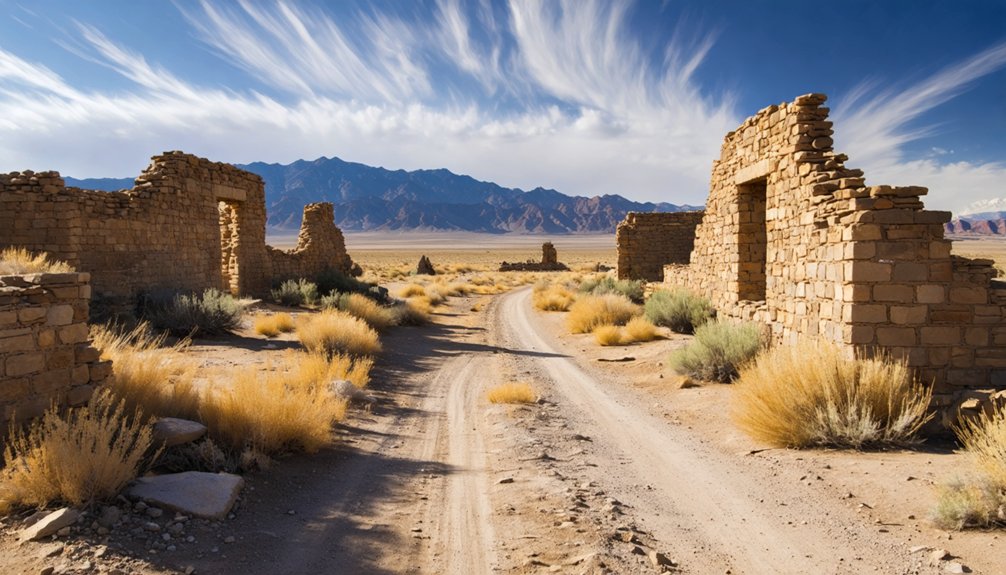
Walking through Iosepa today, you’ll find the desert has reclaimed most of what the settlers built, leaving behind only fragments of a once-thriving community. Scattered building foundations peek through the sagebrush, inviting ruins exploration across the quiet townsite.
A lone fire hydrant stands almost defiantly amid the emptiness, a strange yet powerful reminder of the infrastructure these pioneers built from nothing.
The cemetery carries the deepest historical significance. Listed on the National Register of Historic Places since 1971, it holds roughly eighty graves marked by rock piles and wilted Hawaiian flower wreaths.
You’ll also discover “Story Rock,” a limestone slab etched with petroglyphs carved by early inhabitants. Each relic connects you directly to the Polynesian settlers who transformed this harsh Utah valley into a functioning desert community.
What Makes Iosepa Worth the Drive?
Iosepa isn’t your typical ghost town — it’s a rare desert relic tied to a remarkable chapter of Polynesian-Mormon history that you won’t find anywhere else in the American West.
Every Memorial Day weekend, the silence of Skull Valley breaks as over 1,000 Pacific Islanders gather for a three-day luau, transforming this lonely sagebrush flat into a vibrant cultural reunion.
Whether you’re chasing history, unique landscapes, or living traditions, Iosepa delivers something far more layered than a simple pile of ruins.
Unique Desert Ghost Town
Tucked into the desolate expanse of Skull Valley, roughly 75 miles southwest of Salt Lake City, Iosepa isn’t your typical ghost town. The desert isolation here hits differently — no tourist traps, no crowds, just open sagebrush, scattered building foundations, and an unexpected cemetery that tells a remarkable story.
What sets Iosepa apart is its cultural significance. This wasn’t a mining camp or frontier outpost. It was a Polynesian colony, home to over 200 Latter-day Saint converts who built a community in one of Utah’s most unforgiving landscapes.
They arrived in 1889, carved a life from hardpan desert, and left behind graves marked with rock piles and Hawaiian flowers. You’ll find no place quite like it — where Pacific Island heritage meets raw, windswept Utah wilderness.
Annual Cultural Gathering
That remarkable story doesn’t stay buried in the desert. Every Memorial Day weekend, hundreds of Pacific Islanders reclaim Skull Valley, transforming this remote stretch of Utah into a living celebration of cultural significance and community connections.
Over 1,000 people converge on Iosepa for three days of remembrance, gathering from across the Western United States to honor ancestors who sacrificed everything for their faith. They tend graves marked by rock piles, lay fresh Hawaiian flowers, and share a traditional luau in the middle of the sagebrush.
You won’t find this experience anywhere else. It’s raw, authentic, and deeply moving — proof that Iosepa isn’t just a ghost town.
It’s a place where history breathes, and where belonging transcends both distance and time.
How to Get to Iosepa From Salt Lake City
Reaching Iosepa from Salt Lake City is a straightforward 75-mile drive that’ll take you through some of Utah’s most remote and haunting desert scenery.
Head west on Interstate 80 to exit 77, signed for Dugway or Iosepa. Turn south onto UT-196, also called Skull Valley Road, and follow it approximately 14 miles to milepost 22.85.
Keep your eyes open for clearly marked Iosepa signs on your left. From there, a short one-mile gravel road leads directly to the parking area beside the cemetery.
As you travel these scenic routes, watch for historical markers that add context to the landscape.
If you’re coming from the south, alternative routes through Dugway or Rush Valley offer equally compelling desert drives worth exploring.
The Best Time to Visit Iosepa
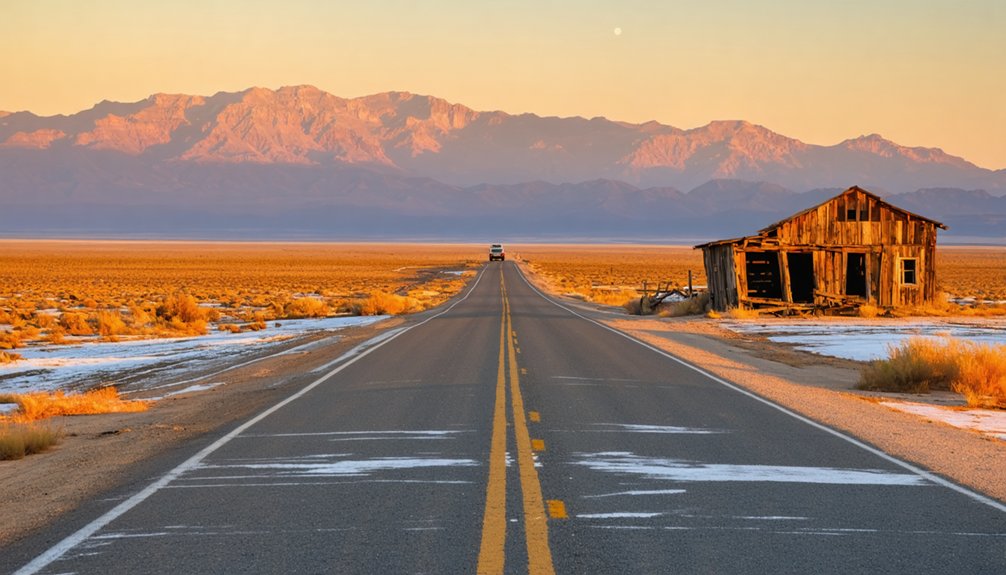
You can visit Iosepa any time of year, but if you want to experience the site at its most vibrant, plan your trip around Memorial Day weekend, when over 1,000 Pacific Islanders gather for three days of celebration, traditional luau, and grave tending.
The high desert climate of Skull Valley means scorching summers and bitter winters, so spring and fall offer the most comfortable conditions for exploring the scattered foundations and cemetery.
Whenever you go, pack water, since the remote stretch of Utah desert offers little shade and no nearby services.
Memorial Day Weekend Events
When should you plan your visit to Iosepa? If you want to experience the site’s full cultural significance, aim for Memorial Day weekend. Every year, over 1,000 Pacific Islanders and Latter-day Saint descendants converge on this remote desert valley for three days of memorial traditions, connection, and celebration.
You’ll witness something extraordinary — a traditional luau unfolding in the middle of Skull Valley, surrounded by sagebrush and silence.
Visitors travel from across the Western United States to tend the graves of their Polynesian ancestors, placing Hawaiian flower wreaths on the rock-pile markers throughout the cemetery.
The gathering transforms this quiet ghost town into a living cultural event.
If you can’t make Memorial Day weekend, the site remains open and welcoming year-round.
Year-Round Visiting Conditions
Outside of Memorial Day weekend, Iosepa stays open and accessible year-round — but the season you choose shapes your experience greatly.
Spring and fall offer the most comfortable temperatures for exploring the cemetery and scattered building foundations across the sagebrush flats. Summer visits mean intense desert heat, so bring extra water and start early. Winter can make Skull Valley Road slick and uninviting.
Among the best year-round activities here are self-guided walks through the cemetery, photographing Story Rock’s petroglyphs, and soaking in the raw silence of the valley.
For visiting tips, arrive prepared — there are no services nearby, cell coverage is spotty, and the single fire hydrant standing in the desert won’t help you much. Pack everything you need and embrace the isolation.
Seasonal Weather Considerations
Skull Valley doesn’t coddle visitors — the desert sets the terms, and knowing the seasons helps you meet them.
Summer bakes the valley floor with temperatures pushing 100°F, making early morning arrivals essential. Weather impacts are real here — flash floods can wash out gravel roads, and afternoon storms roll in fast.
Spring offers the most forgiving conditions, with mild temperatures and occasional wildflowers breaking through the sagebrush. It’s also when Memorial Day weekend brings over 1,000 people to the site for the annual Polynesian gathering — the richest seasonal activity you’ll find at any ghost town.
Winter visits are possible but cold and raw.
Fall delivers crisp, quiet days perfect for exploring foundations and reading Story Rock without crowds pressing in around you.
What to Expect at the Memorial Day Gathering?
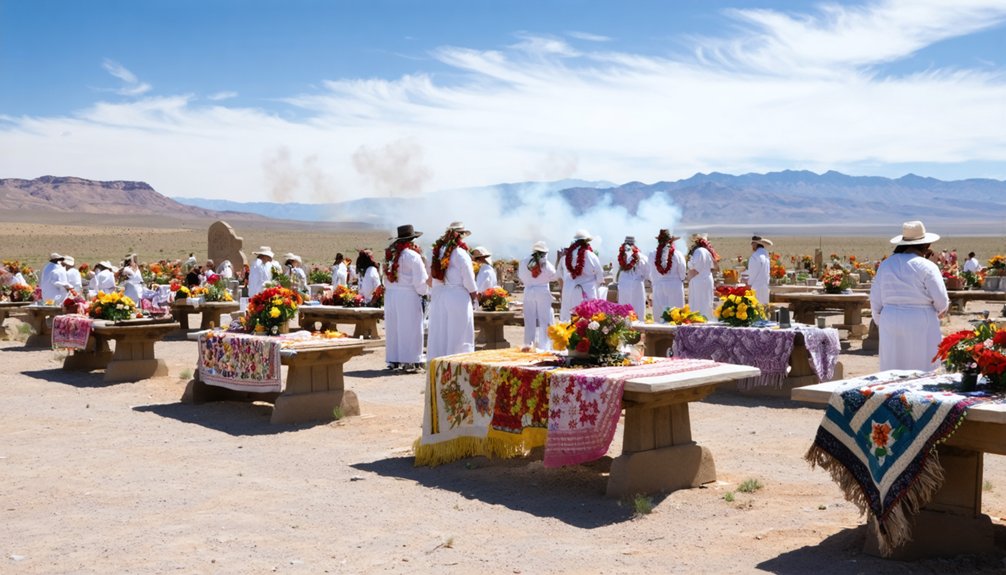
Every Memorial Day weekend, hundreds of native Pacific Islanders transform the barren expanse of Skull Valley into a vibrant cultural celebration.
You’ll witness over 1,000 people converging on this remote desert site, drawn together by deep cultural significance and powerful community bonding.
Expect a traditional luau featuring authentic Polynesian food, music, and dance — all unfolding against the stark desert backdrop.
Savor traditional Polynesian food, music, and dance set against Skull Valley’s striking desert landscape.
The three-day gathering isn’t just a party; it’s a meaningful pilgrimage where descendants tend to the rock-pile graves of their Latter-day Saint ancestors.
Visitors travel from across the Western United States, creating an atmosphere that feels both intimate and electric.
You’re welcome to attend, explore the cemetery, and respectfully share in this extraordinary convergence of Pacific Island heritage and Utah desert solitude.
Respecting the Cemetery and Grounds at Iosepa
When you step into the Iosepa cemetery, you’re entering sacred ground that carries the weight of Polynesian sacrifice and faith. The eighty graves marked by rock piles and wilted Hawaiian flowers represent real lives, real struggles, and enduring devotion.
Cemetery etiquette here means more than staying on paths — it means approaching this space with genuine cultural respect.
Don’t disturb the rock piles or remove any flowers or markers. Speak quietly, keep children close, and leave everything exactly as you found it. Photography is welcome, but treat each grave as you’d treat a family member’s memorial.
The site stays open year-round, and that freedom comes with responsibility. You’re a guest in a place that still holds deep meaning for thousands of Pacific Islander descendants.
Frequently Asked Questions
Is There an Admission Fee to Visit the Iosepa Ghost Town Site?
You’ll find no admission fee to explore Iosepa history freely! Visit anytime, roam the sagebrush ruins, and discover the cemetery significance of this sacred Polynesian settlement, where eighty graves await your respectful, unhurried exploration.
Are Pets Allowed When Visiting the Iosepa Cemetery and Grounds?
Like wide-open desert skies, the information’s unclear — pet policies for Iosepa aren’t officially documented. You’ll want to call ahead and practice proper cemetery etiquette, keeping any pets respectful of this sacred ancestral ground.
Can Visitors Camp Overnight Near the Iosepa Townsite in Skull Valley?
The provided knowledge doesn’t specify camping regulations for Iosepa. You’d want to verify options before heading out. While exploring nearby attractions, contact Tooele County or Utah’s BLM office to confirm where you’re allowed to camp overnight.
Is the Gravel Road to Iosepa Accessible for Standard Passenger Vehicles?
You’ll find the road conditions on that short, one-mile gravel stretch are surprisingly manageable — vehicle recommendations aren’t strict here. Your standard passenger car can handle it easily, delivering you straight to Iosepa’s hauntingly beautiful cemetery.
Are Guided Tours of the Iosepa Ghost Town Available for Visitors?
No formal guided tours are available, but you’ll explore Iosepa’s ghost town history freely at your own pace. You’ll discover visitor experiences through memorial plaques, the historic cemetery, and fascinating archaeological remnants scattered throughout the sagebrush landscape.
References
- https://en.wikipedia.org/wiki/Iosepa
- https://www.atlasobscura.com/places/iosepa-ghost-town
- https://www.upi.com/Archives/1986/06/22/Utah-ghost-town-was-thriving-Hawaiian-colony/1988519796800/
- https://www.ksl.com/article/27432550/utah-ghost-town-once-hawaiian-paradise
- https://inspiredbytheoutdoors.com/blogs/news/exploring-the-iosepa-ghost-town-skull-valley-utah
- https://stories.utahhumanities.org/stories/items/show/277
- https://www.youtube.com/watch?v=oZ5R96-L0kA
- https://www.youtube.com/watch?v=6vB3WAt5f3Q
- https://archive.sltrib.com/article.php?id=10384134&itype=storyID
- http://www.expeditionutah.com/forum/index.php?threads/ghost-town-iosepa-tooele-county.3354/