Planning a ghost town road trip to Jungo, Nevada means heading deep into the Black Rock Desert, where a once-thriving railroad settlement has faded into scattered ruins and desert silence. You’ll need a high-clearance 4×4, extra water, and fuel since there’s no cell service or supplies along the way. Visit in late spring or early fall for the best road conditions. Keep exploring to uncover everything this remote, haunting destination has to offer.
Key Takeaways
- Jungo is accessible via Nevada State Route 49 from Gerlach, requiring a high-clearance 4×4 vehicle for the unimproved dirt track.
- Visit in late spring or early fall to avoid extreme summer heat exceeding 100°F and impassable winter road conditions.
- Carry extra water, sufficient fuel, and a recovery kit, as no services or cell signal exist along the route.
- Jungo features scattered foundations, rusted metal, and debris from its 1910 railroad town origins, with no standing buildings remaining.
- Nearby attractions include the Sulphur Springs ghost town, Black Rock Desert, Bottle Creek Ranch, and the active Hycroft Mine.
What’s Left to See at Jungo Today
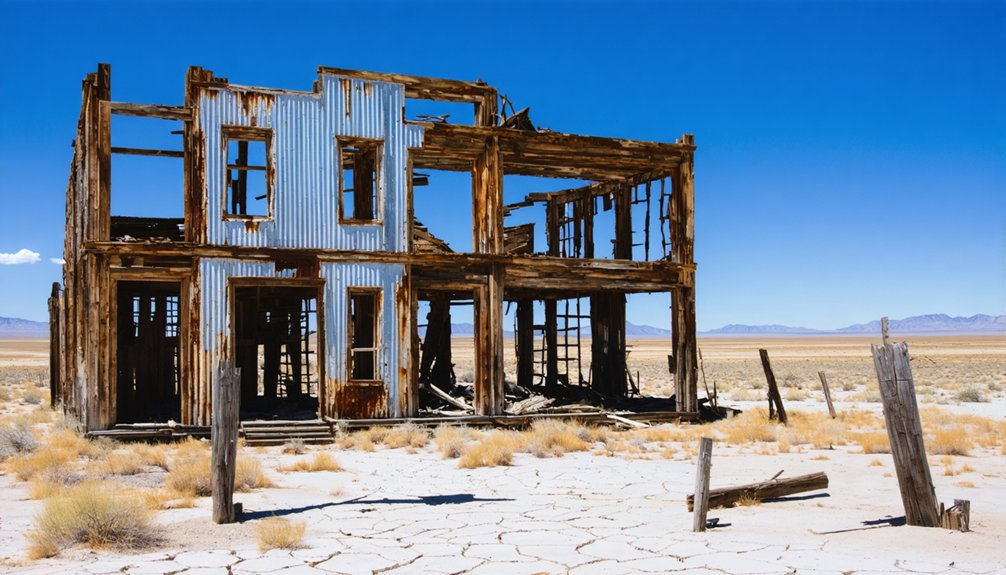
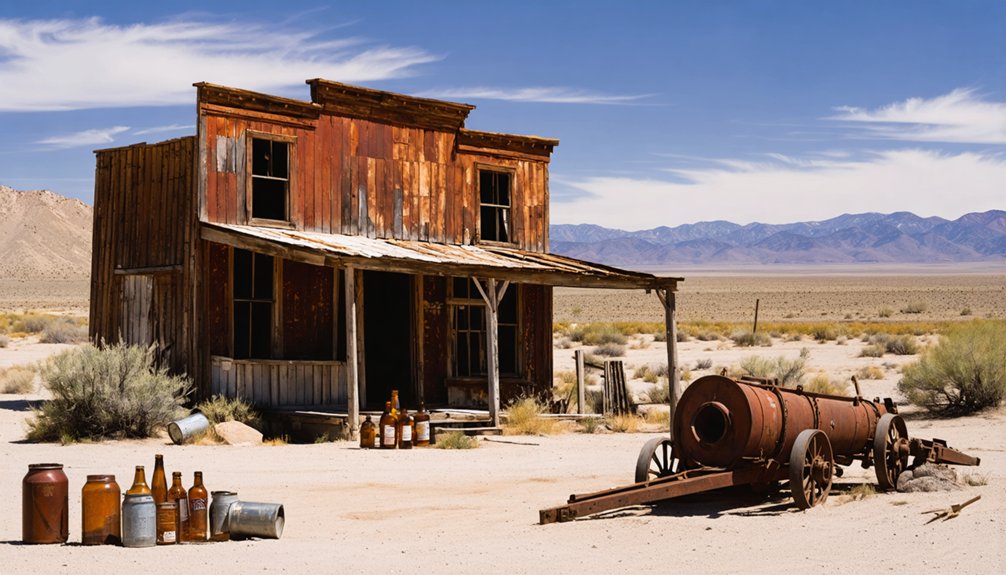
Scattered across the dusty playa, a few weathered remnants of Jungo’s once-bustling railroad life still poke through the desert floor. You won’t find standing buildings here — just debris, scattered foundations, and rusted metal fragments hinting at what once thrived.
These ghost town remnants connect you directly to a hardworking community that supported railroad crews, ranchers, and miners throughout the early 1900s.
Walking these grounds, you’re touching the lives of railroad crews, ranchers, and miners who built something real here.
Walk the site carefully and you’ll notice how the desert has slowly reclaimed everything. The area’s mining history runs deep, with Hycroft Mining’s massive gold and silver operation still active nearby — though access is restricted.
Bring your curiosity, your camera, and respect for the land. Jungo doesn’t offer much visually, but its silence tells a powerful story about boom, bust, and abandonment.
How Jungo Went From Railroad Town to Ghost Town
When you trace Jungo’s roots back to 1910, you’ll find a thriving Western Pacific Railroad town packed with a hotel, saloon, blacksmith shop, and school.
By the 1930s, though, shifting economics had drained the life from the settlement, leaving businesses shuttered and residents gone.
The post office finally closed in 1952, marking the town’s official fade into silence.
Railroad Town Origins
Jungo didn’t start as a ghost town — it started as a lifeline. In 1910, the Western Pacific Railroad’s expansion gave Jungo its railroad significance, transforming raw Nevada desert into a functioning community. That town infrastructure supported real people living rugged, independent lives.
At its peak, Jungo offered everything settlers and railroad workers needed:
- A hotel for weary travelers pushing through the high desert
- A saloon where ranchers and rail crews unwound after brutal days
- A blacksmith shop keeping horses and equipment road-ready
- A school ensuring children didn’t lose their future to the frontier
You’re not just visiting a forgotten dot on a map — you’re standing where a self-sufficient community once refused to let the desert win.
Economic Decline Factors
But nothing built on a single industry lasts forever. Jungo thrived as long as the railroad needed it, but economic shifts in the 1930s pulled the foundation right out from under the town.
As freight operations modernized and regional mining activity slowed, fewer workers stayed, and businesses lost their customer base. Population decline followed swiftly — the hotel emptied, the saloon went quiet, and the blacksmith had no horses left to shoe.
The school eventually closed its doors. By 1952, even the post office shut down, the final signal that Jungo had crossed the point of no return.
What you’ll find today are scattered remnants and silence — a raw, honest reminder that boom towns live and die by the industries that birth them.
Post Office Closure
The moment the post office shuttered in 1952, Jungo’s fate was sealed — not with a dramatic collapse, but with the quiet click of a locked door. That closure marked the end of Jungo’s postal history and cemented its ghost town legacy forever.
When mail stops moving, people follow.
Here’s what that single event signaled:
- No mail meant no official community recognition
- No recognition meant no infrastructure investment
- No investment accelerated permanent abandonment
- No residents left buildings to the desert’s mercy
You’re now driving through land that once buzzed with railroad workers, ranchers, and daily deliveries.
Today, only scattered debris remains. Jungo doesn’t beg for your attention — it simply waits, silent and windswept, for explorers bold enough to find it.
How to Get to Jungo on Jungo Road
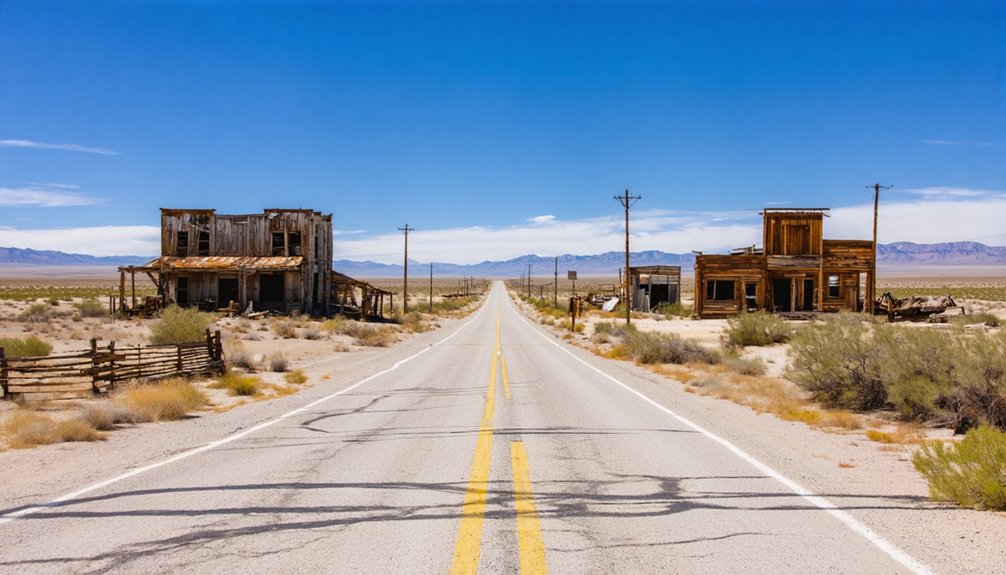
To reach Jungo, you’ll head out on Nevada State Route 49, also known as Jungo Road, traveling either 31.5 miles west of Gerlach or 25.8 miles east of Bottle Creek Ranch.
The road is an unimproved dirt track crossing open playa and old mining territory, so you’ll need a 4×4 with high clearance and solid tires to make it through.
Don’t underestimate the terrain — this route is rough, remote, and unforgiving for anything less than a capable off-road vehicle.
Starting Point and Route
Getting to Jungo means committing to one of Nevada’s roughest back roads, so you’ll want a 4×4 with high clearance and solid tires before you even think about heading out.
Nevada State Route 49, locally called Jungo Road, is your primary corridor through open playa and mining country.
Use these wayfinding tips to navigate confidently:
- Start at Bottle Creek Ranch, located 25.8 miles west of Jungo
- Drive 13.4 miles north on the unimproved dirt road toward the ghost town
- Watch for railroad crossings — crossing points are limited along the parallel track
- Consider scenic detours through Sulphur or toward Black Rock City for added exploration
Gerlach sits 31.5 miles east, making it a solid resupply stop before you push into the backcountry.
Road Conditions and Requirements
Knowing your route is only half the battle — Jungo Road itself will test your rig and your nerve. Nevada State Route 49 is unimproved dirt, crossing open playa and rough terrain that’ll punish anything less than a 4×4 with high clearance and solid tires.
Road safety isn’t optional out here; it’s survival. You’re 31.5 miles from Gerlach with no services, no cell signal, and no guarantee of passing traffic.
Vehicle maintenance matters before you leave — check your spare tire, fluids, and recovery gear. The railroad runs parallel with limited crossing points, so plan accordingly.
Dry conditions make the road manageable; rain turns it treacherous fast. Respect the terrain, pack extra water, and you’ll reach Jungo on your own terms.
What Kind of Vehicle You Actually Need for Jungo Road
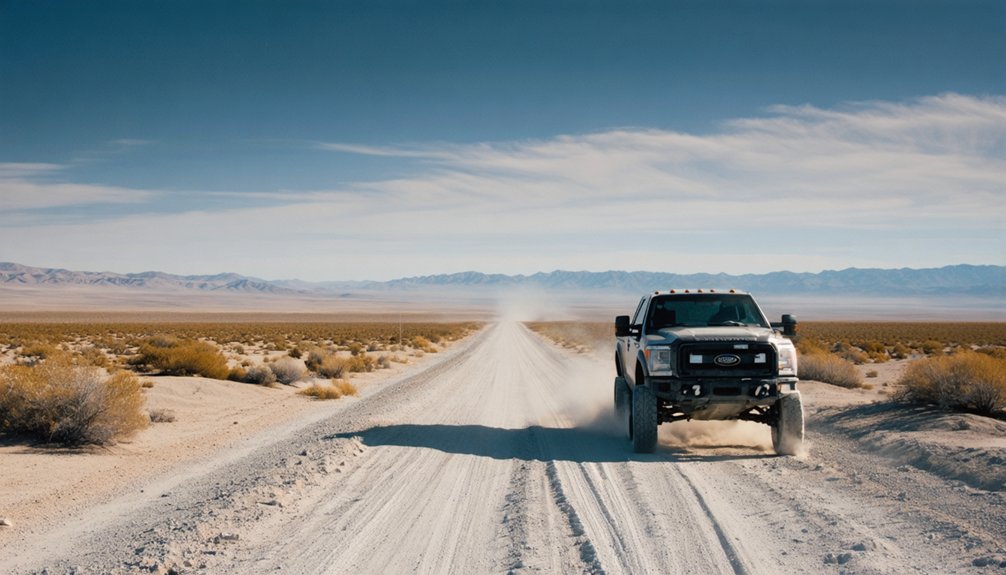
Jungo Road doesn’t forgive an unprepared driver, and that starts with your vehicle. You’ll need serious hardware to handle this unimproved terrain safely. Follow these 4×4 recommendations before you roll out:
- 4×4 drivetrain: Full-time or selectable four-wheel drive is non-negotiable on shifting playa surfaces.
- High ground clearance: Rocks and ruts will bottom out a standard sedan instantly.
- Reinforced tires: All-terrain or mud-terrain tires reduce blowout risk on sharp desert debris.
- Emergency recovery gear: A shovel, tow strap, and spare tire are essential vehicle safety basics.
Don’t underestimate this road because it looks flat. Desert playa hides soft spots that swallow tires whole.
Prepare your rig correctly, and Jungo rewards you with raw, untouched freedom most travelers never experience.
What to Bring for the Drive Out to Jungo
Once you’ve got the right vehicle, what you pack determines whether this desert run stays an adventure or turns into a survival situation.
These ghost town essentials aren’t optional — they’re your lifeline on Jungo Road’s unforgiving terrain.
Out here, essentials aren’t suggestions — they’re the difference between an adventure and a crisis.
Bring at least two gallons of water per person, a full-size spare tire, a tow strap, and a basic toolkit.
Cell service disappears fast out here, so carry a paper map or GPS unit with downloaded offline maps.
A first aid kit, emergency blanket, and extra fuel round out your off road tips checklist.
Pack food, sun protection, and a charged power bank.
Tell someone your route and expected return time.
Jungo rewards prepared explorers and punishes careless ones — the desert doesn’t negotiate.
Sulphur, Bottle Creek Ranch, and Black Rock City: What’s Near Jungo
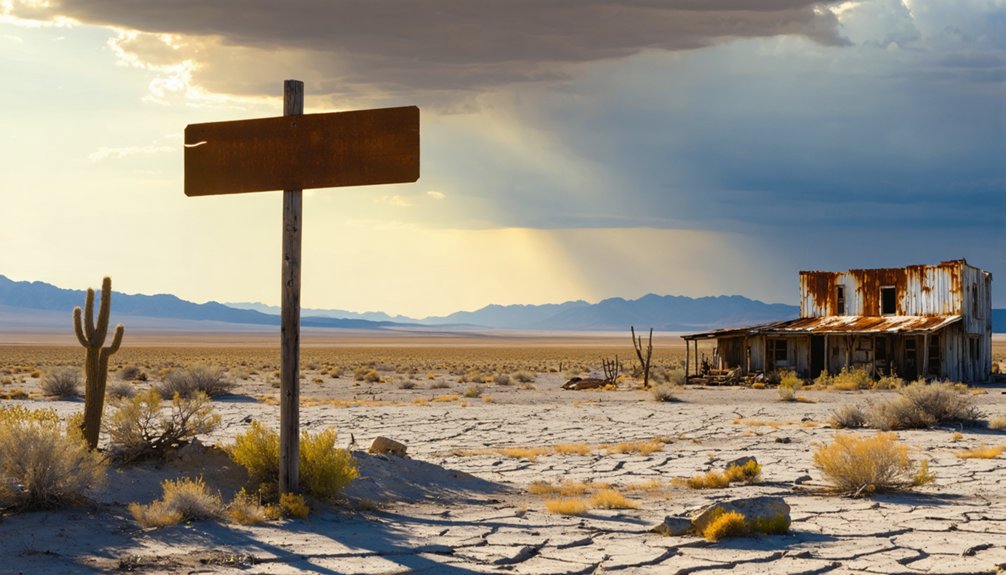
Nestled within the same remote stretch of Northern Nevada, several worthwhile stops surround Jungo and transform a single ghost town visit into a full desert expedition.
You’re already out here, so push further and explore what the region holds:
- Sulphur Springs – another crumbling ghost town layered with mining-era history
- Bottle Creek Ranch – a remote landmark sitting 25.8 miles west along Jungo Road
- Black Rock Desert – the legendary playa hosting Black Rock City and endless open terrain
- Hycroft Mine – an active gold and silver operation cutting through the landscape nearby
Each destination rewards curiosity and adds depth to your route.
The ghost towns, wide playas, and forgotten ranches out here remind you that Nevada’s backcountry still belongs to those willing to chase it.
Best Time to Visit Jungo and What to Expect on the Road
Timing your visit to Jungo can mean the difference between a memorable desert adventure and a dangerous misadventure. The best season to explore is late spring or early fall, when ideal weather keeps temperatures manageable and the playa roads stable.
Summer scorches the high desert, pushing temperatures past 100°F, while winter brings mud, snow, and impassable conditions on Nevada State Route 49.
You’ll need a 4×4 with high clearance and solid tires — no exceptions. The 13.4-mile dirt road from Bottle Creek Ranch crosses rough terrain that punishes unprepared vehicles.
Carry extra water, fuel, and a recovery kit. Cell service doesn’t exist out here.
Once you roll into Jungo, you’ll find scattered debris and silence — raw, unfiltered history waiting for those bold enough to seek it.
Frequently Asked Questions
Who Owns the Land Where Jungo Ghost Town Currently Sits?
The knowledge doesn’t specify who owns Jungo’s land, but you’ll find Hycroft Mining Company controls nearby terrain. Exploring this site of historical significance means respecting land ownership boundaries as you chase Nevada’s wild, adventurous ghost town heritage.
Are There Any Permits Required to Visit Jungo, Nevada?
No formal permits are currently needed to explore Jungo’s storied landscape, but you’ll want to respect ghost town regulations and prioritize visitor safety — especially since Hycroft Mining Company’s active operations mean certain restricted areas aren’t yours to freely roam.
Is There Any Cell Phone Coverage Along Jungo Road?
You’ll find little to no cell service along Jungo Road’s remote stretches. Don’t let that stop you — embrace the freedom, stay alert to rugged road conditions, and carry offline maps for your adventure!
Were Any Famous or Notable People Ever Residents of Jungo?
No famous residents have been documented in Jungo’s historical significance, but you’ll discover that railroad workers, rugged miners, and frontier settlers who called it home were extraordinary in their own adventurous, freedom-chasing, pioneering spirit.
How Many People Lived in Jungo During Its Peak Population?
The exact peak population isn’t recorded, but Jungo history tells you it was a small, bustling railroad community. Mining impact drew enough souls to support a hotel, saloon, school, and blacksmith — you’d have felt the wild energy!
References
- https://en.wikipedia.org/wiki/Jungo
- https://en.wikipedia.org/wiki/List_of_ghost_towns_in_Nevada
- https://wiki.blackrockdesert.org/wiki/Jungo
- https://en.wikipedia.org/wiki/Category:Ghost_towns_in_Nevada
- https://en.wikipedia.org/wiki/Category:Ghost_towns_in_Humboldt_County
- https://travelfeed.com/@eiafp/in-search-of-black-rock-city-part-1
- https://www.youtube.com/watch?v=ag1pja3lNTg
- http://wikimapia.org/4897068/Jungo-site
- https://nevadamagazine.com/issue/january-february-2016/3009/
- https://forgottennevada.org/sites/Ironking.html