Planning a road trip to Vya, Nevada means venturing into one of the most isolated ghost towns in the American West. You’ll explore crumbling homesteader ruins, experience true desert silence, and stargaze under some of the darkest skies on earth. Before you go, stock up on fuel, water, and supplies in nearby towns like Cedarville or Alturas — cell service vanishes fast out here. There’s far more to know before you hit the road.
Key Takeaways
- Vya, Nevada, is a remote ghost town in Washoe County, about 10 miles east of the California border, offering genuine solitude and historical ruins.
- The town was abandoned due to drought, economic hardship, and population decline, with the school closing by World War II.
- Pack extra water, fuel, and a car repair kit, as the terrain is unforgiving and cell service disappears quickly outside supply towns.
- Stock up on supplies in Cedarville or Alturas, California, before heading east, as these are the last reliable stops near Vya.
- Visit nearby Massacre Rim Dark Sky Sanctuary for world-class stargazing, recognized as an International Dark Sky Sanctuary since 2019.
What Is Vya, Nevada and Why Visit This Ghost Town
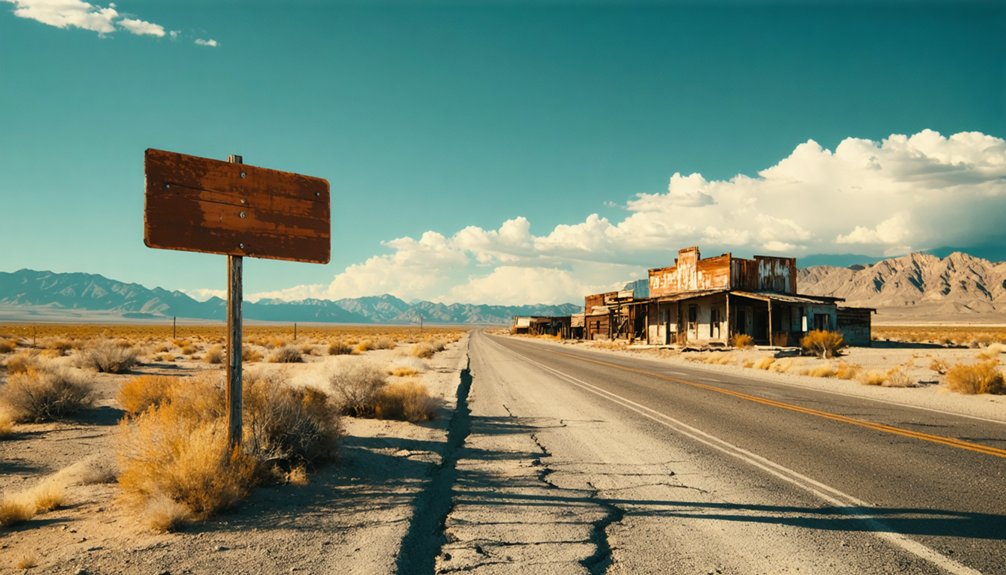
Tucked into the remote high desert of Washoe County, Vya is a ghost town in northwestern Nevada that’s barely a whisper of what it once was — and that’s exactly what makes it worth visiting.
Sitting roughly 10 miles east of the California state line, this forgotten settlement tells a story of hopeful homesteaders, relentless drought, and eventual abandonment.
Vya’s significance lies in what it represents — the raw, unfiltered reality of frontier life stripped of romantic mythology.
Vya doesn’t romanticize the past — it simply reveals it, raw and unfiltered.
You won’t find tourist traps or admission fees here. What you’ll find is silence, open sky, and crumbling structures that demand your imagination.
That ghost town allure is real. Vya offers you something increasingly rare: genuine solitude and an unscripted connection to history on your own terms.
Why Everyone Left Vya and Never Came Back
The story of why Vya failed isn’t complicated — drought simply won. Settlers arrived with genuine hope, but the harsh climate had other plans. Crops withered, livestock suffered, and ranching income dried up alongside the land itself.
You’d think a tight-knit community might push through, but economic struggles compounded every season. Without reliable income, families couldn’t justify staying. One by one, they packed their lives and left Long Valley behind.
By World War II, even the school closed — there weren’t enough children left to fill a classroom. That closure said everything.
When a community stops educating its young, it’s already gone in spirit.
What remains today are skeletal structures standing in silence, letting the desert tell the story settlers couldn’t finish.
The Ruins and Remnants Still Standing in Vya Today
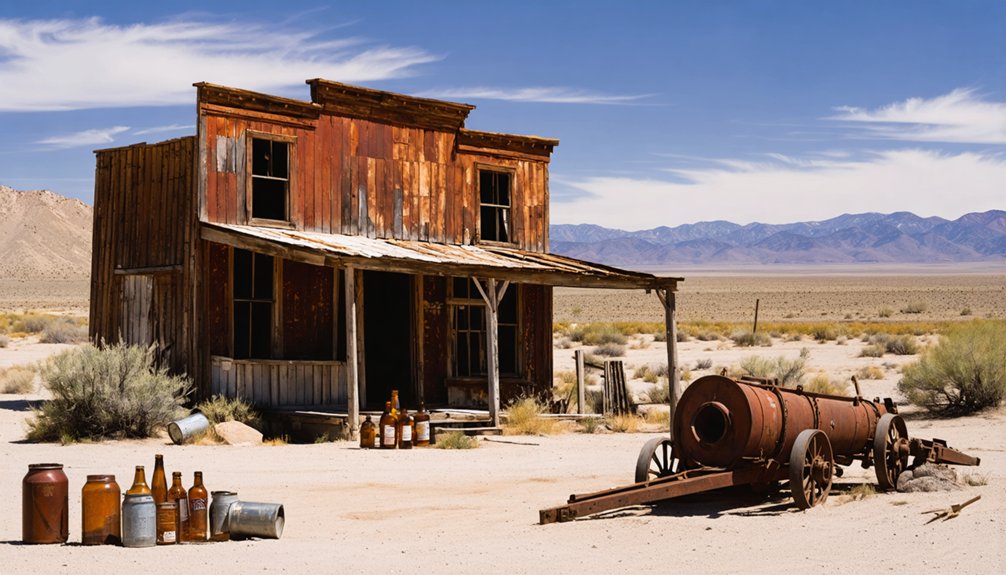
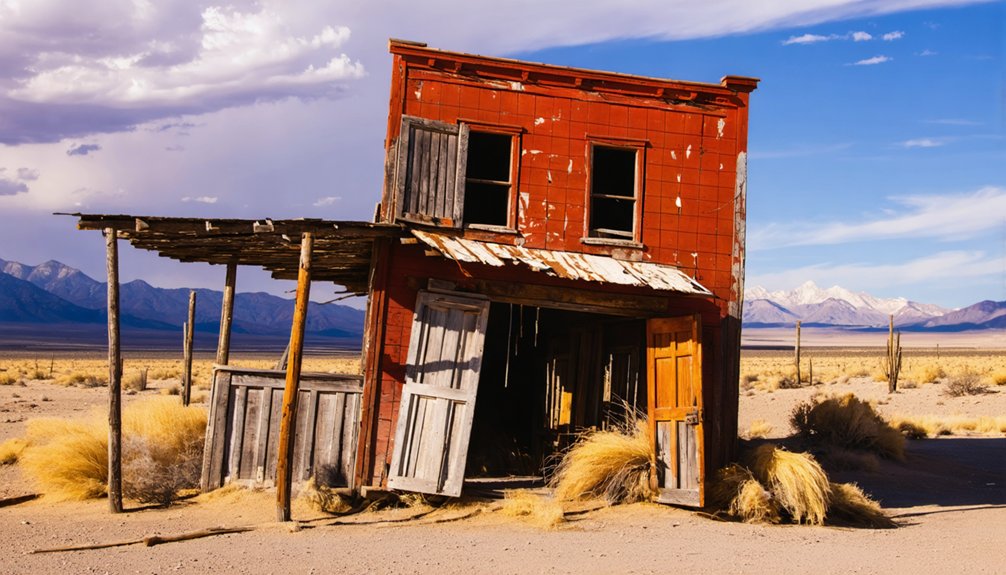
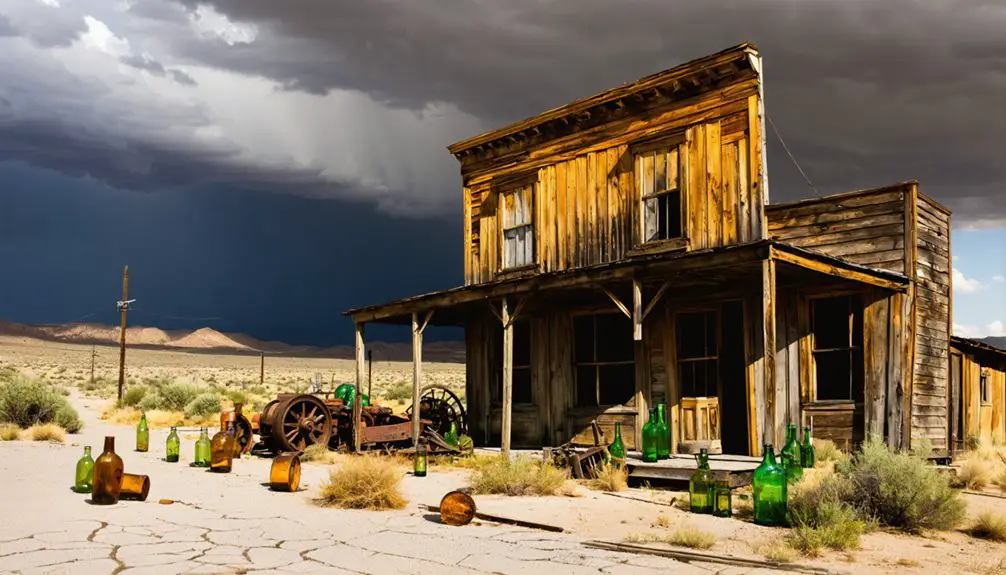
When you visit Vya today, you’ll find only fragments of the original buildings still standing, their weathered frames a quiet tribute to the families who once called this desert settlement home.
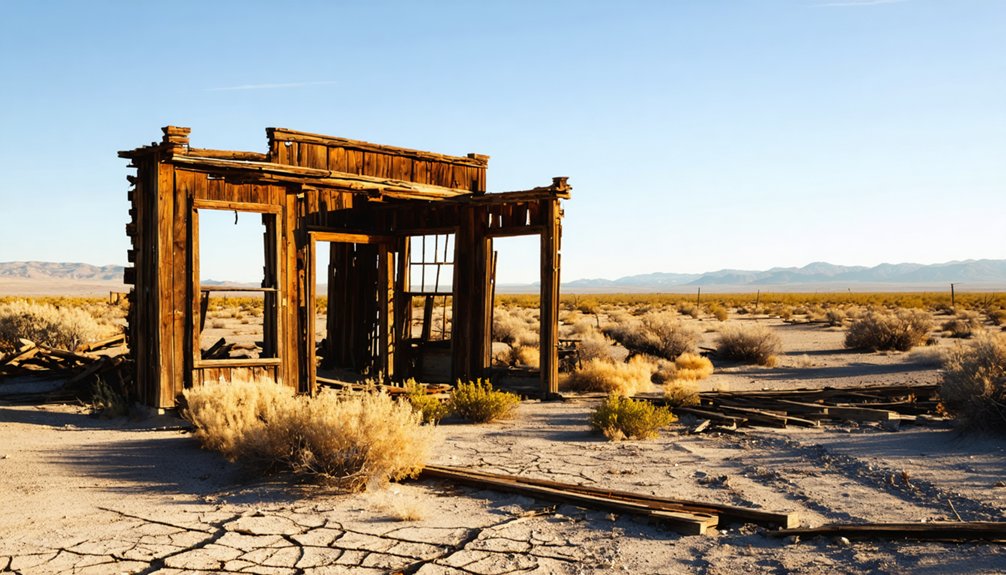
The structural remnants have endured decades of harsh Nevada climate, leaving skeletal wooden beams and crumbling walls scattered across the flat alluvial terrain.
As you walk the site, the visible homestead ruins paint a stark picture of a community that drought and hardship ultimately reclaimed.
Surviving Original Building Fragments
Although time and desert conditions have taken their toll, fragments of Vya’s original structures still stand as silent monuments to the community that once thrived here.
As you walk through the site, you’ll encounter weathered remnants that carry genuine historical significance, connecting you directly to the early homesteaders who carved out a life in this unforgiving desert landscape.
These abandoned structures tell a raw, honest story of ambition and hardship. You can examine crumbling walls and decayed foundations that once housed families, a school, and a general store.
The desert has reclaimed much of what existed, but what remains speaks volumes. Running your hand across sun-bleached timber or scattered stone gives you an immediate, visceral sense of Vya’s forgotten past that no photograph can fully capture.
Weathered Structural Remnants Today
Standing among Vya’s weathered remnants today, you’ll find skeletal structures that speak directly to the settlement’s rise and fall. The weathered architecture carries undeniable historical significance, each crumbling wall and collapsed roofline telling the story of early 20th-century homesteaders who bet everything on this remote Nevada landscape.
What remains isn’t much — fragments of buildings stripped bare by decades of desert wind, scorching summers, and freezing winters. Nature has systematically reclaimed what drought-defeated settlers left behind.
You’re fundamentally walking through an open-air timeline, where each deteriorating structure marks another family’s broken dream.
Photograph everything you can. These remnants won’t stand indefinitely, and visiting now means witnessing history before it completely dissolves back into the high desert floor from which it rose.
Visible Homestead Ruins Remaining
Scattered across Vya’s desert floor, the homestead ruins that remain tell an immediate, visceral story — collapsed walls, half-standing structures, and weathered timber frames frozen in various stages of decay.
As you walk through, ghost town exploration becomes deeply personal — you’re standing inside someone’s abandoned life.
Here’s what you’ll likely encounter:
- Crumbling adobe walls where families once sheltered from brutal desert winds
- Rotting wooden doorframes still upright, framing nothing but open sky
- Scattered foundation stones marking where kitchens and bedrooms once existed
- Rusted farm equipment half-buried beneath decades of windblown soil
- Broken fence posts stretching toward the horizon, defining boundaries nobody enforces anymore
Each fragment carries homestead history worth honoring.
You’re not just seeing ruins — you’re witnessing real human perseverance that ultimately couldn’t outlast the desert.
How to Get to Vya, Nevada Without Getting Stranded
Reaching Vya means committing to some of Nevada’s most unforgiving remote terrain, so you’ll want to prepare before you leave civilization behind.
Cell service vanishes quickly once you head into this ghost town history corridor, leaving you genuinely on your own.
Pack extra water, a basic car repair kit, and enough fuel to cover long stretches without service stations.
Desert survival isn’t dramatic until it suddenly is, so treat preparation as non-negotiable rather than optional.
Check weather conditions before departing, since desert climate swings fast and unpredictably.
Contact your local Bureau of Land Management office for current road conditions specific to the Vya area.
Share your full itinerary with someone trustworthy before you roll out, ensuring someone always knows where you’re headed.
What to Pack for a Remote Nevada Desert Road Trip
Packing smart turns that survival checklist into an actual road trip rather than a rescue story. Vya’s remoteness demands serious trip preparation before you leave pavement behind.
Pack smart or pack a rescue story — Vya’s remoteness doesn’t forgive unprepared travelers who leave pavement behind.
Cell service disappears fast out here, and the nearest help isn’t close. Your packing essentials determine whether this adventure stays memorable for the right reasons.
Load your vehicle with these non-negotiables:
- Extra water — at least one gallon per person daily
- Basic car repair kit — flat tires don’t care about your schedule
- Paper maps — GPS dies when signals vanish
- Snacks and a first aid kit — hunger and injuries don’t wait
- Layered clothing — desert temperatures swing violently between dawn and dusk
Freedom tastes better when you’re genuinely prepared for it.
Massacre Rim Dark Sky Sanctuary: the Best Detour From Vya
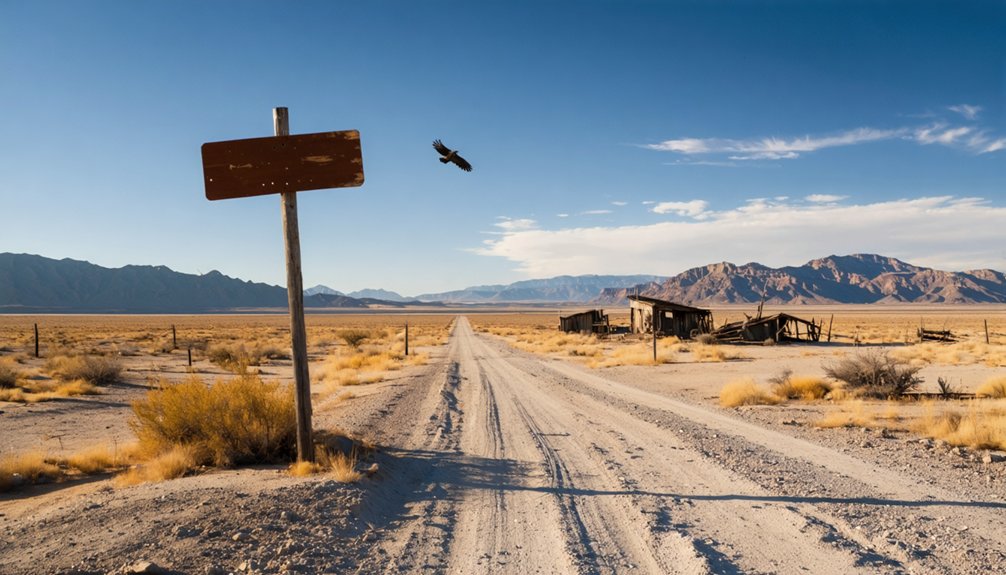
While you’re already out near Vya, skipping Massacre Rim Dark Sky Sanctuary would be a genuine mistake. This remote wilderness area earned designation as an International Dark Sky Sanctuary in 2019, joining only eleven such protected sites worldwide.
What makes Massacre Rim extraordinary is simple: zero light pollution. You’ll see the Milky Way stretched across the horizon in stunning clarity, something most people never experience in their lifetimes.
The same isolation that made Vya difficult to settle now works entirely in your favor.
Plan your visit around a new moon for maximum darkness. Since you’ve already packed water and emergency supplies for the Vya trip, you’re perfectly equipped for this detour.
Don’t rush it — these skies reward patience.
Closest Towns to Vya for Supplies and Cell Service
Before heading out to Vya, you’ll want to stock up on supplies, fuel, and emergency resources in one of the nearest towns, since long stretches of highway in this remote region offer no cell service or gas stations.
Knowing where to find reliable phone reception could make the difference between a minor inconvenience and a dangerous situation.
Plan your route carefully, identifying the closest towns where you can restock, refuel, and check in with someone back home.
Nearest Towns For Supplies
Heading out to Vya means accepting that you’ll be deep in one of Nevada’s most isolated corners, where cell service vanishes and gas stations are a distant memory.
Before you hit those open roads, stock up in nearby towns — your supply options are limited once you cross into this remote stretch of high desert.
Hit these spots before you lose civilization behind you:
- Cedarville, California – your last real grocery and fuel stop heading east
- Alturas, California – solid supply options including hardware and provisions
- Lakeview, Oregon – surprisingly well-stocked for a small town
- Reno, Nevada – stock up completely if you’re departing from the south
- Winnemucca, Nevada – reliable fuel and emergency supplies along Highway 95
Finding Cell Phone Service
Once you leave the supply towns behind, cell service disappears fast — and in Vya’s corner of northwestern Nevada, “fast” means practically the moment you turn onto the back roads.
Don’t count on your phone for navigation, emergencies, or connectivity options once you’re deep in Long Valley.
Before departing Cedarville or Alturas, download offline maps and confirm your route. Lovelock and Winnemucca offer stronger network coverage if you need reliable connectivity options before heading into the remote corridor.
Once you’re moving north toward Vya, those signals fade completely.
Tell someone your exact itinerary — where you’re going, which roads you’re taking, and when you expect to return.
That single step replaces everything your cell service would’ve otherwise handled. Out here, preparation isn’t optional; it’s your lifeline.
Fuel And Emergency Resources
Stocking up on fuel and supplies before reaching Vya isn’t just smart — it’s non-negotiable. The closest fuel stations sit miles away, and cell service vanishes long before you arrive. Freedom means being prepared.
Before you leave civilization behind, make sure you’ve handled these essentials:
- Fill your tank completely at the last fuel station — don’t gamble on fumes
- Pack emergency kits containing first aid supplies, flashlights, and basic repair tools
- Carry extra water — desert heat turns minor breakdowns into serious emergencies
- Download offline maps before you lose signal permanently
- Share your itinerary with someone who’ll notice if you don’t check in
The Bureau of Land Management offices can provide current road conditions.
Don’t skip that call — it could save your life.
Frequently Asked Questions
Who Were the Original Founding Settlers That Gave Vya Its Name?
Like pioneers planting seeds of legacy, Roy and Artie Wimer, alongside their daughter Vya, are the founding families forever etched into Vya history — you’ll find their spirit still whispering through the desert winds.
How Many International Dark Sky Sanctuaries Exist Worldwide Today?
You’ll find exactly eleven International Dark Sky Sanctuaries worldwide, making Massacre Rim truly special for stargazing tips, dark sky exploration, spotting nocturnal wildlife, and witnessing breathtaking celestial events under some of Earth’s most unspoiled, light-pollution-free skies.
What Is the Most Haunted Location Found Anywhere in Nevada?
Virginia City’s shadowy streets whisper haunted legends through crumbling halls where you’ll feel ghostly encounters chill your spine. It’s Nevada’s most haunted place, drawing free spirits who crave eerie adventures beneath moonlit, history-soaked skies.
How Many Beer Bottles Make up the Tom Kelly Bottle House?
You’ll be amazed to discover that Tom Kelly’s Bottle House features 50,000 beer bottles in its unique architecture! This incredible bottle house history showcases human creativity, giving you a sense of boundless freedom through its remarkable, unconventional construction.
How Many Nevada Ghost Towns Appear in Detailed Google Map Guides?
Hit the ground running with map navigation — you’ll find six Nevada ghost towns featured in detailed Google Map guides, giving you the perfect roadmap to explore rich ghost town history on your freewheeling adventure!
References
- https://mwg.aaa.com/via/road-trip/nevada-high-desert
- https://wanderingroadblog.com/nevada-road-trip-bucket-list/
- https://en.wikipedia.org/wiki/Vya
- https://www.onlyinyourstate.com/trip-ideas/nevada/ghost-town-road-trip-nv
- https://travelnevada.com/ghost-town/
- https://www.youtube.com/watch?v=PI7gqits6FY
- https://roadtrippers.com/magazine/dark-skies-and-ghost-towns-stops-on-a-spooky-nevada-road-trip/
- https://www.youtube.com/watch?v=jBgXMYH9XF0
- https://www.reddit.com/r/roadtrip/comments/15md7od/western_nevada_and_eastern_california_ghost_town/
- https://nvtami.com/2025/08/10/exploring-high-rock-canyon/