Planning a ghost town road trip to Kalaupapa means confronting one of America’s most sobering histories. You’ll need advance permits through the National Park Service, and you must book through Father Damien Tours before you arrive. Start your journey in Kaunakakai, trace Route 470 north toward towering cliffs, then choose your descent — by plane, mule, or foot. Over 8,000 people were exiled here and never left. There’s far more to uncover about this haunting peninsula.
Key Takeaways
- Kalaupapa requires advance permits through the National Park Service, with all visits conducted via organized tours booked through Father Damien Tours.
- Visitors can reach Kalaupapa by small plane, mule ride, or hiking a steep 1,700-foot trail down the cliffs.
- The road trip begins in Kaunakakai, heading west on Maunaloa Highway before taking Route 470 north toward the peninsula’s cliffs.
- Visit between April and October for drier weather, arriving early morning to avoid midday heat during your guided tour.
- Pack water, sunscreen, sturdy closed-toe shoes, a hat, and a light layer for shifting coastal winds during your visit.
Why Kalaupapa Qualifies as Hawaii’s Most Haunting Ghost Town
Most ghost towns fade quietly—mills shut down, workers move on, and nature slowly reclaims the buildings.
Kalaupapa didn’t fade. It was sealed off by law, surrounded by 2,000-foot cliffs and open ocean, and filled with more than 8,000 people who never chose to be there.
What you’ll find here isn’t abandonment in the ordinary sense. The haunting landscapes carry Kalaupapa memories that stretch from 1866 through decades of forced exile under Hawaiian public health policy.
Father Damien lived and died here. Families were separated here. People built lives here because they’d no alternative.
That weight makes Kalaupapa different from every other ghost town on this list. You’re not visiting a ruin—you’re entering a place that still remembers what was taken from it.
The Forced Exile That Shaped Kalaupapa’s History
When you walk through Kalaupapa, you’re standing inside a policy, not just a place.
In 1866, King Kamehameha V signed the Act to Prevent the Spread of Leprosy, and Hawaiian authorities began forcibly removing those diagnosed with Hansen’s disease to this remote peninsula.
For more than a century, over 8,000 people lived and died here, not by choice, but by law.
Banishment Under Kamehameha V
In 1865, King Kamehameha V signed the Act to Prevent the Spread of Leprosy, setting in motion one of Hawaii’s most devastating chapters.
Kamehameha’s decree authorized authorities to forcibly remove anyone suspected of carrying Hansen’s disease from their homes, families, and communities.
Beginning in 1866, thousands of Native Hawaiians were exiled to Kalaupapa’s remote peninsula, surrounded by ocean and towering cliffs that made escape virtually impossible.
You’re standing at the threshold of a place where people lost every freedom they’d ever known — not through war or conquest, but through a government policy that treated illness as a crime.
More than 8,000 people died here, their lives forever shaped by a signature on a single document.
Decades Of Enforced Isolation
What began as a single act of legislation stretched into more than a century of enforced exile, with Kalaupapa’s isolation lasting from 1866 all the way to 1969. For over 100 years, more than 8,000 people — mostly Native Hawaiians — lost their freedom simply because they were sick. Families were separated. Lives were redirected by government decree rather than personal choice.
The isolation impact reached far beyond physical confinement. It eroded identity, severed community ties, and left a cultural legacy that modern Hawaii still reckons with today.
When you walk through Kalaupapa, you’re not just visiting a preserved settlement. You’re standing inside a place where human dignity was tested for generations — a reminder of what happens when fear overrides freedom.
Kalaupapa Permit Requirements and Age Restrictions
Before you can set foot in Kalaupapa, you’ll need to secure a permit, as the National Park Service tightly controls access to protect both the site’s integrity and its remaining residents.
Visitors must be over 16 years old, a restriction that reflects the gravity of the settlement’s history and the sensitivity of the experience.
You’ll book access through an organized tour — Father Damien Tours is the recognized operator — making independent exploration impossible by design.
Permits Are Required
Unlike most national parks where you can simply show up and explore, Kalaupapa requires advance permits before you set foot on the peninsula. The permits process runs through the National Park Service, and you’ll need to secure approval well before your trip.
Don’t wait until the last minute — availability is limited, and demand is real.
Visitor guidelines are strict by design. Kalaupapa isn’t a casual stop; it’s a protected memorial where more than 8,000 people lived and died under forced exile. The rules honor that history.
Independent exploration isn’t allowed, so your permit connects directly to an organized tour. Respecting these guidelines isn’t just a formality — it’s how you earn the privilege of witnessing one of Hawaii’s most profound and haunting places.
Minimum Age Restrictions
Kalaupapa enforces a minimum age requirement of 16 years old for all visitors, and this restriction applies without exception. The National Park Service upholds this rule out of respect for the settlement’s deeply sensitive history. More than 8,000 people suffered forced exile here, and their legacy deserves a visitor experience grounded in maturity and reflection.
If you’re planning this road trip with younger family members, you’ll need to arrange alternative care before making the journey to Molokaʻi. There’s no flexibility on this policy, regardless of circumstances.
Before you commit to routing your itinerary around Kalaupapa, confirm that everyone in your group meets the minimum age threshold. Planning ahead protects both your schedule and the sacred character of this extraordinary place.
Booking Tour Access
Securing access to Kalaupapa requires more than marking a date on your calendar—you’ll need an official permit, and that permit comes exclusively through an organized tour.
Father Damien Tours operates as the designated provider, handling both tour logistics and permit coordination on your behalf. You can’t simply drive in, wander the grounds, or explore independently—the National Park Service enforces strict access rules that honor the site’s sensitive historical context and respect the privacy of remaining residents.
Book early, because availability is genuinely limited. Visitors must be at least 16 years old, no exceptions.
Once confirmed, you’ll receive guidance on arrival methods—mule ride, foot trail, or small aircraft. Plan for a full day. This place earned its weight in history, and it deserves your full attention.
How to Route Across Molokaʻi Before You Reach the Peninsula
Most visitors begin their Molokaʻi loop in Kaunakakai, the island’s modest commercial hub, before heading west on Maunaloa Highway (Route 460).
Along this stretch, you’ll find some of Molokaʻi’s most understated Molokaʻi highlights, including Kapuaiwa Coconut Beach Park, planted in the 1860s as a royal grove, and the quiet Kiowea Beach Park.
These aren’t tourist traps — they’re breathing room before heavier history arrives.
Turn north onto Route 470 when you’re ready to approach the peninsula.
Historical landmarks line the way, including the Coffees of Hawaii Molokai Plantation and overlook points above the cliffs.
You won’t drive down into Kalaupapa — that’s the point. The road ends, the land drops, and the weight of what you’ve come to see begins to settle.
Your Three Options for Getting Down to Kalaupapa
Once you’ve made your way across Molokaʻi’s quiet roads and reached the trailhead above the peninsula, the road itself simply ends — and that’s intentional.
To reach Kalaupapa, you’ve got three choices: fly directly onto the peninsula’s small airstrip, ride the famous mules down a switchback-laden trail that drops nearly 1,700 feet, or hike that same steep path on foot.
Each option demands something from you, which feels fitting for a place defined by the hardship of those who once had no choice in coming here at all.
Fly Into The Peninsula
Because Kalaupapa sits walled off by cliffs and ocean, you can’t simply drive down to the peninsula — you’ll need to choose one of three ways in: by small plane, by mule, or on foot.
Flying in delivers the fastest arrival and frames the cultural significance of the settlement immediately. From the air, you’ll see exactly why this peninsula became a place of enforced exile — ocean on three sides, sheer cliffs behind, nowhere to go.
That first aerial view carries weight before you’ve even landed.
Small planes depart from Molokaʻi’s topside airport and touch down directly on the peninsula’s airstrip. The visitor experience begins the moment you step off, joining a mandatory guided tour that controls access and honors the site’s deeply human history.
Ride The Famous Mules
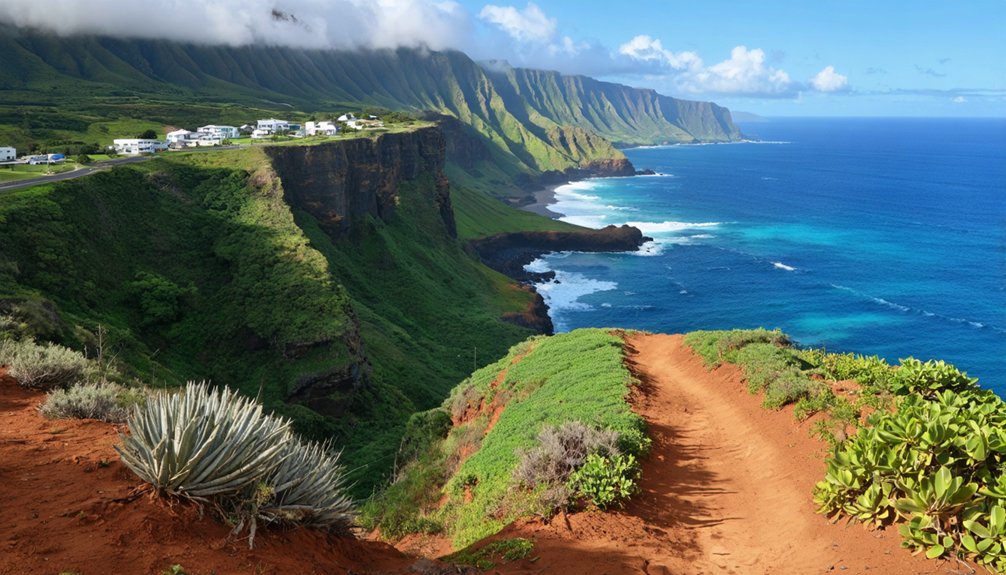
Flying in is the quickest path down, but the mule ride is the one most travelers remember. The descent covers 3.5 miles and 26 switchbacks along cliffs dropping 2,000 feet to the sea.
Mule history here runs deep — these animals carried supplies and patients when no other route existed. Today, the scenic views on the way down remain unchanged.
Your three access options:
- Mule ride – the signature experience, guided along the historic switchback trail
- Hiking – descend on foot at your own pace down the same steep path
- Small aircraft – fly directly onto the peninsula (covered in the previous section)
Whichever route you choose, a permit and guided tour are mandatory once you arrive below.
Hike The Steep Trail
If you’d rather earn the view, the trail down is waiting. The same path the mules use drops roughly 3.5 miles with 26 switchbacks along Molokaʻi’s towering cliffs. It’s steep, relentless, and genuinely demanding — but it puts you in direct physical relationship with a landscape that once swallowed people whole.
Hiking safety matters here more than on most trails. You’ll descend over 1,600 feet, and your knees will feel every step on the return climb. Check trail conditions before you go, wear proper footwear, and carry enough water. The exposure is real.
You still need a permit and must join the guided tour once you reach the bottom. Freedom here comes with responsibility — to your body and to the history beneath your feet.
What the Father Damien Tour Actually Covers
Once you’re inside Kalaupapa, the Father Damien Tour takes you through the full weight of the peninsula’s history—this isn’t a highlights reel, but a structured journey through the places where more than 8,000 people lived, suffered, and died in forced exile.
Father Damien’s legacy anchors the experience, giving Kalaupapa’s significance a human face amid the grief.
The tour typically covers:
- Saint Philomena Church, where Father Damien ministered and his original burial site remains
- Kalawao, the original settlement side, abandoned and overtaken by jungle
- The cemetery grounds, where thousands of exiled residents are interred
You’ll leave understanding that this peninsula wasn’t just a place of suffering—it was where people fought to preserve their dignity against a policy that stripped it away.
Other Molokaʻi Ghost Towns Worth Adding to the Route
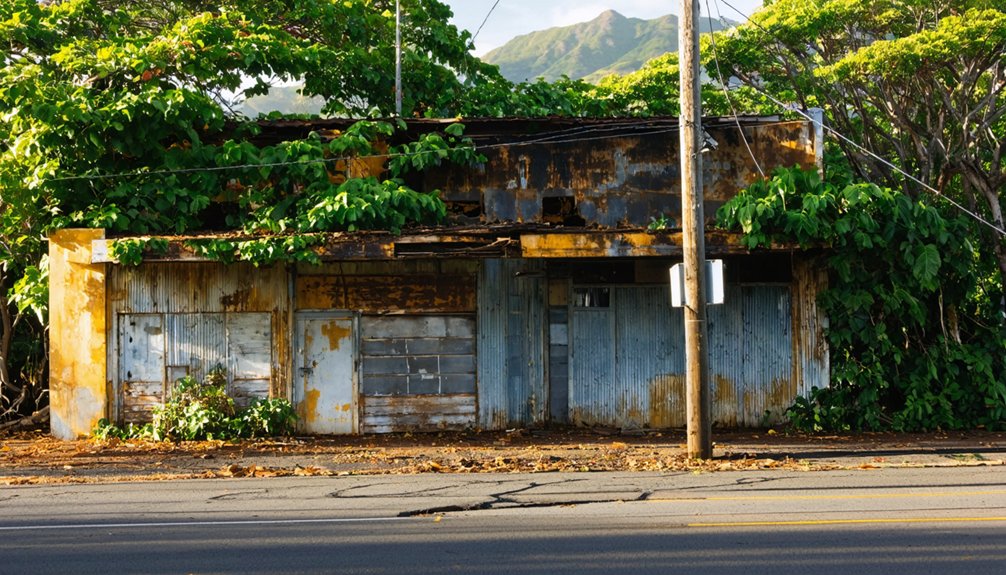
Kalaupapa doesn’t have to be where your Molokaʻi ghost-town story ends. Drive west toward Maunaloa, a former plantation town that once hummed with pineapple industry life.
Today, its quiet streets and shuttered storefronts carry the weight of economic decline — a different kind of abandonment, but no less real. It fits your route naturally and rewards a slow walk.
Back on the north shore, Kalawao ruins mark the peninsula’s original settlement site, predating the more familiar Kalaupapa village.
It’s where the exiled first arrived, and remnants still stand against that dramatic cliffside backdrop.
Together, these stops deepen your understanding of Molokaʻi’s layered history — isolation shaped by policy, industry, and geography.
You’re not just passing through; you’re reading the island on its own terms.
When to Visit Kalaupapa for the Best Conditions
Timing your visit to Kalaupapa matters more than it might for a typical Hawaii stop. The peninsula’s north-shore exposure means weather conditions shift dramatically by season. Summer brings calmer seas and clearer skies, making it the best season for the mule descent and outdoor exploration.
Consider these conditions before booking:
- April through October offers drier, more stable weather with lower winds along the cliffs.
- Winter months bring heavier rainfall and rough swells that can affect trail safety and visibility.
- Early morning arrivals help you avoid midday heat on the switchback trail.
Because access requires advance permits and a guided tour, you can’t afford to arrive unprepared.
Check conditions, lock in your reservation early, and respect the land’s weight before you descend.
What to Bring for a Full Day at Kalaupapa
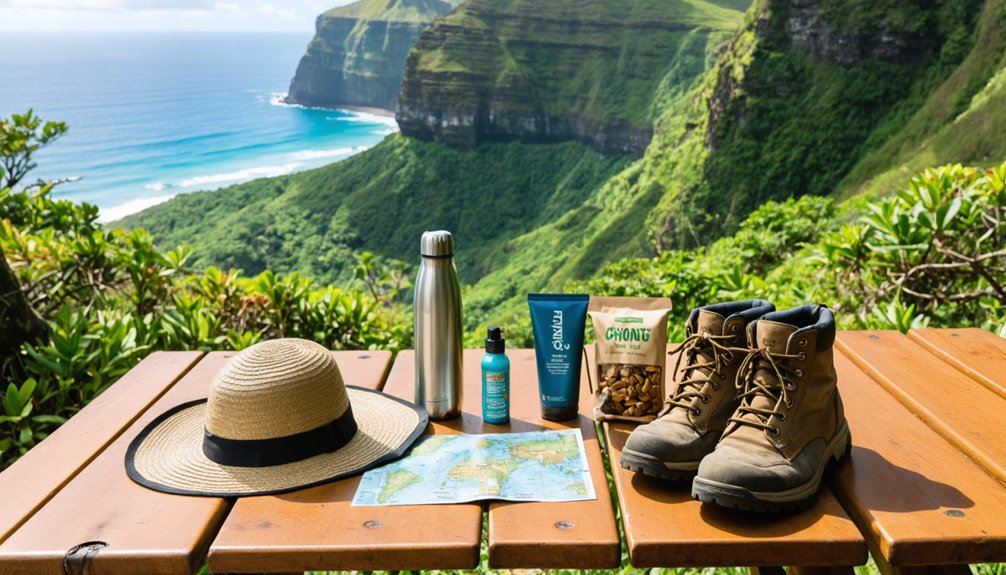
Because you’ll spend most of a full day traversing remote terrain with no stores, no quick exits, and a history that deserves your full presence, packing thoughtfully isn’t optional—it’s part of respecting the place itself.
Your Kalaupapa essentials start with water—carry more than you think you’ll need. Bring sunscreen, a hat, and sturdy closed-toe shoes suitable for uneven ground. Pack a light layer since coastal winds shift quickly. A small backpack keeps your hands free throughout the guided tour.
Pack water, sunscreen, a hat, and sturdy shoes—then add a light layer for the shifting coastal winds.
Visitor tips worth heeding: leave your phone on silent and bring a camera with spare storage—the landscape and memorials reward documentation. Carry cash since card readers aren’t guaranteed.
Most importantly, bring patience and humility. This peninsula held 8,000 lives. You’re walking through their story.
How Kalaupapa Stands Apart From Every Other Hawaiian Ghost Town
Once you’ve packed your bag and steeled yourself for the day, you’ll quickly realize that no checklist fully prepares you for what Kalaupapa actually *is*—and more pointedly, what it isn’t.
Unlike Hawaii’s other ghost towns, the isolation impact here wasn’t lava or economic collapse. It was policy—government-enforced exile that separated over 8,000 people from everything they knew.
What distinguishes Kalaupapa’s legacy from every comparable site:
- Lava towns like Kapoho and Kaimū were erased by nature, not human decree
- Plantation towns like Maunaloa declined through industry, not persecution
- Kalaupapa held living people under enforced confinement until 1969
You’re not walking through ruins. You’re walking through consequence—a place where geography became a prison, and survival became resistance.
Frequently Asked Questions
Can Visitors Stay Overnight Inside Kalaupapa National Historical Park?
Over 8,000 souls shaped Kalaupapa’s historical significance. You can’t stay overnight — accommodation options don’t exist for visitors. You’ll experience this sacred, isolated peninsula only through a guided day visit, honoring its profound, freedom-stripped past respectfully.
Are There Restroom Facilities Available Throughout the Kalaupapa Peninsula?
The knowledge base doesn’t confirm specific restroom locations or facility maintenance details for Kalaupapa. Since you’ll explore this historically sacred peninsula on a guided tour, your operator can best address those practical needs beforehand.
Is Photography Permitted at Gravesites and Memorials Within Kalaupapa?
Like walking on hallowed ground, you’ll want to tread carefully—photography etiquette matters deeply here. You can photograph gravesites and memorials, but respectful practices mean always prioritizing sensitivity over the perfect shot at Kalaupapa.
Do Any Remaining Residents Still Live Permanently at Kalaupapa Today?
Yes, a small number of elderly survivors still call Kalaupapa home. When you explore Kalaupapa history, you’ll find that resident experiences reflect extraordinary resilience — these individuals chose to stay, reclaiming a place once defined by forced exile.
Are Guided Tours Conducted in Languages Other Than English at Kalaupapa?
As it happens, the knowledge available doesn’t confirm guided tour options beyond English, so you’d want to contact the park directly about language accessibility before you visit this profoundly sacred, historically-layered place.
References
- https://nvtami.com/2023/04/26/big-island-hawaii-ghost-towns/
- https://www.youtube.com/watch?v=3tGSM9Xl-4M
- https://www.youtube.com/watch?v=daDv94EEpqs
- https://en.wikipedia.org/wiki/List_of_ghost_towns_in_Hawaii
- https://www.nps.gov/kala/planyourvisit/index.htm
- https://www.recreation.gov/camping/gateways/2785
- https://www.mysteries-of-hawaii.com/blog/the-kalaupapa-ghost
- https://www.roadsideamerica.com/tip/1636
- https://www.hecktictravels.com/kalaupapa-hawaii/
- https://www.youtube.com/watch?v=Wb5gKrD7cAk