If you’re planning a ghost town road trip, Kellyville, Texas is worth the detour. It’s just four miles west of Jefferson along Highway 49, making it an easy half-day adventure through classic East Texas scenery. Founded in 1848, this former iron foundry town burned in 1880 and never recovered. A historical monument and two cemeteries are all that remain. Stick around and you’ll uncover everything you need to make the most of your visit.
Key Takeaways
- Kellyville is four miles west of Jefferson via Texas Highway 49, making Jefferson an ideal base for food and fuel.
- The ghost town features a historical monument and two cemeteries, offering rich insight into East Texas’s industrial and cultural past.
- Metal detection hobbyists can search for iron-era artifacts from the 1880 foundry fire, but must follow Texas state regulations.
- Pair the visit with nearby Caddo Lake State Park for kayaking, fishing, hiking, and wildlife viewing among cypress groves.
- Spring and fall offer the best visiting conditions, with mild temperatures, fewer crowds, and scenic natural surroundings.
What Is Kellyville, Texas and Why Visit?
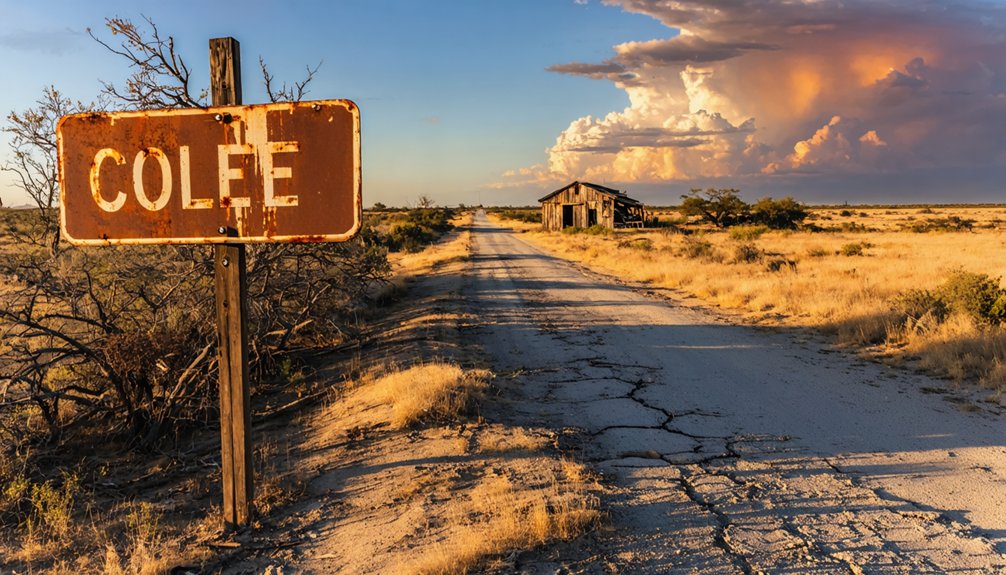
Kellyville, Texas, is a ghost town sitting four miles west of Jefferson in Marion County, once a thriving industrial hub that’s now little more than a historical monument and two aging cemeteries. Founded in 1848 by Zachariah Lockett, it grew into a serious iron foundry operation before a devastating 1880 fire erased it from the map.
Its historical significance draws curious travelers who want something beyond polished museums and scripted tours. You’ll find raw, unfiltered history here — abandoned ground steeped in ghost stories, industrial ambition, and quiet decay.
Whether you’re a history enthusiast, a metal detection hobbyist, or simply someone chasing roads less traveled, Kellyville offers an honest glimpse into Texas’s forgotten past without the crowds or the commercialism.
How Kellyville Grew From an 1848 Iron Foundry
What started as a modest wagon repair shop in 1848 grew into one of East Texas’s most ambitious industrial ventures. Zachariah Lockett and John Stewart founded the original operation, but when George A. Kelly purchased it in 1860, everything changed.
Kelly transformed the simple repair shop into a full-scale iron manufacturing hub. He added smelters, furnaces, and expanded production capacity to include iron plows, farming tools, and civilian stoves.
Kelly turned a humble repair shop into a thriving iron manufacturing hub, producing plows, tools, and stoves.
The operation didn’t just make products — it sparked community growth, drawing workers and families to the area and establishing Kellyville as a legitimate settlement.
You’re fundamentally walking through the birthplace of regional industry when you visit. That small wagon shop became the engine that built an entire community from the East Texas soil up.
The Fire of 1880 That Erased a Thriving Town
When you picture Kellyville at its peak, it’s hard to imagine how quickly a single fire in 1880 could silence all those clanging furnaces and busy workshops.
The blaze tore through the foundry, destroying equipment and infrastructure that George Kelly had spent decades building.
With nothing left to salvage, Kelly packed up and relocated his operations to Longview, and the town that had thrived around his industry simply faded away.
Fire’s Devastating 1880 Impact
By 1880, Kellyville had grown into a thriving industrial hub, its foundry producing iron plows, stoves, and farming equipment that served the entire region.
Then a devastating fire tore through the complex, destroying buildings, equipment, and infrastructure in what must have felt like an unstoppable force. Workers faced lost livelihoods overnight, watching years of hard-built industry collapse into ash and rubble.
George Kelly made the difficult decision to relocate operations to Longview, taking the town’s economic heartbeat with him. Without the foundry, Kellyville had no reason to survive.
You can imagine the community resilience it took for remaining residents to face such sudden collapse. Buildings emptied, families scattered, and a once-productive settlement began its quiet transformation into the ghost town you’ll explore today.
Equipment And Infrastructure Lost
The 1880 fire didn’t just erase buildings — it wiped out an entire ecosystem of specialized industrial equipment that had taken decades to assemble. The smelters, furnaces, and iron-working machinery represented serious capital investment and irreplaceable craftsmanship.
When you consider the lost machinery left smoldering in the ruins, you begin grasping the true historical significance of this disaster.
Kelly’s foundry had produced plows, stoves, and farming tools that sustained regional trade across East Texas. Rebuilding wasn’t simply a matter of reconstructing walls — it meant sourcing and reinstalling complex industrial systems that took years to develop originally.
Kelly recognized the impossible math of starting over in Kellyville. Instead, he relocated operations to Longview, effectively signing the town’s death certificate and leaving the community with nothing but ash and silence.
Kelly’s Relocation To Longview
After watching his foundry burn to the ground in 1880, George A. Kelly made a decisive choice — he packed up and rebuilt in Longview.
This Longview shift marked the end of Kellyville’s industrial heartbeat. Kelly’s legacy didn’t die in those ashes; it simply moved on, leaving the town without its driving force.
When you visit today, consider what vanished after Kelly departed:
- The skilled workers who followed employment elsewhere
- The commercial activity that once drew regional traders
- The infrastructure supporting surrounding farmsteads
- The community identity anchored to industrial production
You’re standing where ambition once roared with furnace fire.
Kelly’s exit wasn’t just a business relocation — it was the quiet death sentence of an entire town that couldn’t survive without him.
How To Get To Kellyville From Jefferson
Getting to Kellyville from Jefferson is a straightforward four-mile drive west along Texas Highway 49. You’ll cruise through classic East Texas scenery, passing through canopied roads that make the scenic routes feel more like an adventure than a commute.
Before heading out, fuel up at one of Jefferson’s charming spots for local dining, since Kellyville won’t offer any restaurants waiting on the other side.
Once you’re on Highway 49, keep your eyes open for the historical monument marking the former town site. You won’t need a map app or complicated directions—just head west and let the road do the work.
Head west on Highway 49 and watch for the historical monument—no map app required.
The drive itself sets the mood perfectly, easing you into the quiet, untamed history that Kellyville’s ghost town atmosphere delivers.
The Historical Monument and Remains Still on Site
When you arrive at the site of Kellyville, you’ll find a historical monument marking where this once-thriving industrial town stood.
Two cemeteries remain on the property, one holding the Kelly family burial plot and another designated for black community members, offering you a quiet glimpse into the town’s layered past.
If you’re a metal detection enthusiast, you’ll want to bring your gear, as the grounds attract treasure hunters hoping to uncover artifacts from Kellyville’s iron-foundry era.
Historical Monument Location
Two remnants of Kellyville’s past still stand on the site today: a historical monument and a pair of cemeteries.
The monument captures the historical significance of this once-thriving industrial hub, connecting you directly to local legends of iron foundries and frontier enterprise.
When you visit, you’ll find:
- A roadside historical marker along Texas Highway 49
- Details about Zachariah Lockett and George Kelly’s founding roles
- Accounts of the 1880 fire that ended Kellyville’s industrial era
- Directions pointing toward the remaining cemetery plots nearby
Standing at the marker, you can almost hear the clang of iron plows being forged.
It’s a powerful, unfiltered connection to Texas history that no museum can replicate.
Pull over, read every word, and let Kellyville’s story sink in.
Two Remaining Cemeteries
Beyond the historical marker, 2 cemeteries quietly preserve what the 1880 fire couldn’t erase. These cemetery stories connect you directly to Kellyville’s layered past in ways no monument can fully capture.
The first cemetery holds the Kelly family burial plot, where the foundry’s driving force rests permanently in East Texas soil. Walking among these graves, you’ll feel the historical significance of a family whose iron plows shaped regional agriculture before disaster scattered their legacy to Longview.
The second cemetery carries equal weight — designated for Kellyville’s Black community members, it stands as quiet testimony to lives often overlooked in standard historical narratives.
Both sites demand respectful exploration. Bring water, wear sturdy shoes, and take time to read each marker. These graves tell Kellyville’s complete story.
Metal Detection Opportunities
For metal detection enthusiasts, Kellyville’s scorched earth holds genuine promise — a foundry fire that consumed buildings in 1880 leaves behind exactly the kind of buried iron, hardware, and period artifacts that make a site worth sweeping.
Treasure hunting here connects you directly to mid-1800s industrial history.
Before you unpack your detector, know what you’re working with:
- The Kelly Foundry produced iron plows, stoves, and farming equipment — all potential targets
- Fire debris frequently drives metal deeper, rewarding patient, systematic sweeping
- Metal detecting near the historical monument grounds your finds in documented context
- Always secure landowner permission before detecting on or near cemetery boundaries
Kellyville rewards the prepared hunter — someone who researches before they dig and respects the history beneath their feet.
The Two Cemeteries Still Standing at Kellyville
While much of Kellyville has vanished into the East Texas undergrowth, two cemeteries still stand as the town’s most tangible remnants. Their cemetery significance goes beyond simple burial grounds — they’re living chapters of Kellyville’s divided social history.
The first cemetery holds the Kelly family plot, where the foundry’s founding family rests beneath weathered stones. You’ll find historical preservation efforts evident here, with markers still readable despite decades of neglect and encroaching vegetation.
The second cemetery was designated for Kellyville’s Black community members, a sobering reminder of the era’s racial boundaries.
Both sites deserve your respectful attention. Walk slowly, read the names, and consider the lives behind them. These graves outlasted the fire, the factory, and the town itself — and that means something.
Metal Detecting at Kellyville: Permits, Rules, and What People Find
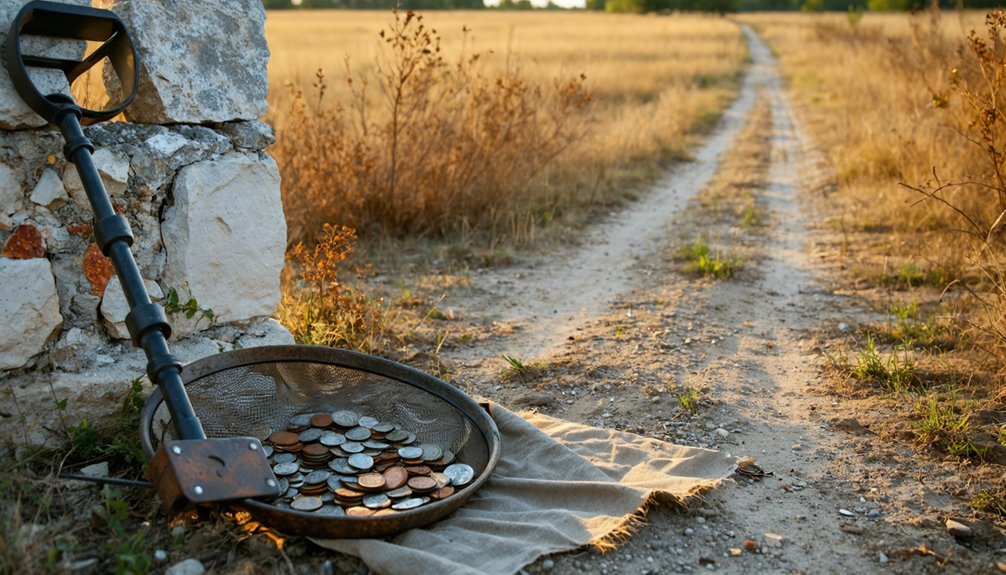
Kellyville’s ghost town status makes it a magnet for metal detecting enthusiasts hoping to uncover remnants of the old foundry era. Before you grab your detector and start treasure hunting, know the ground rules:
- Always secure landowner permission before detecting on private property.
- Check Texas state regulations regarding artifact removal from historical sites.
- Respect both cemeteries and never detect within burial grounds.
- Document and photograph anything significant you discover.
The site’s industrial history means you might find iron fragments, old hardware, or tools from Kelly’s foundry operations.
Treasure hunting here connects you directly to mid-1800s Texas manufacturing culture.
Kellyville rewards patient, respectful explorers who understand that preserving historical context matters as much as the thrill of discovery itself.
Pair Your Trip With Caddo Lake State Park
After you’ve finished poking around Kellyville’s ghost town remnants, Caddo Lake State Park sits just minutes away and makes the perfect companion stop.
Caddo Lake carries its own historical significance as one of Texas’s most hauntingly beautiful natural wonders, and the locals will gladly share ghost stories and legends tied to its cypress-draped waters.
Caddo Lake is one of Texas’s most hauntingly beautiful natural wonders, steeped in legend and lore.
You’ll find no shortage of outdoor activities here — kayaking, fishing, hiking, and wildlife viewing keep you busy well beyond a single afternoon.
Watch for herons, alligators, and wood ducks threading through ancient cypress groves.
The lake’s murky, moss-covered atmosphere feels like a natural extension of Kellyville’s eerie energy, making the two stops a seamless pairing.
Pack a lunch, bring your binoculars, and give yourself a full day to explore both.
Best Time of Year To Visit Kellyville and East Texas
East Texas rewards visitors most generously in spring and fall, when mild temperatures make outdoor exploration genuinely comfortable.
These best visiting seasons let you roam cemeteries, read historical markers, and wander the grounds without battling brutal heat or unpredictable storms.
Keep these local weather considerations in mind before you go:
- Spring (March–May): Wildflowers bloom, temperatures stay mild, and Caddo Lake turns lush and green.
- Fall (September–November): Cooler air returns, crowds thin, and foliage adds color to the landscape.
- Summer: Expect intense heat and humidity that’ll drain your energy fast.
- Winter: Mild but occasionally wet, with fewer tourists competing for space.
Pack layers in shoulder seasons, and you’ll enjoy every moment outdoors.
Frequently Asked Questions
Are There Any Guided Tours Available Specifically for Kellyville Ghost Town Visitors?
No specific guided ghost tours exist for Kellyville, but you’ll uncover its historical significance independently! Explore the monument, wander through cemeteries, and let the freedom of self-discovery bring this fascinating Texas ghost town’s rich story alive.
Is There an Admission Fee to Access the Kellyville Historical Site?
You won’t pay an admission fee to explore Kellyville’s historical significance! You’ll freely roam the monument and cemeteries, enhancing your visitor experience with unrestricted access to this fascinating ghost town’s rich, untamed history.
Can Visitors Legally Remove Artifacts or Soil Samples From Kellyville?
You absolutely can’t take a single speck from Kellyville! Removing artifacts carries serious legal implications, and artifact preservation laws protect the site. Respect the history, explore freely, but leave everything exactly as you’ve found it.
Are the Kellyville Cemeteries Maintained or Accessible to the General Public?
You can access both cemeteries at Kellyville, where cemetery history and local legends come alive. Explore the Kelly family plot and the black community burial ground, each offering a deeply personal connection to this forgotten town’s past.
Is Overnight Camping Permitted Anywhere Near the Kellyville Historical Site?
Like a beacon for adventurers, Caddo Lake State Park offers nearby campgrounds where you can set up camp! Always check camping regulations beforehand, as the Kellyville historical site itself doesn’t permit overnight camping.
References
- https://www.ghosttowns.com/states/tx/kellyville.html
- https://www.tshaonline.org/handbook/entries/kellyville-tx
- https://en.wikipedia.org/wiki/List_of_ghost_towns_in_Texas
- https://texashistory.unt.edu/ark:/67531/metapth61101/m1/168/
- https://texashistory.unt.edu/ark:/67531/metapth61101/m1/171/
- https://texashistory.unt.edu/ark:/67531/metapth61101/
- https://detectingtreasures.com/best-ghost-towns-in-texas-to-metal-detect/
- https://mix931fm.com/east-texas-ghost-towns/
- https://www.facebook.com/groups/873928379320499/posts/26354189527534367/
- https://texashistory.unt.edu/ark:/67531/metapth61101/m1/155/