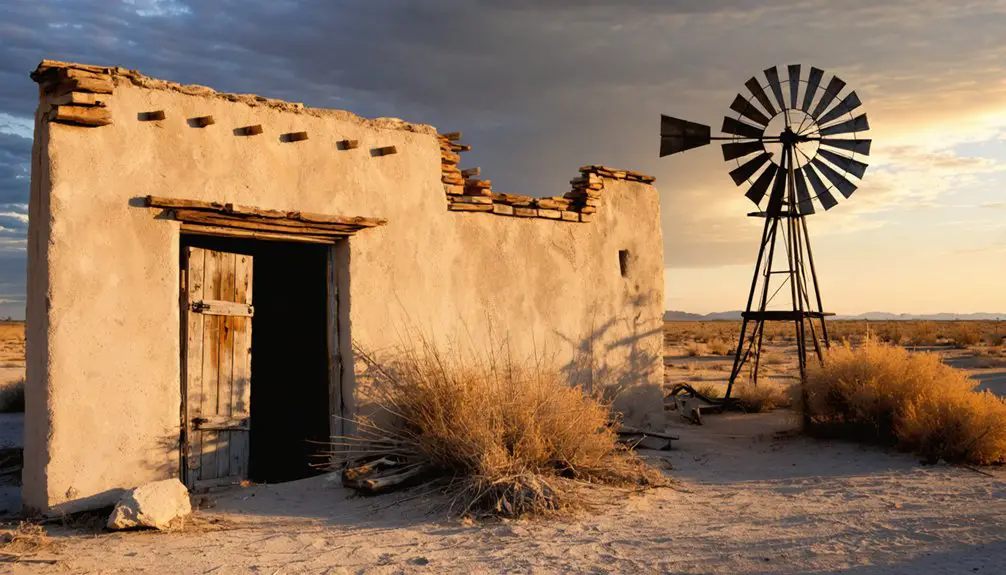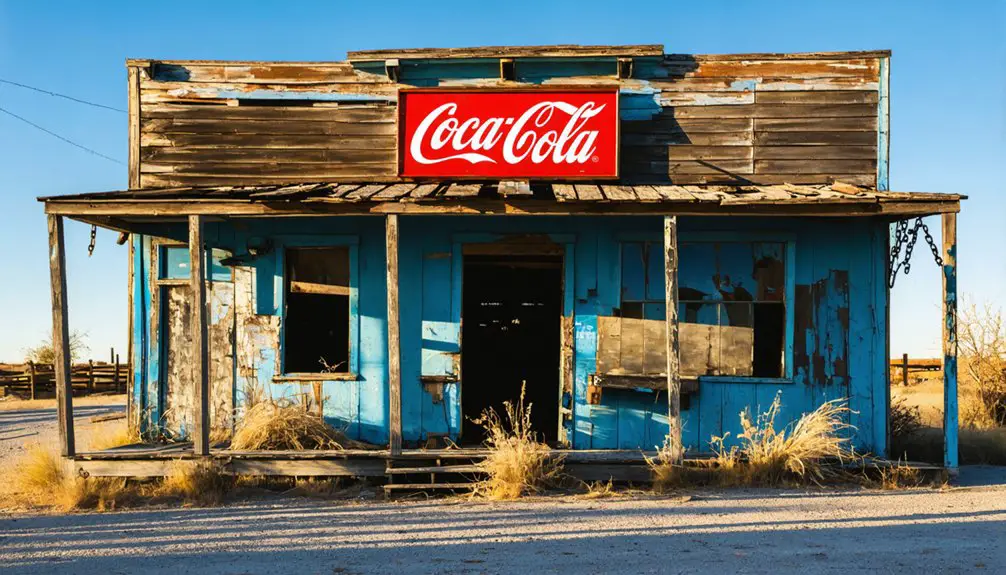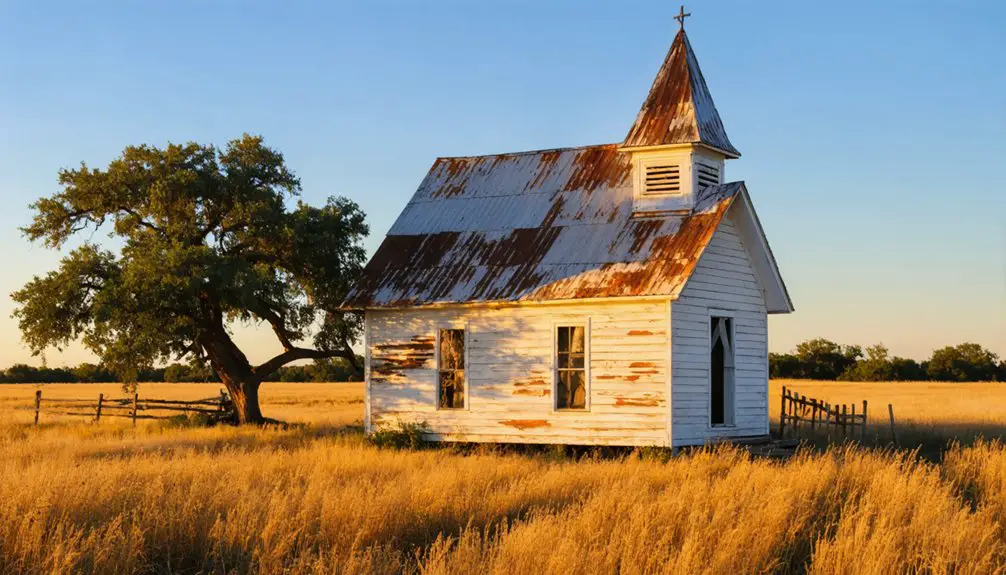
You’ll find Kelsey seven miles west of Gilmer off Farm Road 1795, where weathered structures peek through the pines at coordinates 32.7318016°N, -95.0496631°W. This Mormon settlement once sheltered 800 souls before demographic shifts emptied its streets, leaving behind a 1951 LDS church, abandoned store, and veterans memorial with archived time capsule. Pack water, wear sturdy boots for exploring overgrown foundations, and combine your visit with Lake Gilmer’s trails or Barnwell Mountain’s off-road terrain—though the town’s full story requires uncovering its hidden layers beyond these crumbling facades.
Key Takeaways
- Kelsey is located 7 miles west of Gilmer off Farm Road 1795, 1.5 miles south of State Highway 154.
- Visit the 1951 LDS church building, abandoned store, veterans memorial with time capsule, and official historical marker onsite.
- Plan stops at Lake Gilmer Park for fishing, Barnwell Mountain for trails, and Historic Upshur Museum for regional history.
- Time your trip during East Texas Yamboree or Gilmer’s Coffee and Cars Show for additional local attractions.
- Use GPS coordinates 32.7318016°N, 95.0496631°W and base yourself in nearby Longview or Tyler for amenities.
The Rise and Fall of a Mormon Settlement in East Texas
When brothers Jim and John Edgar rode through Upshur County in 1899, traveling from Arizona to Alabama, they saw something in the pine-studded landscape that made them stop. They’d purchase 140 acres along Kelsey Creek, establishing what would become the oldest surviving LDS colony in the southern United States.
By 1904, you’d have found 400 Mormon faithful building their grid-pattern streets and log chapel. The population swelled to 800 by 1923, with families arriving from Tennessee to escape persecution and build community on their own terms. Mormon Elders organized a conference that identified Kelsey as an ideal refuge for persecuted Saints seeking a new home.
But demographic changes arrived with the railroad’s closure. Economic decline followed—crop failures, the Depression, and war effort demands emptied the settlement. In 1958, the Kelsey-Gilmer Ward combined the original Kelsey Ward with two branches as the community consolidated. Today, you’ll discover a quiet place where freedom-seeking pioneers once carved their legacy into East Texas soil.
Getting to Kelsey: Directions and Coordinates
Seven miles of East Texas backroads separate you from Gilmer’s main square and the weathered remnants of Kelsey. Navigate west on Farm Road 1795, where rolling pine forests give way to the Pritchett Area’s red clay hills.
You’ll find the ghost town roughly a mile and a half south of State Highway 154, perched at 423 feet elevation near Kelsey Creek‘s meandering banks. The settlement earned its name from this very waterway when the post office opened in 1902.
Your GPS coordinates read 32.7318016°N, -95.0496631°W—exact waypoints that’ll lead you through countryside unchanged since the Marshall and East Texas Railway arrived in 1910. Regional geological features here reveal iron-rich soils that once supported Mormon farmers’ ambitious dreams. This unique historical perspective connects you to 280 acres of abandoned hope, accessible only to those willing to venture beyond pavement’s end. Other nearby destinations include Longview and Tyler, both offering modern amenities for explorers of East Texas history.
What You’ll Find at the Abandoned Townsite
The gravel crunches beneath your tires as you roll into what remains of Kelsey—a scattering of weathered structures half-hidden by encroaching pines and wild undergrowth. You’ll spot the LDS church building from 1951 standing sentinel over empty lots where Zion’s “mother colony” once thrived.
The business district that bustled in 1913 has surrendered to nature, with the last store long abandoned. Look for the veterans memorial—inside, a time capsule preserves community archives documenting this Texas experiment in religious influences. The name Kelsey has multiple variant spellings including Kelsea, Kelsy, Kelcy, and Kelcey across different regions and communities.
Most fascinating: current residents still attend Gilmer ward meetings, maintaining spiritual ties even as physical Kelsey fades. It’s a peculiar blend of persistence and decay, where faith outlasted commerce and population.
Exploring Historical Markers and Remnants
Standing beside the official historical marker near Kelsey’s last commercial building, you’re confronted with the weight of Texas’s first Mormon experiment—a bronze plaque that declares this windswept townsite the “mother colony” from which other LDS settlements sprouted across the state.
Beyond this marker, BSA Troop 311’s mapping project reveals original building foundations scattered throughout—phantom outlines where sawmills, blacksmith shops, and that ambitious two-story academy once stood. The vacant store building looms nearby, its weathered frame an evidence, a documentation, a record to 1911’s commercial peak.
Walk the documented sites yourself; each foundation tells stories that historical record preservation can only approximate. The former church, Bennion Hall’s gymnasium footprint, even the cotton gin’s location—they’re all here, waiting for explorers who value tangible connections over sanitized narratives. With 95 residents in 2000, Kelsey represents the dramatic population decline common among rural Texas communities that once thrived. Like the nearby Oak Grove Cemetery established on Haden Edwards’ 1826 land grant, these remnants anchor East Texas’s layered settlement history in physical space.
Nearby Attractions to Extend Your Journey
After absorbing Kelsey’s ghostly foundations and weathered historical marker, you’ll find Upshur County offers enough outdoor recreation and cultural experiences to justify multiple days in East Texas. Lake Gilmer Park delivers family friendly activities through its fishing pier, swimming area, and handicap accessible trails winding through Piney Woods.
For adrenaline seekers, Barnwell Mountain‘s 1,850 acres provide unrestricted dirt bike and UTV terrain across 27+ miles of single-track challenges.
The Historic Upshur Museum occupies a neoclassical federal building showcasing ancient Native American mounds and settler history from 1836. Guided tours are available to enhance your understanding of the exhibits and local heritage. Time your visit during October’s East Texas Yamboree for barn dances and agricultural exhibitions, or catch Gilmer’s first-Saturday Coffee and Cars Show, where classic automobiles gather without entry fees.
The Gilmer Civic Center provides a premier venue with approximately 40,000 square feet of flexible event space accommodating everything from fine arts performances to family reunions.
These scenic nature views and cultural touchpoints transform a ghost town excursion into a proper backcountry adventure.
Frequently Asked Questions
Are There Any Facilities or Restrooms Available at the Kelsey Ghost Town Site?
No facilities exist at Kelsey—you’ll find no portable toilets available among the crumbling homesteads. Pack everything you need, plan bathroom stops in Gilmer beforehand, and if you’re considering picnicking opportunities explored, bring supplies for complete self-sufficiency in this forgotten landscape.
Is It Legal to Enter the Abandoned Buildings in Kelsey?
No, you can’t legally enter without permission. Private property protection persists despite abandonment. Trespassing risks include prosecution under Texas law and local regulations enforced by Upshur County authorities. Seek owner consent before exploring—respecting rights guarantees continued access for all adventurers.
What Is the Best Time of Year to Visit Kelsey Ghost Town?
Visit Kelsey during spring’s wildflower blooms in April or autumn’s fall foliage from late October through November. You’ll enjoy mild temperatures perfect for exploring overgrown ruins, with fewer crowds and comfortable hiking conditions along rural East Texas backroads.
Are There Any Guided Tours Available for Visiting Kelsey?
You won’t find private guided tours waiting at this abandoned settlement—Kelsey’s isolation guarantees that freedom. Instead, you’ll create your own self-guided walking tours through overgrown ruins, discovering forgotten stories at your own adventurous pace.
Is the Kelsey Cemetery Accessible to Visitors Year-Round?
Kelsey cemetery hours aren’t officially documented, but you’ll likely find it accessible during daylight. Preservation efforts remain minimal at this ghost town site, so you’re free to explore respectfully whenever you visit this hauntingly beautiful East Texas landmark.
References
- https://freepages.history.rootsweb.com/~gtusa/usa/tx.htm
- https://kids.kiddle.co/Kelsey
- http://texasghosttowns.blogspot.com/2012/01/kelsey-upshur-county-november-2010.html
- https://en.wikipedia.org/wiki/Kelsey
- https://www.deseret.com/1999/11/13/20775885/spotlight-on-historical-sites/
- https://scholarsarchive.byu.edu/etd/5185/
- https://www.texasescapes.com/EastTexasTowns/Kelsey-Texas.htm
- https://texashistory.unt.edu/ark:/67531/metapth61101/
- http://amateurmormonhistorian.blogspot.com/2009/08/kelsey-texas-mormon-colony.html
- https://www.thechurchnews.com/1988/3/5/23264126/time-capsule-holds-history-of-kelsey-early-lds-colony-in-northeast-texas/