To plan your ghost town road trip to Keystone, Montana, you’ll need to head four miles off the main highway via Forest Road 246 into western Montana’s wilderness. This silver-boom settlement once housed nearly 500 residents, and weathered structures like the Vendome building still stand today. Visit during dry weather, bring sturdy boots, and time your arrival around sunset for the best atmosphere. There’s far more to uncover about this forgotten frontier than meets the eye.
Key Takeaways
- Keystone, Montana sits four miles off the main highway, accessible via Forest Road 246, offering an authentically isolated frontier ghost town experience.
- Visit during dry weather, as forest roads become muddy after rain; waterproof boots and sturdy footwear are strongly recommended.
- Bring water, snacks, a first aid kit, and a detailed map, since cell service is unreliable and no amenities exist on-site.
- Arriving around sunset enhances the atmospheric experience among weathered surviving structures from Keystone’s silver and lead mining boom era.
- Expand your road trip by visiting nearby ghost towns including Garnet, Bannack, and Nevada City for a fuller historical exploration.
How Do You Find and Reach Keystone, Montana?
Tucked roughly four miles off the main highway in the remote back hills of western Montana, Keystone isn’t the kind of place you’ll stumble across by accident.
You’ll need a solid directions guide before you leave, because the forest swallows this old silver and lead mining settlement whole. Use Forest Road 246 as your primary navigation tip when plotting your route. The surrounding terrain can turn muddy after rain, so check conditions beforehand and pack accordingly.
Once you reach the townsite, a small informational kiosk marks your arrival and offers helpful historical context.
The remoteness is exactly the point — Keystone rewards the prepared traveler with an authentically isolated frontier atmosphere that crowded tourist destinations simply can’t replicate.
Do your homework, fuel up, and head into the hills.
What Structures Still Stand at the Keystone Townsite?
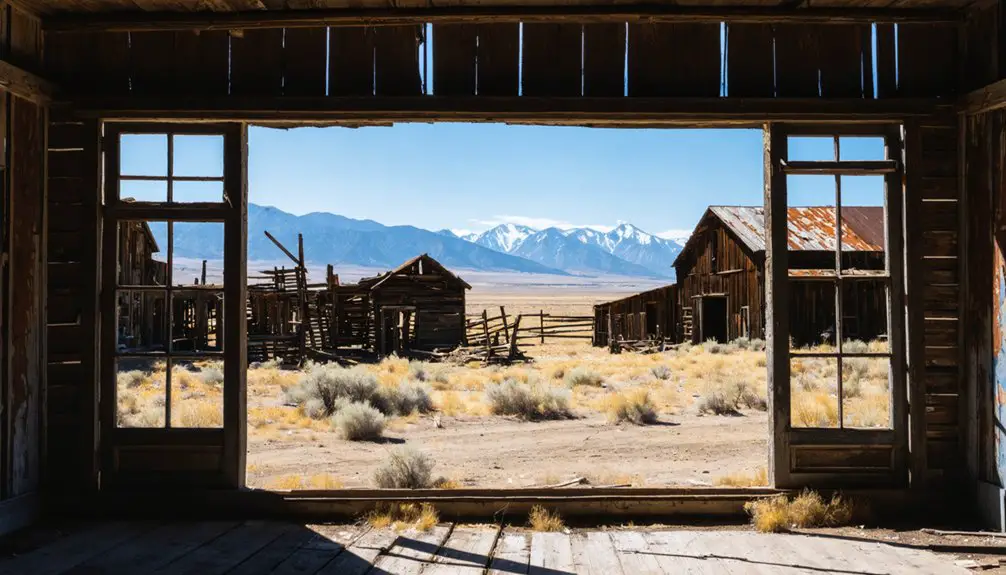
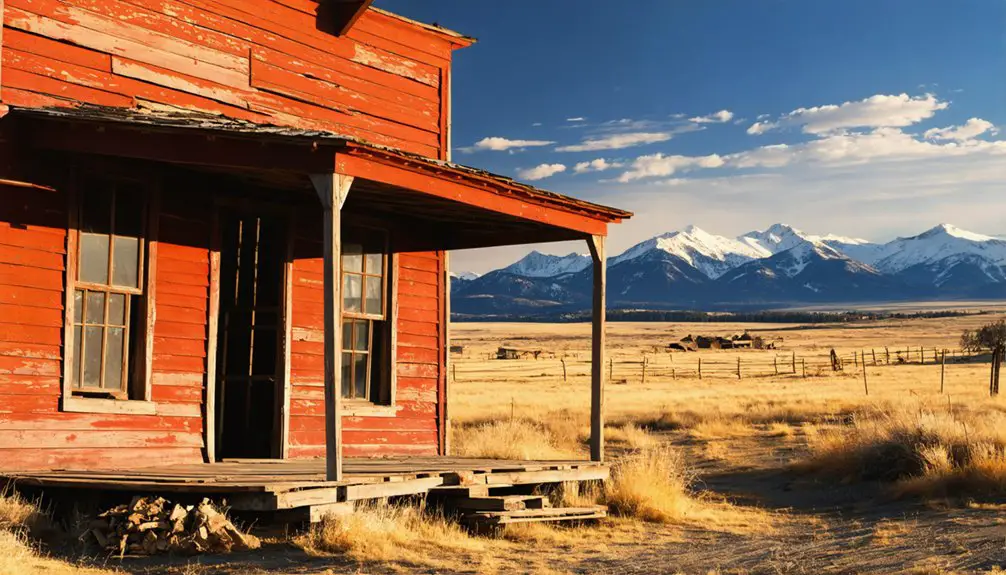
Scattered across the forested hillside, Keystone’s surviving structures pull you straight back into the silver and lead boom era that once drew 500 residents to this remote Montana hollow.
Keystone’s weathered structures scatter across forested slopes, silent witnesses to the silver rush that once packed this Montana hollow.
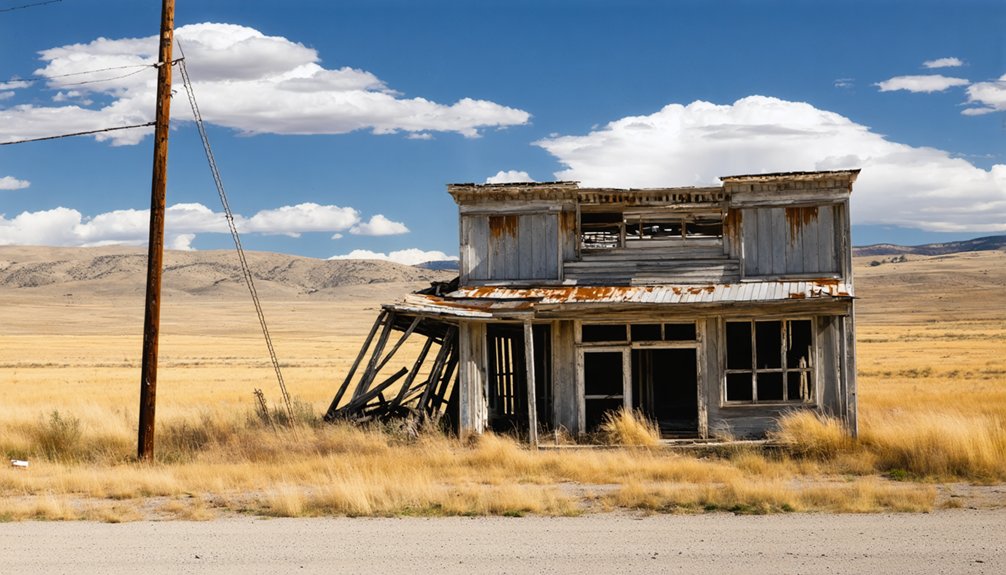
You’ll find multiple buildings still standing, each carrying real historical significance as physical proof of frontier ambition carved from raw wilderness. The Vendome once housed workers and guests during peak mining operations, and its weathered frame remains among the most striking examples of ruin preservation you’ll encounter on any Montana ghost town circuit.
Uneven ground from old mining activity means you’ll want to watch your footing as you move between structures.
Explore freely, but tread carefully — these remnants aren’t maintained, and that rawness is precisely what makes Keystone feel genuinely untouched.
How Did Silver Mining Turn Keystone Into a Boomtown?
When silver and lead strikes hit this remote Montana hollow, they didn’t just attract prospectors — they rebuilt the entire social and economic fabric of the settlement from the ground up.
Silver strikes transformed what Philip O’Rourke had quietly established along a creek into a roaring hub of ambition and commerce. You’re looking at boomtown dynamics that pushed the population to nearly 500 residents at its peak — a remarkable surge for such isolated terrain.
The mining legacy reshaped everything: housing, hospitality, and commerce all expanded rapidly to meet demand.
The Vendome structure emerged to accommodate the influx of workers and visitors. Economic impact rippled outward, turning a forgotten hollow into a legitimate frontier operation — one whose ruins you can still walk through today.
Is Keystone Montana Worth the Drive and When Should You Go?
If you’re willing to navigate four miles of back-road Montana terrain, Keystone rewards you with an authentically isolated ghost town experience that most travelers never find.
You’ll want to time your visit for dry weather, since forest roads turn muddy after rainfall and can cut off access entirely.
Plan your arrival around sunset, when fading light washes over the ruins and surrounding mountain views, transforming a scattered historic site into something genuinely atmospheric.
Worth the Remote Drive
Keystone rewards the four-mile detour off the main highway with something most ghost towns can’t deliver — genuine isolation paired with tangible history.
You’re not walking through a curated museum or a tourist-polished relic. You’re traversing uneven terrain shaped by real mining activity, surrounded by Montana forest that’s slowly reclaiming what silver and lead built.
This remote adventure strips away modern noise and drops you directly into the 1880s, where 500 residents once carved a working town from wilderness. The informational kiosk orients you, but the standing structures do the real storytelling.
For travelers who crave historical exploration without guardrails, Keystone delivers authentically. Bring supplies, wear solid footwear, and arrive near sunset — the light hits those ruins in ways that make the drive completely worthwhile.
Best Times to Visit
Timing your visit to Keystone separates a rewarding ghost town experience from a frustrating, muddy dead end.
Forest Road 246 turns treacherous after heavy rainfall, leaving unprepared travelers stranded four miles from the highway with nothing but regret.
The best seasons for exploration run from late spring through early fall, once snowmelt stabilizes the terrain.
Summer brings the clearest skies and most accessible trails, though peak visitation during July and August means you’ll occasionally share the ruins with fellow wanderers.
September offers the sweet spot — cooler temperatures, fewer crowds, and golden light that transforms the crumbling structures into something almost cinematic.
Whatever season you choose, time your arrival for late afternoon.
Sunset over Keystone’s scattered ruins delivers the kind of atmosphere no photograph fully captures.
What Should You Pack Before Driving Out to Keystone?
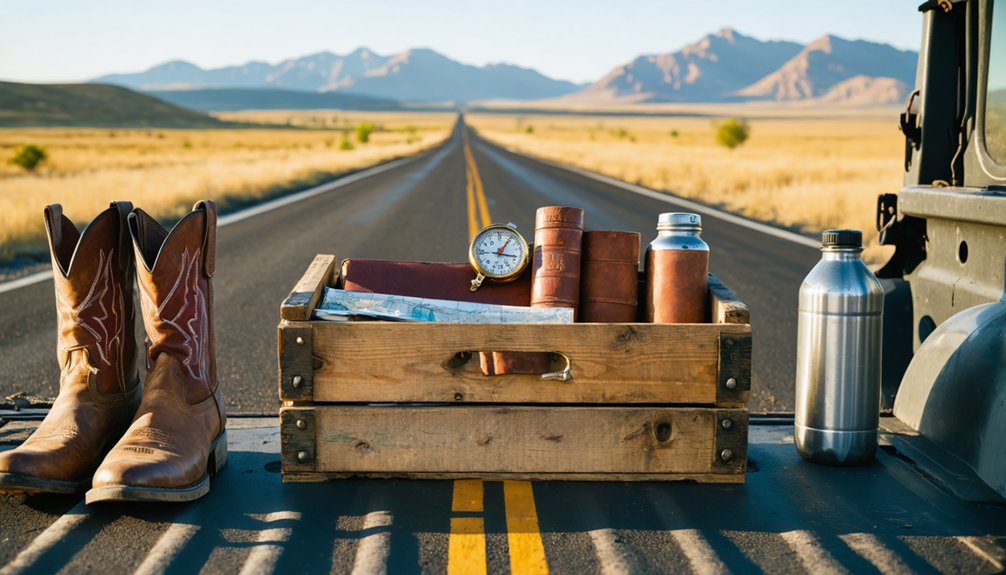
Because Keystone sits roughly four miles off the main highway in remote Montana forest, you’ll want to pack smart before you make the drive out.
These packing essentials will keep your exploration comfortable and safe: bring plenty of water, snacks, and a first aid kit since no amenities exist on-site.
Add these travel tips to your preparation checklist — wear sturdy boots for uneven terrain shaped by old mining activity, and carry a detailed map since cell service is unreliable this deep in the backcountry.
Pack a camera for golden-hour shots among the ruins, and layer your clothing for shifting mountain temperatures.
If rain’s recently hit the area, toss a pair of waterproof boots in the truck — those forest roads can turn muddy fast.
Other Ghost Towns Near Keystone Worth Combining Into One Trip
Once you’ve got your pack sorted and you’re ready to hit the road, Montana rewards the curious traveler — Keystone doesn’t have to be a one-stop destination.
The region’s ghost town highlights stretch across a corridor connecting Glacier to Yellowstone, giving you serious mileage through regional history.
Garnet sits frozen in time with remarkably intact structures, while Bannack — Montana’s first territorial capital — delivers frontier drama at a larger scale.
Nevada City offers yet another layer of mining-era character worth your afternoon.
Each town tells a different chapter of the same silver-and-lead story that once defined this landscape.
String them together along the Pioneer Mountain Scenic Byway and you’ve transformed a single ghost town visit into an unforgettable multi-day expedition through Montana’s raw, abandoned past.
Frequently Asked Questions
What Was Keystone Originally Named Before It Became a Ghost Town?
You’ll discover Keystone’s name origin traces back to O’Rourke, named after settler Philip O’Rourke. Its historical significance deepened when it was renamed Carter upon opening its post office, marking the town’s evolving frontier identity.
Who Was the Original Settler That Keystone’s First Name Honored?
Forget your history books — you’ll find the original settler’s legacy etched in Montana’s hills! Philip O’Rourke’s historical significance lives on, as he claimed the creek that birthed the town honoring his pioneering name.
How Many People Lived in Keystone During Its Peak Mining Years?
During Keystone’s thrilling mining boom, you’d have rubbed shoulders with roughly 500 residents hustling through this frontier hub. Population decline eventually silenced those rugged streets, leaving you today with hauntingly beautiful ruins to freely explore.
What Was the Vendome Building Used for During Keystone’s Active Years?
Like a frontier inn welcoming weary miners, the Vendome’s Vendome history shows it housed guests during Keystone’s active mining era. You’ll find its architectural significance stands as a symbol of the settlement’s once-thriving, freedom-seeking community.
Is There an Informational Kiosk Available When You Arrive at Keystone?
Yes, you’ll find an informational kiosk at the townsite entrance, providing historical context about Keystone’s fascinating mining past. There aren’t posted visitor hours, so arrive during daylight and let your adventurous spirit guide your exploration freely.
References
- https://www.nationalgeographic.com/travel/article/small-towns-ghost-towns-road-trip
- https://visitmt.com/trip-ideas/ghost-town-route
- https://www.thetravel.com/drive-hike-to-coolidge-ghost-town-in-montana/
- https://www.youtube.com/watch?v=rF5KELLLa00
- https://www.youtube.com/watch?v=lJy7Q8kNbGU
- https://leisuregrouptravel.com/park-to-park-ghost-town-route/
- https://www.yellowstonepark.com/things-to-do/attractions/ghost-town/
- https://www.youtube.com/watch?v=JmDCfbC9vq4
- https://www.rvtravel.com/ghost-town-trails-elkhorn-montana-rvt-1058/
- https://www.youtube.com/watch?v=6WR-eG1knPw