Planning a ghost town road trip to Lagrange, Vermont means venturing deep into Bennington County’s southwestern wilderness, where a 19th-century logging settlement has nearly disappeared into the forest. You won’t find it on standard maps or paved roads, so you’ll need topographic maps, solid hiking gear, and a taste for mystery. Visit in late spring or early fall for the best trail conditions. There’s far more to this forgotten place than first meets the eye.
Key Takeaways
- Lagrange is a ghost town in Bennington County, Vermont, with no paved roads or standard map listings, requiring wilderness navigation skills.
- Scattered remnants like crumbling foundations, rusted equipment, and abandoned charcoal sites mark the area’s 19th-century logging community history.
- Visit during late spring, early fall, or summer for optimal trail conditions; avoid mud season and heavy winter snowfall.
- Pack topographic maps, a GPS device, first aid kit, personal locator beacon, and weather-appropriate layered clothing for off-trail hiking.
- Nearby ghost towns like Glastenbury and Little River State Park can enrich your itinerary with additional Vermont history and exploration.
What Is the Ghost Town of Lagrange, Vermont?
Tucked away in the dense wilderness of Vermont, Lagrange is one of those ghost towns that exists more in legend than in documented history — no official records confirm it on historical maps, and it doesn’t appear on any formal lists of Vermont’s abandoned settlements.
That mystery is precisely what draws adventurous travelers to explore its story. Lagrange myths swirl around Bennington County, where supernatural tales and vanishing populations already dominate local folklore.
While historians struggle to verify its historical significance, the absence of hard evidence doesn’t diminish the intrigue — if anything, it deepens it.
You’re free to investigate the legends yourself, wandering through Vermont’s untamed backcountry where forgotten places blur the line between documented past and enduring myth.
Where Exactly Is Lagrange Located in Vermont?
Where does Lagrange fit on Vermont’s map? Honestly, pinning down its exact Lagrange location proves tricky — and that’s partly what makes this journey so intriguing.
Vermont geography places the region’s most legendary ghost towns within the Green Mountain State‘s dense, rugged interior, particularly in Bennington County’s southwestern corner.
Glastenbury, the area’s most documented abandoned settlement, sits nestled near Glastenbury Mountain in that wild southwestern pocket. No paved roads reach it. You’ll navigate thick wilderness trails to even glimpse its remnants.
If you’re chasing Lagrange specifically, expect limited official cartographic confirmation — it doesn’t appear on standard Vermont maps.
Your best approach is treating Bennington County as your launchpad, exploring the surrounding forested terrain where forgotten settlements once quietly thrived before vanishing into Vermont’s untamed landscape.
How Lagrange, Vermont Went From Settlement to Ghost Town
Once you’ve got your bearings on the map, the next natural question surfaces: what actually happened here? Lagrange’s history mirrors a pattern you’ll recognize across Vermont’s forgotten settlements — early promise followed by swift collapse.
Like many remote Vermont communities, Lagrange emerged during the 19th century logging boom, when timber drew ambitious settlers into the wilderness. Workers arrived, structures went up, and briefly, life thrived.
Then the timber ran out.
Settlement decline hit fast and hard. Without economic foundation, residents had no reason to stay. Families packed up, buildings weathered into ruin, and the forest quietly reclaimed everything they’d built.
The state eventually stripped municipal recognition from similar settlements when functioning governments simply ceased to exist.
What remains today is wilderness, silence, and a story worth chasing down.
Is Lagrange Connected to the Bennington Triangle?
Any road trip into Vermont’s abandoned corners eventually brushes up against the Bennington Triangle — that unsettling stretch of wilderness centered on Glastenbury Mountain where five people vanished without explanation between 1945 and 1950.
While Lagrange history doesn’t directly tie into documented Triangle disappearances, the Bennington connection adds atmospheric weight to your journey. Both locations share Vermont’s pattern of communities swallowed by wilderness.
Here’s what makes this region worth exploring:
- Glastenbury Mountain anchors paranormal theories involving energy vortexes and alternate dimensions.
- Local legends describe cursed boulders and monster sightings throughout the surrounding forest.
- Five unsolved disappearances between 1945–1950 remain unexplained to this day.
You’re traveling through land that doesn’t easily surrender its secrets — and that’s exactly the point.
How to Get to Lagrange, Vermont
Getting to Lagrange means orienting yourself toward Bennington County and using Glastenbury Mountain as your primary landmark, since no roads lead directly to this vanished community.
Glastenbury Mountain anchors your route to Lagrange — no roads reach this vanished community, only wilderness and determination.
You’ll need to embrace the Vermont wilderness fully, trading pavement for hiking trails through dense, untamed forest.
Start your journey in Bennington, then head north toward Glastenbury Mountain’s trailheads. Pack wayfinding tools, sturdy boots, and extra supplies, because the terrain doesn’t forgive the unprepared.
The isolation that swallowed this community still dominates every acre surrounding it.
Chasing Lagrange legends means accepting that the journey itself becomes part of the experience. No road signs mark your destination, no parking lots greet you.
You’re steering by history, instinct, and whatever fragments of documentation survive about this forgotten corner of Vermont.
What Survives in Lagrange: Ruins, Trails, and What’s Actually There
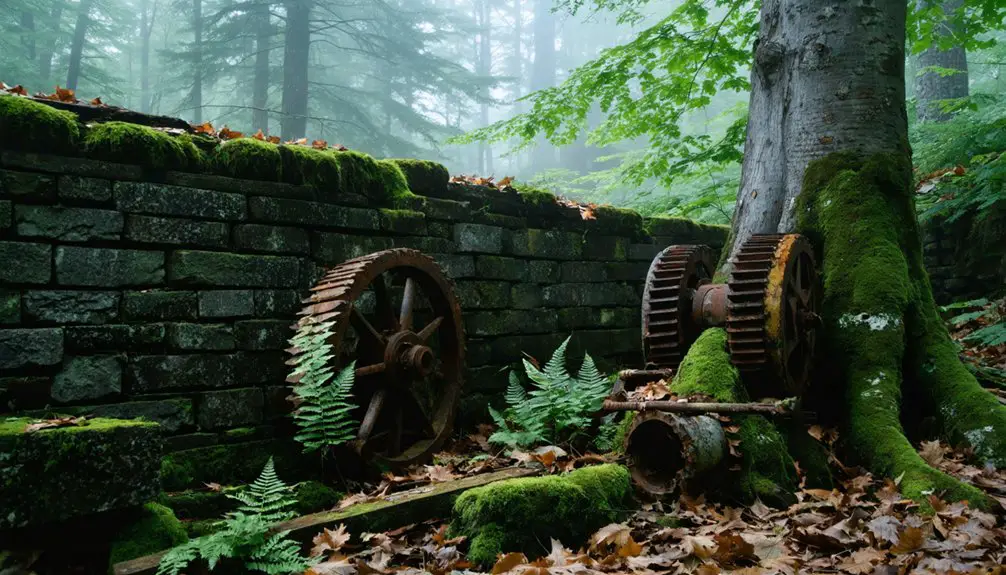
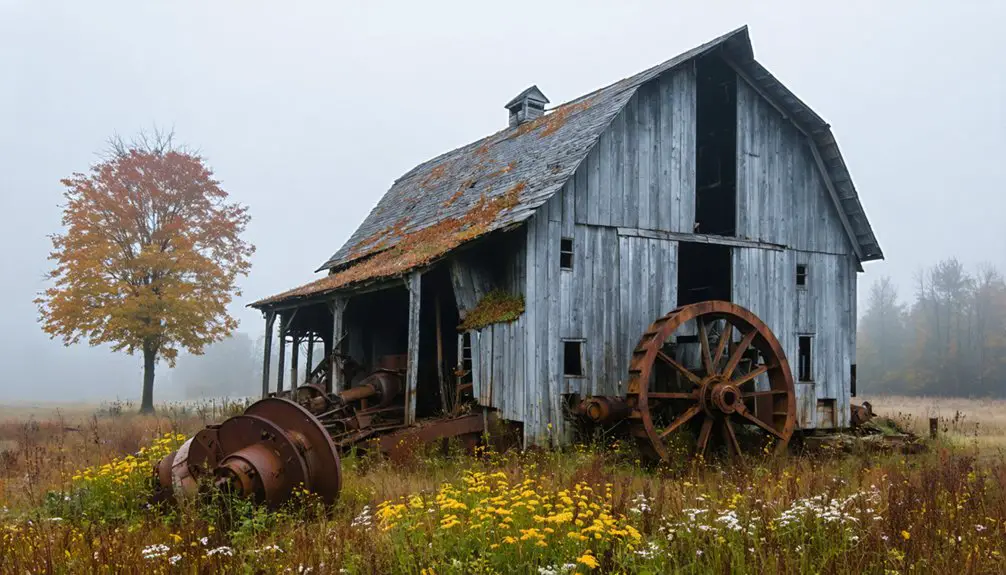
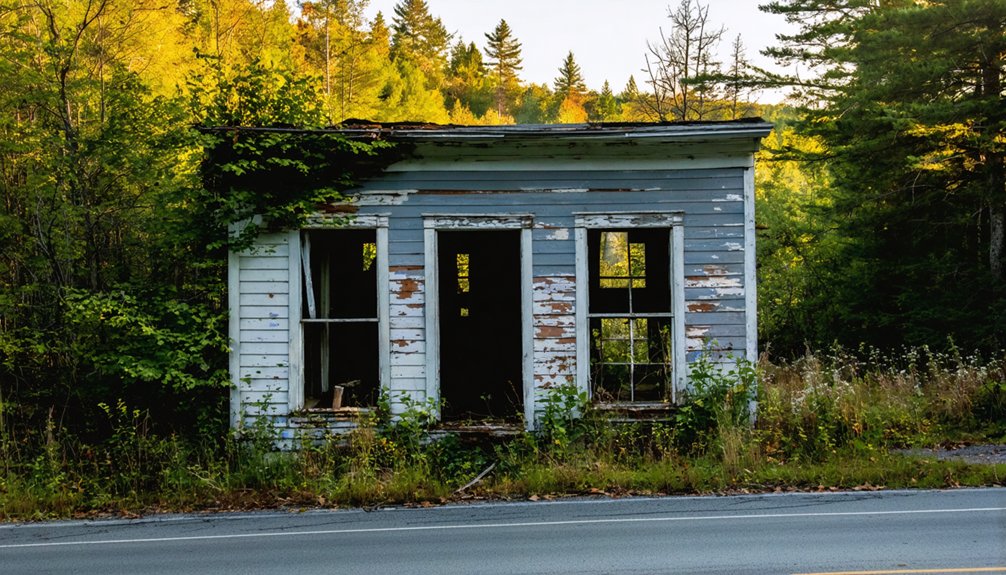
Once you push through the dense wilderness surrounding Lagrange, you’ll find scattered remnants of a 19th-century logging community slowly reclaimed by forest — crumbling foundations, rusted equipment fragments, and skeletal structural remains that hint at the town’s industrious past.
The trails cutting through this overgrown landscape aren’t maintained or formally marked, so you’ll navigate more by instinct and topographic maps than by signage.
What survives here isn’t a curated historic site but rather a raw, unfiltered snapshot of abandonment, where nature has quietly swallowed nearly everything humans left behind.
Surviving Ruins And Remnants
Though Lagrange doesn’t appear on Vermont’s official ghost town records or historical maps, the surrounding Glastenbury area offers tangible remnants worth exploring — crumbling foundations, overgrown logging roads, and weathered ruins that wilderness has slowly reclaimed since the town lost its municipal status in 1937.
These haunted locations preserve forgotten histories you won’t find in any guidebook. Here’s what you’ll actually discover:
- Collapsed foundations from 19th-century logging operations buried beneath dense forest overgrowth
- Abandoned charcoal production sites where industrial remnants rust quietly among reclaimed woodland
- Eroded trail corridors following original settlement paths toward Glastenbury Mountain
You’ll need solid hiking gear — no roads reach these spots. The wilderness has swallowed most evidence, making every discovery feel genuinely earned rather than staged for tourists.
Trails Through Wilderness
Hiking into the Glastenbury wilderness means trading paved convenience for something rawer — unmarked corridors threading through dense forest where 19th-century logging roads have nearly dissolved back into the landscape.
No maintained trail system guides you here, so wilderness exploration demands real preparation. You’ll want topographic maps, a compass, and enough supplies to handle unexpected delays.
The Long Trail passes near Glastenbury Mountain, offering your most reliable entry point into the surrounding backcountry. Hiking safety isn’t optional — cell service vanishes quickly, and the terrain shifts without warning.
Watch for remnant stone foundations half-swallowed by undergrowth; they appear suddenly, marking where Fayville’s residents once built their lives.
This forest doesn’t hand you anything. You earn every discovery by moving deliberately through it.
Best Season to Visit Lagrange and Vermont’s Ghost Towns
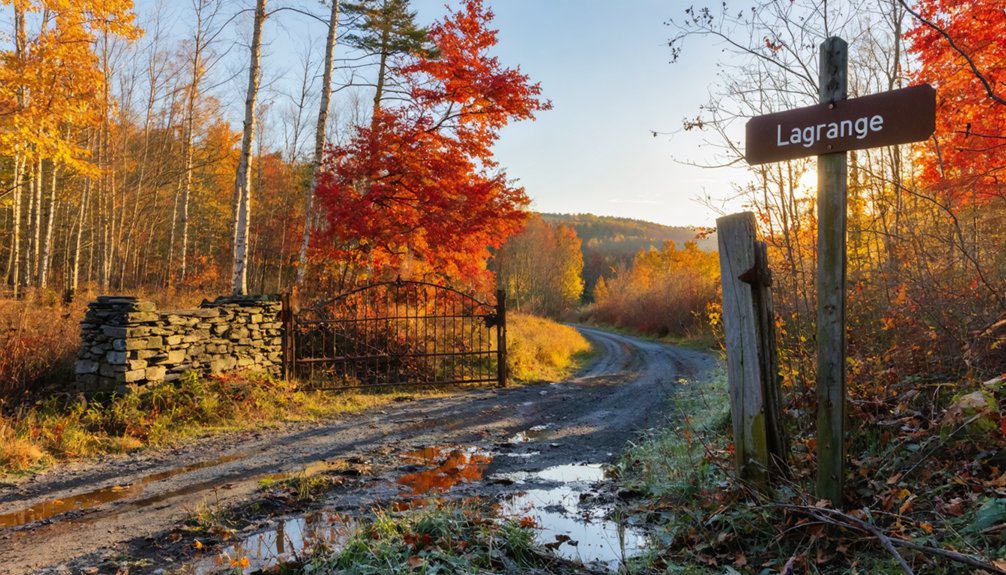
When you visit Vermont’s ghost towns, timing can mean the difference between an unforgettable adventure and a miserable slog through mud or snowdrifts.
Choose your season wisely to fully experience ghost town folklore and Lagrange legends without nature fighting you every step.
- Late Spring (May–June): Trails dry out, wildflowers bloom, and daylight stretches long enough for deep wilderness exploration.
- Early Fall (September–October): Foliage transforms the forest into vivid color, creating dramatic backdrops around crumbling ruins and forgotten settlements.
- Summer (July–August): Peak accessibility means clearer trails and longer days, though you’ll share the wilderness with more visitors.
Avoid mud season (March–April) and heavy winter snowfall, which renders most ghost town trails genuinely impassable.
Your freedom to roam depends on timing it right.
Which Other Vermont Ghost Towns Are Worth the Drive?
Vermont hides more ghost towns than most travelers realize, and if Lagrange has already sparked your curiosity, several other abandoned settlements are absolutely worth adding to your itinerary.
Glastenbury stands out as the crown jewel, a once-thriving logging hub stripped of its municipal status in 1937 after its population fundamentally vanished. Today, it’s accessible only by wilderness hiking, making the journey feel genuinely adventurous.
Ricker Mountain tells a similar story, where 50 families once built lives before abandonment reclaimed the land. Vermont folklore surrounding these places runs deep, echoing the same Lagrange legends that originally drew you north.
Little River State Park also offers a ghost town hike that’s surprisingly accessible. Each stop layers your road trip with authentic history you simply can’t experience anywhere else.
What to Pack for an Off-Trail Vermont Ghost Town Hike

When you’re heading off-trail through Vermont’s dense wilderness to reach a ghost town like Lagrange, you’ll want to layer up with moisture-wicking base layers, sturdy waterproof boots, and weather-resistant outer shells since conditions change fast in the mountains.
Pack a first aid kit, emergency whistle, and extra food and water, as you won’t find help easily in these remote stretches.
You should also carry both a physical topographic map and a GPS device, because cell service drops out quickly once you push beyond the trailhead.
Essential Gear and Clothing
Packing the right gear can mean the difference between a memorable adventure and a miserable retreat through Glastenbury’s unforgiving wilderness.
You’re venturing deep into terrain with no roads, unpredictable weather, and ghost town legends that’ll keep your senses sharp.
Don’t let poor preparation cut your exploration short.
Your hiking essentials should include:
- Navigation tools — A detailed topographic map and compass, since cell service vanishes quickly in Glastenbury’s dense forest.
- Layered clothing — Vermont’s mountain temperatures shift dramatically; moisture-wicking base layers, insulating mid-layers, and a waterproof shell are non-negotiable.
- Emergency supplies — Pack a first-aid kit, emergency bivouac sack, water filtration system, and high-calorie snacks for sustained energy.
You’re choosing freedom over comfort — pack accordingly.
Navigation and Safety Tools
Traversing Glastenbury’s wilderness without the right tools is how day hikes turn into emergencies. Cell service disappears fast out here, so don’t rely on your phone’s GPS. Pack a topographic map and a reliable compass — they’re your lifeline when technology fails. A GPS device with downloaded offline maps adds another layer of protection against getting turned around in dense forest.
For safety tips, bring a whistle, a headlamp with extra batteries, and a personal locator beacon if you’re venturing deep. Tell someone your exact route before leaving.
Glastenbury’s trails aren’t maintained, so footing can be unpredictable — trekking poles help. Carry a basic first aid kit and know how to use your navigation tools before you step off the trailhead.
What Could Go Wrong Exploring Lagrange and Vermont’s Abandoned Ghost Towns?
Exploring Vermont’s abandoned ghost towns like Glastenbury carries real risks that can turn an adventure into an emergency fast.
Lagrange myths and local legends sound thrilling until you’re lost in dense wilderness with fading daylight. Ghost stories don’t compare to genuine hiking challenges you’ll face on unmarked trails.
Watch for these real dangers:
- Navigation failure — No roads reach these sites, and cell service disappears fast in Vermont’s dense forest terrain.
- Structural hazards — Rotting foundations and collapsed buildings hide beneath overgrowth, creating serious injury risks.
- Weather ambushes — Vermont’s mountain conditions shift violently without warning, turning mild hikes into survival situations.
Respect the wilderness, carry proper gear, and tell someone your exact route before you disappear into Vermont’s forgotten corners.
Frequently Asked Questions
Are There Guided Tours Available for Vermont Ghost Town Explorations?
You’ll find guided exploration options for Vermont’s storied, forgotten landscapes! Trails at Little River State Park and the Slate History Trail honor their historical significance, letting you wander freely through 19th-century remnants with knowledgeable local guides leading your adventure.
Can You Camp Overnight Near Lagrange or Glastenbury’s Wilderness Areas?
You can camp near Glastenbury’s wilderness areas, but you’ll want to follow strict camping regulations and prioritize wilderness safety. The dense, remote terrain demands preparation, so pack smart and embrace the freedom of Vermont’s untamed backcountry!
Is Photography Permitted at Vermont’s Abandoned Ghost Town Sites?
You’re free to capture Vermont’s abandoned ghost town sites through photography! Embrace urban exploration while respecting their historical significance. Stick to public trails, avoid trespassing on private ruins, and you’ll document these hauntingly beautiful landscapes responsibly.
Are Children and Pets Safe on Vermont Ghost Town Hiking Trails?
Like pioneers forging new paths, you can bring family safely—keep children close and leash pets on Vermont’s ghost town trails. Practice family safety and pet precautions: watch for uneven terrain, wildlife, and unstable ruins throughout your adventure.
Do Vermont Ghost Towns Require Permits or Fees to Access?
You’ll find most Vermont ghost towns don’t require permits or fees. Simply hike freely through wilderness trails, soaking in ghost town history and local legends — though some state parks may charge small entry fees.
References
- https://happyvermont.com/2014/10/23/glastenbury-ghost-town/
- https://www.youtube.com/watch?v=gxePk0rsBx4
- https://mysterioushillsdotcom.wordpress.com/2021/02/13/snapshots-of-a-ghost-town-fayville-vt-2004/
- https://www.youtube.com/watch?v=ScW-H7A8yL8
- https://www.onlyinyourstate.com/nature/vermont/creepiest-hike-vt