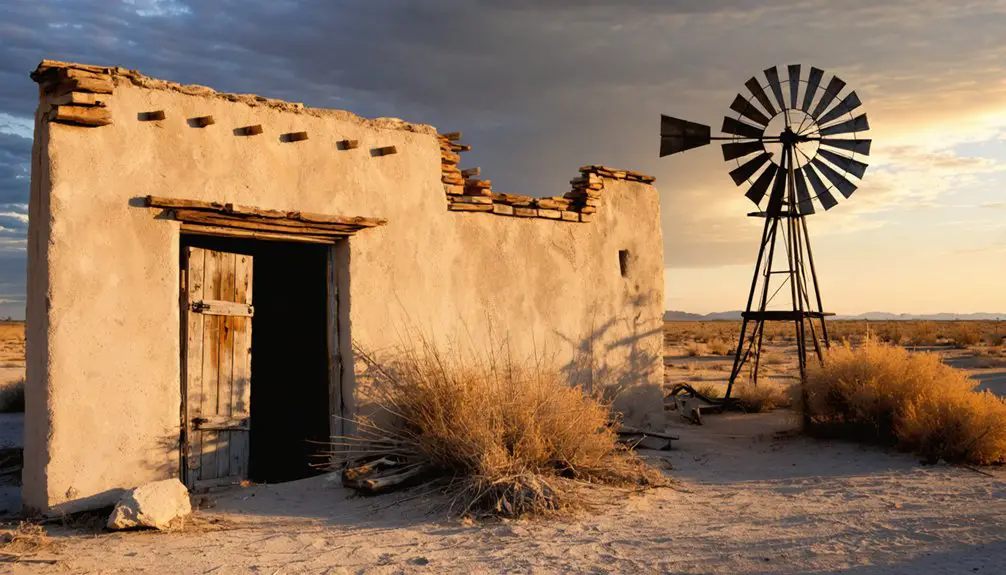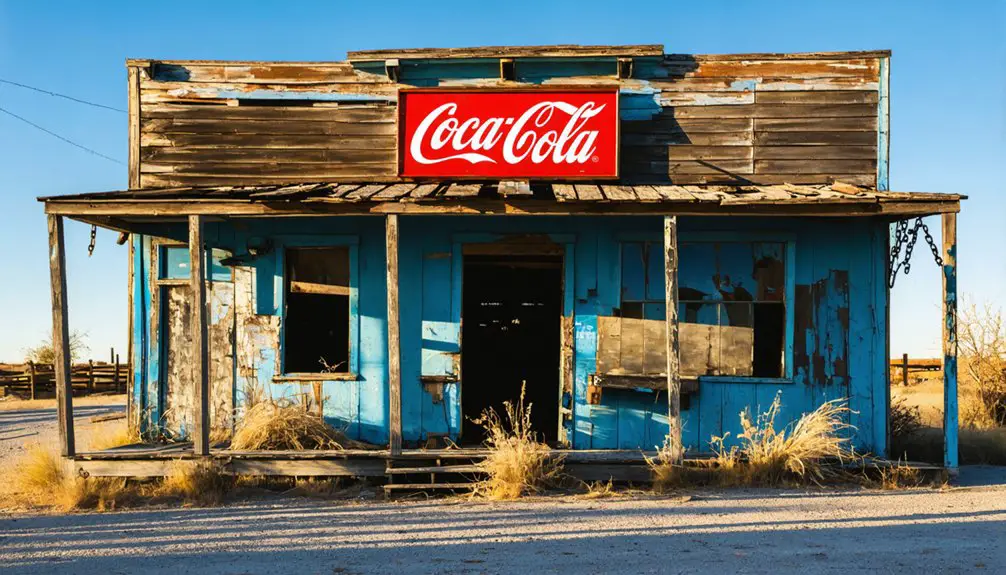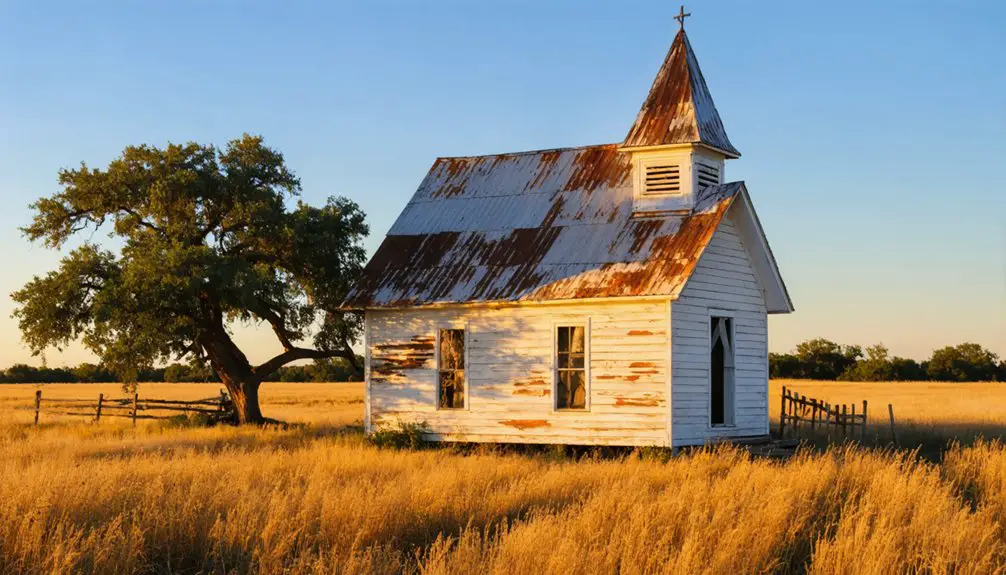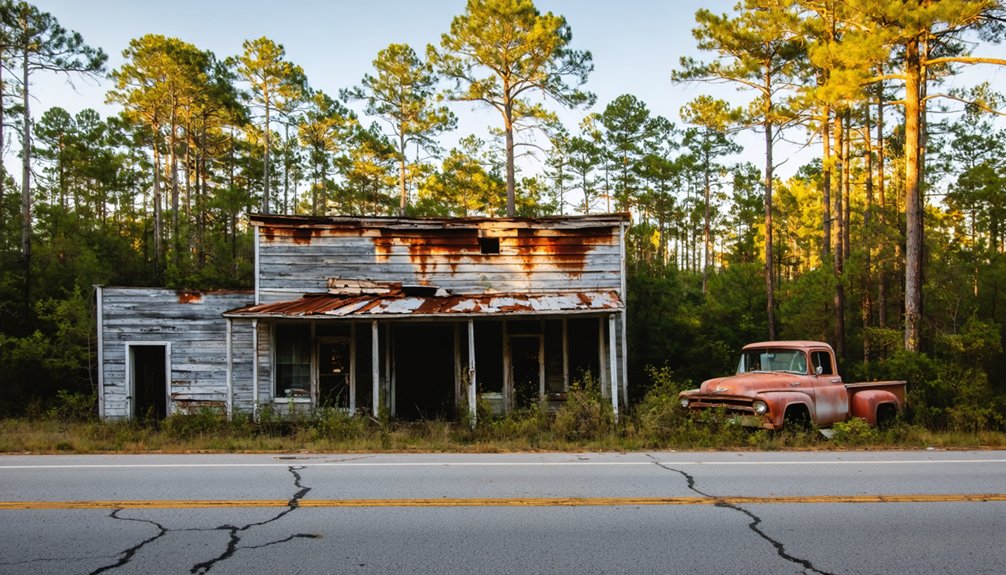
Planning a ghost town road trip to The Grove, Texas puts you just 30 miles northwest of Waco on a journey back to 1859. This Smithsonian-recognized historic town isn’t your typical crumbling ruin — it’s a preserved, walkable snapshot of 19th-century Texas life, complete with an original post office, saloon, and blacksmith shop. Visit in spring or fall for the best experience. Stick around to uncover everything this remarkable town has to offer.
Key Takeaways
- The Grove, established in 1859 in Coryell County, sits approximately 30 miles northwest of Waco, accessible via State Highway 36 and Farm Road 1114.
- Visit during spring (March–May) or fall (September–November) for mild temperatures, and choose weekdays to avoid private events.
- The town is privately owned; exterior walking is permitted, but indoor access and photography require the owner’s prior approval.
- Stock up on fuel and food in nearby Gatesville, 16 miles northwest, as The Grove offers absolutely no services for visitors.
- Original structures including a post office, saloon, blacksmith shop, and general store remain intact, offering an authentic 19th-century Texas experience.
What Is The Grove, Texas (And Why Visit)?
If you’re chasing the kind of history that most people drive right past, The Grove, Texas, is worth a detour. Established in 1859 in Coryell County, this small settlement once supported nearly 400 residents before a highway reroute and Fort Hood’s expansion quietly drained its population.
Today, its historical significance earns it a designation as a Smithsonian Historical Museum Town — not a ghost town in the traditional sense, but something more honest.
The Grove attractions include a preserved post office, saloon, blacksmith shop, and general store that once doubled as a bank and doctor’s office.
You won’t find crowds or tourist traps here. You’ll find a raw, walkable snapshot of 19th-century Texas life, largely untouched and unfiltered — exactly the kind of place worth seeking out.
The Fascinating History Behind This Texas Ghost Town
What started as a modest settlement in 1859 grew into a thriving Coryell County community of nearly 400 residents by the early 1900s — a town with its own post office, saloon, blacksmith, and a general store that doubled as a bank and doctor’s office.
The Grove’s historical significance runs deep, rooted in a defining act of community resilience: when Texas officials demanded the town cap its central well to reroute Highway 36, residents flat-out refused. The state rerouted the highway 0.2 miles north instead.
That bypass quietly strangled commerce, diverting traffic away from local businesses. The cotton gin closed. Fort Hood’s expansion in the 1940s pulled more residents away. By 2000, only 65 people remained — yet The Grove never surrendered its identity.
Getting To The Grove From Waco and Nearby Cities
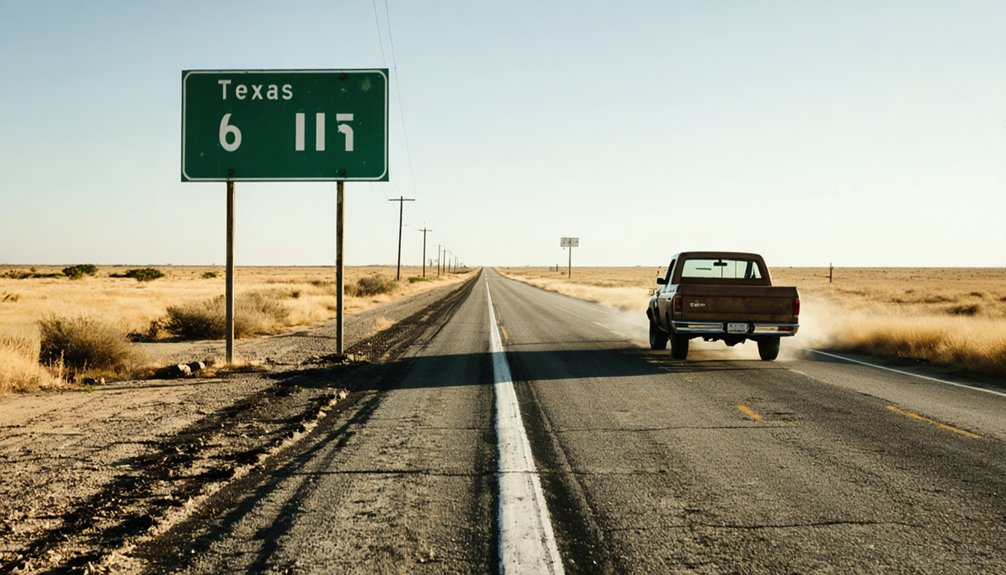
If you’re heading to The Grove from Waco, you’re looking at a straightforward drive of roughly 30 miles northwest that’ll take you about 40 minutes.
You’ll want to take State Highway 36 and then turn onto Farm Road 1114, where the town sits about 16 miles southeast of Gatesville.
Since The Grove doesn’t have an official street address, plug the coordinates — 31.273333, -97.525278 — into Google Maps before you hit the road.
Driving From Waco
Since Waco serves as the closest major city to The Grove, it makes for the most natural starting point for your drive out to this slice of 19th-century Texas history.
Head northwest on State Highway 36, and after roughly 30 miles, watch for Farm Road 1114, where you’ll turn to reach this remarkably preserved settlement. The drive takes under an hour, rewarding you with open Texas countryside before the Grove’s attractions come into view.
You’ll arrive at a living representation of historical significance, where preserved storefronts, a legendary well, and buildings featured in iconic films like *Lonesome Dove* and *True Grit* tell a story of stubborn resilience.
Pack your camera, respect the private property boundaries, and prepare to step back into a forgotten chapter of Texas heritage.
Nearby Cities And Routes
Although Waco serves as the most convenient jumping-off point, several nearby cities offer straightforward routes to The Grove, each cutting through the kind of wide-open Texas landscape that makes the journey as rewarding as the destination.
Gatesville sits just 16 miles northwest, making it another natural starting point. From there, Farm Road 1114 off State Highway 36 delivers you directly into town.
Killeen and Temple also provide accessible entry points for travelers coming from the south, with scenic routes weaving through rolling Hill Country terrain. Along the way, you’ll find nearby attractions worth folding into your itinerary, including Fort Hood’s historical sites.
These scenic routes don’t just connect dots on a map — they immerse you in the raw, unhurried freedom that defines Central Texas travel.
The Post Office, Saloon, and Blacksmith Shop Still Standing in The Grove
As you walk through The Grove, you’ll find the post office, saloon, and blacksmith shop still standing as quiet reminders of a once-thriving 19th-century Texas town.
Step inside these historic buildings — with permission — and you’ll encounter preserved artifacts and remnants that paint a vivid picture of daily frontier life.
Faded signs, worn tools, and original fixtures remain largely intact, making each structure feel less like a relic and more like a paused moment in time.
Still Standing Structures
When you walk through The Grove, three structures stand as the most striking survivors of its 19th-century downtown: the post office, the saloon, and the blacksmith shop. Each building carries enormous cultural significance, offering a rare, unfiltered glimpse into frontier Texas life.
The post office once connected isolated settlers to the outside world. The saloon served as a social hub where locals gathered, debated, and conducted business. The blacksmith shop kept the town’s horses shod and its wagon wheels turning.
Their historic architecture remains remarkably intact, letting you absorb details that photographs simply can’t capture. You can walk the exterior freely, reading faded signs and studying weathered wood.
Just remember — interiors are off-limits without permission, so respect the boundaries and appreciate what’s still standing.
Inside These Historic Buildings
Even though you can’t step inside these buildings without permission, understanding what lies within each structure deepens your appreciation for what you’re looking at from the outside.
The post office once handled correspondence for a thriving cotton community. The saloon poured drinks for ranchers and travelers cutting through central Texas, its walls soaked in town legends you’ll sense just standing nearby.
The blacksmith shop represents the backbone of 19th-century frontier life, where horses were shod and wagon wheels repaired. Each structure’s historic architecture tells a specific story about daily survival in rural Texas.
Artifacts remain preserved inside, frozen in time since the town’s decline. You’re fundamentally reading a three-dimensional history book from the sidewalk, where every weathered plank and faded sign speaks volumes.
Preserved Artifacts And Remnants
What stands before you in The Grove isn’t just aging wood and faded paint — it’s a collection of preserved artifacts and remnants that have outlasted the town’s decline by more than a century.
The post office, saloon, and blacksmith shop still stand as symbols of artifact preservation rarely seen in abandoned Texas settlements. Step closer and you’ll notice original tools, signage, and fixtures frozen in time, each carrying deep historical significance.
The general store once housed a bank and doctor’s office, layers of purpose still visible in its bones. These structures don’t simply represent the past — they embody it.
You’re walking through a living snapshot of 19th-century Texas life, where every weathered plank tells a story worth remembering.
Why The Grove Refused To Move for a Highway
One of The Grove’s most defining moments came down to a single well. When Texas officials demanded residents cap their central well to make way for Highway 36, the town refused. That act of community resilience rerouted the highway 0.2 miles north instead, but the highway impact proved devastating anyway.
Bypassed and forgotten, The Grove watched its businesses collapse one by one:
- The post office lost steady foot traffic almost immediately.
- The blacksmith shop and general store hemorrhaged customers.
- The cotton gin eventually shut down completely.
You’re walking through a town that chose principle over convenience. That stubbornness preserved its soul but sealed its quiet fate. The Grove didn’t surrender — it simply got left behind.
Can You Still Visit The Grove? Access Rules Explained
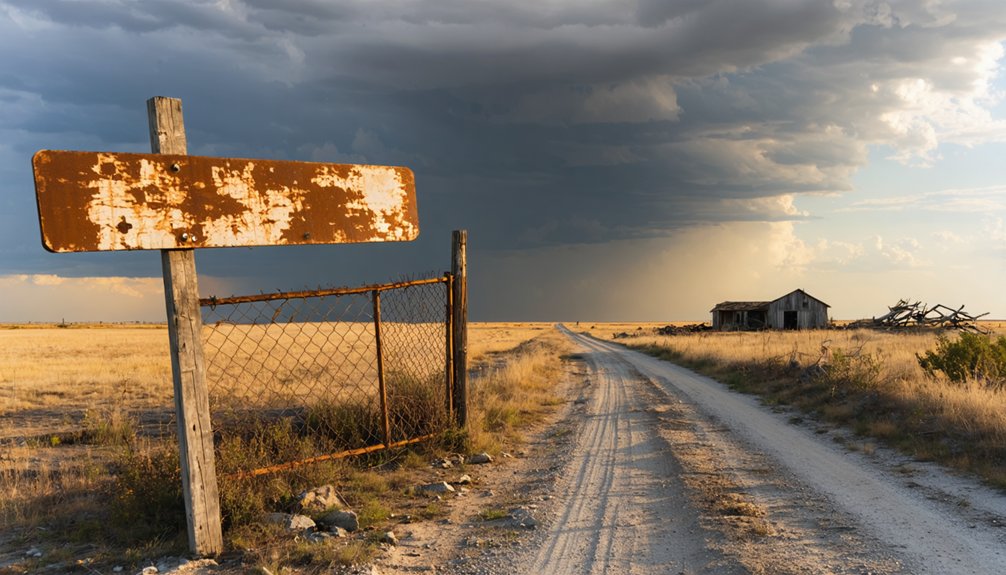
Technically, yes — you can still visit The Grove, but don’t expect to walk through any open doors. The property belongs to private owners, so access restrictions apply to both the buildings and the grounds surrounding them.
You’re free to walk the exterior and soak in the preserved downtown streetscape, but stepping inside requires permission from the owners. The same goes for photography permissions — you’ll need to contact the property before pointing your camera at anything beyond the public road.
Faded signs hint at a livelier past, but today the town operates on its own quiet terms. Respect those boundaries, and you’ll still experience something rare: an authentic 19th-century Texas town standing almost exactly as history left it.
The Best Time To Visit The Grove
Since The Grove sits on private property with no set visiting hours, timing your trip around the right season makes all the difference.
Spring and fall offer the best season for exploring, keeping you comfortable while natural light flatters the weathered buildings perfectly for photography.
Watch for local events like weddings or reunions, which occasionally open access to the grounds. Plan around these opportunities whenever possible.
- Spring (March–May): Mild temperatures, soft light, and blooming landscapes enhance the atmosphere
- Fall (September–November): Cooler days reduce heat exposure during your exterior walking tour
- Weekdays: Less likely to encounter private gatherings, giving you quieter, uninterrupted exploration
Avoid summer heat, which makes outdoor touring genuinely uncomfortable across Central Texas.
What Else To See Near The Grove on Your Way From Waco
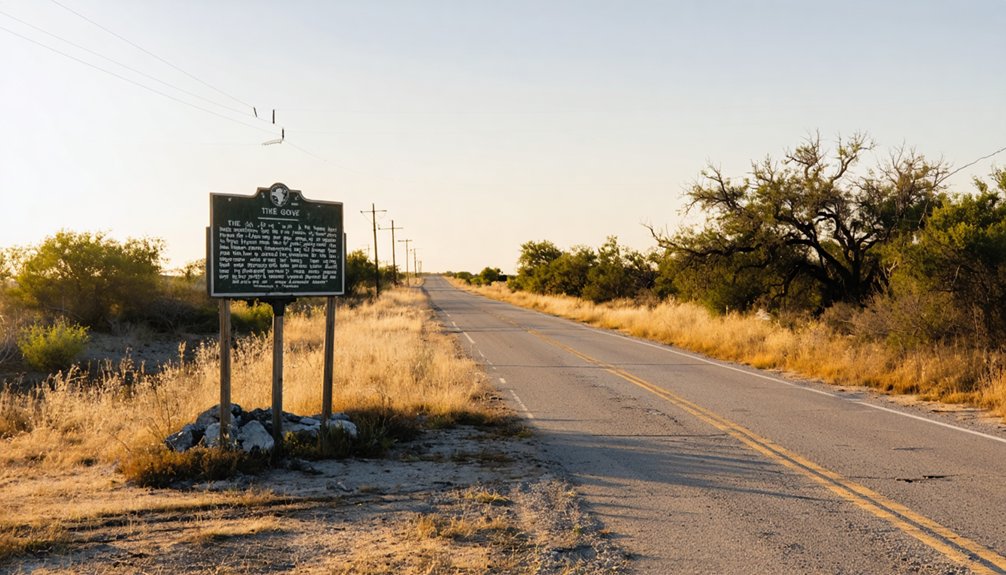
The drive from Waco to The Grove covers roughly 50 miles, and you’d be shortchanging yourself by treating it as a straight shot.
Gatesville, just 16 miles northwest of The Grove, offers local attractions worth your time, including the Coryell County Museum, which deepens the regional history you’ll encounter at The Grove itself.
Mother Neff State Park sits along your route and rewards a short detour with wooded trails and creek views.
One of the better travel tips for this stretch: fuel up and grab food in Gatesville, since The Grove has no services.
The landscape between Waco and Coryell County shifts from flat prairie to rolling cedar hills, so keep your windows down and let the drive work on you.
Why The Grove Was Named a Historical Museum Town, Not a Ghost Town
Once you’ve taken in Gatesville and pointed your car toward The Grove, you might expect to roll up on a place that fits the standard ghost town mold — a few collapsed walls, some tumbleweeds, and a lot of silence.
Instead, you’ll find something rarer.
The Smithsonian recognized The Grove’s historical significance by designating it a Historical Museum Town — a title that reflects active preservation efforts, not abandonment.
Here’s what sets it apart:
- Original structures like the saloon, post office, and general store still stand intact
- Artifacts inside reflect authentic 19th-century Texas life
- Moody Anderson’s 1972 purchase launched deliberate conservation of the entire townsite
You’re not walking through decay.
You’re walking through a protected slice of Texas history that someone fought to keep alive.
Before You Go: Safety at Abandoned Sites
Ghost town structures have stood without maintenance for decades. Floors, stairs and roof timbers fail without warning, and a building that looks solid from outside may not hold your weight. Stay out of standing structures unless the site is actively maintained and open to visitors.
Mine workings are the more serious hazard. Vertical shafts can be hundreds of feet deep, are often unfenced, and may be hidden by brush or capped with rotted boards. Never enter an adit, tunnel or shaft: abandoned workings can hold oxygen-poor or toxic air that gives no warning before you lose consciousness.
Enclosed spaces with rodent droppings carry a risk of hantavirus, which is contracted by breathing contaminated dust. Do not sweep or stir up dust inside old cabins and outbuildings.
Cell coverage at these sites is usually poor or absent. Tell someone your route and expected return time, and carry more water than you think you need.
Frequently Asked Questions
Has the Grove Ever Been Featured in Any Hollywood Films?
Yes, you’ll love The Grove’s Hollywood connections! Its rich film history includes appearances in *Lonesome Dove*, *Texas Chainsaw Massacre*, and *True Grit*, making it a cinematic treasure you won’t want to miss exploring.
Who Currently Owns the Grove, Texas?
Coincidentally, as you explore Grove history and local legends, you’ll find the descendants of W.J. Dube currently own The Grove, Texas — a fascinating twist of fate connecting past families to this iconic, storied land.
Can You Hold a Private Event or Wedding at the Grove?
You’d need to contact the Dube descendants directly to explore venue options and event planning possibilities. The Grove has historically hosted weddings and reunions, but it’s privately owned, so you’ll need permission first.
Is There an Official Street Address for the Grove?
You won’t find an official street address for The Grove, but don’t let that stop your road trip tips game! Search Google Maps using its coordinates to uncover this ghost town history gem easily.
What Was Originally Housed Inside the Grove’s General Store?
You’ll find the general store history quite the “one-stop shop” — it once housed a bank, doctor’s office, and antiques filled with local artifacts, making it a vibrant community hub you’d have loved exploring back then!
References
- https://www.tripadvisor.com/Attraction_Review-g56043-d1171970-Reviews-The_Grove-Jefferson_Texas.html
- https://texaswanderers.com/texas-ghost-towns-the-grove/
- https://talesfromthewayside.com/blog-1/2016/10/12/the-grove-tx
- http://texasghosttowns.blogspot.com/2012/02/grove-coryell-county-august-2010-photos.html
- https://www.youtube.com/watch?v=-7XyPu5jkIk
- https://www.youtube.com/watch?v=M43wsfqmk-s
- https://www.youtube.com/watch?v=50Tvth_-AOM