To plan your ghost town road trip to Lapidum, Maryland, head to Susquehanna State Park at 4122 Wilkinson Rd, Havre de Grace, and follow Stafford Road south to Lapidum Road along the river’s edge. You’ll find crumbling canal locks, corroded railroad tracks, and the haunting foundation of Conrad Baker’s 1868 Victorian hotel slowly surrendering to the forest. Visit in fall or spring for the best experience. Everything you need to explore this forgotten world is just ahead.
Key Takeaways
- Lapidum is located within Susquehanna State Park, accessible via Stafford Road south to Lapidum Road, with roadside parking near the river.
- Key historical landmarks include Conrad Baker’s 1868 Victorian hotel foundation and Lock 9 of the Tidewater Canal’s crumbling stonework.
- Fall and winter visits are ideal for spotting foundations and ruins normally hidden beneath dense summer foliage.
- Wear sturdy boots for muddy trails, and plan early weekday visits to secure convenient roadside parking near canal remnants.
- Once a thriving commercial hub, Lapidum declined after railroads replaced canal commerce and ice jams destroyed remaining warehouses.
What Remains of Lapidum Today
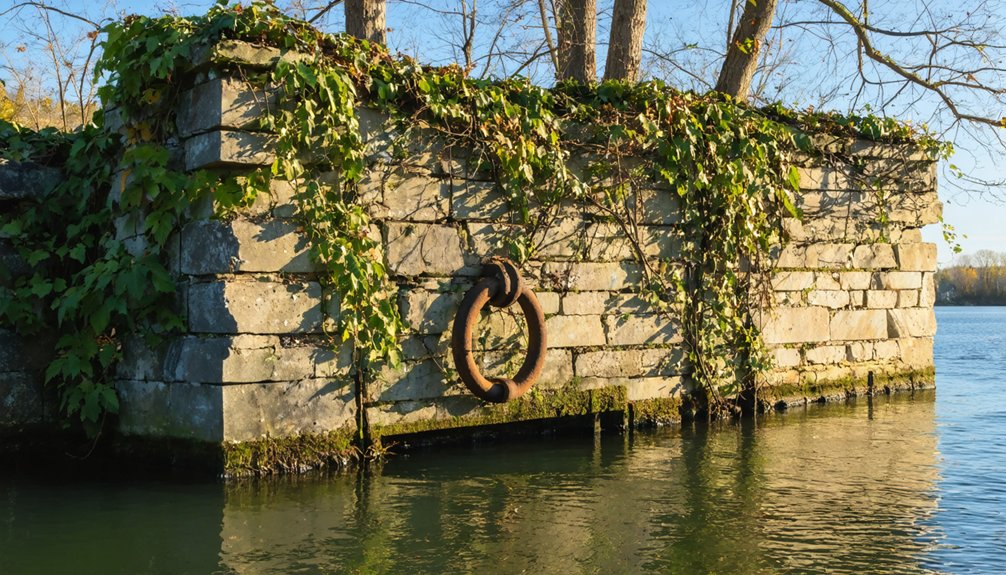
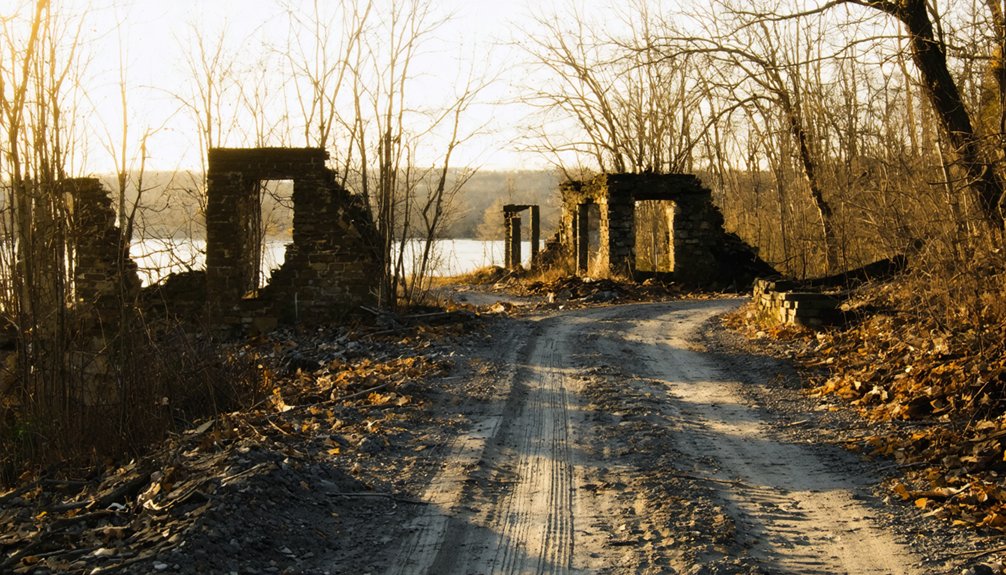
Walking through Lapidum today, you’ll find only whispers of its prosperous past — crumbling canal walls draped in ivy and moss, corroded railroad tracks half-swallowed by earth, and foundations backfilled with debris where homes and businesses once stood.
Lapidum history lives in these silent remnants, urging you to piece together ghost town legends from scattered clues.
You’ll spot the hillside foundation of Conrad Baker’s three-story Victorian hotel, demolished nearly a century after its 1868 construction.
Loch 9 of the Tidewater Canal still marks the landscape, its deteriorating walls a reflection of the commerce that once thrived here.
Historical plaques describe vanished wharves and bustling trade.
Overgrown mule paths wind through forest, and nature steadily reclaims everything — offering you raw, unfiltered access to a forgotten world.
How Lapidum Went From Boomtown to Ghost Town
Once a thriving commercial hub serving northern Maryland and southern Pennsylvania, Lapidum’s rise hinged on a single advantage: water. The Susquehanna River fed its ferries, canals, and fisheries, fueling a community complete with a Victorian hotel, Masonic hall, church, and bustling wharves.
Then progress arrived — and took everything with it.
Then the modern world came knocking — and Lapidum never recovered.
Railroads rendered canal commerce obsolete almost overnight. Automobiles finished what the trains started. You can almost feel the economic decline settle over the town as each business shuttered and each family packed up.
Ice jams along the river destroyed the remaining warehouses, eliminating any reason to stay.
Lapidum’s historical significance lies in how completely it captures this story — a self-sufficient community swallowed by forces it couldn’t control, leaving only foundations and silence behind.
How To Get To Lapidum Inside Susquehanna State Park
Reaching Lapidum takes you through Susquehanna State Park, a forested stretch along the river where the trailheads and access roads still follow paths that mules and merchants once traveled.
The park’s address is 4122 Wilkinson Rd, Havre de Grace, MD 21078. From there, you’ll follow Stafford Road south until it intersects Lapidum Road at the river’s edge.
Your access routes include the Alberton Road Trail and similar wooded paths that cut through the tree line toward the water.
Parking options are straightforward — you’ll find roadside space near the river that puts you steps from the old canal and foundation remnants.
No gates, no fees, just open land waiting to be explored on your own terms.
The Canal Ruins, Hotel Foundation, and Trails at Lapidum
When you step into Lapidum’s remains, two structures anchor the entire experience: the foundation of Conrad Baker’s three-story Victorian hotel, built in 1868 and demolished nearly a century later, and Lock 9 of the Tidewater Canal, whose walls still stand beneath thick coats of ivy and moss.
The hotel architecture once dominated this hillside, serving travelers during Lapidum’s commercial peak. Now its backfilled foundation invites quiet reflection on what thriving looked like here.
Once a thriving hilltop landmark, the hotel’s foundation now stands as a quiet monument to Lapidum’s forgotten peak.
The canal history embedded in Lock 9’s crumbling stonework tells an equally compelling story—corroded railroad tracks nearby mark the very shift that killed this town’s commerce.
Overgrown mule paths wind through the surrounding forest, and historical plaques describe the former wharves. You’re free to wander, explore, and piece together Lapidum’s past on your own terms.
When Is the Best Time To Visit Lapidum?
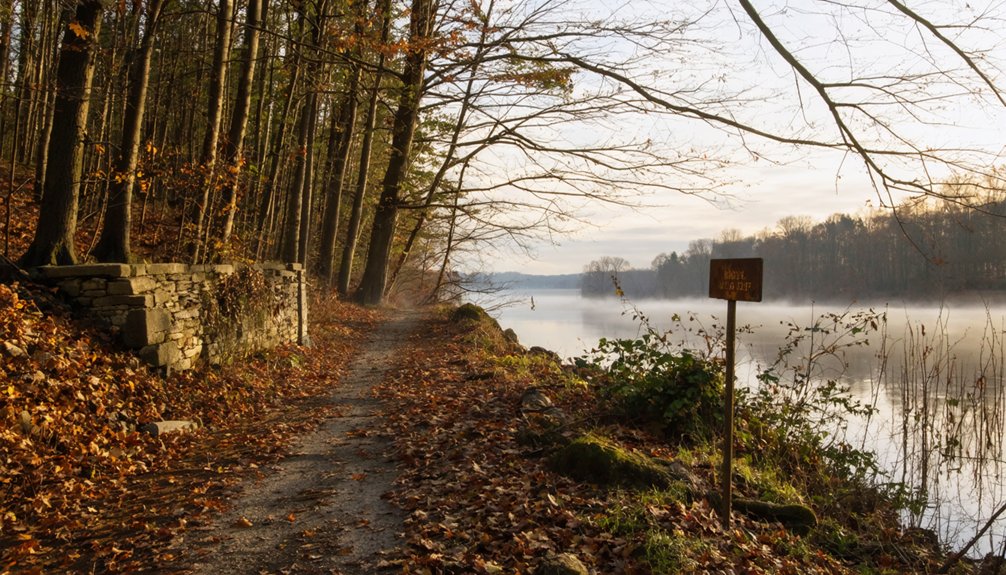
Timing your visit to Lapidum shapes everything about what you’ll see and feel in those woods.
Spring brings seasonal highlights worth chasing — wildflowers push through crumbling canal walls, and shad runs echo the river’s old commercial pulse.
Fall strips the canopy bare, exposing foundations and forgotten structures you’d miss beneath summer’s dense cover.
Winter offers raw solitude; ice-edged ruins carry a haunting clarity that warmer months can’t match.
For practical visitor tips, arrive early on weekdays to claim roadside parking before crowds settle in.
Wear sturdy boots since overgrown mule paths turn muddy after rain.
Bring water, as the park offers little infrastructure.
Summer works if shade doesn’t bother you, but spring and fall reward the most adventurous, freedom-seeking explorers with Lapidum’s sharpest details.
Frequently Asked Questions
What Crops Did Early Lapidum Settlers Grow in the 17TH Century?
You’d find early Lapidum settlers mastered tobacco cultivation and corn as their chief crops, driving early agriculture forward. They embraced fertile land freely, building self-sufficient lives rooted in nature’s abundance during the 17th century.
Who Built the Victorian Hotel, and What Was Their Name?
Forget Hilton’s empire — Conrad Baker’s your rugged visionary! He built Lapidum’s grand Victorian architecture masterpiece in 1868, etching his name into hotel history. You’ll find his hillside foundation still whispering tales of bold, untamed ambition.
Which Ferries Operated From Lapidum to Nearby Pennsylvania Towns?
You’ll discover that Lapidum’s ferry history included Transportation routes connecting to Peach Bottom, Pennsylvania upstream. Several ferries also crossed to Port Deposit, letting you imagine the bustling river commerce that once defined this vibrant, now-silent ghost town.
What Fish Were Historically Caught in Lapidum’s Local Waters?
Like silver daggers slicing through the current, shad and herring were historically caught in Lapidum’s waters. You’ll appreciate how these species shaped local ecology, sustaining communities and defining the region’s historical fishing heritage beautifully.
What Are the Exact GPS Coordinates for Visiting Lapidum, Maryland?
Set your GPS navigation to 39°35′52″N, 76°07′44″W, and you’ll arrive at Lapidum’s historical significance firsthand. You’ll find this hauntingly beautiful ghost town waiting, ready to reveal Maryland’s forgotten past on your own terms.
References
- https://en.wikipedia.org/wiki/Lapidum
- https://www.tripadvisor.com/ShowUserReviews-g41187-d2425861-r969844423-Susquehanna_State_Park-Havre_de_Grace_Maryland.html
- http://outtaway.blogspot.com/2014/01/ghost-town-of-lapidum-maryland.html
- https://www.youtube.com/watch?v=XgE8IPwHdI0
- https://kids.kiddle.co/List_of_ghost_towns_in_Maryland
- https://en.wikipedia.org/wiki/Category:Ghost_towns_in_Maryland