Planning your Leigh ghost town adventure requires flexibility since this drowned settlement lies beneath the Santee-Cooper reservoir, flooded in the 1940s. You’ll find the best access via Edisto River launch points at Pooles Mill Landing or Jones Bridge Landing, where you can kayak over submerged foundations and mill ruins. Autumn offers ideal conditions with golden light and manageable temperatures, though you’ll need waterproof gear, GPS with offline maps, and landowner permissions for any shoreline remnants. The full story of what awaits beneath those blackwater swamps reveals even more haunting details.
Key Takeaways
- Leigh’s exact location has faded from modern maps; consult county historical societies and old railroad maps to pinpoint remnants.
- Access via Edisto River North Fork launches at Pooles Mill Landing (RM 62) or Jones Bridge Landing (RM 55) with waterproof gear.
- Obtain written landowner permission through Berkeley County’s tax assessor records, as Leigh sits on private property.
- Visit during autumn or spring for ideal weather; pack GPS with offline maps, sturdy boots, and safety equipment.
- Bring DSLR camera, drone, FFP3 mask, headlamps, first aid kit, and never explore alone for safety.
What Remains of Leigh Today
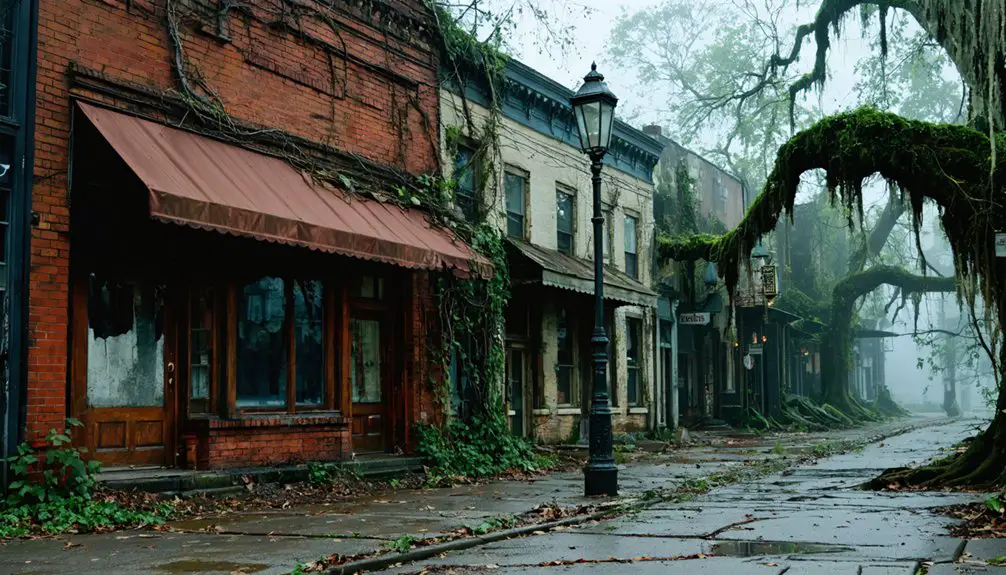
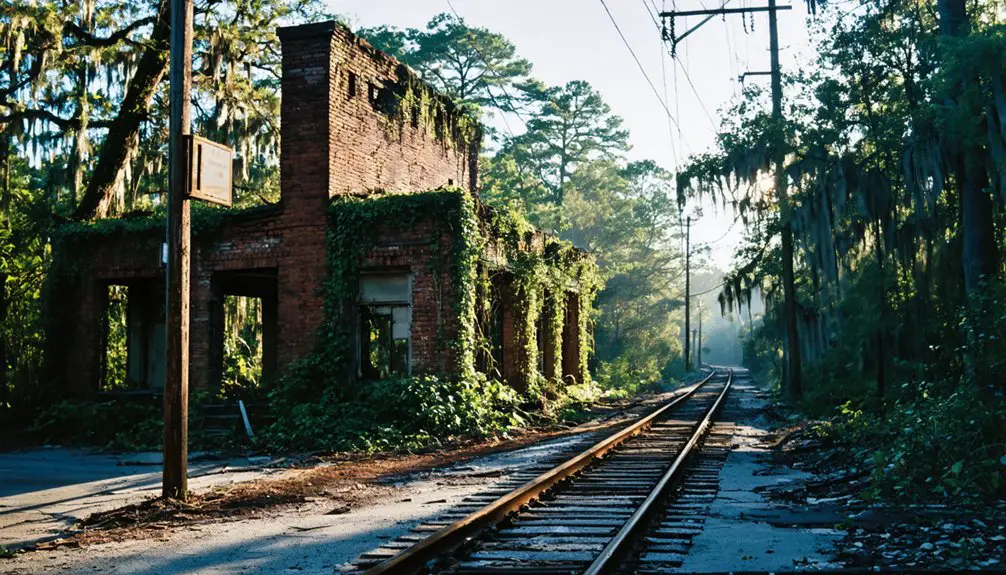
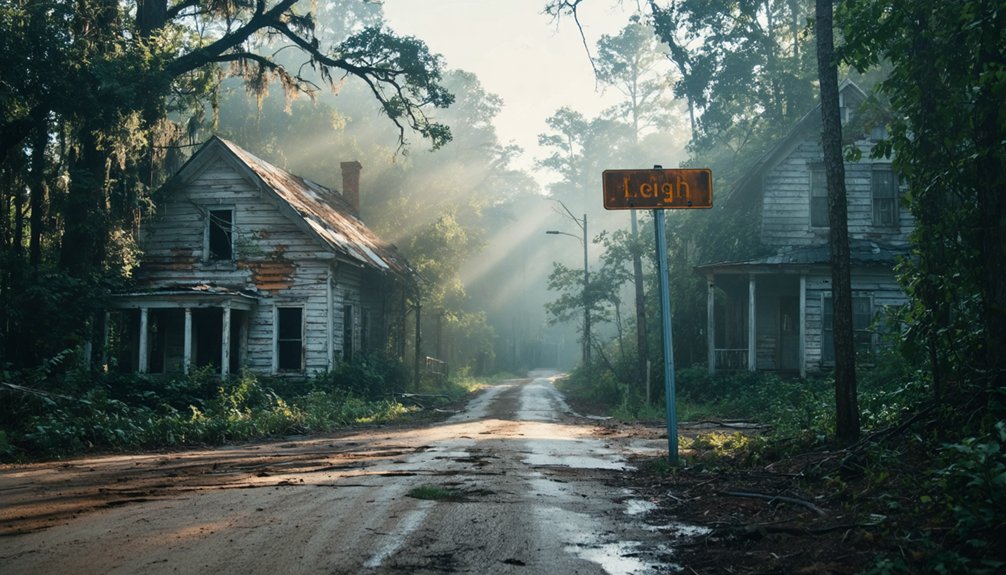
What happens when a town loses its reason for existing? You’ll find the answer driving through Leigh’s empty streets. The old train trestle stands skeletal along the river, while the faded bank building marks what passed for downtown.
When a town loses its purpose, only skeletal remains bear witness—empty streets, faded facades, and the silence of abandonment.
Broken civic structures dot the landscape—crumbling brick facades that threaten passing vehicles, buildings abandoned since the 1970s now sprouting vegetation from their rooftops.
Only 400 souls remain in this ghost town, many too poor to leave or unwilling to abandon ancestral land. The lost community importance hits you immediately. Over 60% of homes suffered irreversible water damage, never repaired.
No industries. No hope for revival. Just rust, overgrown lots, and the weight of broken promises hanging thick in the air. This is freedom’s darker side—abandonment without safety nets.
How Leigh Became Abandoned
You’ll find that Leigh’s demise mirrors a familiar Southern pattern: a once-thriving textile community devastated by catastrophic floods in the 1840s that destroyed its mills and lifeblood. The town struggled to rebuild after the first deluge, only to face a second flood within twelve years that shattered any hope of recovery.
Like neighboring ghost towns across South Carolina, Leigh couldn’t survive the combination of wrecked infrastructure, failed railroad speculation, and the economic shifts that drove families to seek opportunities elsewhere.
Economic Decline and Exodus
- 1980s rural banking collapse shuttered local institutions and hospitals
- 1990s federal trade deals eviscerated manufacturing jobs that sustained mill towns
- Post-2010 workforce withdrawal as COVID stimulus rewarded staying home over customer-facing positions
Each crisis stripped away another generation. Property tax abatements still cost schools $534 million annually, ensuring nothing attracts families back. You’re witnessing what happens when governments prioritize corporate handouts over communities.
Leigh’s empty streets aren’t accidental—they’re engineered outcomes of policies that value profit over people’s autonomy to build sustainable livelihoods.
Infrastructure or Natural Disasters
The same Santee-Cooper dam project that promised hydroelectric progress to South Carolina drowned Leigh’s future in the 1940s. You’ll find no hurricane tales or earthquake records here—just the calculated flooding of communities for reservoir construction. When Lake Marion’s waters rose, they swallowed 2,500 to 3,000 residents’ livelihoods, mostly African American tenant farmers who’d built lives on this land.
Unlike dramatic natural disasters, this abandonment came from deliberate natural resource exploitation disguised as progress. The state-owned utility project transformed viable farmland into underwater graveyards of mills and timber. Today, you can’t even explore Leigh’s remnants by boat—submerged logs from cypress mills create dangerous navigation hazards, their rusted anchor wires releasing timber like wooden ghosts beneath your hull.
Railroad Speculation Failure
Before Lake Marion’s waters sealed Leigh’s fate, another ambitious failure had already shaped the town’s destiny. The Cheraw and Chester Charter promised 55 miles of railroad freedom in 1873, connecting isolated communities to commerce and opportunity. Instead, you’ll find only remnants of broken dreams.
Initial investors withdrawing funds crippled the vision:
- Original backers abandoned ship after burning through capital on just 29 miles
- The ambitious Cheraw-to-Chester route died before reaching either endpoint
- Inability to complete construction left communities stranded in economic isolation
Foreclosure came swiftly. The truncated Lancaster-to-Chester segment sold for a mere $25,000 at courthouse auction—pocket change compared to initial investments. Leroy Springs salvaged what remained, but for Leigh and surrounding settlements, the damage was done. Without rail access, prosperity remained forever out of reach.
Getting to Leigh by Car and Boat
Planning your journey to Leigh requires careful navigation, as this forgotten settlement sits tucked away from modern highways on what’s now mostly private land.
You’ll need to map out back roads that branch off State Highway 215 near the Broad River, though reaching certain portions may require watercraft during high-water seasons.
Before you load up your car or trailer your boat, understand that property boundaries around ghost towns demand respect—trespassing citations can turn your adventure into an expensive mistake.
Highway Routes to Leigh
Since Leigh’s exact location has faded from modern maps along with the town itself, you’ll need to channel your inner detective to track down this elusive ghost town. The history of transportation access to Leigh remains shrouded in mystery, with no documented highway routes surviving in modern records.
Your best approach involves:
- Consulting county historical societies in potential South Carolina locations where Leigh once existed
- Researching old railroad maps from the late 1800s that might reveal the town’s position
- Connecting with local explorers who’ve investigated abandoned settlements in the region
Without confirmed coordinates, you can’t assess current local road conditions or plan specific routes. Consider this treasure hunt part of your adventure—sometimes the journey to find a ghost town proves more thrilling than the destination itself.
Boat Access Points
While Leigh’s landlocked location means you won’t paddle directly to the ghost town’s doorstep, South Carolina’s waterways offer compelling detours for adventurers who crave a mixed-mode expedition. The Edisto River North Fork provides your closest launch points, with RM 62 at Pooles Mill Landing near the Lexington County line giving you highway-accessible entry.
Downstream, you’ll find RM 55 at Jones Bridge Landing off Highway 394, another solid put-in for exploring these cypress-draped channels. After paddling these wilderness corridors, stash your kayak and drive the remaining distance to Leigh. This approach transforms your ghost town hunt into a genuine backcountry experience, letting you taste South Carolina’s wild heart before confronting its abandoned past.
Pack waterproof bags for your camping gear.
Private Property Considerations
Your paddling adventure ends the moment reality sets in: Leigh’s remnants sit on somebody’s land. Before you set foot on shore or park your vehicle near the site, you’ll need to track down current property owners and secure landowner permissions.
Trespassing in South Carolina isn’t just frowned upon—it carries legal liabilities that could turn your ghost town expedition into a costly mistake.
Smart explorers handle access this way:
- Research property records through Berkeley County’s tax assessor before your trip
- Contact landowners directly, explaining your historical interest and respecting their decision
- Document any granted permissions in writing to protect yourself
Without proper authorization, you’re gambling with fines and prosecution. The freedom to explore South Carolina’s forgotten places requires respecting the boundaries that protect them.
Best Times to Visit South Carolina Ghost Towns
The golden light of autumn transforms South Carolina’s abandoned settlements into photographer’s paradises, though you’ll find each season offers distinct advantages for ghost town exploration.
Spring brings manageable temperatures and blooming vegetation that frames crumbling structures beautifully, while summer’s heat demands early morning departures but rewards you with extended daylight hours. Seasonal weather patterns heavily influence accessibility—particularly for boat-accessible sites like Andersonville and Ferguson beneath Lake Marion’s surface, where water levels fluctuate dramatically.
Winter offers ideal visitation periods with minimal crowds and clearer sightlines through bare branches, perfect for spotting hidden foundations. However, you’ll want to check local conditions before venturing out, as South Carolina’s unpredictable storms can transform dirt roads into impassable mud. Plan flexibly, embrace spontaneity, and let weather guide your adventure rather than restrict it.
What to Bring on Your Exploration

Packing smart separates memorable adventures from miserable ones, and Leigh’s remote location demands thoughtful preparation. Your packing essentials should cover navigation, documentation, and safety. Bring GPS devices with offline maps since cell signals vanish on rural Orangeburg County roads. Pack a headlamp—exploring crumbling structures at dusk reveals their haunting beauty.
Smart preparation transforms remote exploration from risky gamble into controlled adventure—especially where civilization’s safety nets disappear into Orangeburg’s wilderness.
Weather preparations matter year-round in South Carolina’s unpredictable climate:
- Sturdy hiking boots and long sleeves protect against overgrown brush
- Sunscreen and bug spray combat relentless summer heat and mosquitoes
- First aid kit handles splinters from weathered wood and minor scrapes
Don’t forget your camera with extra batteries for capturing decay’s artistry. Carry plenty of water, energy bars, and a whistle. Leave civilization’s constraints behind, but bring tools ensuring you’ll return safely.
Other Abandoned Towns Within Driving Distance
While Leigh offers compelling desolation, South Carolina harbors dozens of abandoned settlements within a few hours’ drive, each telling distinct stories of ambition and abandonment. Colonial Dorchester’s oyster shell tabby walls stand [EVIDENCE] to historical preservation efforts, with shipping wharves emerging at low tide.
You’ll find Old Pickens Court House’s red brick Presbyterian Church still welcoming visitors Sunday afternoons April through October. Ellenton’s radioactive environmental impact keeps it off-limits—a Cold War casualty claimed by the Atomic Energy Commission. Andersonville sleeps beneath Lake Hartwell’s waters, accessible only by kayak for adventurous paddlers seeking submerged ruins. Pinckneyville’s complete disappearance requires drone reconnaissance to locate any remnants. Each site rewards those who reject tourist-beaten paths for authentic encounters with Carolina’s forgotten places.
Safety Considerations for Ghost Town Adventurers
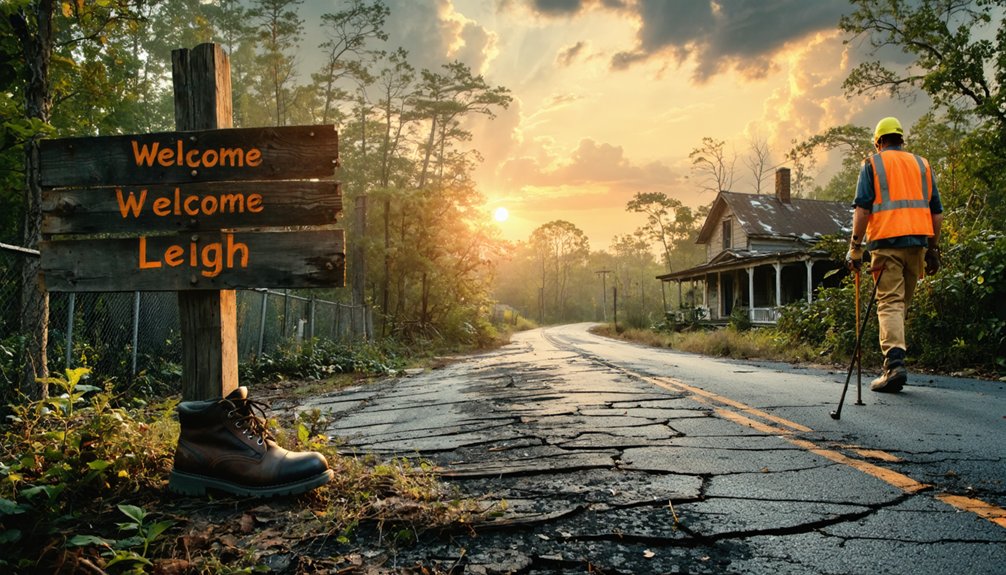
Before stepping onto crumbling floorboards or ducking through doorways held up by rust and hope, you need protection that goes beyond simple hiking gear. Safety gear essentials include FFP3 masks against black mold and asbestos, sturdy gloves for rusted surfaces, and headlamps with backup batteries—darkness in abandoned buildings isn’t romantic, it’s dangerous.
Group support structures make the difference between adventure and catastrophe:
- Never explore solo; buddy systems provide emergency assistance
- Share your route plan and return time with someone outside your party
- Travel with multiple vehicles for recovery support in remote locations
Test stairs along wall-attached sides, watch for ceiling collapses, and exit immediately when floors creak ominously.
Research site hazards beforehand, pack first-aid supplies, and respect structural warnings from experienced explorers.
Documenting Your Leigh Discovery
Capturing Leigh’s quiet dissolution requires more than pointing your camera at weathered boards and snapping a few shots. You’ll need thoughtful equipment selection—bring a DSLR for high-resolution details, a drone for overhead perspectives of scattered foundations, and your smartphone for geotagged timestamps that map each discovery.
Documentation techniques matter here: sketch architectural oddities your lens can’t quite capture, record ambient sounds of wind through hollow structures, measure surviving walls to quantify what’s left. Shoot 360-degree panoramas where the Banana Case Company once thrived, then return at different hours to track how light transforms ruins.
Note vegetation encroachment, log weather conditions, and collect oral histories from anyone who remembers Jean Shaw’s store. Your digital archive becomes Leigh’s memory—share it freely, without copyright restrictions, in South Carolina’s lost places repositories.
Frequently Asked Questions
Is Camping Allowed Near Leigh Ghost Town Overnight?
Camping isn’t permitted near Leigh’s ghost town overnight outside designated campgrounds. You’ll find campsites available at nearby Lee State Park, where you can reserve spots up to 13 months ahead and enjoy proper facilities while exploring the area.
Are There Any Local Legends or Paranormal Stories About Leigh?
Unlike some ghost towns boasting haunted mine shafts or ghostly encounters, Leigh’s story whispers only economic death. You won’t find paranormal legends here—just nature reclaiming freedom from commerce. The real ghosts are abandoned dreams, not spectral wanderers seeking your attention.
Do I Need Special Permits to Explore Leigh?
You’ll need to respect restricted land access since Leigh sits on private property. Check local regulations enforcement with Kershaw County authorities before visiting. Always seek landowner permission—it’s not just courteous, it’s legally required for your exploration freedom.
Can I Take Artifacts or Souvenirs From Leigh?
No, you can’t take artifacts from Leigh. It’s federal property where removing items is illegal theft. Respect local laws and show cultural sensitivity to displaced communities by visiting museums instead, where you’ll find authentic, legally obtained historical treasures.
Are Guided Tours of Leigh Available?
You won’t find a single soul offering guided tours in Leigh—it’s completely undiscovered territory. No guided tours offered seasonally exist here, and private tours available upon request? Forget it. You’ll explore this forgotten place entirely on your own terms.