You’ll find Lewiston, Vermont tucked along the Connecticut River, where stone foundations and cellar holes whisper stories of a once-thriving railroad hub. Start your visit at Ledyard Bridge, follow the “Lewiston Quest” trail, and wear long pants to guard against poison ivy. Arrive early on weekends to snag limited parking. Pair it with stops at Glastenbury and Ricker Basin for a full ghost town experience — there’s far more to uncover ahead.
Key Takeaways
- Start your visit at Ledyard Bridge, where the “Lewiston Quest” trail begins, offering easy navigation to the ghost town site.
- Wear long pants and closed-toe shoes, as poison ivy is prevalent and terrain is uneven and root-covered throughout trails.
- Explore stone foundations and cellar holes that reveal Lewiston’s history as a 19th-century railroad hub and coal supplier.
- Extend your road trip by visiting nearby ghost towns like Glastenbury, Ricker Basin, and West Castleton for diverse historical experiences.
- Bring water, insect repellent, and a trail map; arrive early on weekends due to limited parking at Ledyard Bridge.
How Lewiston, Vermont Went From Railroad Hub to Ghost Town
When Lewiston, Vermont first took shape in the 1760s along the Connecticut River, it had all the makings of a thriving New England settlement.
By the 19th century, it had risen into a legitimate railroad hub, shipping coal and lumber throughout the region and even supplying Dartmouth College with heating fuel.
By the 1800s, Lewiston had become a regional railroad powerhouse, fueling everything from lumber trade to Dartmouth’s heating needs.
But that economic transformation didn’t hold. Oil replaced coal, the Windsor Dam swallowed valuable farmland, and interstate highway expansion slowly strangled local businesses.
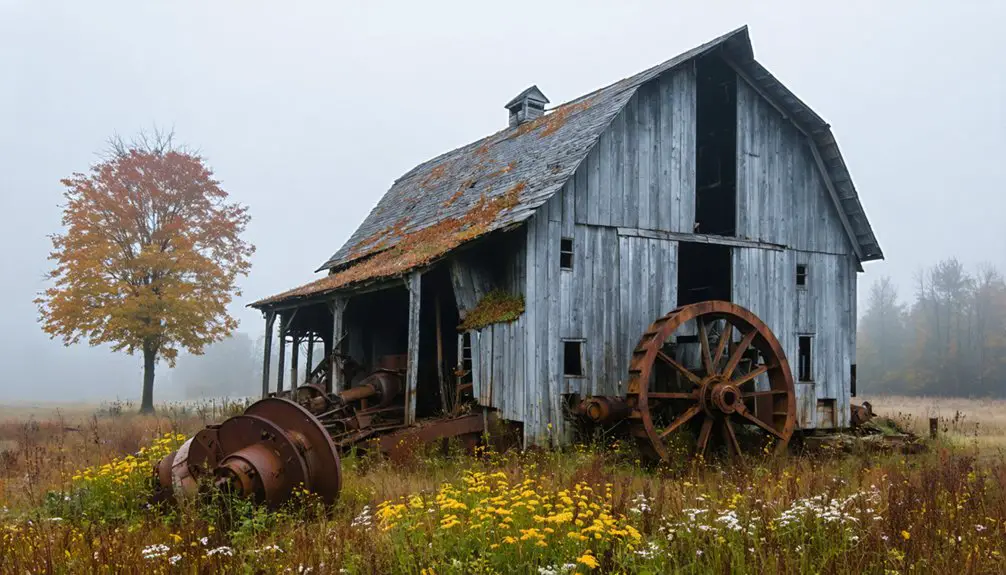
The railroad that once gave Lewiston its historical significance became obsolete as energy sources shifted. One by one, residents left, and the forest quietly reclaimed what settlers had built.
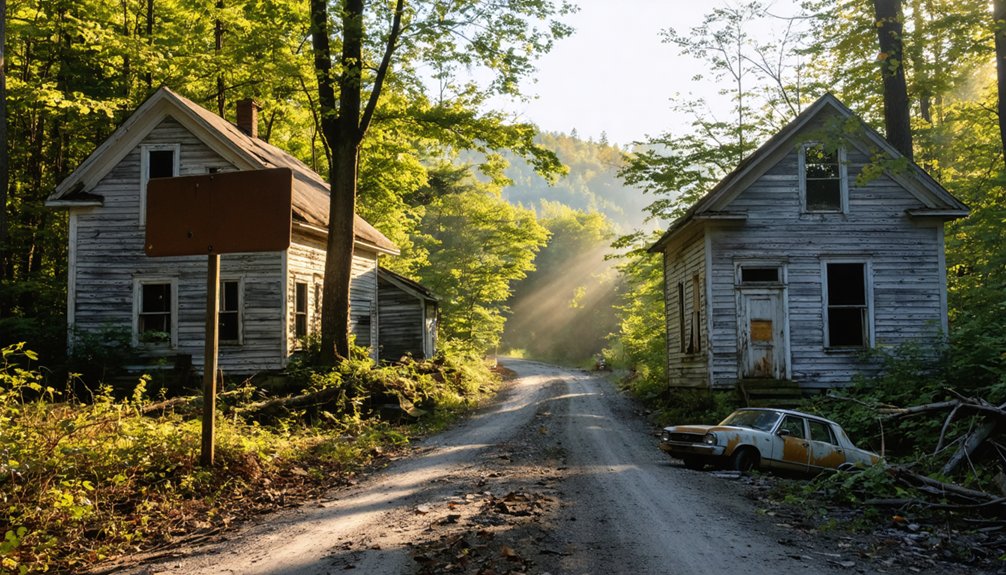
Today, you won’t find a functioning town — just foundations, cellar holes, and silence where a community once hustled.
The Stone Foundations, Cellar Holes, and Preserved LDS Church Still Standing
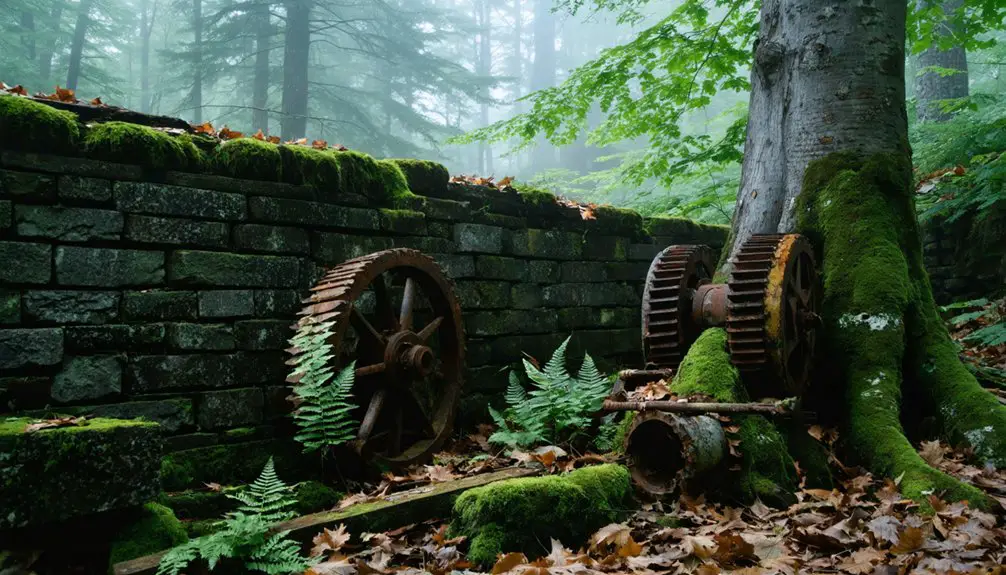
What the forest didn’t swallow, time left frozen in place. As you wander Lewiston’s remains, stone foundations rise through the undergrowth like skeletal outlines of vanished lives.
Old cellar holes mark where families once gathered, cooked, and slept — now silent beneath a canopy of reclaimed woodland. Your foundational exploration here feels genuinely intimate, connecting you directly to the people who built this place.
But Lewiston surprises you with something unexpected: a preserved church maintained by the Church of Jesus Christ of Latter-day Saints still stands on site.
It’s a striking example of historical preservation amid total community collapse. You’ll walk from crumbling ruins to a standing structure within moments, experiencing both ends of Lewiston’s story in a single, unforgettable visit.
How to Reach Lewiston via the Ledyard Bridge
Reaching those ruins and that preserved church starts with finding your way to Lewiston itself, and the Ledyard Bridge makes for a natural starting point.
You’ll find the “Lewiston Quest” launching right at the bridge’s foot, giving you immediate ghost town accessibility without complicated navigation.
Ledyard Bridge history ties directly into Lewiston’s own story, since this Connecticut River crossing once connected the town to regional trade routes that fueled its rise and, eventually, witnessed its quiet abandonment.
Park near the bridge, grab your bearings, and follow the trail toward the foundations you’ve read about.
Route 9 puts you within a short drive of the site, and combining this stop with nearby Vermont ghost town trails makes your road trip genuinely worthwhile.
What to Know Before You Go: Poison Ivy, Trail Conditions, and Parking
Before you set foot on the trail toward Lewiston’s stone foundations, a few practical details can save you from an itchy, frustrating afternoon.
Poison ivy precautions aren’t optional here — the plant thrives near hiding spots and cellar holes, so wear long pants and closed-toe shoes regardless of the season.
Trail conditions vary depending on recent rainfall, so expect uneven, root-covered terrain that demands sturdy footwear.
Wet weather turns the paths slippery near the riverbank, so check forecasts before heading out.
Park at the foot of Ledyard Bridge, where roadside space accommodates a small number of vehicles.
Arrive early on weekends to secure a spot.
Pack water, insect repellent, and a trail map, and you’ll move through this forgotten village with confidence and ease.
Ghost Town Road Trips Near Lewiston: Glastenbury, Ricker Basin, and West Castleton
Three ghost towns within striking distance of Lewiston make for an ambitious but rewarding multi-stop road trip through Vermont’s forgotten past.
Head southwest toward Bennington, where Glastenbury legends of disappearances and wilderness mystery draw curious explorers into dense forest remnants. It’s unsettling, atmospheric, and unlike anything else in New England.
Shift northeast to Waterbury State Park, where Ricker Basin trails wind past cellar holes and stone walls reclaimed by hardwood forest. The silence there hits differently than a museum ever could.
Finally, West Castleton’s slate quarry ruins offer an industrial contrast — raw, heavy, and industrial in scale.
Together, these three destinations reward anyone willing to string them into a single road trip, giving you Vermont’s full spectrum of abandonment, legend, and reclaimed wilderness.
Frequently Asked Questions
What Year Was Lewiston, Vermont Officially Founded as a Settlement?
You’ll find Lewiston’s Settlement Timeline dates back to the 1760s, when early pioneers carved this historic village along the Connecticut River — a founding moment of undeniable Historical Significance that shaped New England’s fascinating colonial heritage.
Which Academic Book Documented Lewiston’s Ghost Town History in 1983?
You’ll find Lewiston’s ghost town historical documentation in “The Geography of a New England Ghost Town: Lewiston, Vermont,” published in 1983. This engaging academic book captures the eerie, forgotten story of this vanished Vermont settlement beautifully.
Did Lewiston Directly Supply Coal to Dartmouth College for Heating?
Yes, you’ll find that Lewiston’s coal supply did directly fuel Dartmouth heating systems. This thriving hub actively shipped coal across the Connecticut River, keeping the college warm before oil eventually replaced it all.
How Did Windsor Dam Construction Contribute to Lewiston’s Farmland Loss?
When Windsor Dam’s construction flooded the valley, you’d have watched fertile farmland disappear beneath rising waters. The dam impact wiped out traditional farming techniques, stripping Lewiston’s agricultural heart and accelerating the town’s inevitable decline into abandonment.
Is Lewiston, Vermont Recognized Among New England’s Top Ghost Towns?
Like a forgotten legend whispering through ancient trees, Lewiston’s earned its place among New England’s top 10 ghost towns. You’ll discover its ghost town legends and historical significance make it a truly unmissable destination.
References
- https://www.youtube.com/watch?v=ScW-H7A8yL8
- https://thebridgevt.org/2022/10/ghost-towns-of-new-england/
- https://myfamilytravels.com/supposedly-boring-vermont-towns-hiding-some-truly-strange-landmarks
- https://vitalcommunities.org/quest/lewiston-2/
- https://www.youtube.com/watch?v=2fvPo9iQC-w
- https://vermontcountry.com/2022/09/18/ghost-town/
- https://books.google.com/books/about/The_Geography_of_a_New_England_Ghost_Tow.html?id=MD7mHAAACAAJ