Planning a ghost town road trip to Aransas City means tracing the footsteps of a Republic of Texas port that once rivaled the Gulf Coast’s busiest trade hubs. You’ll find it on the Live Oak Peninsula, roughly three hours from Houston and under an hour from Corpus Christi. Pack sturdy shoes, sunscreen, and a camera, and visit in fall or spring for the best conditions. Everything you need to make this trip unforgettable is just ahead.
Key Takeaways
- Aransas City, located on Live Oak Peninsula near Fulton, Texas, is accessible within three hours from Houston and under an hour from Corpus Christi.
- Founded in 1837 by James Power, the town peaked at 500 residents before economic decline and competition led to its abandonment by 1847.
- Visit in fall or spring on weekdays, arriving mornings to experience coastal mist and avoid crowds while exploring historical markers and archaeological remnants.
- Pack sturdy walking shoes, water, sunscreen, insect repellent, a camera, and printed maps, as cell service is limited throughout the area.
- Combine your visit with nearby ghost towns St. Mary’s, Copano, and former port Aransas on San José Island for a fuller historical experience.
What Is Aransas City and Is This Ghost Town Worth Visiting?
Where the Live Oak Peninsula juts into the waters where Aransas Bay meets Copano Bay, you’ll find the forgotten remnants of Aransas City — a once-thriving port town that helped shape the early Republic of Texas. Founded in 1837, it once bustled with 500 residents and served as a crucial commercial gateway before political rivalries, raids, and competing ports slowly drained it of life.
For travelers drawn to ghost town exploration, Aransas City delivers genuine historical significance.
You’re walking ground where Spanish fortifications once stood, where early Texas commerce flowed, and where an entire community simply disappeared.
Near present-day Fulton, the site won’t greet you with dramatic ruins, but if you value raw, unfiltered history over tourist polish, this overlooked peninsula rewards the curious traveler completely.
The Rise and Fall of Aransas City: Republic of Texas Port Town
When James Power founded Aransas City in 1837 on the tip of the Live Oak Peninsula, he envisioned a thriving Republic of Texas port where ships sailed a natural channel connecting Aransas Bay to Copano Bay.
The town’s fate shifted dramatically when President Lamar awarded the coveted customhouse to the rival port of Lamar, a politically charged decision that reflected the bitter feud between Lamar and former President Sam Houston — Power had backed the wrong side.
Mexican irregulars raided the town in 1838, 1839, and 1841, and attacks by Karankawa and Comanche groups compounded the losses, leaving Aransas City largely abandoned by 1847.
Founding Aransas City’s Strategic Port
Nestled at the tip of the Live Oak Peninsula, Aransas City rose as one of the Republic of Texas‘s most promising port towns when James Power founded it in 1837.
Its strategic location at the confluence of Aransas Bay and Copano Bay made it a natural hub for commerce and trade. Ships navigated a natural channel from Aransas Pass, a route sailors had used since 1795.
Power partnered with former Texas Governor Henry Smith to advertise and organize the town, which sat on the site of the old Spanish fort of Aránzazu.
Political Rivalries Doomed Commerce
Despite its promise as a thriving port, Aransas City‘s fate wasn’t sealed by nature or geography—it was sealed by politics. President Lamar stripped the town of its customhouse, awarding it instead to rival port Lamar, founded by James Byrne—a Lamar loyalist.
James Power, Aransas City’s founder, backed Sam Houston, and that political division cost the town dearly.
Losing the customhouse triggered rapid economic decline. Without it, merchants rerouted trade elsewhere, tax revenue vanished, and Aransas City surrendered its county seat status.
Then Henry Kinney—a former Aransas City resident—founded Corpus Christi, pushing the region’s commercial center further west.
What once felt like destiny became a cautionary tale about how political rivalries can strangle even the most promising free-market ambitions, leaving nothing behind but silence and memory.
Raids Accelerated Town’s Abandonment
Political betrayal had already weakened Aransas City’s foundation, but Mexican irregulars and hostile Native American groups delivered blow after blow that the struggling port simply couldn’t absorb. The raids’ impact proved devastating across multiple fronts.
Mexican irregulars struck in 1838, 1839, and 1841, while Karankawa and Comanche attacks added relentless pressure on settlers who’d already watched their economic lifeline disappear.
You can imagine the impossible choice facing residents: rebuild after each assault or abandon the dream entirely. Most chose to leave.
By 1847, Aransas City’s ghost town decline was complete, its government dissolved and its streets emptied of the 500 souls who’d once believed this peninsula port would define Texas commerce.
Freedom-seekers had built something remarkable here — and then watched it crumble from all sides.
Where Aransas City Sits on the Live Oak Peninsula
The tip of the Live Oak Peninsula is where you’ll find the ghost town of Aransas City, perched along the waters where Aransas Bay meets Copano Bay.
Today, the site sits near Fulton, Texas, quietly reclaimed by the coastal landscape that once made it so strategically valuable.
The geographical features here still tell the town’s story. That natural channel running from Aransas Pass to Copano Bay once carried supply ships as early as 1795, long before James Power ever platted a single street.
Now, local wildlife — herons, roseate spoonbills, and coastal shorebirds — roam the same shoreline that merchants and settlers once walked.
You’re standing where the Republic of Texas once conducted serious business, and nature has been slowly, steadily taking it back ever since.
What Remains at the Aransas City Site Today
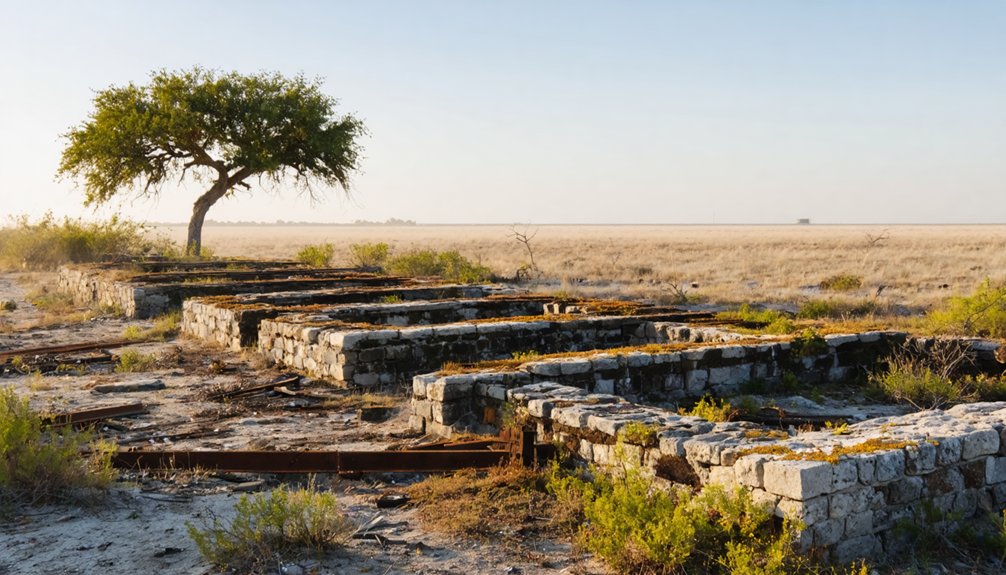
When you visit the Aransas City site today, you won’t find much standing above ground, but the landscape itself carries the quiet weight of a once-thriving Republic of Texas port.
Historical markers guide you through what’s left, anchoring the story of the town’s rise and fall to the actual ground where it all happened.
You’ll leave with a sharper sense of how quickly ambition, politics, and geography can erase a place from the map.
Visible Physical Remnants
Few visible traces remain of what was once a thriving Republic of Texas port, but if you visit the tip of the Live Oak Peninsula near present-day Fulton, you’ll find the land itself tells a quiet story.
Archaeological finds and historic landmarks connect you to the 1830s settlement that once bustled with 500 residents and essential commerce.
Look for these remnants during your visit:
- The peninsula’s geography — the same strategic shoreline where Aransas Bay meets Copano Bay
- Archaeological traces — scattered artifacts recovered from the former Spanish fort of Aránzazu’s footprint
- Historical markers — signage documenting the town’s Republic of Texas-era significance
The site rewards curious explorers willing to read the landscape carefully rather than expecting grand ruins.
Historical Markers Present
Standing at the tip of the Live Oak Peninsula today, you’ll find that historical markers serve as the primary anchors connecting visitors to Aransas City’s forgotten story. These weathered signs document the town’s historical significance as a thriving Republic of Texas-era port, reminding you that 500 residents once built lives on this quiet stretch of Texas coast.
The markers reference Aransas City’s role as Refugio County’s original seat of government and its position as a critical trading hub before political betrayal and repeated raids dismantled everything Power had built.
For serious ghost town exploration, these plaques provide essential context that transforms an otherwise unremarkable peninsula into a layered historical landscape. Read them carefully — they’re carrying the entire weight of a vanished civilization.
Getting to Aransas City From Houston, San Antonio, and Corpus Christi
Reaching Aransas City’s ghost town site near Fulton takes roughly three hours from Houston, two hours from San Antonio, and under an hour from Corpus Christi.
Each route delivers you through coastal geography shaped by centuries of port significance, historical narratives, and archaeological findings buried beneath Texas soil.
Here are three key driving routes:
- From Houston: Take US-59 South to US-77, then follow TX-35 into Fulton.
- From San Antonio: Head southeast on US-181 directly through Refugio toward Fulton.
- From Corpus Christi: Drive north on TX-35, reaching Fulton in approximately 40 minutes.
Pack provisions, fuel up early, and embrace the open road leading toward one of Texas’s most forgotten coastal settlements.
When to Make the Drive to Aransas City

When you make the drive to Aransas City matters as much as how you get there. Fall and spring offer the best travel times, delivering mild temperatures and golden coastal light that makes the scenic routes along Aransas Bay shimmer with quiet beauty.
Summer heat can be punishing, and hurricane season runs June through November, so check forecasts before you go.
Spring wildflowers line the roads approaching the Live Oak Peninsula, echoing the hopeful energy settlers once carried into this forgotten port town.
Spring wildflowers bloom along the peninsula roads, carrying the same quiet hope that once drew settlers to this forgotten shore.
Weekday visits give you undisturbed time to wander the site without crowds. Arrive in the morning when coastal mist still clings to the bay, and you’ll feel the weight of history more deeply than any afternoon visit could offer.
Where to Stay and Eat Before or After Visiting Aransas City
Fulton and Rockport sit just minutes from the ghost town site, and they’ll take care of you well before or after your visit to the Live Oak Peninsula.
Both towns offer solid ghost town accommodations and dining options worth planning around:
- Rockport Harbor hosts waterfront hotels and bed-and-breakfasts with views matching the region’s storied coastal history.
- Local seafood restaurants in Rockport serve fresh Gulf catches that connect you to the same waters old Aransas City merchants once depended on.
- Fulton’s smaller lodges and vacation rentals give you a quieter, more independent base for exploring the peninsula on your own terms.
Stay close, eat well, and let the surrounding bay remind you why settlers once fought hard to build something lasting here.
Nearby Ghost Towns Worth Adding to Your Road Trip
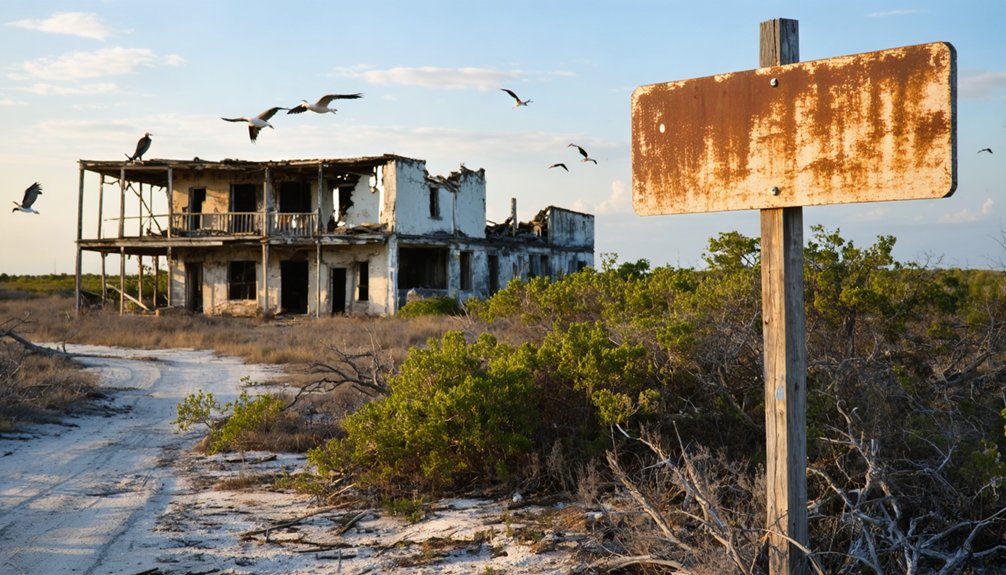
Once you’ve rested and eaten, the Copano Bay region rewards curious road-trippers with more ghost towns than most people realize.
St. Mary’s operated as a busy shipping hub until two back-to-back hurricanes in the late 1880s broke it permanently. Copano, the town that gave the bay its name, struggled with water shortages and faded by the mid-1800s.
Over on San José Island, the former port of Aransas withered under Union blockade and destruction during the Civil War.
Each site offers distinct ghost town attractions that deepen your understanding of early Texas coastal life. Exploring these locations together creates a meaningful loop of historical preservation, connecting forgotten communities that once shaped an entire region before time, storms, and politics erased them from the map.
Planning Your Aransas City Visit: Timing, Packing, and the Drive
Planning a visit to Aransas City means timing matters as much as the drive itself. Spring and fall offer the best conditions for ghost town exploration, avoiding brutal Gulf Coast summers.
From Rockport, head south toward Fulton on the Live Oak Peninsula, where the historical significance of this former Republic of Texas port still lingers in the salt air.
Pack smart before you go:
- Sturdy walking shoes for uneven, overgrown terrain
- Water, sunscreen, and insect repellent for coastal exposure
- A camera and printed maps, since cell service runs thin out here
You’re chasing a town that once housed 500 souls and rivaled the region’s busiest ports.
Give yourself unhurried time to wander, observe, and let the silence tell its story.
Frequently Asked Questions
Was Aransas City Ever the County Seat of Refugio County?
Yes, you’ll find it fascinating that Aransas City served as Refugio County’s county seat until 1840, carrying tremendous historical significance and economic impact as a thriving Republic of Texas port before political rivalry stripped away its proud distinction.
Who Founded Aransas City and When Was It Incorporated?
Once a thriving port, now silent earth — James Power founded Aransas City in 1837, and it’s incorporated in 1839. You’ll feel the founder history and city growth echo through its abandoned, freedom-forged past.
Why Did Aransas City Lose Its Republic of Texas Customhouse?
You’ll find Aransas City lost its customhouse due to political rivalry — James Power supported Houston while James Byrne backed President Lamar. This decision sparked economic decline, stripping the town of its historical significance as Texas’s essential western port.
Which Native American Groups Attacked Aransas City During Its Settlement Years?
You’d have faced fierce historical conflicts with the Karankawa and Comanche, two Native tribes whose attacks tested Aransas City’s resolve. These battles shaped the town’s turbulent story, reminding you of the untamed freedom settlers craved and fought to protect.
Did Mexican Irregulars Ever Raid Aransas City During Its Operation?
Yes, because nothing says “thriving port town” like three Mexican incursions! You’d have witnessed raids in 1838, 1839, and 1841, each attack cementing Aransas City’s historical significance as a resilient, freedom-seeking settlement that refused to quietly surrender its independence.
References
- https://kids.kiddle.co/Aransas_City
- https://en.wikipedia.org/wiki/Aransas_City
- https://en.wikipedia.org/wiki/Aransas
- https://portaransasmuseum.org/pam-wheat-stranahan-ghost-towns-of-copano-bay/