Planning a road trip to Lignite, Virginia puts you face-to-face with the state’s only true ghost town. You’ll find this forgotten mining settlement buried inside Jefferson National Forest in Botetourt County. Once a thriving company town complete with stores, churches, and a theater, Lignite collapsed after the 1920s and was absorbed by the federal government by the 1950s. It’s a half-day drive from Roanoke, and there’s far more to this haunting destination than meets the eye.
Key Takeaways
- Lignite, Virginia, located in Jefferson National Forest in Botetourt County, is recognized as Virginia’s only true ghost town.
- Access the site via Lignite Road, branching off Craig Creek Road, using GPS coordinates 37°37′38″N 79°59′54″W.
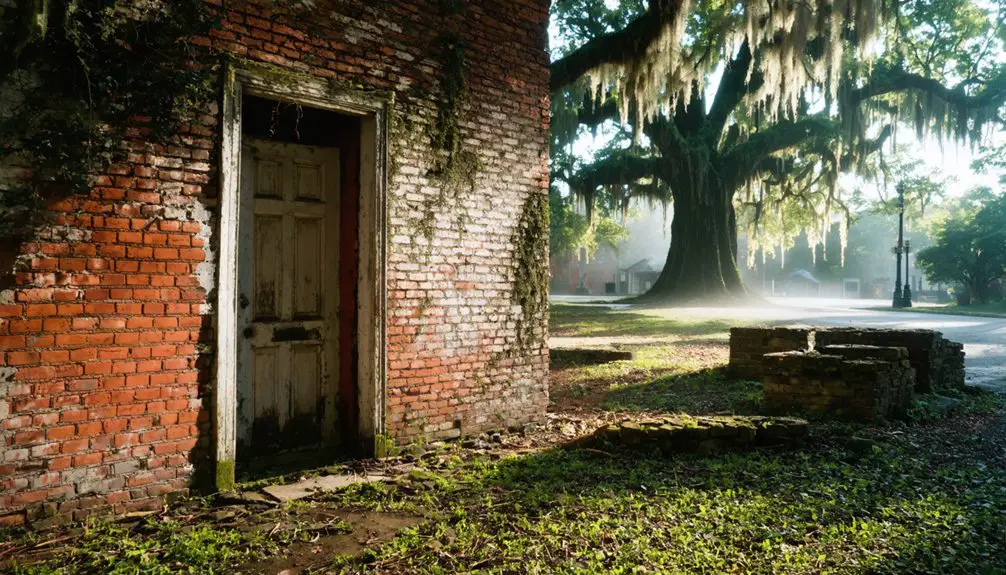
- Explore remnants including chimney ruins, building foundations, and traces of the original main street reclaimed by forest.
- Depart early from Roanoke, just a half-day drive away, to maximize daylight for exploration.
- Prepare with sturdy footwear, a trail map, and water; combine the visit with nearby Bald Mountain trails.
Why Lignite Was Built, Abandoned, and Forgotten
Tucked deep in the Jefferson National Forest of Botetourt County, Virginia, Lignite was born out of industrial ambition. The Allegheny Ore and Iron Company founded it in the late 1800s, building an entire self-contained community around lignite mining operations. Its historical significance stretched beyond coal — residents had a company store, churches, a school, and even a main street theater.
But the town’s fate shifted in the 1920s when higher-grade coal emerged from Pennsylvania and superior iron ore surfaced near the Great Lakes. Demand collapsed, and the company walked away.
Residents held on through the 1950s until the federal government absorbed the land into Jefferson National Forest, forcing everyone out. What once thrived as a working community quietly vanished, leaving only ruins and silence behind.
What Makes Lignite, Virginia a True Ghost Town?
When you explore Lignite, Virginia, you’re stepping into what many consider the state’s only true ghost town—a place that meets every criterion: extant ruins and a reason for existence that’s long since vanished.
Founded in the late 1800s for lignite mining, the town thrived until the 1920s, when superior resources elsewhere made it obsolete, and residents were eventually forced out by the 1950s.
Today, you’ll find traces of roads, chimney remnants, and foundation ruins that confirm this abandoned settlement‘s haunting status as a genuine ghost town.
Abandoned Town Historical Background
Few ghost towns earn that title as legitimately as Lignite, Virginia.
The Allegheny Ore and Iron Company founded this settlement in the late 1800s, building an entire community around its mining legacy.
You’d have found a company store, churches, a school, a post office, and even a main street theater here — a fully functioning town development built solely to support lignite extraction.
Ruins Confirming Ghost Town Status
Scattered across the forest floor, the ruins of Lignite check every box of what makes a ghost town legitimate: extant physical remains and a permanently lost reason for existence.
Your ruins exploration begins where Lignite Road delivers you to faint traces of the original streets. You’ll spot chimney remnants from the company manager’s house rising through the brush, along with crumbling building foundations half-swallowed by vegetation.
These ghostly encounters aren’t dramatized—they’re the quiet, undeniable evidence of a community that once functioned fully and then simply stopped. The mining operation collapsed, superior resources elsewhere made Lignite irrelevant, and Jefferson National Forest eventually reclaimed the land entirely.
No residents remain. No economy survives. What you find instead is raw, unfiltered history hiding in plain sight.
What Ruins Can You Still Find at Lignite Today?
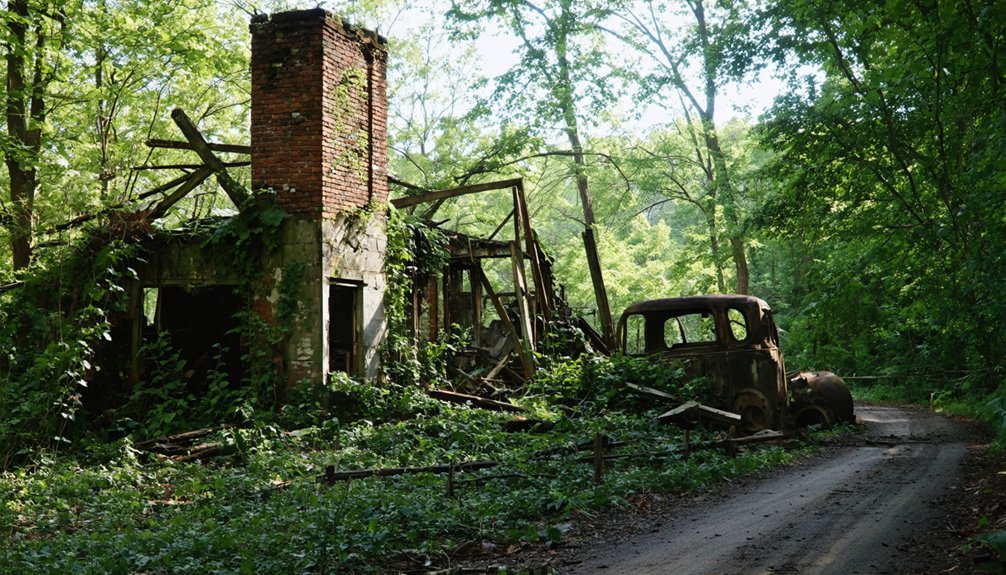
Though Lignite has largely been reclaimed by the forest, you’ll still find enough remnants to piece together the town’s former life. Your ruins exploration will uncover tangible proof of the historical significance this forgotten community once held.
Here’s what you can still discover on-site:
- Chimney remnants from the company manager’s house, standing as silent sentinels among the overgrowth.
- Building foundations scattered throughout the landscape, outlining where homes and businesses once stood.
- Traces of the original main street, where roads still cut recognizable paths through the reclaimed wilderness.
These surviving fragments aren’t much, but they’re enough. The forest has consumed most of Lignite, making each remaining ruin feel like an earned discovery rather than a tourist attraction.
Where Exactly Is Lignite and How Do You Reach It
Tucked into Botetourt County, Virginia, within Jefferson National Forest, Lignite sits at coordinates 37°37′38″N 79°59′54″W — remote enough that reaching it requires deliberate effort.
Plug those coordinates into your GPS navigation before leaving civilization, because cell service gets spotty fast once you’re deep in the forest.
You’ll access the site via Lignite Road, branching off Craig Creek Road — a winding, scenic route that rewards patient drivers with sweeping woodland views.
Pre-car era travelers considered Roanoke a full day’s journey away, and while modern roads cut that dramatically, don’t underestimate the terrain.
Wear sturdy footwear, since you’ll shift from driving to hiking once pavement surrenders to forest floor.
The trails of nearby Bald Mountain also connect to the site, giving you flexible approach options.
Plan Your Lignite Day Trip From Roanoke
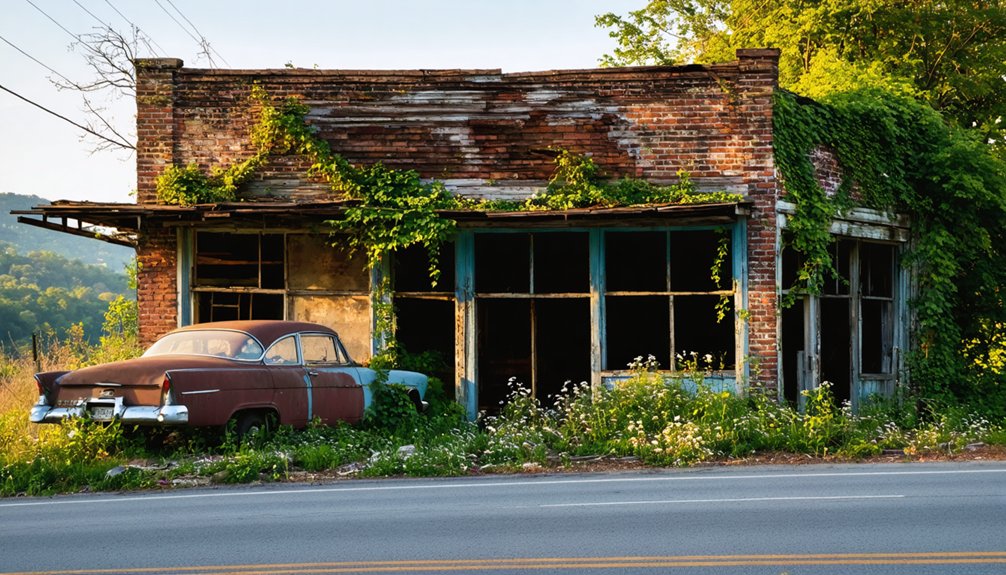
A half-day drive from Roanoke gives you everything you need to pull off a satisfying Lignite ghost town visit without rushing.
Pack light, fuel up early, and follow Craig Creek Road to Lignite Road. You’ll want to arrive with enough daylight to explore properly.
Here’s how to structure your day:
- Drive out early — Roanoke sits close enough for a comfortable morning departure before heat builds.
- Research Lignite history beforehand — Understanding the company town’s rise, lignite mining techniques, and its 1920s collapse deepens what you see among the ruins.
- Combine with Bald Mountain trails — Extend your exploration naturally without backtracking.
You’re not visiting a museum. You’re walking ground where real people lived, worked, and eventually disappeared.
Trails and Ruins Near Lignite Worth the Detour
Once you’ve explored Lignite’s crumbling foundations and chimney remnants, the surrounding Jefferson National Forest rewards curious hikers with trails that put the ghost town’s isolation in sharp geographic context.
Bald Mountain’s nearby ghost town trails wind through dense forest, offering elevation and perspective that reveal just how remote this company town truly was. You’ll understand immediately why reaching Roanoke once required a full day’s journey.
Pair your historical exploration with a detour toward Fenwick Mines, another local site connected to the region’s lignite and iron ore legacy. Together, these stops paint a vivid picture of industrial ambition colliding with geographic reality.
Bring sturdy footwear, a trail map, and enough water for several hours outdoors. This corner of Virginia rewards those willing to wander off the beaten path.
Frequently Asked Questions
Was Lignite, Virginia Ever Officially Recognized as an Incorporated Town?
Once thriving, now silent — Lignite history reveals no official incorporation. Town demographics show it was a company-owned settlement, meaning you’ll find ruins, not records, of any recognized municipal status.
Are There Any Guided Tours Available for Visiting Lignite’s Ghost Town Ruins?
No guided tours exist, but you’ll discover Lignite’s historical significance by exploring it independently! Hike Bald Mountain’s trails, uncover ghostly ruins, and create your own ghost stories as you roam this hauntingly free, untamed Virginia wilderness.
Is a Permit Required to Explore Lignite Within Jefferson National Forest?
You don’t need a permit for general exploration, but check current permit requirements before visiting. Follow these exploration tips: stay on trails, respect ruins, and leave no trace while discovering Lignite’s haunting, abandoned history freely.
Were Any Photographs or Maps of Lignite Preserved Before Its Abandonment?
The knowledge base doesn’t confirm preserved photographs or maps, but you’ll want to explore archival research at local historical societies, where historic preservation efforts may have captured Lignite’s vanished streets, structures, and mining operations before abandonment erased them.
Did Any Former Lignite Residents Document Their Experiences Living in the Town?
Once thriving, now silent—Lignite memories are scarce. You won’t find many resident stories documented, as the knowledge base doesn’t confirm formal accounts, leaving you to piece together this ghost town’s human history yourself.
References
- https://fincastleherald.com/lignite-a-botetourt-ghost-town/
- https://en.wikipedia.org/wiki/Lignite
- https://ghosttownfinder.com/towns/lignite-virginia
- https://www.blueridgeoutdoors.com/magazine/february-2012/lost-town-of-lignite/
- https://www.youtube.com/watch?v=oReUEYk70no
- https://www.youtube.com/watch?v=HNKugzEj6hw
- https://www.instagram.com/p/DEc40SoPExd/
- https://www.facebook.com/groups/AbandonedInVirginia/posts/985659888934485/
- https://genealogy.botetourtva.gov/botgen/s/local-history/item/52652
- https://www.virginia.org/listing/union-level-ghost-town/4358/