Sixty miles northeast of Los Angeles, Llano del Rio’s crumbling chimneys and stone foundations wait in the Mojave Desert as remnants of a bold 1914 socialist cooperative. You can reach the site in under 90 minutes via State Route 138, near mile marker 64.1. Visit in spring or fall to avoid brutal summer heat, bring water, and wear sturdy shoes. It’s a raw, unforgettable slice of American utopian history, and there’s far more to this story than the ruins reveal.
Key Takeaways
- Llano del Rio is located less than 90 minutes from Los Angeles via Interstate 5, State Route 14, and State Route 138.
- Find the ruins on both sides of Highway 138 near mile marker 64.1, approximately 20 miles east of Palmdale.
- Visit during spring or fall for mild weather; summer temperatures exceed 100°F, making exploration uncomfortable.
- No facilities exist on-site, so bring water, sunscreen, and sturdy shoes for self-guided exploration.
- The site features crumbling stone chimneys, foundations, and a grain silo from a 1914 socialist cooperative community.
What Is Llano Del Rio and Why Did It Collapse?
Tucked away in California’s Antelope Valley, Llano del Rio was an ambitious socialist commune that lawyer and politician Job Harriman founded in 1914 after losing his bid for Los Angeles mayor in 1911. Harriman envisioned a self-sustaining cooperative that would prove socialism could outperform capitalism.
At its peak in late 1917, the colony housed 1,500 members who built real infrastructure and maintained a vibrant cultural life.
But the dream unraveled fast. Environmental challenges, particularly severe water scarcity from unreliable rainfall and heavy irrigation demands, proved fatal. Economic decline followed, worsened by the colony’s isolation from neighboring settlements.
What’s Left of Llano Del Rio Today?
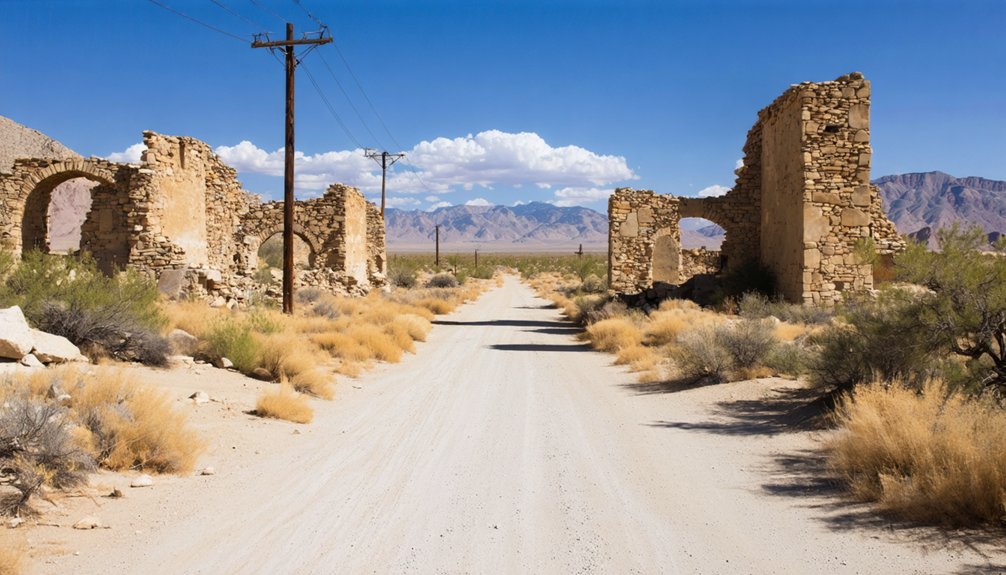
Although nature and neglect have had over a century to erase Llano del Rio, you’ll still find haunting remnants scattered along California State Highway 138 near mile marker 64.1. Stone chimneys rise unexpectedly from the desert scrub, foundations outline vanished buildings, and a weathered grain silo still stands as a quiet symbol to the colony’s ambitions.
The site carries California Historical Landmark No. 933 designation, though preservation efforts remain frustratingly minimal — a bronze plaque installed in the 1980s was stolen and never replaced. Artistic interpretations of the ruins have appeared in photography and literature, keeping the colony’s memory alive where official protection falls short.
You’re essentially exploring an unguarded open-air relic, free to walk the grounds and imagine 1,500 people once building their socialist dream here.
When Should You Visit Llano Del Rio?
Since Llano del Rio sits in California’s Antelope Valley desert, timing your visit makes a real difference in how much you’ll enjoy the experience. The same environmental challenges that doomed the colony still define this landscape today.
- Spring (March–May): Mild temperatures make exploring the architectural remnants comfortable, and wildflowers occasionally brighten the desert surroundings.
- Fall (September–November): Cooler air returns without winter’s unpredictability, giving you clear skies and pleasant walking conditions around the foundations and stone chimneys.
- Avoid summer: Desert heat exceeds 100°F regularly, turning a casual exploration into a genuine endurance test.
You’ll want sturdy shoes, plenty of water, and sunscreen regardless of season. The site has no facilities, so you’re completely on your own out there — just like the colonists were.
How to Get to Llano Del Rio From Los Angeles
Llano del Rio is less than 90 minutes from Los Angeles, making it an easy day trip. Head north on Interstate 5 through the Valley, branch off onto State Route 14, then follow State Route 138 east until you’ve traveled roughly 20 miles past Palmdale.
Google Maps won’t show “Llano del Rio” directly, but searching “Llano del Rio collective” will get you close enough to spot the ruins on both sides of the highway near mile marker 64.1.
Drive Time From LA
Tucked less than 90 minutes east of Los Angeles, Llano del Rio is surprisingly easy to reach by car. This site of urban decay and historical preservation deserves a spot on your road trip list.
Head north on Interstate 5 through the Valley, then branch onto State Route 14. From there, State Route 138 leads you directly to the ruins, roughly 20 miles east of Palmdale.
Keep these navigation tips in mind:
- Google Maps won’t show “Llano del Rio” directly — search “Llano del Rio collective” instead
- Watch for mile marker 64.1 along Highway 138
- The ruins appear on both sides of the highway, so you can’t miss them
Freedom-seekers, the open road is calling — and history is waiting.
Highway Route Overview
Getting there’s half the adventure, and the route itself sets the mood for what you’ll find. Head north on Interstate 5 through the Valley, where urban development crowds every shoulder of the highway.
Branch off onto State Route 14, and almost immediately the landscape shifts — the city’s grip loosens, and you’ll feel the open desert reclaiming its territory.
Take State Route 138 east off Route 14, and you’re on the final stretch. The environmental impact of this arid region becomes unmistakably clear as scrubland replaces suburbs and the Antelope Valley spreads wide around you.
Drive roughly 20 miles east of Palmdale, and you’ll spot the ruins sitting right alongside the highway — stone chimneys rising from the desert floor, waiting quietly for curious travelers like you.
Finding The Ruins
Despite its ghost town status, Llano del Rio sits less than 90 minutes from Los Angeles — close enough for a day trip but far enough to feel like you’ve genuinely escaped.
The ruins showcase urban decay reclaimed by desert, where environmental impact shaped both the colony’s collapse and its current haunting beauty.
Find the site along State Route 138, approximately 20 miles east of Palmdale near mile marker 64.1:
- Search Google Maps for “Llano del Rio collective” since the location isn’t listed directly.
- Look for ruins on both sides of State Route 138.
- Spot stone chimneys, foundations, and a grain silo as your landmarks.
No fence. No admission fee. Just open desert and crumbling history waiting for you to explore freely.
What Else Can You See Along State Route 138?
While you’re making the drive out to Llano del Rio, State Route 138 itself rewards the journey with sweeping views of the Antelope Valley’s high desert landscape, where Joshua trees dot the terrain and the San Gabriel Mountains frame the horizon.
The scenic vistas shift constantly as you travel east from Palmdale, revealing open ranchland, dry lakebeds, and wide desert flats that stretch toward the horizon.
Keep your eyes open for local wildlife — hawks circling overhead, coyotes crossing scrubland, and jackrabbits darting through brush are common sightings.
Small roadside pullouts let you stop and absorb the silence.
The route feels genuinely remote despite its proximity to Los Angeles, giving you that rare sense of open road freedom that makes a desert drive worth every mile.
Why Llano Del Rio Still Matters as a Socialist Landmark
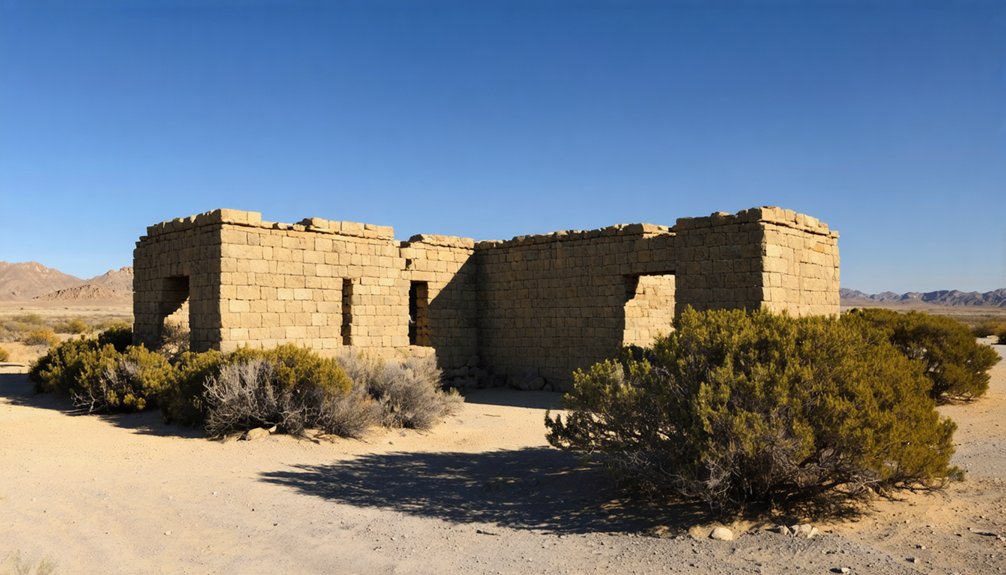
When you stand among Llano del Rio’s crumbling stone foundations, you’re witnessing more than a failed experiment — you’re connecting with Job Harriman’s bold challenge to capitalism that still resonates today.
Harriman’s vision of a self-sustaining cooperative community helped inspire modern intentional communities and worker-owned cooperatives across the country.
You’ll find that his ideas didn’t die in the Mojave Desert; they scattered like seeds, shaping socialist and cooperative movements that continue pushing back against economic inequality.
Harriman’s Enduring Socialist Vision
Though the crumbling chimneys and grain silo at Llano del Rio might look like little more than roadside rubble, they mark something far more significant — the physical remains of one man’s bold attempt to prove socialism could work on American soil. Job Harriman channeled his 1911 mayoral defeat into building a cooperative alternative to capitalism, launching the colony on May 1, 1914.
Despite environmental challenges and eventual collapse, his vision left an undeniable imprint.
When you visit, consider what Harriman was really fighting for:
- Individual agency within a collective framework
- Economic independence from corporate control
- Community-driven historical preservation of radical ideas
His experiment failed, but the questions it raised about freedom, cooperation, and self-determination still demand your attention today.
Inspiring Modern Cooperative Movements
Llano del Rio’s collapse didn’t bury its ideas — it scattered them. When roughly 200 members relocated to Louisiana and built New Llano, they proved that community resilience could outlast failure. That spirit echoes today in cooperative housing movements, intentional communities, and worker-owned businesses across the country.
When you stand among those crumbling chimneys and foundations along State Route 138, you’re touching something larger than ruins. This site represents historical preservation in its most honest form — imperfect, unguarded, and raw. No polished museum softens the lesson here.
Llano del Rio shows you that utopian ambition carries real costs, yet also real influence. The cooperative principles Harriman championed still shape progressive economic thinking. You don’t need a plaque to feel that weight.
Frequently Asked Questions
Did Any Llano Del Rio Members Continue Socialist Organizing After Leaving California?
About 200 members carried their socialist legacy to Louisiana, where they founded New Llano, continuing union organizing and cooperative living until 1937. You’d find their resilient spirit shaped communities far beyond California’s desert ruins.
Is There an Admission Fee or Permit Required to Visit the Ruins?
You don’t need an admission fee or permit to visit! The site lacks active historic preservation protection, so you’re free to explore. Follow tourist guidelines, respect the ruins, and enjoy your liberating journey along Highway 138.
What Happened to Job Harriman After Llano Del Rio Collapsed in 1918?
The knowledge doesn’t detail Harriman’s post-1918 fate, but you’ll find his historical context lives on through architectural remnants—those striking stone chimneys and foundations that still stand defiantly along Highway 138, echoing his bold, freedom-driven socialist vision.
Are the Ruins Safe to Walk Through and Explore on Foot?
You can explore the ruins on foot, but conduct your own hazard assessment before stepping through crumbling foundations. Preservation efforts are lacking here, so you’ll navigate this historically rich, untamed site entirely at your own adventurous risk.
Was Llano Del Rio Ever Featured in Films or Major Publications?
Unfortunately, the knowledge base doesn’t confirm Llano del Rio’s Hollywood fame or major publication features. But its stunning historical architecture and eerie film locations potential mean you’d swear it deserves its own dramatic documentary spotlight!
References
- https://www.pbssocal.org/shows/lost-la/llano-del-rio-from-utopia-to-ghost-town
- https://ladigs.com/ghost-towns-near-los-angeles/
- https://archive.aperture.org/article/2020/4/4/dreaming-dwelling
- https://www.destination4x4.com/llano-del-rio-antelope-valley-ghost-town/
- https://www.youtube.com/watch?v=kOYelh08JT4
- https://www.latimes.com/archives/la-xpm-1990-05-29-me-21-story.html
- https://digital-desert.com/llano-del-rio/
- https://www.youtube.com/watch?v=hvjNSxjmn6M
- https://trippingovertheworld.wordpress.com/2016/05/03/socialists-tried-to-create-a-utopia-near-la-these-ruins-are-all-thats-left/
- https://www.californist.com/articles/interesting-california-ghost-towns