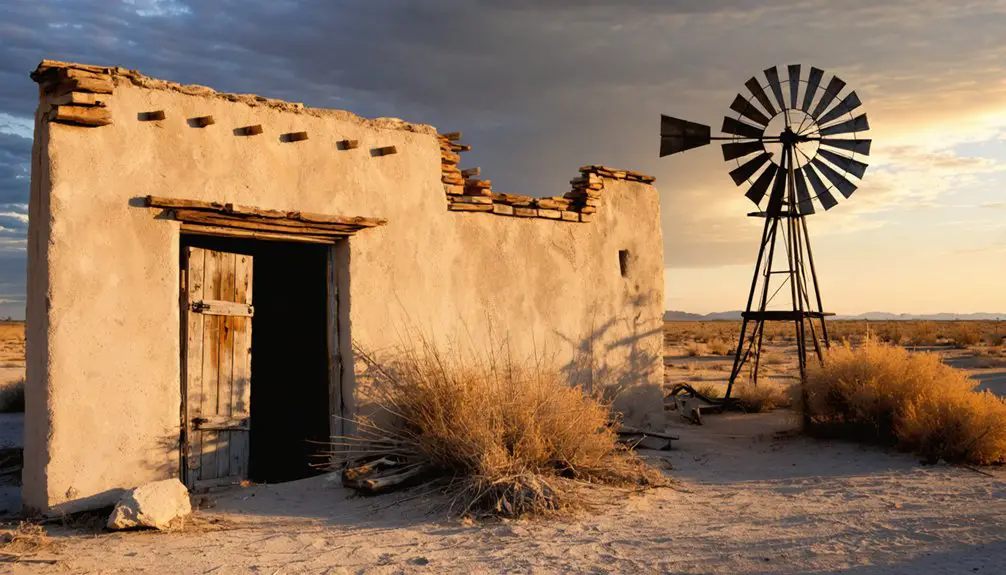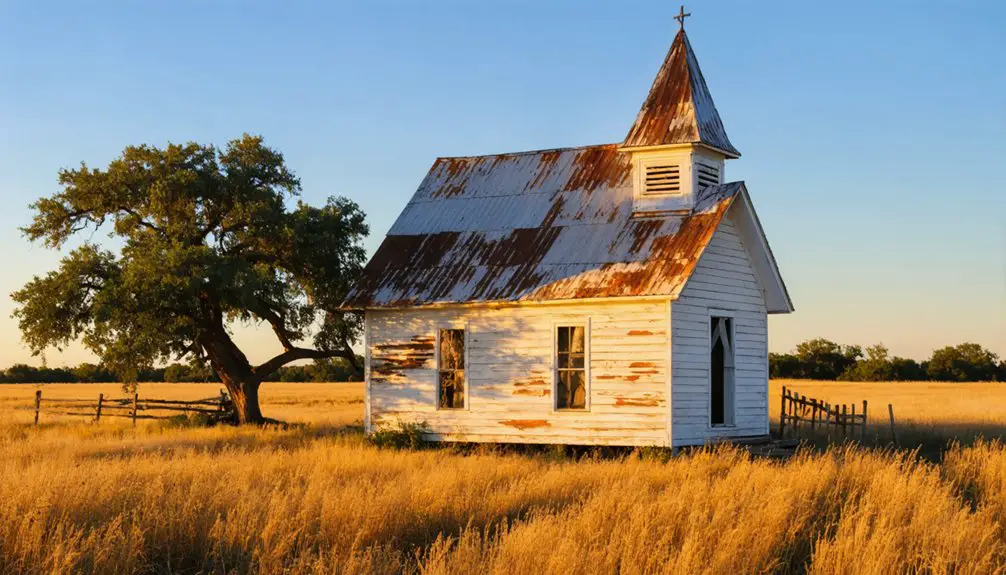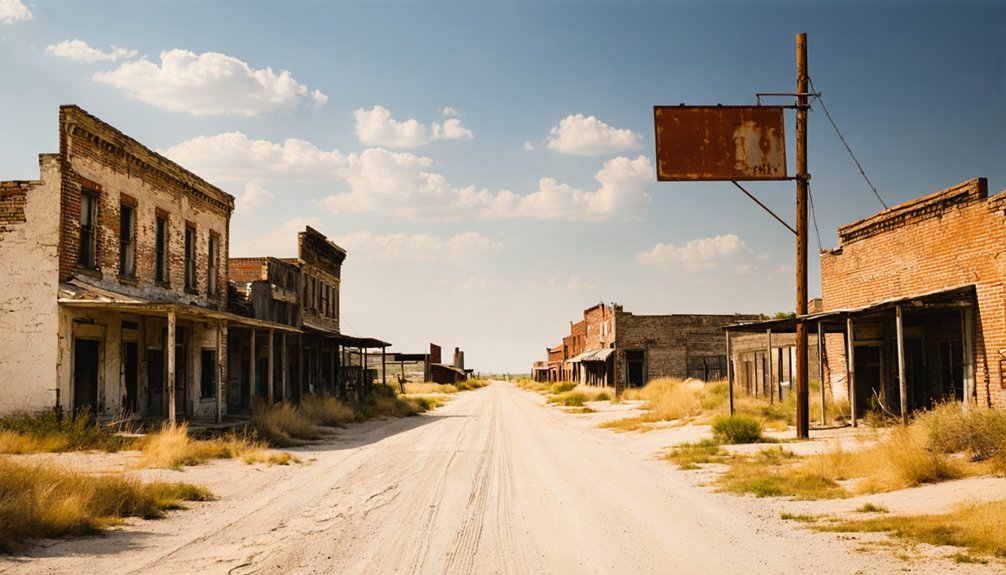
Start your road trip by heading northwest on US-87 toward Hale Center, then follow Farm Road 1914 to where Hale City once stood. Settlers platted this town in 1891, dreaming of railroads and prosperity, but drought and broken promises erased it by 1893. Today, you’ll find no ruins—just windswept plains, a historical marker, and a quiet legacy absorbed by modern Hale Center. There’s far more to this forgotten story than the silence suggests.
Key Takeaways
- Hale City, founded in 1891, was abandoned by 1893 due to severe drought and railroad promises that never materialized.
- The site is accessible via US-87 and Farm Road 1914, northwest of modern Hale Center, near Plainview, Texas.
- No physical structures remain; a historical marker commemorates Hale City’s merger with Epworth, which formed Hale Center.
- Visit during spring or fall for mild temperatures; summers are intensely hot, and winters bring harsh winds.
- Combine your trip with nearby ghost towns like Estacado, Bula, and Lazbuddie for a fuller regional exploration.
How Hale City Was Founded and Abandoned in Just Two Years
When settlers staked their claims in central Hale County back in 1891, they weren’t just building homes—they were betting on a future that Hale City never got to see. They’d pinned their hopes on railroad expansion that never arrived. Drought hit hard, and by 1893, those same determined pioneers walked away.
A rival settlement called Epworth had sprung up the same year, and instead of competing, the two communities merged into what you now know as Hale Center. Local legends say the merger was born from necessity, not choice.
Today, you won’t find much beyond historical artifacts and faded memories buried beneath modern Hale Center’s streets. That raw, independent spirit those original settlers carried? You can still feel it if you know where to look.
The Drought and Railroad Failure That Erased Hale City
Two forces killed Hale City, and neither gave the settlers much warning. The railroad they’d counted on never arrived, stranding their ambitions in the dust. Without those iron rails, commerce dried up faster than the creeks during the brutal 1893 drought that followed.
Two forces killed Hale City — a railroad that never came and a drought that finished the job.
You can almost feel their desperation when you study the historical artifacts tied to this era — land deeds, abandoned plat maps, the ghost of a town that simply couldn’t survive two consecutive betrayals.
Local legends still whisper about families who packed wagons overnight, choosing survival over stubbornness.
When drought and broken railroad promises hit simultaneously, Hale City’s settlers didn’t romanticize their losses. They merged with neighboring Epworth, built something new, and left Hale City to history’s keeping.
Where Hale City Stood and What the Land Looks Like Now
Hale City once occupied ground northwest of what’s now Hale Center’s city limits, platted in 1891 along land that settlers believed would anchor a thriving commercial hub. You won’t find surviving historical architecture marking the spot today — Hale Center’s growth absorbed the original footprint entirely, erasing visible boundaries between what was and what is.
Stand near Farm Road 1914, and you’re walking terrain where determined pioneers once built their hopes. Local legends whisper about the rivalry between Hale City and Epworth, two communities stubbornly competing until drought and railroad disappointment forced their merger in 1893.
The land itself feels indifferent now, flat Panhandle earth stretching toward the horizon, unbothered by the ambitions buried beneath it. You sense freedom here — and the quiet weight of forgotten beginnings.
When to Visit the Hale City Area and What to Expect
Spring and fall offer you the most comfortable conditions for exploring the Hale City area, when the Texas Panhandle’s harsh winds and brutal summer heat ease into something more forgiving.
You won’t find standing structures or marked foundations where Hale City once platted its hopeful streets in 1891, as the ghost town’s remnants long ago dissolved into Hale Center’s modern footprint.
What you *will* find is a quiet, windswept landscape that still carries the weight of a community that rose, faltered, and vanished within just two years.
Best Seasons To Visit
When you set out to explore the ghost town remnants of Hale City, timing your visit can make all the difference. Spring and fall offer the most rewarding experiences — mild temperatures let you wander freely, absorbing the historic architecture that still whispers of 1891 pioneer ambitions.
Summers in the Texas Panhandle hit hard, with brutal heat that can drain your enthusiasm before you’ve uncovered the local legends tied to Hale City’s brief, dramatic existence. Winters bring biting winds sweeping across open plains, making exploration uncomfortable.
April through May and September through October give you clear skies, manageable winds, and the quiet solitude that ghost town adventurers crave. You’ll feel the weight of history most honestly when nature itself isn’t fighting you every step of the way.
What Remains Today
Arriving at the former site of Hale City, you’ll find the original settlement has vanished beneath the modern footprint of Hale Center. The town was born from Hale City’s 1893 merger with its rival community, Epworth. The land speaks quietly now, but local legends persist among long-time residents who remember stories passed down through generations of pioneer families.
You won’t discover dramatic abandoned structures rising from the Texas Panhandle dust, but a historical marker acknowledges the merger that erased Hale City from the map. Drive along Farm Road 1914, and you’ll sense the layered past beneath ordinary streets.
The freedom-seekers who founded this community in 1891 left no visible ruins, only a name echoing through county records and the bones of Hale Center itself.
How to Get to the Hale City Site From Plainview and Lubbock
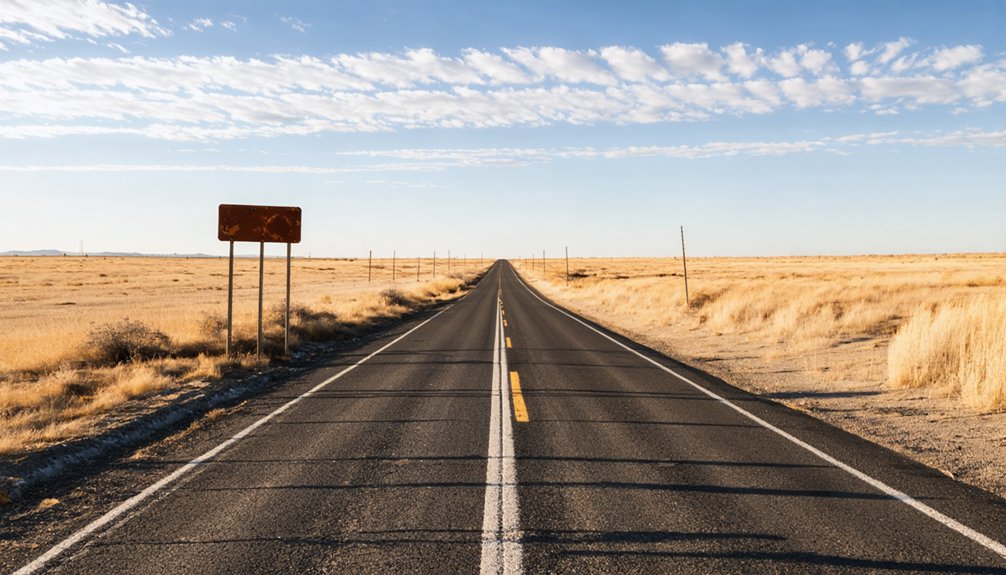
To reach the ghost town site of Hale City, you’ll want to start from Plainview, the Hale County seat, heading south along Farm Road 1914 toward the old northwest edges of modern Hale Center.
If you’re coming from Lubbock, roughly 45 miles to the south, take US-87 north through the flat Texas Panhandle plains until you reach Hale Center.
Where the original Hale City settlement once stood before its 1893 merger with Epworth.
Along either route, you’ll pass through the same windswept landscape that early 1891 settlers crossed, likely dreaming of a railroad town that never materialized.
Driving From Plainview
Since Hale City now rests beneath the streets of modern Hale Center, you’ll want to orient yourself toward that town rather than chasing a dot on an old map. From Plainview, the county seat sitting roughly 10 miles southeast, head northwest on US-87. The drive won’t take long, but let it carry you back to 1891, when determined settlers staked their futures on railroad promises that never arrived.
Once you reach Hale Center, slow down near Farm Road 1914. You’re treading ground where those original pioneers walked. Keep your eyes open for any abandoned structures or historical artifacts that hint at what preceded the merger.
The freedom those early settlers chased still echoes through this flat, windswept Texas Panhandle landscape.
Lubbock Route Options
Heading north from Lubbock, you’ll cover roughly 45 miles on US-87 before the flat Panhandle horizon delivers you to Hale Center. The town that swallowed Hale City whole back in 1893.
Follow Farm Road 1914 northwest to reach the original settlement’s footprint. The drive itself mirrors Hale City’s story — wide open land that once promised everything, then quietly absorbed the dreams of pioneers who arrived in 1891 expecting railroad prosperity.
Ghost town preservation efforts here remain minimal, making your personal reconnaissance genuinely meaningful. You’re not visiting a curated museum; you’re reading landscape as history.
The historical significance of this merger between Hale City and rival Epworth survives largely through markers and memory. Lubbock travelers gain the added advantage of approaching from the same direction those early settlers once did.
Nearby Landmarks En Route
Plainview, the Hale County seat sitting about 12 miles south of Hale Center, makes a natural starting point before you push northwest toward the ghost town‘s footprint. Stop at the Museum of the Llano Estacado, where historical artifacts from early settler life connect directly to Hale City’s pioneer era. You’ll feel the same restless ambition those 1891 founders carried when they platted their hopeful little community.
Driving north on US-87, watch for Farm Road 1914, your clearest geographic anchor near the former townsite. Preservation efforts have kept the merger story alive through local historical markers honoring both Hale City and Epworth. These roadside touchstones aren’t decorative—they’re your map into a vanished world where drought and railroad disappointment quietly erased an entire community’s dreams.
What Survives at the Hale City Site Today
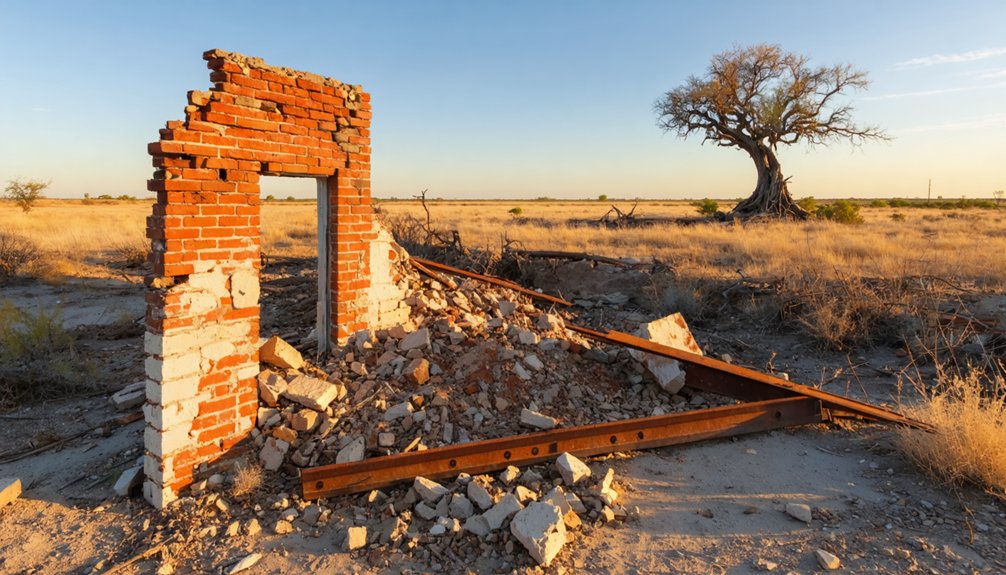
Although Hale City once buzzed with pioneer ambition, today you’ll find little trace of the settlement that briefly staked its claim on the Texas Panhandle. Modern Hale Center’s urban footprint has absorbed the original townsite, leaving ghost town preservation largely symbolic. Still, your visit isn’t without reward:
- A historical marker commemorating the 1893 merger with Epworth
- The general grid of Farm Road 1914, echoing former settlement boundaries
- Historical artifacts occasionally surfacing through local museum collections in nearby Plainview
- The enduring Hale Center community itself, which carries the original pioneer spirit forward
You’re fundamentally walking ground where two rival towns once competed for survival. That invisible history lives beneath every street, reminding you that freedom-seekers built something lasting, even from fleeting beginnings.
Where to Eat and Sleep Near Hale Center, Texas
After wandering Hale Center’s ghost-town streets, you’ll want a warm meal and a soft bed—and nearby Plainview, the Hale County seat, delivers both without much fuss. Drive roughly fifteen miles north, and you’ll find diners serving honest Texas comfort food alongside budget-friendly motels that won’t chain you down with unnecessary costs.
Before you leave Hale Center, pause at the historical plaques marking where two rival settlements surrendered their independence to become something larger. That quiet act of ghost town preservation deserves a moment’s reflection.
Back in Plainview, eat well, rest easy, and plan tomorrow’s route through the Panhandle’s forgotten corners. The open road is yours, and Texas rewards travelers who move through its history with curiosity rather than hurry.
Ghost Towns Near Hale City Worth Adding to Your Route
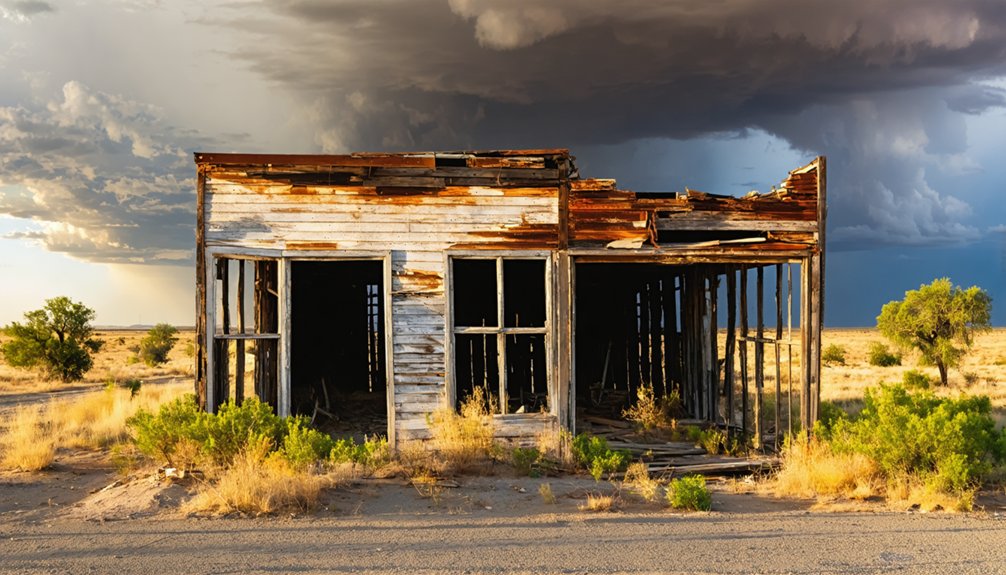
The Texas Panhandle scattered ghost towns like seeds across its flat expanse, and Hale City sits among dozens of forgotten settlements worth threading into your route. You’ll find ghost town legends embedded in every crumbling foundation across this region.
Consider adding these stops:
- Estacado – Quaker settlers built Texas’s first Panhandle courthouse here before abandoning it entirely.
- Bula – A farming community that drought quietly erased from the map.
- Lazbuddie – Named after two ranchers, it carries historical artifacts and fading structures.
- Springlake – Once promising, now a whisper of collapsed ambitions.
Each destination rewards curious travelers who crave raw, unfiltered history. You’re not just driving roads here — you’re tracing the bones of vanished dreams across open Texas sky.
What to Combine With Hale City for a Full Day Out
Once you’ve mapped out those neighboring ghost towns, rounding them into a fuller day means looking at what Hale City‘s surviving landscape connects to. Drive into Hale Center itself, where local legends about the 1893 merger still echo through older residents’ memories.
Stop at Plainview, the county seat, where historic preservation efforts have kept artifacts from early Panhandle settlement alive in local museums. You’re tracing ground once walked by pioneers who expected railroads and stayed through drought. That story deserves a full day.
Farm Road 1914 connects these points without rushing you. You’ll move through flat, open country that rewards patience over speed — exactly the kind of road that reminds you why traveling freely through forgotten Texas still matters.
Frequently Asked Questions
Is Hale City Related to Lt. John C. Hale’s Historical Route?
Yes, you’ll find Hale City’s name echoes Lt. John C. Hale’s historical route, connecting you to Battle of San Jacinto legacy. It’s a Texas history exploration gem hiding within ghost town tourism’s most evocative, freedom-calling landscapes.
What Was the Population of Hale City Before Its 1893 Merger?
You’ll find Hale City’s pre-merger population was a negligible small number — just a handful of hardy pioneers. Embracing ghost town tourism and historical preservation, you’re connecting with those free-spirited souls who briefly carved out this evocative, now-silent Texas community.
Did Hale City and Epworth Have Any Cooperative Relationship Before Merging?
Like two stubborn seeds in dry Texas soil, they didn’t cooperate—they competed. You’ll find no ghost town preservation records showing collaboration; historic site significance reveals drought and failed railroads simply forced these rival settlements to merge in 1893.
How Does Hale City’s Story Connect to the Battle of San Jacinto?
You’ll find Hale City’s ghost town legends trace back to Lieutenant John C. Hale, a San Jacinto battle hero whose name inspired this forgotten land — historical preservation reminds you that freedom’s fighters echo through Texas’s abandoned, storied soil.
What Year Was the Historical Marker Commemorating Hale City’s Merger Installed?
The knowledge doesn’t specify the installation year. You’ll find ghost town legends alive in historical preservation efforts, but you’ll need to contact Hale County historical authorities directly to uncover that specific marker’s commemorative date.
References
- https://www.tshaonline.org/handbook/entries/hale-city-tx
- https://www.facebook.com/groups/1784294158550093/posts/4229034527409365/
- https://en.wikipedia.org/wiki/Hale_City
- https://kids.kiddle.co/Hale_City
- https://texashistory.unt.edu/ark:/67531/metapth61101/m1/171/
- https://en.wikipedia.org/wiki/Hale_County
- https://texashistory.unt.edu/ark:/67531/metapth299921/m1/190/
- https://en.wikipedia.org/wiki/Hale_Center
- https://www.texasescapes.com/TOWNS/Texas-Ghost-Towns-5-Texas-Panhandle.htm
- https://atlas.thc.texas.gov/Details/5189000784/print