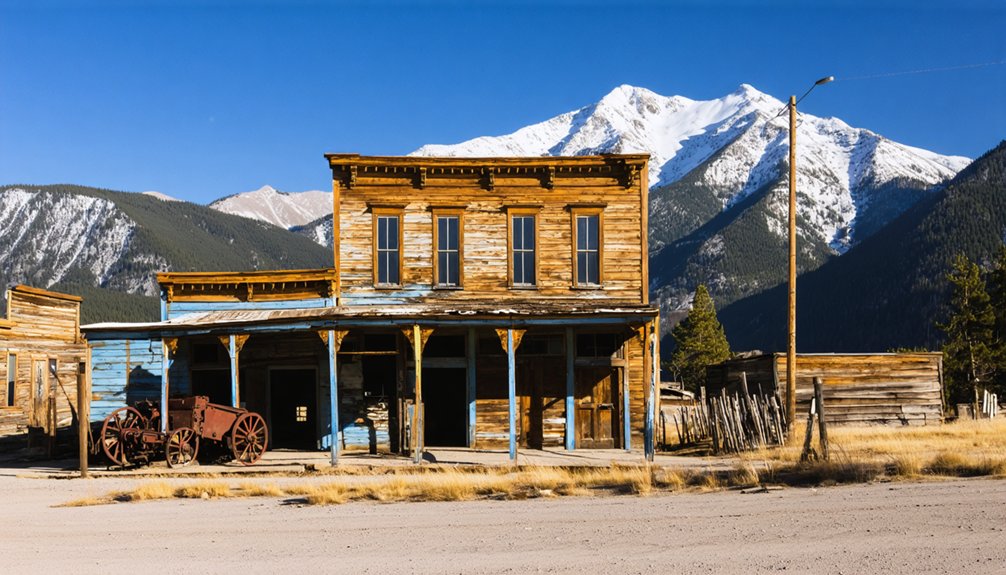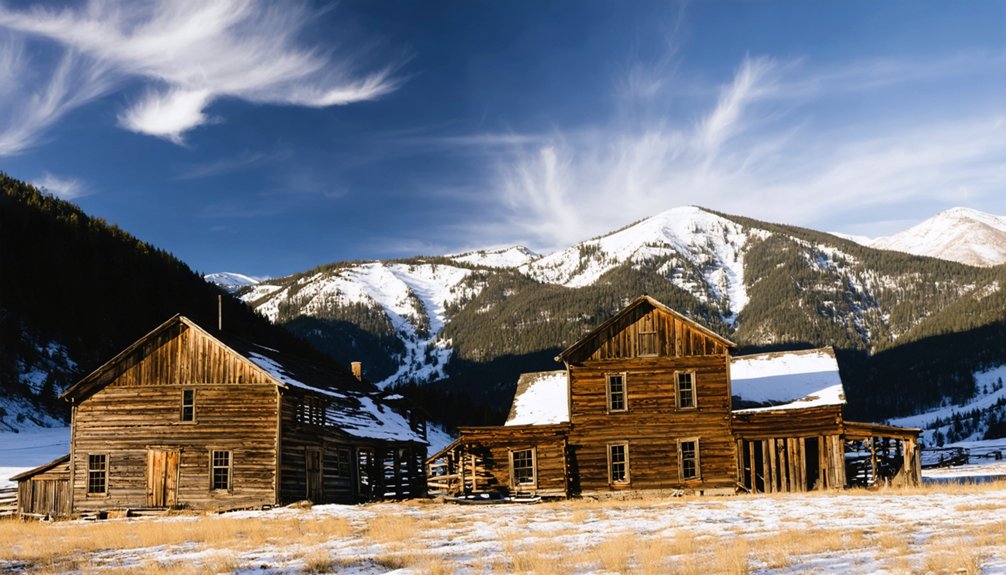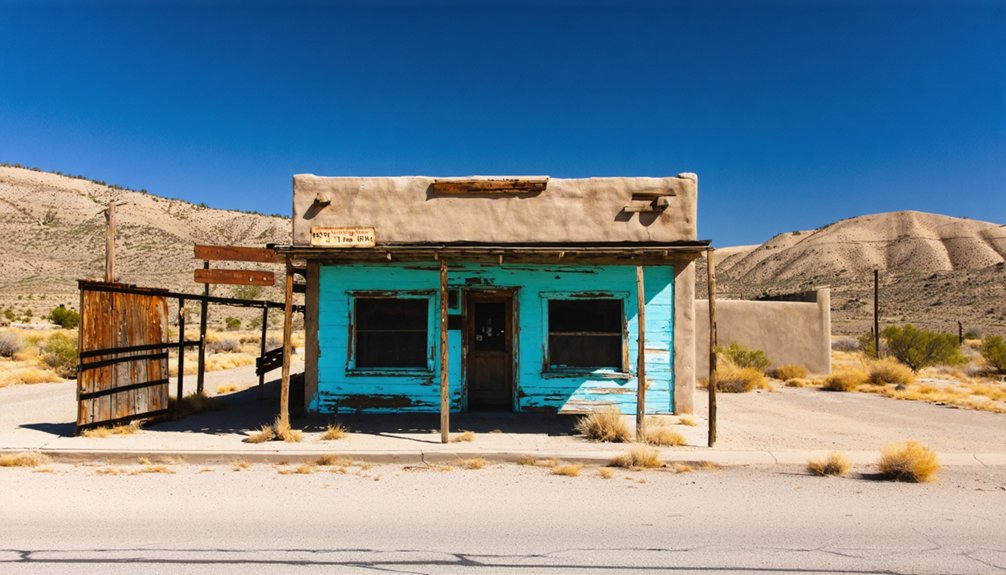
Start your ghost town road trip to Madrid, Colorado in Trinidad, then drive 14 miles west on State Highway 12 through rolling high-desert terrain. You’ll find crumbling shaft houses, rusted equipment, and weathered structures frozen in time at 6,590 feet elevation. There’s no visitor center or entrance fee — just raw, unfiltered silence and solitude. Bring water, sturdy boots, and a camera. Everything you need to make the most of this haunting Colorado detour is just ahead.
Key Takeaways
- Madrid, Colorado sits 14 miles west of Trinidad along State Highway 12, at 6,590 feet elevation in a high-desert landscape.
- Begin your trip in Trinidad, stocking up on fuel, food, and lodging before heading west on the scenic highway.
- Late spring through early fall offers the best weather; always check road conditions before departing, as winter roads close unexpectedly.
- Bring water, sturdy boots, and a camera; avoid unstable structures, mine shafts, and leave all artifacts undisturbed.
- Expect no visitor centers, entrance fees, or guided tours—Madrid is a self-guided, remote, and authentically raw ghost town experience.
What Is Madrid, Colorado and Why Does It Matter?
Tucked 14 miles west of Trinidad along State Highway 12, Madrid, Colorado sits quietly in Las Animas County at 6,590 feet elevation — a ghost town that’s easy to miss but hard to forget.
Named after Hilario Madrid, a New Mexico settler, this small community once supported a functioning post office from 1882 to 1917. Today, urban decay has claimed its structures, leaving behind a raw, unfiltered slice of frontier history.
Unlike heavily restored sites, Madrid’s appeal lies in its authenticity — you’re walking through time without velvet ropes or entrance fees. For travelers who value historic preservation and wide-open exploration, Madrid delivers something rare: a place where the past hasn’t been polished away.
It’s genuinely free, genuinely forgotten, and genuinely worth the detour.
Where Is Madrid, Colorado Located?
Nestled in Las Animas County, Madrid, Colorado sits roughly 14 miles west of Trinidad along State Highway 12, at an elevation of 6,590 feet. Named after Hilario Madrid, a New Mexico settler, this high-desert ghost town carries a quiet dignity that few places can match.
Perched at 6,590 feet, Madrid, Colorado is a high-desert ghost town of quiet, unmistakable dignity.
You’ll find the drive along Highway 12 rewarding on its own — sweeping landscapes open up as you climb toward the site.
Unlike its New Mexico namesake, which evolved into a thriving art community, Madrid, Colorado remains a raw, undisturbed relic. There’s no commercial polish here, just honest historic preservation standing against time.
If you crave destinations that feel genuinely untouched, Madrid, Colorado delivers exactly that. It’s a place where history breathes freely, waiting for travelers bold enough to seek it out.
How Do You Get to Madrid From Trinidad?
If you’re starting your trip in Trinidad, you’ve got an easy 14-mile drive ahead of you. Head west on State Highway 12, and the road will carry you through the rugged Las Animas County landscape straight to Madrid.
Once you arrive, you’ll find yourself standing in what remains of a once-thriving Colorado settlement.
Starting Point: Trinidad
Whether you’re starting your ghost town road trip from Trinidad, Colorado, the drive to Madrid is pleasantly straightforward. Head west on State Highway 12, and within 14 miles, you’ll reach this forgotten settlement tucked into Las Animas County.
The route itself sets the mood perfectly. Rolling high desert terrain builds anticipation as you climb toward an elevation of 6,590 feet. Locals along the way will happily share haunted stories and local legends tied to Madrid’s mysterious past — whispers of settlers, abandoned structures, and unexplained presences that have lingered for generations.
Trinidad serves as your ideal launching pad, offering fuel, food, and lodging before you venture into isolation. Pack what you need, because once you reach Madrid, modern conveniences disappear and raw frontier history takes over completely.
Highway 12 Route West
Heading west out of Trinidad on State Highway 12, you’ll cover just 14 miles before Madrid appears on the horizon, rising quietly at 6,590 feet above sea level. The drive itself rewards you — rolling high-desert terrain opens up alongside the Purgatoire River corridor, hinting at the rugged independence this region has always embraced.
You’re not racing toward a crowded destination. You’re tracing a route where cultural festivals once drew curious travelers and where local cuisine reflected the grit of mining-era communities.
Las Animas County stretches wide around you, offering space and silence that feels earned rather than manufactured.
Keep your speed steady, your windows down, and your eyes open. Madrid doesn’t announce itself loudly — it simply waits, patient and unapologetic, exactly where the highway delivers you.
Arriving At Madrid
Once you’ve rolled through Trinidad, getting to Madrid is straightforward — drive west on State Highway 12, and you’ll arrive in just 14 miles. The route itself sets the tone, pulling you through open Colorado terrain before depositing you at a settlement that time quietly abandoned.
Madrid sits at 6,590 feet in Las Animas County, named after Hilario Madrid, a New Mexican settler whose cultural influence shaped the area’s early identity. That historical significance echoes through every crumbling structure you’ll encounter upon arrival.
Don’t expect a welcome center or a bustling main street. What greets you instead is stillness — the honest kind that ghost towns deliver without apology. Park where you can, step out, and let the elevation and silence do the talking.
What’s Left to See in Madrid, Colorado Today?
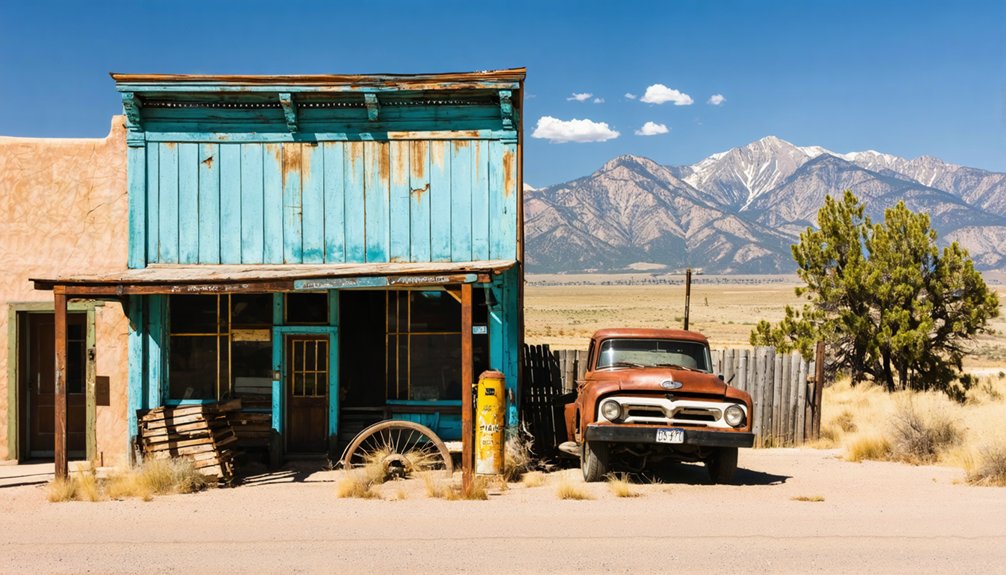
Although Madrid, Colorado sits quietly in Las Animas County at 6,590 feet, its sparse remnants still tell a compelling story. You’ll find weathered structures scattered across the high desert landscape, each one carrying whispers of the settlers who once built lives here.
Weathered structures dot the high desert silence, each one carrying the quiet weight of lives once lived here.
Local legends surrounding Hilario Madrid and the community he inspired add unexpected depth to what might otherwise seem like empty ruins.
Preservation efforts remain minimal, which actually keeps the site raw and authentic — exactly what freedom-seeking road trippers crave. You won’t encounter crowds or ticket booths, just open land and honest history.
Bring a camera, wear sturdy shoes, and give yourself time to wander. The silence itself becomes part of the experience, making Madrid, Colorado one of the most unfiltered ghost towns you’ll ever explore.
Why Did Madrid, Colorado Become a Ghost Town?
Wandering through those scattered remnants naturally raises one burning question — what drove people away in the first place? Madrid, Colorado, originally called Madrid Plaza, thrived briefly after its 1864 founding, supporting a post office from 1882 to 1917. Once that economic lifeline disappeared, residents followed. The town never anchored itself to a strong enough industry to survive shifting frontier economics.
Unlike its New Mexico namesake, which rode coal mining into the 20th century, Colorado’s Madrid lacked that sustaining resource. Urban decay quietly consumed what settlers left behind. You’ll notice how nature reclaims structures faster than anyone expects without preservation efforts to slow the process.
No organized revival ever came, and the population eventually dropped to near nothing, cementing Madrid, Colorado’s permanent status as a ghost town.
Who Was Hilario Madrid and How Did He Shape the Town?
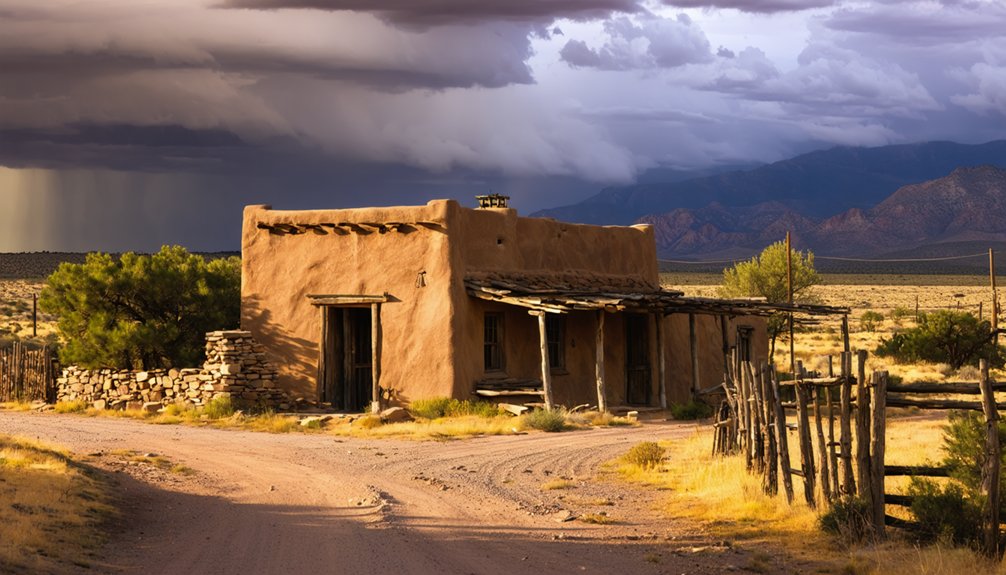
Behind every ghost town, a founding figure leaves fingerprints on the land long after the crowds disappear. Hilario Madrid, a New Mexico settler, gave this Las Animas County outpost its name and early identity. He arrived when this stretch of Colorado offered genuine freedom — open land, fresh starts, and untested possibilities.
Local legends paint him as a man deeply rooted in Hispanic frontier culture, someone who understood both the promise and harshness of settling rugged terrain. His legacy became woven into the town’s mining history, as later residents pushed into the earth chasing coal and survival.
When you drive those 14 miles west of Trinidad on Highway 12, you’re fundamentally tracing Hilario’s original footsteps — following a name carved permanently into Colorado’s ghost town record.
What’s the Best Time of Year to Visit Madrid, Colorado?
Since Madrid, Colorado sits at 6,590 feet in Las Animas County, the seasons hit differently here than they do at lower elevations. Summers are mild and perfect for exploring the ghost town’s remnants without brutal heat slowing you down.
Spring and fall offer crisp air and dramatic skies that make the abandoned structures feel genuinely cinematic.
Winter, however, can close State Highway 12 unexpectedly, so check road conditions before heading out from Trinidad.
Late spring through early fall gives you the best window for cultural preservation efforts happening nearby and lets you chase local legends without weather cutting your trip short.
You’re free to roam the high desert landscape, but respect the site — ghost towns disappear faster when visitors treat them carelessly.
Ghost Towns Near Madrid, Colorado Worth the Detour
Once you’ve explored Madrid, Colorado, Las Animas County rewards you with several nearby abandoned mining sites that stretch across rugged, scenic terrain worth adding to your route.
You can follow State Highway 12 west from Trinidad and pick up detours leading to forgotten settlements that once thrived on coal and silver extraction.
Mapping a ghost town loop through this corridor turns a single stop into a full day of discovery across one of Colorado’s most historically rich landscapes.
Nearby Abandoned Mining Sites
While Madrid, Colorado makes a worthy destination on its own, the surrounding Las Animas County countryside hides a string of abandoned mining sites that’ll reward anyone willing to push a little further down the back roads.
The mining history etched into these landscapes tells stories of boom-and-bust cycles that shaped entire communities overnight. You’ll find crumbling shaft houses, rusted equipment, and collapsed timbers that speak louder than any museum exhibit.
Ghost stories follow these sites naturally — locals whisper about unexplained lights near old headframes and footsteps echoing through empty tunnels.
Bring sturdy boots, a reliable map, and a healthy respect for unstable structures. These sites aren’t manicured tourist stops; they’re raw, unfiltered glimpses into Colorado’s brutal, beautiful mining past.
Las Animas County Detours
Those abandoned mining sites scattered across Las Animas County don’t stand alone — they’re stepping stones into a wider network of ghost towns worth chasing down on your road trip. Push west along State Highway 12 from Trinidad, and you’ll uncover communities frozen mid-collapse, each carrying its own mining history and local legends that no guidebook fully captures.
Ludlow sits nearby, a sobering reminder of the 1914 massacre that reshaped Colorado’s labor landscape. Farther along, smaller settlements offer crumbling foundations and rusted equipment you can actually walk through. You’re not following a scripted tour here — you’re piecing together a raw, authentic picture of the region’s coal-driven past.
Las Animas County rewards the curious traveler who’s willing to veer off the main road and explore without a rigid itinerary.
Scenic Ghost Town Routes
Stretching beyond Madrid, Colorado, the surrounding Las Animas County landscape opens into a loose constellation of ghost towns that reward drivers willing to follow the road wherever it bends.
State Highway 12 alone connects you to communities where historical preservation efforts keep crumbling structures standing long enough to tell their stories. You’ll find remnants of coal camps, abandoned homesteads, and crossroads that locals still whisper about.
Local legends follow you through every canyon curve, attaching themselves to rusted fence posts and collapsed rooflines. Each stop adds texture to your understanding of why people came here, stayed, and eventually disappeared.
You don’t need a rigid itinerary. Just keep moving west, pull over when something catches your eye, and let the landscape do the talking.
How to Explore Madrid, Colorado Without Getting Hurt
Exploring a ghost town like Madrid, Colorado is exciting, but you’ll want to stay smart about it. Crumbling structures, unstable ground, and abandoned mine shafts make safety tips essential before you wander off the main path. Wear sturdy boots, watch your footing, and never enter a structure that looks compromised.
Freedom to roam doesn’t mean recklessness. Respect barriers and posted warnings — they exist for real reasons. Bring water, since the 6,590-foot elevation drains energy faster than you’d expect.
Your preservation advice is simple: don’t take anything, don’t vandalize, and leave every piece of history exactly where you found it. Future visitors deserve the same raw, authentic experience you came for.
Tread lightly, stay alert, and Madrid’s haunted atmosphere will reward you fully.
How Madrid, Colorado Compares to Madrid, New Mexico
If you’re wondering how Madrid, Colorado stacks up against its New Mexico namesake, the contrast couldn’t be sharper — one’s a quiet ghost town frozen in time, while the other’s a buzzing artist enclave with over 40 shops and a starring role in the 2007 film *Wild Hogs*.
Both towns trace their names to Spanish-colonial roots, with Colorado’s Madrid honoring settler Hilario Madrid and New Mexico’s version growing from an 1869 coal-mining operation near the Santa Fe Railroad.
You’ll find that visiting each delivers a completely different experience — Colorado offers raw, windswept solitude, while New Mexico serves up live music at the Mine Shaft Tavern and a walkable Main Street packed with galleries.
Ghost Town Versus Active Village
While both towns share the same name, Madrid, Colorado and Madrid, New Mexico couldn’t be more different in how they greet visitors today.
Colorado’s Madrid is a true ghost town — silent, windswept, and frozen in time since its post office closed in 1917. You’ll find history here, but no bustling crowds.
New Mexico’s Madrid tells a different story. Once reduced to a population of just 10, it became a remarkable example of community revitalization, transforming from an abandoned coal camp into a thriving artist enclave with over 40 shops and galleries.
That cultural preservation effort drew filmmakers, tourists, and creatives alike.
If you crave solitude and raw history, Colorado’s Madrid delivers. If you want vibrant energy alongside history, New Mexico’s version satisfies that freedom too.
Historical Origins Compared
Both towns carry the Madrid name, but their origins stem from entirely different worlds. Colorado’s Madrid honored Hilario Madrid, a New Mexico settler who shaped Las Animas County’s early frontier identity.
New Mexico’s Madrid grew from an 1869 coal operation near the Santa Fe Railroad, fueling regional industry for decades.
Here’s how their histories contrast:
- Colorado Madrid earned its post office in 1882, serving settlers until 1917.
- New Mexico Madrid built its identity around mining history, extracting coal through the early 20th century.
- Cultural preservation drives New Mexico’s current artist community revival.
- Cultural preservation in Colorado exists only through ghost town documentation and historical records.
You’re visiting two places shaped by labor, land, and legacy — just through completely different paths.
Tourism And Visitor Experience
What you’ll find at each Madrid depends entirely on how you define a road trip destination. Madrid, New Mexico rewards you with over 40 art galleries, local cuisine, and live music at the Mine Shaft Tavern. You’ll walk a living Main Street where every storefront tells a story, including Maggie’s Diner, built for the 2007 film *Wild Hogs*. It’s busy, creative, and unapologetically alive.
Madrid, Colorado offers something rawer. There’s no local cuisine, no art galleries, and no guided tours waiting for you. What you get is silence, open land, and the freedom to stand inside a forgotten place on your own terms. If you crave discovery without crowds, Colorado’s Madrid delivers exactly that kind of honest, unfiltered experience.
Frequently Asked Questions
Is Madrid, Colorado Considered an Officially Recognized Ghost Town?
Yes, Madrid, Colorado’s considered an officially recognized ghost town! You’ll find it steeped in historic mining heritage and rich local legends, sitting quietly in Las Animas County, waiting for you to uncover its forgotten, fascinating stories.
Are There Any Paranormal or Haunted Reports in Madrid, Colorado?
You won’t find documented haunted legends or paranormal sightings specifically tied to Madrid, Colorado. It’s a quiet ghost town, so if you’re chasing supernatural thrills, you’ll discover more activity in Madrid, New Mexico instead.
Did Madrid, Colorado Ever Appear in Any Films or Movies?
Madrid, Colorado hasn’t served as a filming location, but its historic significance as a ghost town makes it a compelling destination you’ll want to explore on your next adventurous road trip out west.
What Was Madrid, Colorado’s Original Name Before It Was Renamed?
You’ll discover that Madrid, Colorado’s original name was Madrid Plaza, dating back to 1864. It’s a historical landmark steeped in local legends, and its post office operated under that identity until eventually fading into ghost town history.
How Long Did Madrid, Colorado’s Post Office Operate Before Closing?
Madrid, Colorado’s post office ran for 35 years, from 1882 to 1917, before it closed. You’ll uncover historical mining local legends during those decades that shaped this freedom-seeking frontier community’s fascinating, untamed identity.
References
- https://www.newmexico.org/places-to-visit/ghost-towns/madrid/
- https://www.facebook.com/groups/823194575947189/posts/1082459620020682/
- https://www.intermountainhistories.org/items/show/805
- https://newmexiconomad.com/madrid/
- https://en.wikipedia.org/wiki/Madrid
- https://en.wikipedia.org/wiki/List_of_ghost_towns_in_Colorado
- https://www.hmdb.org/m.asp?m=181503