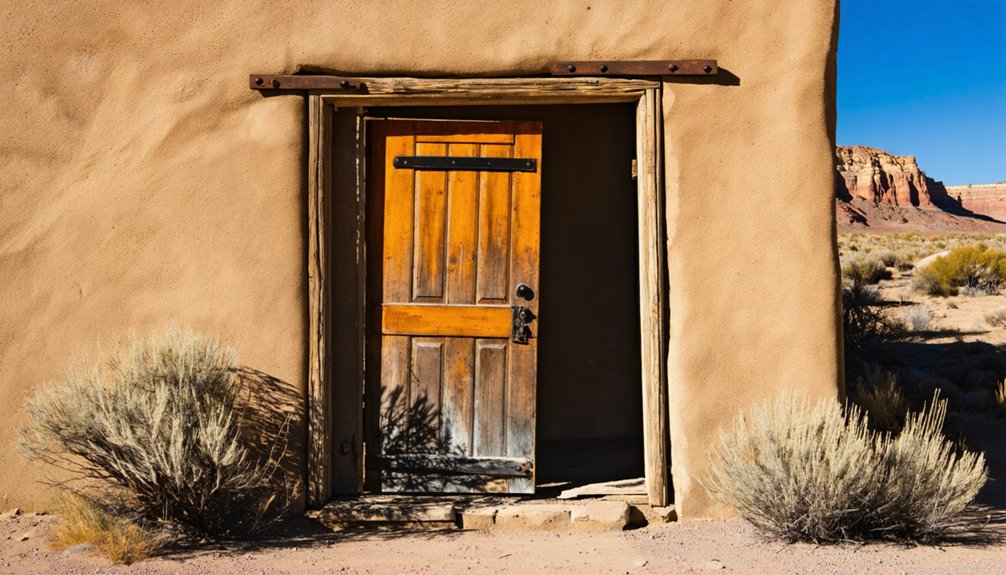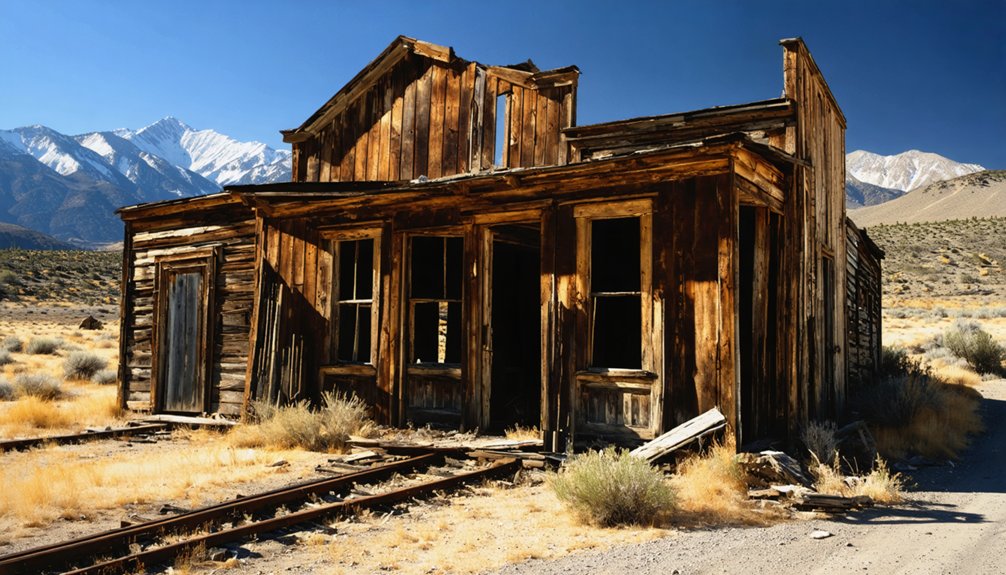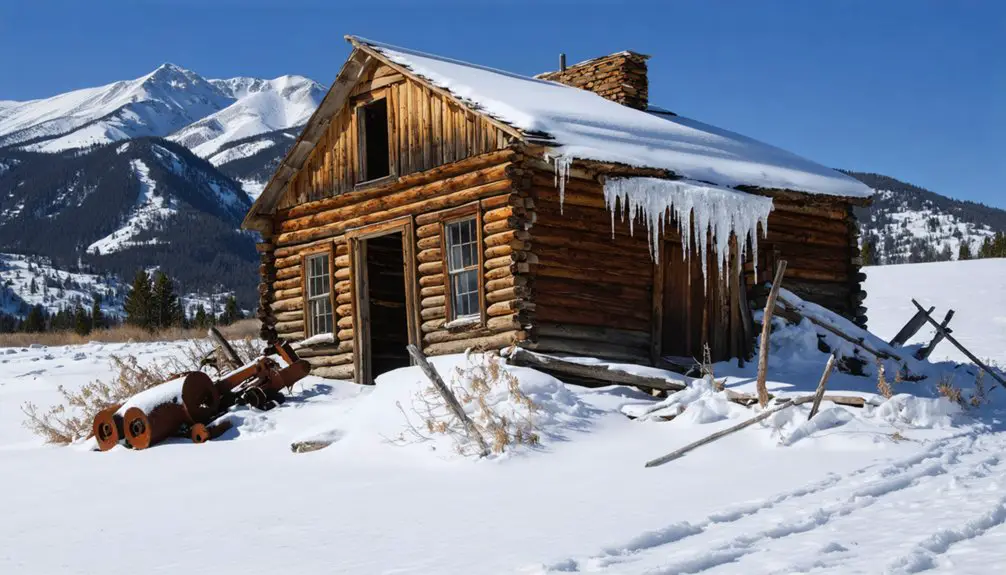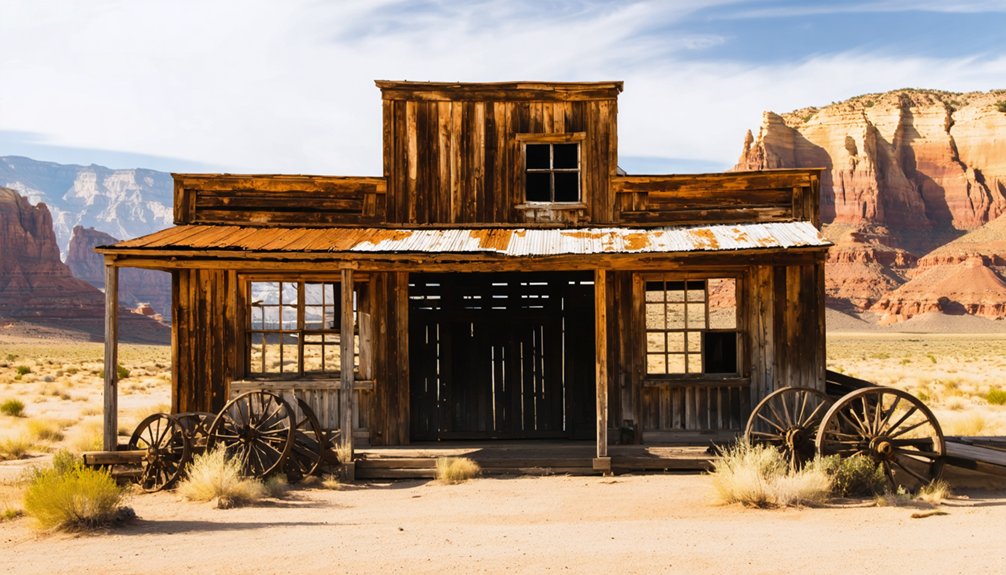
Utah’s mining ghost towns rose from silver and gold discoveries in the 1860s and 1870s, drawing thousands of prospectors into remote deserts and mountains. You’ll find over 195 recorded sites scattered across the state, from Silver Reef near St. George to Frisco in Beaver County, which once held 6,000 residents. These towns collapsed fast due to the 1884 silver price crash, resource depletion, and flooding. There’s far more to uncover about each site’s rise, ruin, and accessibility.
Key Takeaways
- Utah has over 100 documented mining ghost towns, born from silver and gold discoveries during the 1860s and 1870s.
- Notable ghost towns include Silver Reef, Frisco, and Kimberly, each reflecting Utah’s rich frontier mining heritage.
- Towns collapsed primarily due to the 1884 silver price decline, resource depletion, and environmental challenges like groundwater flooding.
- Accessible sites include Silver Reef, Old Iron Town, and Ophir, with visitation available between May and September.
- Planning a visit requires maps, water, and fuel, as cellular coverage is unreliable and some sites need four-wheel-drive access.
How Did Utah’s Mining Ghost Towns Get Started?
Utah’s mining ghost towns trace their origins to the explosive silver and gold discoveries of the 1860s and 1870s, when prospectors flooded previously uninhabited deserts, mountains, and canyons in pursuit of sudden wealth.
Silver strikes in sandstone cliffs near Frisco and Silver Reef drew thousands, while gold discoveries in the Tushar Mountains produced short-lived settlements like Kimberly.
Settlement patterns emerged rapidly around viable ore deposits, with towns materializing almost overnight wherever mining techniques proved productive.
Towns didn’t grow—they erupted, clustering instantly wherever ore and ambition briefly converged.
Railroad expansion accelerated this process, connecting remote camps to broader markets and amplifying population surges.
You’ll find that these towns weren’t built for permanence—they existed solely to extract wealth.
Once mines exhausted their yields or markets collapsed, residents abandoned everything, leaving over 100 documented ghost towns scattered across Utah’s landscape.
What Fueled the Silver and Gold Boom Towns?
When you examine Utah’s silver and gold boomtowns, you’ll find that raw mineral discovery consistently sparked their rapid rise.
John Kemple’s 1866 silver vein discovery, for instance, established Silver Reef as a major production site, while gold strikes in the Tushar Mountains birthed short-lived settlements like Kimberly.
Railroad expansion then amplified these discoveries by connecting remote camps to broader markets, though declining silver prices in 1884 and the logistical difficulty of pumping water from deep mines ultimately undermined the economic foundations these towns depended on.
Silver and Gold Discoveries
Silver and gold discoveries ignited Utah’s most dramatic population surges, transforming desolate landscapes into thriving industrial camps almost overnight.
When you trace the origins of these boomtowns, you’ll find that silver mining drove some of the most consequential settlement patterns across the territory. John Kemple’s 1866 silver vein discovery established Silver Reef as a major production site, drawing thousands into Washington County’s desert terrain.
Similarly, the gold rush mentality swept through Piute County when strikes in the Tushar Mountains birthed short-lived settlements like Kimberly. Silver discoveries in sandstone cliffs near Frisco further amplified regional migration.
These weren’t gradual developments — they were explosive, freedom-driven pursuits of mineral wealth that reshaped Utah’s demographic landscape within months, creating communities where nothing previously existed.
Railroad and Market Forces
Railroad expansion and mining ambitions didn’t operate in isolation — they reinforced each other in ways that accelerated Utah’s boomtown cycle with remarkable speed. When rails pushed into remote territories, they opened previously inaccessible mineral deposits to commercial exploitation, connecting isolated camps to national markets almost overnight.
However, market fluctuations proved equally decisive in determining a town’s fate. The world silver market’s collapse in 1884 triggered mass mine closures across the Silver Reef area, demonstrating how vulnerable these communities were to forces far beyond their borders.
You’ll notice that railroad expansion created opportunity, but it couldn’t shield towns from economic volatility. When prices dropped and profits vanished, workers left, businesses shuttered, and entire communities dissolved — leaving only crumbling structures as evidence of their brief, ambitious existence.
Which Utah Mining Ghost Towns Are Most Worth Knowing?
Among Utah’s 195 recorded ghost town sites, a handful stand out as particularly significant for understanding the state’s mining heritage.
You’ll find that Frisco history alone reveals how rapidly boomtowns could rise and collapse, peaking at 6,000 residents in 1885 before final abandonment in 1929.
Silver Reef offers equally compelling lessons, preserving its original Wells Fargo Express Building for you to explore firsthand.
Consider these essential sites:
- Silver Reef: 15 miles northeast of St. George, it collapsed after the 1884 world silver market decline
- Frisco: Located in Beaver County, its crumbling streets document railroad-driven ambition
- Kimberly: Tucked into the Tushar Mountains, it represents gold mining’s short-lived promise
Each site delivers unfiltered access to Utah’s rugged frontier reality.
How Many Ghost Towns Does Utah Actually Have?
Utah’s ghost town count surprises most people: the state holds at least 195 recorded sites, according to both historical records and the Utah Automated Geographic Reference Center.
These aren’t merely footnotes in mining lore — they’re tangible evidence of a frontier economy that rose and collapsed within decades. You’ll find these sites scattered across deserts, mountain ranges, and canyon corridors, each carrying distinct ghost town legends rooted in silver strikes, gold rushes, and railroad ambitions.
Utah’s sheer geographic diversity allowed boom settlements to emerge in remarkably remote locations, many of which you can still access today.
Historical books document these sites thoroughly, giving you the tools to explore Utah’s abandoned mining heritage on your own terms, with precision and independence guiding every step.
What Killed These Utah Mining Towns So Fast?
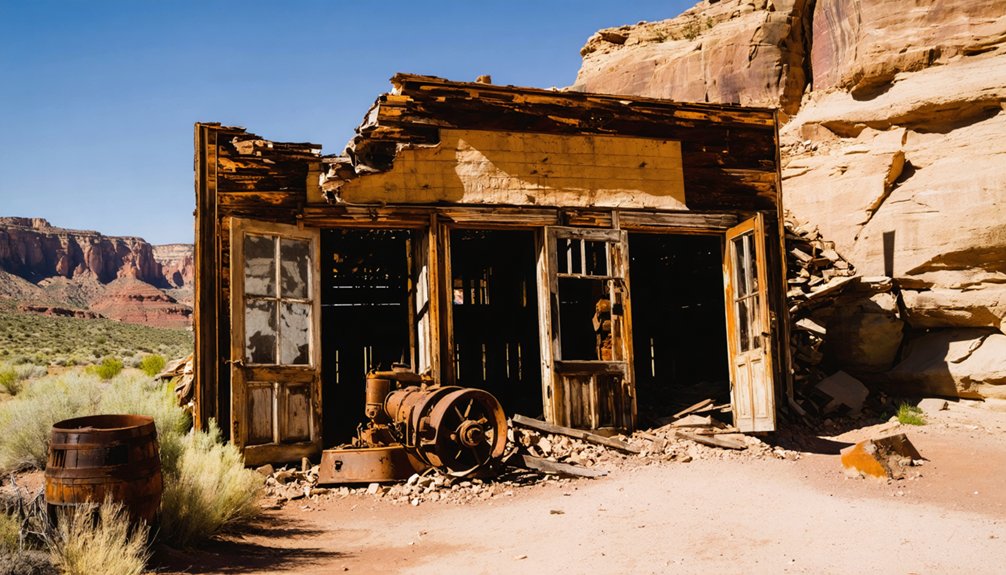
When silver prices collapsed on the world market in 1884, mine operators across the Silver Reef area shuttered operations almost overnight, stripping entire communities of their economic foundation.
Economic downturns weren’t the sole culprit—environmental challenges like uncontrollable groundwater flooding made mining technology insufficient to sustain deeper extraction.
Community dynamics fractured as wages dropped, forcing workers to abandon camps entirely.
Three critical factors accelerated these towns’ collapse:
- Resource depletion: Once veins ran dry, no economic incentive remained to sustain populations
- Infrastructure failure: Pumping water from deep mines exceeded available mining technology capabilities
- Market vulnerability: Communities built on single commodities couldn’t survive global price shifts
You’ll recognize these towns weren’t defeated—they were structurally designed to disappear once profits vanished.
Which Utah Mining Ghost Towns Can You Still Visit?
If you’re ready to walk through Utah’s mining past firsthand, several ghost towns remain accessible as preserved parks and open historic sites.
You can explore Silver Reef in Washington County, where the original Wells Fargo Express Building still stands, or wander Old Iron Town’s ruins in Dixie National Forest, both maintained as public parks.
If you plan to visit Ophir, however, you’ll need to schedule your trip on a Saturday between May and September, as the site only opens for public tours during that window.
Preserved Ghost Town Parks
Several of Utah’s mining ghost towns have survived the centuries well enough that you can still walk their historic grounds today.
Preservation challenges have shaped how these sites exist, yet three standout parks deliver compelling visitor experiences:
- Silver Reef (Washington County) preserves the original Wells Fargo Express Building, letting you explore a genuine 19th-century commercial structure 15 miles northeast of St. George.
- Old Iron Town operates as a public park within Dixie National Forest, where you’ll examine ruins from its brief 1870–1876 lifespan.
- Ophir opens selectively—only Saturdays between May and September—rewarding those who plan ahead with guided access to intact frontier architecture.
Each site grants you direct contact with Utah’s raw mining heritage on your own terms.
Open Visitation Sites
Beyond the formally preserved parks, a handful of Utah’s mining ghost towns remain openly accessible for self-guided exploration.
Frisco, abandoned since 1929 in Beaver County, welcomes you without restriction, offering raw, unmediated encounters ideal for ghost town photography.
Silver City, situated at Dragon Canyon’s mouth in Juab County, stands neglected yet reachable, its roofless structures bearing honest testimony to mining heritage preservation challenges.
Kimberly, perched high in the Tushar Mountains of Piute County, rewards those willing to navigate rugged terrain.
Unlike formally managed sites, these locations impose no schedules or admission fees, granting you direct, unfiltered access to Utah’s frontier legacy.
Exercise responsible visitation practices, however, since unmanaged sites carry both physical hazards and irreplaceable historical value that careless exploration permanently destroys.
Accessible Historic Ruins
Utah’s mining ghost towns span preserved parks, open ruins, and restricted sites—each offering a distinct visitor experience shaped by its preservation status and accessibility. You can explore several sites where historic preservation efforts have kept cultural heritage visible and reachable.
- Silver Reef: Visit the original Wells Fargo Express Building, preserved as a park 15 miles northeast of St. George.
- Old Iron Town: Walk freely through this public park in Dixie National Forest, examining authentic 1870s industrial ruins.
- Frisco: Roam abandoned streets and crumbling structures in Beaver County, where no formal preservation restricts your exploration.
Silver City offers roofless, uninhabited buildings for independent examination, while Ophir restricts tours to Saturdays between May and September—so plan accordingly before you travel.
What Do the Ruins, Access Roads, and Entry Points Look Like?
Across Utah’s 195 recorded ghost town sites, ruins, access roads, and entry points vary dramatically in condition and accessibility.
Some sites, like Silver Reef, offer paved entry roads and preserved structures, making ruin exploration straightforward for most vehicles. Others, like Kimberly in the Tushar Mountains, demand high-clearance four-wheel-drive capability on rugged mountain terrain.
You’ll encounter crumbling stone walls, roofless structures, and deteriorating foundations at less-maintained sites like Silver City.
Road accessibility ranges from well-maintained county roads near Frisco to narrow canyon tracks approaching remote camps.
Entry points aren’t always marked, so you’ll benefit from consulting the Utah Automated Geographic Reference Center before departing. Knowing road conditions, seasonal closures, and structural stability guarantees you navigate these sites safely and responsibly.
How Do You Plan a Utah Mining Ghost Town Road Trip?
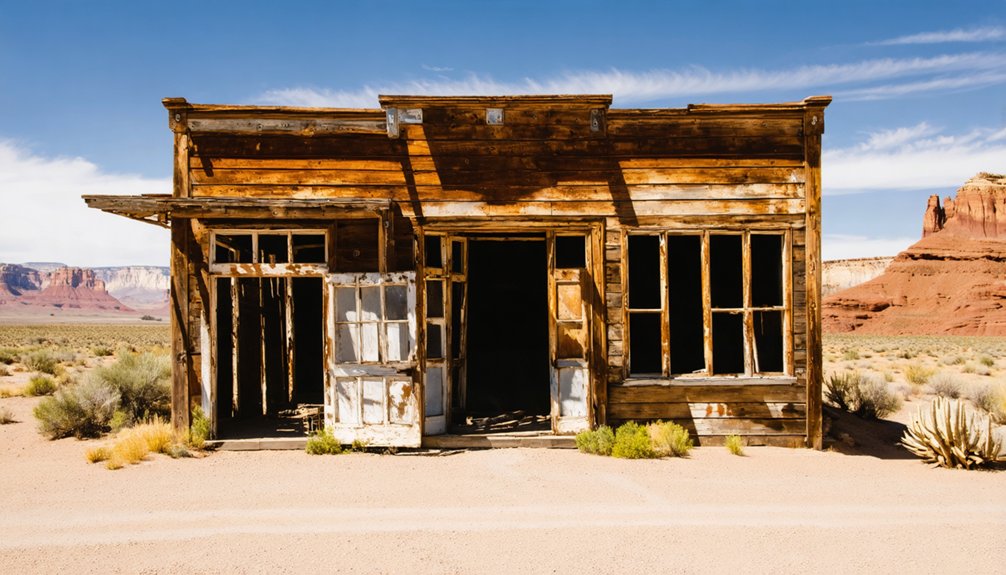
Planning a Utah mining ghost town road trip requires strategic sequencing of sites, realistic mileage estimates, and vehicle preparation suited to each destination’s terrain demands.
You’ll want to cluster visits geographically, prioritizing southwest Utah’s Beaver and Washington Counties before moving into Juab and Piute Counties.
- Research seasonal access restrictions, since Ophir opens only Saturdays from May through September.
- Prioritize ghost town photography during golden hour to capture dramatic lighting across crumbling structures.
- Confirm historical preservation guidelines at each site before touching or removing artifacts.
Cross-reference the Utah Automated Geographic Reference Center’s 195 recorded sites against your timeline.
Cross-reference the Utah Automated Geographic Reference Center’s 195 recorded ghost town sites against your available travel timeline.
High-clearance vehicles access remote destinations like Kimberly in the Tushar Mountains.
Carry printed maps, water, and fuel since cellular coverage remains unreliable across Utah’s desert corridors.
Frequently Asked Questions
What Artifacts Have Been Discovered at Utah’s Abandoned Mining Ghost Towns?
You’ll find mining equipment like ore carts, pickaxes, and smelting remnants at Utah’s ghost towns. Historical preservation efforts at sites like Silver Reef protect these artifacts, connecting you to the state’s rugged frontier mining heritage.
Were Any Famous Outlaws or Criminals Associated With Utah Mining Towns?
Shadowy scoundrels surely stalked these settlements! You’ll find outlaw legends tied to Utah’s mining towns, where criminal hauntings echo through crumbling corridors. Bandits exploited boom-era lawlessness, targeting silver shipments and vulnerable miners seeking freedom in Utah’s rugged frontier.
How Did Mining Ghost Town Residents Get Food and Essential Supplies?
You’d have relied on supply routes bringing goods via wagon trains and mule teams, while barter systems let you trade labor or ore for food, tools, and essentials from traveling merchants and company stores.
Did Any Utah Mining Ghost Towns Have Schools or Churches?
Yes, many did! With over 195 recorded Utah ghost town sites, you’ll find rich school history and stunning church architecture throughout. These communities valued education and faith, reflecting settlers’ desire for freedom and civilized frontier life.
Are There Guided Tours Specifically Focused on Utah Mining Ghost Towns?
You’ll find guided adventures focusing on Utah’s mining ghost towns, where you can explore sites like Silver Reef and Frisco, uncovering their historical significance through expert-led tours that illuminate the state’s rugged frontier mining heritage.
References
- https://www.visitutah.com/things-to-do/history-culture/ghost-towns
- https://ogm.utah.gov/learn-about-mining/mining-towns/
- https://www.utah.com/things-to-do/attractions/old-west/ghost-towns-in-utah/
- https://www.ksl.com/article/brandview/7-utah-ghost-towns-that-are-worth-a-visit-this-summer/51008090
- https://www.utahsadventurefamily.com/5-ghost-towns-in-utah-for-families/
- https://www.youtube.com/watch?v=hCu0zbig4t0
- https://www.legendsofamerica.com/ut-ghosttowns/
- https://www.youtube.com/watch?v=FLdClYRU0bY
- https://www.onlyinyourstate.com/experiences/utah/ghost-towns-in-ut
- https://www.youtube.com/watch?v=T9wpVcek1dA