Meehan, Alaska sits 40 miles northeast of Fairbanks, swallowed by wilderness since the gold rush faded after 1905. You’ll need a private vehicle, summer timing, and serious backcountry preparation — no services exist out here. What the Meehan brothers built along Fairbanks Creek, including saloons, dance halls, and a post office, now hides beneath decades of overgrowth. Pack bear spray, survival essentials, and enough curiosity to uncover what this guide reveals ahead.
Key Takeaways
- Meehan, Alaska, located 40 miles northeast of Fairbanks, was a gold rush mining hub established in 1905 by the Meehan brothers.
- Visit between late May and early September for optimal weather, longer daylight hours, and more accessible road conditions.
- A private vehicle is required, as no public transit exists; check road conditions and pack survival essentials before departing.
- Carry bear spray, research land ownership restrictions, and avoid disturbing structures or removing artifacts while exploring the site.
- Inform someone of your itinerary before leaving Fairbanks, as no emergency services are available near the remote site.
What Makes Meehan, Alaska Worth the Drive?
Why drive 40 miles northeast of Fairbanks to visit a town that’s fundamentally swallowed by the Alaskan wilderness? Because Meehan delivers something rare among ghost towns — an unfiltered encounter with gold rush history still breathing beneath the overgrowth.
Established in 1905 by the Meehan brothers, this former mining hub once operated four saloons, two dance halls, and a functioning post office.
Those Meehan attractions weren’t built for permanence — they were built for urgency, for men chasing fortune along Fairbanks Creek.
That raw impermanence is exactly what you’ll feel standing there.
Ghost towns like Meehan don’t offer polished museums or guided pathways. They offer silence, scattered remnants, and the unmistakable sense that civilization rose fast, burned bright, and simply walked away.
Meehan’s Gold Rush History Before You Arrive
Before you set a single boot on that overgrown ground, knowing what happened at Meehan transforms the silence from eerie to electric.
Meehan’s establishment began in 1905 when three brothers — Matt, Pat, and Tom — staked their Discovery claim along Fairbanks Creek, roughly 40 miles northeast of Fairbanks. That single act ignited a community: four saloons, two dance halls, a restaurant, stores, and roadhouses rose fast from raw Alaskan wilderness.
Gold mining impact shaped everything — and ultimately erased it. When the creek’s resources thinned, residents scattered toward richer ground.
Best Time of Year to Visit Meehan
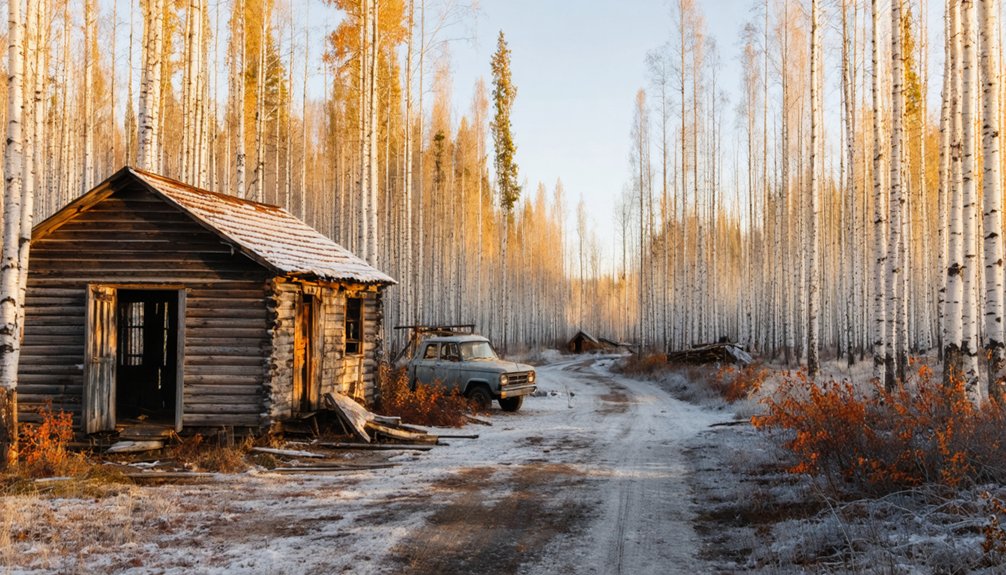
You’ll find summer your best bet for reaching Meehan, as the regional roads connecting to Fairbanks become far more navigable once winter’s ice and snow retreat.
Winter travel isn’t impossible, but dropping subarctic temperatures and unpredictable road conditions can turn a straightforward drive into a serious logistical challenge.
If you want the sweet spot, aim for late May or early September, when you’ll dodge both the harshest weather and the worst of the summer’s overgrown vegetation obscuring the site’s remaining features.
Summer Visits Offer Accessibility
Summer is the undisputed window for visiting Meehan, when Alaska’s interior thaws enough to make the 40-mile drive northeast from Fairbanks both passable and worthwhile.
Summer accessibility transforms this ghost town exploration from impossible to achievable. The subarctic climate dictates your timeline — work with it, not against it.
Plan your visit around these seasonal advantages:
- Roads connecting Fairbanks to the site become reliably navigable
- Daylight stretches generously, giving you maximum exploration time
- Vegetation, though dense, remains traversable on foot
- Moderate temperatures make outdoor site investigation comfortable
You’ll still encounter overgrowth reclaiming Meehan’s bones, but summer light reveals what winter buries entirely.
Come prepared with maps, provisions, and curiosity — no visitor facilities exist, and the freedom of that rawness is exactly the point.
Winter Weather Challenges Travel
Winter transforms Meehan’s already-remote landscape into something genuinely hostile — temperatures plunge well below freezing across the Fairbanks interior, roads become unpredictable, and the short subarctic days leave you with minimal light for site exploration.
Winter driving to this abandoned settlement demands serious preparation; icy, unmarked roads connecting to Fairbanks can shift from manageable to treacherous within hours. Visibility issues compound the danger, as blowing snow and low-angle light obscure road edges and landmarks simultaneously.
You’re traversing toward a ghost town with no services, no permanent residents, and no rescue infrastructure nearby. Unless you’re an experienced cold-weather traveler with proper gear and a reliable vehicle, winter isn’t your season here.
The ruins will wait — visit when conditions respect your freedom to return safely.
Optimal Shoulder Season Timing
Once the brutal interior cold begins releasing its grip — typically late May through early June — Meehan’s surrounding landscape opens into something far more navigable without yet surrendering to midsummer’s dense mosquito pressure and unpredictable trail conditions.
These shoulder season windows reward deliberate travelers. Keep these travel tips in mind:
- Late May offers firmer ground and minimal insect activity
- Early June delivers longer daylight hours — sometimes 20+ hours of usable light
- Early September brings cooler temperatures and thinning vegetation for clearer site visibility
- Mid-September marks your hard cutoff before interior roads deteriorate
You’ll move freely through Fairbanks Creek’s reclaimed terrain, reading the landscape on your own terms.
The ghost town doesn’t wait — neither should your planning window.
How to Get to Meehan From Fairbanks
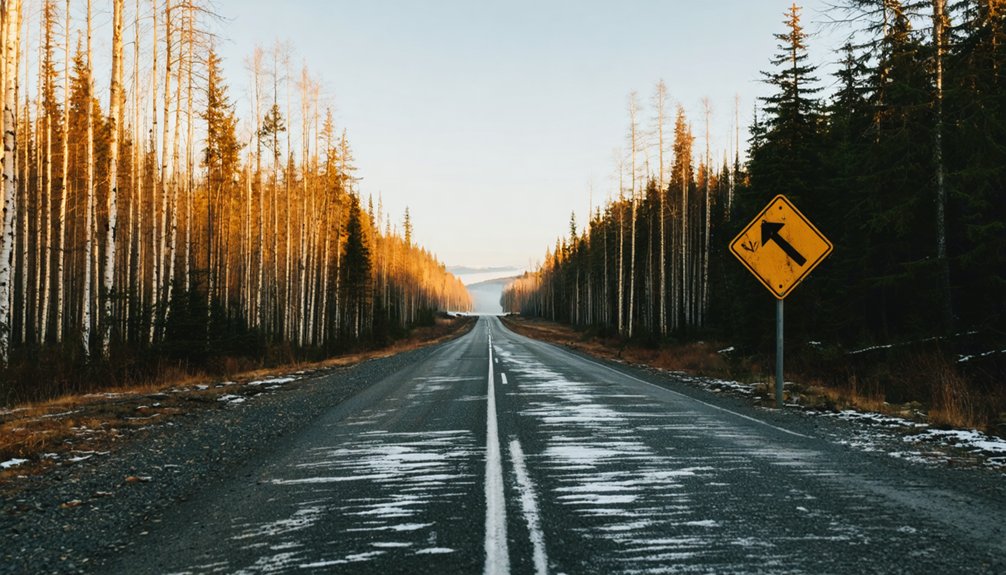
Reaching Meehan means heading roughly 40 miles northeast of Fairbanks via regional roads through the Fairbanks Creek drainage basin—you’ll need a private vehicle, as no public transit or commercial bus routes service the area.
Meehan accessibility depends entirely on your own preparation and self-reliance, which feels fitting for a place built by independent prospectors.
Road conditions shift dramatically with Alaska’s seasons, so check current conditions before departing. Winter ice and spring thaw can make routes unpredictable.
No formal visitor facilities await you upon arrival, and historical preservation efforts remain nonexistent here, meaning the land tells its own raw, unmanaged story.
Pack supplies, carry navigation tools, and move through this subarctic landscape with the same resourceful spirit that once drove the Meehan brothers to stake their claim.
What You’ll Actually See at the Meehan Ghost Town Site?
After the drive out, your arrival at Meehan delivers something humbling: almost nothing.
Vegetation has reclaimed nearly every trace of what once bustled with four saloons, two dance halls, and a post office. The abandoned structures have surrendered to decades of subarctic growth, leaving only fragments behind.
Yet the historical significance runs deep beneath that silence. Look carefully and you’ll notice:
Yet the historical significance runs deep beneath that silence—buried, waiting, patient as the wilderness itself.
- Faint ground depressions where buildings once stood
- Overgrown road traces connecting former mining diggings
- Scattered debris half-buried beneath moss and brush
- Subtle landscape disturbances marking old foundations
This site rewards the patient explorer.
You’re standing where the Meehan brothers staked their 1905 Discovery claim, where an entire community lived, drank, danced, and disappeared.
The wilderness doesn’t erase history—it just buries it.
What to Pack for a Remote Interior Alaska Day Trip to Meehan
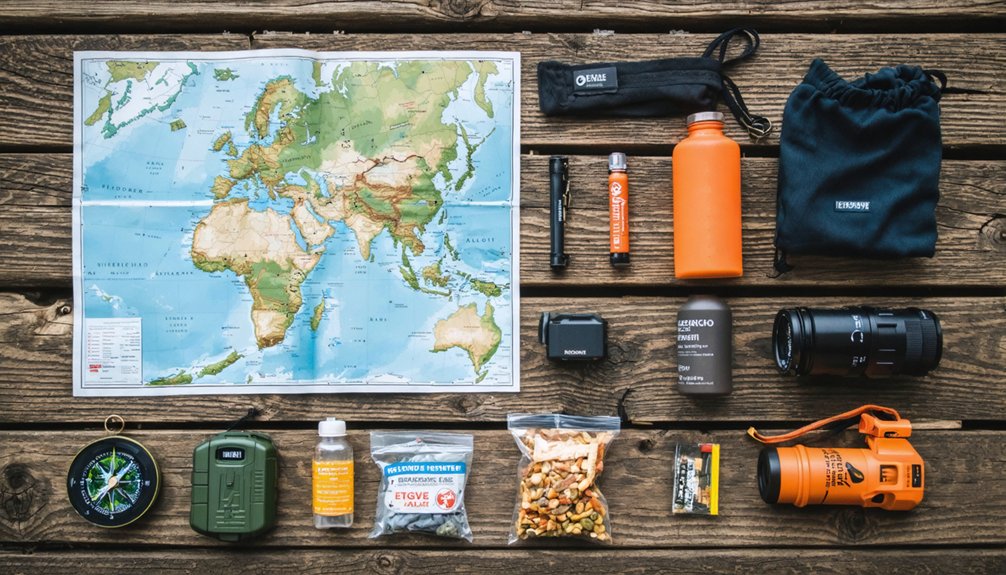
Meehan offers no amenities, no cell service, and no rescue infrastructure—so what you carry in is what keeps you safe.
Interior Alaska’s subarctic climate shifts fast, making layered clothing, waterproof boots, and an emergency kit non-negotiable packing essentials. Bring enough water for the full day—streams aren’t reliably safe without filtration gear.
For Photography Tips, shoot during golden hour when Alaska’s low-angle light dramatizes overgrown textures and decaying remnants. A wide-angle lens captures the encroaching wilderness reclaiming former structures, while a macro lens reveals frost patterns and weathered wood grain.
Pack extra batteries; cold temperatures drain power quickly.
Carry a paper map—GPS signals weaken in dense terrain. Your freedom depends entirely on your preparation before you leave the pavement behind.
Nearby Historical Stops to Pair With Your Meehan Visit
Once you’ve packed your gear and mapped your route to Meehan, it’s worth stretching the drive into a fuller reckoning with the Fairbanks Creek corridor’s gold rush past.
The region rewards curiosity. Pair your visit with these nearby stops to deepen your sense of ghost town culture and mining heritage:
The region rewards curiosity — let each stop deepen your sense of ghost town culture and mining heritage.
- Fairbanks – Explore the city’s gold rush museums and archives documenting regional mining history.
- Fairbanks Creek Basin – Follow the drainage corridor that once sustained multiple mining operations.
- Kennecott and McCarthy – Comparable ghost towns mirroring Meehan’s rise and abandonment arc.
- Local Historical Societies – Access oral histories and photographic records unavailable online.
Each stop layers context onto Meehan’s silence, transforming a single abandoned site into a corridor of living memory.
Safety and Access Tips for Visiting Meehan and Abandoned Alaska Sites
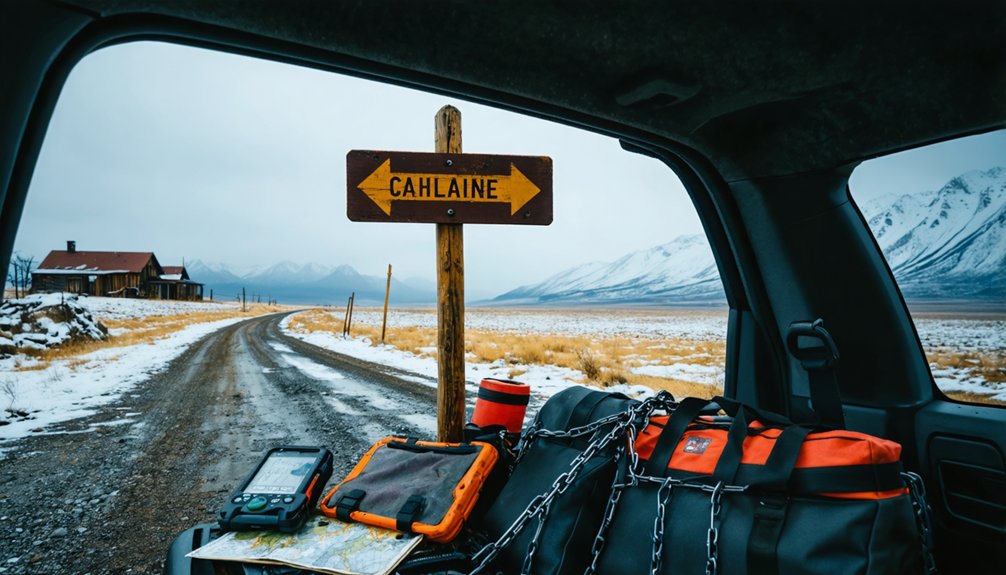
Reaching Meehan demands preparation, not impulse. You’re venturing into subarctic terrain where seasonal road conditions shift without warning, and no emergency services stand nearby.
Pack survival essentials — food, water, a first-aid kit, and extra fuel. Tell someone your itinerary before you leave Fairbanks.
Once on-site, practice responsible ghost town etiquette: don’t disturb remaining structures, don’t remove artifacts, and don’t assume any surface is stable underfoot.
Decades of overgrowth conceal hazards beneath the vegetation.
Your safety precautions should also include bear awareness — interior Alaska demands it. Carry bear spray and stay alert.
Private access restrictions may apply, so research land ownership beforehand.
Meehan rewards the prepared traveler. Respect the silence, move carefully, and you’ll carry its history home intact.
Frequently Asked Questions
Who Were the Meehan Brothers That Originally Founded This Ghost Town?
Ever wonder who sparked Meehan’s gold rush story? Matt, Pat, and Tom Meehan staked the Discovery claim in 1905, cementing their Brothers’ legacy deep within Meehan history and transforming Fairbanks Creek forever.
What Time Zone Does Meehan, Alaska Currently Fall Within?
You’ll find Meehan falls within Alaska Standard Time (AKST). As you explore this haunting ghost town’s rich Meehan history, that same time zone quietly governs the wilderness that’s slowly reclaimed what ambitious gold rush dreamers once built.
Are There Any Formal Preservation Plans for the Meehan Townsite?
You won’t find any formal preservation plans for Meehan’s townsite. Despite its historical significance, preservation challenges remain unaddressed, leaving this atmospheric ghost town free for you to explore independently, untamed by official management or restrictions.
Is Meehan Designated as an Official Protected Historical Monument?
Meehan isn’t designated as an official protected historical monument. You’ll find no formal preservation efforts safeguarding its historical significance, leaving this atmospheric ghost town freely open for your own exploration and personal discovery.
What Drainage Basin Is the Meehan Ghost Town Located Within?
You’ll find Meehan nestled within the mighty Fairbanks Creek drainage basin, where countless dreamers once chased gold! Its drainage patterns shaped everything, carrying both water and historical significance through Alaska’s wildest, most freedom-defining frontier landscape.
References
- https://www.uaf.edu/news/one-big-earthquake-two-alaska-ghost-towns.php
- https://www.facebook.com/groups/115424478179883/posts/692580117130980/
- https://www.youtube.com/watch?v=10BQpBJaDgY
- https://www.youtube.com/watch?v=2WnyUP_SOb0
- https://www.onlyinyourstate.com/trip-ideas/alaska/haunting-ghost-towns-ak
- https://www.bbc.com/travel/article/20210520-the-ghost-town-that-electrified-the-us
- https://www.youtube.com/watch?v=Cz0IGc2Uy0E
- https://www.youtube.com/watch?v=IIh9nTN1tr0
- https://everafterinthewoods.com/forgotten-ghost-towns-in-alaska-that-are-as-isolated-as-they-are-stunning/
- https://en.wikipedia.org/wiki/List_of_ghost_towns_in_Alaska